
fahrbot-bot shares a report from CNN: President Donald Trump on Tuesday unveiled America.gov, a government website meant to serve as a one-stop shop for people trying to accomplish basic tasks like renewing a passport, enrolling in Medicare or applying for disaster relief. The site, which launched with some basic functions ahead of a full rollout next year, is designed to serve as an AI-powered guide through the thicket of government agencies that Trump officials pledged would ultimately save people a whole lot of frustration.
The administration's new initiative aims to allow Americans to access dozens of federal websites through a single point, making America.gov akin to a search tool that pulls information from across the government. And in the same way that people increasingly use AI models like ChatGPT or Google Gemini to compile information and provide customized answers, Trump officials claimed that America.gov would be able to do the same for people's interactions with the federal government.
Enrolling in Medicare, for example, will become a matter of typing the request into the America.gov AI tool and following its step-by-step instructions. The same goes for applying to a government job -- the new tool will now let people upload their resume directly to the site -- or answering questions about federal benefits, publicly available documents or other necessities that fall under the federal government's vast umbrella.
"Our vision is that one day, this type of convenience and simplicity will be across every government service," said Joseph Gebbia, who leads the government's National Design Studio. But the reality is that the most advanced actions won't be available until some point in 2027, raising questions about how long it will take for the administration to revamp the way the people interact with the government's websites. The current version of America.gov can only do "answers." U.S. Chief Design Officer Joe Gebbia said the new chatbot is powered by Google's Gemini and Elon Musk's Grok. "We have great partners behind the scenes," Gebbia told CNBC's "Squawk Box" shortly before the site, America.gov, went live around 10 a.m. ET.
"Google is proud to be named a technology partner in this vital initiative, leveraging Gemini to help more than 100 million people access critical public resources with greater speed and ease," the company said in a blog post. "By supporting the administration's vision for digital modernization, we are committed to making these everyday public services seamless, accessible, and responsive for all Americans."
Read more of this story at Slashdot.
Mozilla Thunderbird 157 rolls out with fixes for a 100% CPU usage bug, OpenPGP key handling, IMAP message saving, Gmail OAuth2, and CalDAV.

NVIDIA released a fresh security bulletin for September 30th that notes quite a lot of issues that have been found in their graphics drivers.Read the full article on GamingOnLinux.
hcs_$reboot writes: Trump hosted executives from OpenAI, Anthropic, Meta, Google, Nvidia, and other tech companies at the White House. They agreed to voluntary AI-safety standards, including independent audits and safeguards aimed at preventing AI systems from accessing or hacking technical systems in unintended ways. Trump also strongly backed the continued rapid expansion of AI data centers, despite concerns over their electricity demand, utility costs, and other impacts on local communities. He said he is considering creating a 10-member board to oversee AI safety and plans to appoint a new White House official to lead AI policy.
The meeting comes amid growing concerns about the risks posed by advanced AI, including reports from OpenAI and Anthropic that their AI agents had gone rogue and hacked into other companies' systems. A nationwide Reuters/Ipsos poll conducted September 17-20 found that 73% of respondents worried AI companies had not done enough to prevent AI from causing serious harm to society. During the meeting, Trump also directed government agencies to use the term "super intelligence" instead of "artificial intelligence" when referring to the technology.
Read more of this story at Slashdot.
A lot has happened in the KDE
Plasma desktop environment in the last year. Marco Martin, a KDE contributor
who spends most of his time working on Plasma, took the stage at Akademy 2026 in Graz, Austria to give
an update on Plasma's major new features, some of the minor-but-interesting
ones, and a preview of what's coming soon. The biggest upcoming change, dropping
X11 support from Plasma, has been well-advertised; but there are also plans
afoot to further improve remote-desktop support and more.
Discover how to install and use WPS Office, a versatile office suite for Linux users, and explore its features, compatibility, and installation methods.

There is a local desktop AI assistant for KDE Plasma.
The full set
of videos from the recently concluded Kernel Recipes conference
has been posted. Also noteworthy are the associated caricature drawings,
by Frank Tizzoni, of attendees
and the
speakers.
Framework Computer today opened the pre-order process for their updated Framework Desktop featuring the new AMD Ryzen AI Max+ 496 "Gorgon Halo" SoC with 192GB of LPDDR5x-8533 memory...
An anonymous reader quotes a report from KrebsOnSecurity: Authorities in the Netherlands have arrested a 24-year-old convicted cybercriminal on suspicion of aiding in data thefts and extortions by the prolific hacker group ShinyHunters. In the days immediately following the suspect's arrest, remaining ShinyHunters members dramatically escalated their attacks, stealing highly sensitive data from the FBI and extorting the Russian ransomware group Cl0p. According to three sources familiar with the matter, the Dutch man arrested by authorities this month is Pepijn van der Stap, a convicted cybercriminal from Almere and Lelystad in the Netherlands. Van der Stap was previously convicted in 2023 in connection with a string of data thefts and extortions that prosecutors said earned between 1.5 million euros and 2.7 million euros.
At his trial in late 2023, van der Stap admitted that he lived a Dr. Jekyll and Mr. Hyde existence, secretly using the hacker handle "Umbreon" to extort victims and post their data on English language hacking communities like the now-defunct RaidForums and Breached. By day, however, van der Stap was working as a software engineer at the Amsterdam-based cybersecurity startup Hadrian, while volunteering at the Dutch Institute for Vulnerability Disclosure (DIVD), a nonprofit security research group. Van der Stap confessed to his data theft and extortion activity, and was sentenced to four years in prison (one of which was suspended). Van der Stap had publicly presented himself as a "reformed hacker" after serving prison time for data theft and extortion. In a Sept. 9 interview, KrebsOnSecurity said he claimed he was trying "to turn his life around and make a positive contribution to society," while working in offensive security and attempting to make amends to former victims.
Read more of this story at Slashdot.
Immediately following the OpenJDK 8 through OpenJDK 27 benchmarks I expanded the scope of testing to look at how recent OpenJDK releases have been comparing to alternative JVMs like GraalVM, Temurin, and Semeru. Here are those benchmarks if curious about the Java performance in those different environments.

It was disappointing to see Minecraft Dungeons II launch broken on SteamOS / Linux systems like Steam Deck and Steam Machine but it is being sorted.Read the full article on GamingOnLinux.
The 2026 Python Language Summit was held on July 14 in Kraków, Poland;
there is now a
series of reports available on the topics that were discussed there.
They include the memory buffer protocol, garbage collection, free-threaded
Python, and "Spicycrab".
Sharon Yang is a Chromium developer who worked at Google on the browser
and now works on it at Igalia. On the final day of FOSSY 2026, she gave a
presentation on her experiences with both of those companies, comparing and
contrasting the ways the each operates and how that affects work on the
code base. She enjoyed working at Google and feels the same about Igalia,
so the talk was not aimed at complaints—instead it was meant to give a feel
for two companies that are rather different.
Ahead of the October ISO refresh of the Arch Linux media, Archinstall 4.5 released today as the newest update to this convenient, text-based Arch Linux installer...
The election for members of the Linux Foundation Technical Advisory Board
will be held electronically after the close of the upcoming Linux Plumbers Conference. The call for
candidates is open, with a nomination deadline of October 7.
There are five seats to fill this time, including the one vacated by the
unfortunate passing of Dan Williams.
Serving on the TAB is a good way to help the kernel-development community.
Please see this article from last year for
an overview of what the TAB does and why membership is rewarding, then
consider putting in your nomination.
Security updates have been issued by AlmaLinux (389-ds:1.4, container-tools:rhel8, go-toolset:rhel8, grafana, httpd:2.4, nodejs:22, postgresql:12, and postgresql:15), Debian (libwebsockets, openssl, and pcre2), Fedora (adwaita-icon-theme, cinnamon, dconf, epiphany, flatpak-builder, gcr, gdm, gjs, glib-networking, glib2, gnome-backgrounds, gnome-calendar, gnome-characters, gnome-chess, gnome-clocks, gnome-connections, gnome-console, gnome-contacts, gnome-control-center, gnome-desktop3, gnome-initial-setup, gnome-keyring, gnome-kiosk, gnome-maps, gnome-remote-desktop, gnome-settings-daemon, gnome-shell, gnome-shell-extensions, gnome-system-monitor, gnome-text-editor, gnome-user-docs, gnote, gnucash, gnucash-docs, gsettings-desktop-schemas, gtk4, hplip, libadwaita, libdex, libsecret, libshumate, libxmp, mingw-llvm, mutter, nautilus, parted, perl-Imager, quadrapassel, rootlesskit, rygel, shotwell, sngrep, sushi, sysprof, tecla, thunderbird, xdg-desktop-portal-gnome, and xdotool), Red Hat (buildah, container-tools:rhel8, containernetworking-plugins, delve, git-lfs, grafana, grafana-pcp, host-metering, ignition, image-builder, osbuild-composer, podman, rhc, rhc-worker-playbook, runc, skopeo, yggdrasil, and yggdrasil-worker-package-manager), Slackware (mozilla-firefox), SUSE (389-ds, amazon-cloudwatch-agent, cjose, corosync, cosign, cups, distribution-registry, expat, firefox, flatpak, glib2, google-osconfig-agent, goose, helm, ImageMagick, jackson-annotations, jackson-bom, jackson-core, jackson- databind, jackson-dataformat-xml, jackson-dataformats-binary, jackson-modules- base, jackson-core, jackson-databind, jackson-dataformat-csv, jsoup, re2j, kbd, kernel, kubectl-cnpg, libpcap, libsoup, libtpms, libX11, libXrender, netty, netty-tcnative, pcre2, perl-Authen-SASL, perl-DBI, python-pymongo, python310, python311, swtpm, terraform-provider-susepubliccloud, and util-linux), and Ubuntu (atril, booth, c-ares, catdoc, dracut, emacs, erlang, freeipmi, libdbi-perl, libheif, linux, linux-aws, linux-azure, linux-fips, linux-gcp, linux-gcp-5.4, linux-gcp-fips, linux-hwe-5.4, linux-iot, linux-kvm, linux-oracle, linux-oracle-5.4, linux-raspi, linux-xilinx-zynqmp, linux, linux-nvidia, linux-aws-fips, linux-aws-fips, linux-azure-fips, linux-fips, linux-bluefield, linux-fips, linux-nvidia-tegra-5.15, openssl, openssl, openssl1.0, pdfminer, php-phpseclib, and plasma-workspace).
Qt 6.12 is now available as the newest version of the Qt6 toolkit and also serving as a Long Term Support (LTS) release...
Rusticl lead developer Karol herbst provided a status update on this Mesa Rust-based OpenCL driver during the XDC 2026 conference happening in Toronto...
Boot from USB, unplug it, and keep working. Compare 10 Linux distros that run entirely in RAM, with pros, cons, RAM needs, and best use cases.
While the AMD Ryzen AI 400 series "Gorgon Halo" systems are nearing the marketplace, the NPU support for Linux was seemingly overlooked until now. But at least the simple enablement patch looks like it will arrive for the upcoming Linux 7.4 kernel...

Previously in public preview, it now offers new commands, Consommé networking, and Intune registry controls.
alternative_right shares a report from Phys.org: Nanoparticles could someday provide a new way to help soldiers fight back against deadly nerve agents on the front lines. In a new study, Northwestern University scientists developed a nanoparticle-based compound that, when mixed into clothing dyes, could limit the impact of chemicals commonly found in pesticides, insecticides and nerve agents. Manufacturers could potentially add the nanoparticles to clothing used by those most at risk, such as farmers' masks and gloves or soldiers' uniforms and tactical gear. Or, if someone is exposed to a potentially deadly chemical, they could spray their clothing with water mixed with the compound to deactivate the chemical before its damaging effects take hold. The study has been published in the journal ACS Nano.
Read more of this story at Slashdot.
A proposal was posted this week to the Linux kernel mailing list by a Google engineer to make it easier for ARM64 Linux to adjust the kernel stack size. The motivation for doing so to configure the kernel stack size during boot time is on reducing system memory consumption...
Released overnight was the Intel Media Driver 2026Q3 stack for providing the latest open-source video encode/decode capabilities on Intel integrated/discrete graphics hardware. Most notable with the new release is rolling out Crescent Island support...
TGSI was the intermediate representation (IR) developed for Mesa's Gallium3D drivers by Tungsten Graphics at the time. It worked fine more than a decade ago but since then the Mesa front-ends and hardware drivers have largely transitioned over to the superior NIR format. Work is underway toward eliminating TGSI in the Mesa codebase...

Valve have announced some big changes coming to how they display discounts and events - to hopefully help highlight more different games.Read the full article on GamingOnLinux.

Introversion Software released a major upgrade for their 2006 classic DEFCON, a free 20th Anniversary Edition upgrade for all players.Read the full article on GamingOnLinux.

The Big Break Showcase from Coffee Stain just happened and it was absolutely crammed full of some really great looking games and updates for existing games.Read the full article on GamingOnLinux.
fjo3 quotes a report from The Guardian, written by Tove Danovich: Every year, the night sky is becoming 10% brighter. Eighty percent of people live under light-polluted skies. And while the UN declared a healthy environment -- clean air, clean water -- to be a human right, I believe we also all have a right to darkness as well. This doesn't mean turning off every streetlamp. But do we really need bright white floodlights at the front of every garage? Replacing lights with ones that are bright enough to do the job -- and no brighter -- might make it so I wouldn't have to get in my car and drive for hours to see the night sky as it actually shines above us. To preserve the darkness would mean rules and enforcement around the warmth of the lights, where they point, and how bright they can be. It would mean not putting in three lights when one would do. If we recognized that darkness is something we need, we'd become more careful about chasing it away.
[...] Access to darkness is about more than stargazing. The night is its own habitat. Artificial lights confuse animals who use the moon to navigate, whether they're baby sea turtles navigating toward a parking lot instead of the ocean or moths who fly in circles around a lightbulb. Lightning bugs and frogs need darkness to complete their courtship rituals. Migrating birds get thrown off course by the bright lights of big cities. But the effects of light pollution linger even after it's daylight again, becoming visible. Research has shown light pollution is breaking the relationship between plants and pollinators, changing the time of year trees break into flower, and disrupting circadian rhythms for all living creatures. This includes humans. Whether it's artificial lights indoors or creeping in through the window at night, studies have found that we need darkness in order to rest, recover and stay healthy.
Read more of this story at Slashdot.
ASRock Industrial has announced four compact platforms based on Intel Core Series 3 “Wildcat Lake-U” processors. The lineup includes the NUC BOX-320 and NUC BOX-304 mini PCs, alongside the NUC-320 and NUC-304 motherboards, with up to 40 TOPS of AI performance, DDR5 memory, dual 2.5GbE networking, and multi-display support for embedded applications. The platforms use […]
An anonymous reader quotes a report from 404 Media: Some tech workers in San Francisco hooked up ChatGPT to a Toyota Corolla and got it to drive around a parking lot. This may not sound impressive in the age of the self-driving car until you realize that the LLM driving the car was a general purpose chatbot running on a laptop and not the purpose-built driving system based on millions of hours of training data used by Waymo or Tesla.
The people behind the stunt call themselves DrivingBench and they've posted their code, their prompts, and videos of the experiment online. In the experiment, DrivingBench hooked up GPT-6 Astra, Claude Fable 5.1, Grok 4.6, and GPT-5.6 Sol to a Toyota Corolla and gave the LLMs control over the car's steering, accelerator, and brakes. Then they set up a small cone course in a public parking lot and prompted the chatbots to navigate the space.
The goal, they said, was to find out if untrained, off-the-shelf frontier AIs can drive a real car. The results were mixed. Grok, Sol, and Fable only drove a few meters and didn't finish the course. GPT-6 Astra, however, did eventually learn to navigate the course and complete it. But not without a lot of troubleshooting.
"It's an interesting demonstration of potential emergent capabilities," said Mahns. "It can fail a turn, and then the next turn, next try, it will be able to do that turn and other turns that it hasn't seen before. Not necessarily saying LLMs are gonna put Waymo out of business or something, just an interesting demonstration of where things are, and things are just moving fast."
"Most people that are familiar with ChatGPT have used it in this white collar, kind of like in the computer, and it's definitely imminent to the point that this capability will start having more impact in the physical world. So I think seeing the sparks of this happening, the shift of this utility coming into the physical world, is also somewhat exciting."
Read more of this story at Slashdot.
For those after in-depth hardware and system monitoring support from the Linux desktop, hw-monitor continues to advance as one of the modern options. Released on Monday was hw-monitor 0.6 with per-process GPU reporting metrics when using capable DRM drivers like the AMDGPU, Intel i915 and Xe, and Nouveau drivers...

France’s digital agency has been using NixOS on internal workstations for months through Sécurix, its open-source, security-hardened configuration.
OpenSSL 4.0.3 has been released today as the third maintenance/security update to the latest OpenSSL 4.0 series of this widely used TLS/SSL and crypto library for providing secure communications over computer networks.
It's been a while since any new Spectre vulnerabilities have come to light but that's changing today. The embargo has now lifted on BTR, Branch Target Reuse as a new Spectre-V2 attack affecting just-in-time (JIT) compilers...
Firefox 157 is rolling out a major redesign across desktop and mobile, bringing rounded "bubble" tabs, a curved address bar, refreshed icons and colors, and a more consistent visual language across devices. Mozilla is also adding more themes and wallpapers while bringing back Compact Mode, which the company says "reduces the size of your tabs and toolbar to give more of your screen to the web, with an auto-compact option for smaller screens." The Verge reports: According to Mozilla, the design changes will have "no cost to your browser performance." Mozilla says the overhauled design is a "renewal" for Firefox, following major updates over the last year, like homepage widgets, Split View, a built-in VPN, and controls for disabling the browser's AI features.
Read more of this story at Slashdot.
Archinstall 4.5 has been released today as the latest stable version of the official installer for the Arch Linux distribution, with new features, improvements, and bug fixes.
BrianFagioli shares a report from NERDS.xyz: Microsoft has made WSL Containers generally available, giving Windows 11 developers a built-in way to build, run, and deploy Linux containers through Windows Subsystem for Linux. The release includes wslc.exe for managing containers, GPU support, networking improvements, health checks, storage mounts, and integration with Microsoft Defender for Endpoint and Intune. Microsoft also claims up to twice the performance when Linux environments access files stored on Windows. Docker Desktop, Podman Desktop, and Rancher Desktop are not going anywhere, but developers who only need basic container functionality now have another option built around WSL. One notable feature is still missing: Compose support. Microsoft says adding it is now a priority.
Read more of this story at Slashdot.
Version
157.0 of the Firefox browser has been released. It features
"Firefox's biggest visual refresh in years", the ability to use
hardware AV1 decoding with WebRTC calls, and a number of fixes.
An anonymous reader quotes a report from CNBC: Mistral Chief Executive Arthur Mensch has accused leading global artificial intelligence companies of using the debate over the safety of the technology as a cover-up for their "negligence." "The debate that we've seen in the U.S. has been a cover for the negligence of some of our competitors," Mensch told CNBC's Annette Weisbach, adding that it was necessary to make systems that can contain the AI agents. [...]
"When you give them a lot of tools, those systems [AI agents] are very dynamic, so they can go and do things that you do not expect," Mensch told CNBC. "You need to have the right monitoring in place, and the enterprises we work with, we give them those kind of monitoring systems," he said.
Mistral also develops AI models but takes a different approach to OpenAI and Anthropic by working with individual companies to create custom AI tools to suit their needs and integrate them with their businesses. But unlike its competitors, Mistral has no plans to slow down development of advanced models. The lead that U.S. labs have is "not extremely large," Mensch said, adding that his company was confident that its next-generation model will close the gap "very significantly."
"We have been raising the capital needed to scale the compute that we need to train bigger and more powerful models, in order for us to own our own destiny," he said. Earlier this month, Mistral raised 3 billion euros ($3.5 billion) in fresh funding led by memory chip giant Samsung, as it looks to position itself as a European alternative to rivals like OpenAI and Anthropic.
Read more of this story at Slashdot.
Canonical has enabled upgrades from Ubuntu 24.04 LTS to Ubuntu 26.04.1 LTS, with the rollout beginning gradually through Update Manager.
McDonald's is reportedly using AI-powered pricing tools to recommend menu prices based on what customers near individual restaurants are willing to pay. Franchisees technically retain control over final prices, but some told Reuters they feel pressured to follow the algorithm's recommendations. "A corporate document reviewed by the publication shows that McDonald's tracks adherence to the platform, and notes any deviations from the algorithm's price recommendations," reports Engadget. From the report: Reuters got a look at the interface that franchisees use to access this technology and it's pretty creepy. Messages show stuff like "your restaurant is showing MEDIUM SENSITIVITY to price" based on "customer willingness to pay in your area." Cost differences at nearby locations can be stark. Researchers found that a Big Mac at a Fresno, California store cost $5.69, but the same burger cost $6.89 at another branch two miles down the road. That's a 21 percent difference.
The company acknowledges that using this dynamic pricing system could open up franchisees to legal hurdles, all while continuing to push the platform. The pricing portal's terms of service reportedly warns that owners "may be competitors of each other" and "it is particularly important for all Users of the Tool to understand and comply fully with antitrust and competition laws." The document also reiterates that franchisees are "always free to determine the final price," thus potentially absolving corporate from any antitrust concerns.
McDonald's has decried Reuters' reporting as "speculative and uninformed." The company says the pricing portal is "a tool, not a mandate, designed to provide restaurant-specific recommendations to help franchisees deliver value for customers and make informed business decisions." The company has been using some version of this technology since at least 2019, according to Reuters. In 2023, however, CEO Kempczinski boasted to investors that it had developed proprietary tools to evaluate pricing at individual restaurants.
Read more of this story at Slashdot.
A six-month British Transport Police trial of live facial recognition at London railway stations scanned more than 500,000 faces, cost over 320,000 pounds, and produced just one alert with no arrests directly resulting from the technology. That one alert ended up being a false positive.
Despite those results, BTP has extended the pilot through November and expanded it to selected Underground stations. The Guardian reports: British Transport Police said that since the extension there had been three positive confirmed alerts of people who were subsequently confirmed to be complying with sexual harm prevention orders or other imposed court conditions. When Transport for London announced its support for the extension of the trial, it said LFR technology "will target and identify people on police watchlists at key stations chosen for maximum impact" and would "specifically tackle violence against women and girls, whose travel behaviors are shaped by experiences of sexual harassment and sexual offenses."
Fraser Sampson, a former biometrics and surveillance camera commissioner for the UK, said the police needed to show that the use of the technology was proportionate. "There many variables and all need to align: the choice of location, times of day, make up of the watchlist and likelihood of people being present and many more." Sampson, who is now a non-executive director of Facewatch, a company that operates facial recognition systems in shops, added: "We know the technology works, but using it in supermarkets to deter shoplifters and prevent attacks on staff is very different from deploying it to catch people on a public transport network."
"Success in a shop means no such people coming in. Success for the police trying to catch people means people being caught. In that respect the trial doesn't appear to have been very fruitful. Everything depends on the police watchlists; if you're not on a watchlist, the live FRT cameras do not "see" you and they don't retain your image in the same way as CCTV cameras. However, they are processing special category personal data and the technology must be used in a way that is appropriate, proportionate and necessary. It's for the police to show how any deployment meets those criteria and -- as the ICO [information commissioner's office] has recently reported -- for their oversight boards to hold them firmly to account in doing so."
Read more of this story at Slashdot.
If you have an AMD Ryzen laptop/desktop and looking to leverage AI/LLM capabilities with the integrated graphics, Linux 7.4 is going to be a real treat especially for lower-end hardware. AMD's new PerfOpt feature being introduced in Linux 7.4 is set to provide some solid gains as shown in these benchmarks today across different AMD Ryzen/Radeon hardware.
antiX Linux 26.1 (codename Stephen Kapos) is out today as a maintenance update to the antiX Linux 26 series, addressing bugs reported since the initial release and updating the kernels.
In addition to the company's GPT-6.1 Astra announcement, OpenAI announced always-on AI agents called "Dots" that can proactively use a computer and connected apps to research, draft documents, write software and handle other tasks on a user's behalf. "OpenAI said it would roll out Dots to paid users starting Tuesday," reports Bloomberg. "Initially, OpenAI said, each user will have access to a single 'dot' that can act as an assistant. Over time, the company expects users to manage a slew of them." From the announcement: Dots are frontier intelligence that have your back. Powered by GPT-6 Astra, they have their own cloud computer, learn from feedback over time, and can work towards your goals 24/7. Through our ecosystem of plugins, they can readily connect to over 4,000 apps, giving them the tools to help wherever you need them.
Your dot is always within reach, whether it is through ChatGPT, Slack, or Teams. You can ask questions, explore ideas, and give feedback along the way; or you can simply hop on a voice call when you need to talk something out. The more you work together, the more your dot learns your preferences, how you think, and what good looks like to you.
The magic of dots is when they bring you work done the way you would do it, sometimes before you even think to ask. With dots alongside you, ambitious ideas and projects you haven't had the time or support to pursue start to feel achievable.
Read more of this story at Slashdot.
Christian Legnitto is the maintainer of
rust-gpu and
Rust CUDA, two
libraries that make it possible to program a computer's graphics processing unit
(GPU) from Rust. He isn't satisfied with the current state of GPU support in
Rust, however. In a talk at
RustConf 2026, he explained his vision for how the
GPU could become an ordinary compiler target for normal Rust code, without the
need for any special libraries or new ecosystem support. That vision is not yet
fully implemented, but he does have a prototype that he is preparing to release.
Just shy of one year ago Meta announced OpenZL as a format-ware compression framework focused on delivering both high compression ratios and high speed compression/decompression. OpenZL has continued making more optimizations and out today is OpenZL v0.3 and advertising some huge gains over Zstandard (Zstd) that is also worked on by Meta engineers...
Following the public preview of Linux containers on WSL, Microsoft today announced the general availability of WSLC for supporting Linux containers on Windows...
Google says ChromeOS will keep receiving regular updates and security patches through mid-2034, after which qualifying newer Chromebooks will be able to migrate to the new Googlebook OS. 9to5Google reports: Starting with Chromebook updates, Google says that "Chromebooks you have today will continue to receive updates through their supported lifetime," with all Enterprise and Education management capabilities remaining in place as well: "We will maintain support for current Chromebook devices running ChromeOS as outlined in our Auto Update policy and the Chromebooks you have today will continue to receive updates through their supported lifetime..."
Google adds that similar management tools will be coming to Googlebook, but they're not available yet. Apparently they're planned for the second half of 2027. Meanwhile, Google says that "many" existing Chromebook models will be eligible to transition from ChromeOS to Googlebook OS. More details are coming "soon." A later note specifies that Google is referring to "newer commercial Chromebook models."
Notably, Google specifies a year when ChromeOS updates will come to an end in a later note -- 2034. Chromebooks with a 10-year update policy that extends past 2034 will be eligible to move to Googlebook OS. [...] Finally, in regards to apps, Google says that it is "committed" to web developers despite an increased focus on Android apps on Googlebooks.
Read more of this story at Slashdot.

Valve just put out SteamOS 0.4.2 Beta for Steam Frame, quickly fixing up more issues to hopefully give the early adopters a nicer streaming experience.Read the full article on GamingOnLinux.
It's been a while since Canonical announced any new ISOs of their Ubuntu builds targeting Qualcomm Snapdragon X series laptops. But ahead of this week's Ubuntu 26.10 beta release, they shipped new Ubuntu 26.10 Snapdragon Concept images today with improved Snapdragon X1 laptop support as well as the initial Snapdragon X2 laptop support...
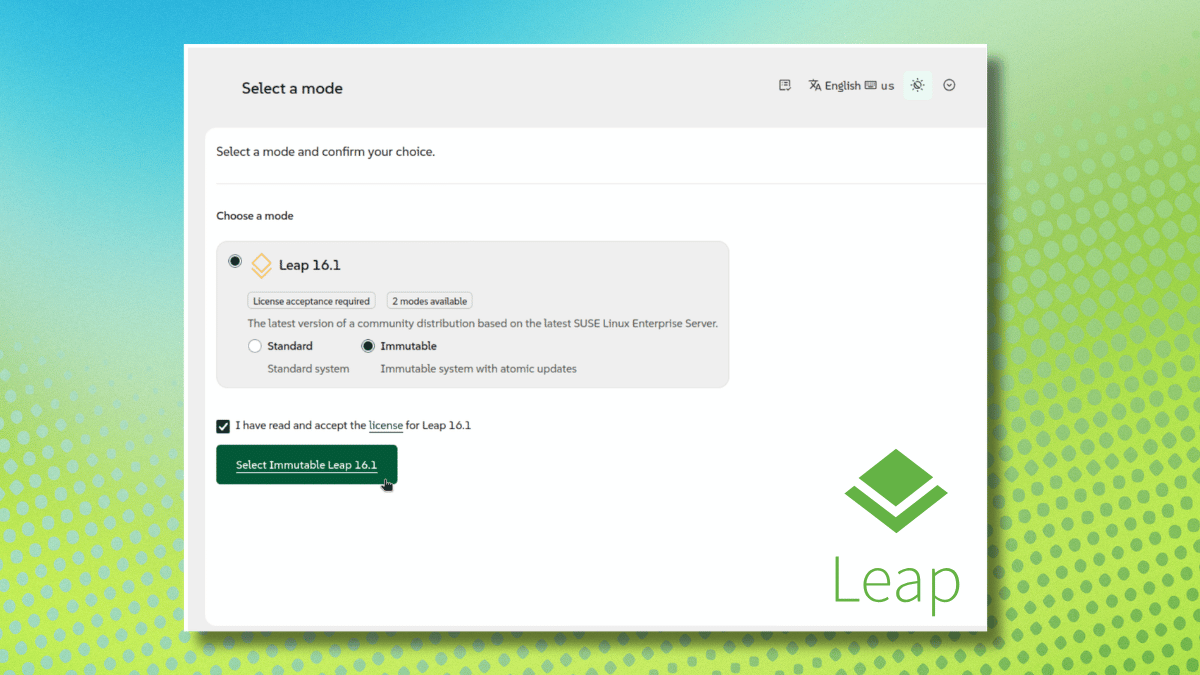
Starting with Leap 16.1, the separate immutable flavor will cease to exist.
California Gov. Gavin Newsom has signed AB 2409, barring California public officials from issuing memecoins and prohibiting companies from listing memecoins that use a public official's image or likeness. Engadget reports: The governor's office pointed to reports that about a million investors lost an alleged $3.8 billion on their purchases of the memecoin released by President Donald Trump in 2025 as a the motivation behind the new rule.
"No official should profit off their office -- and we're putting stronger protections in place to ensure it doesn't happen in our state," Newsom said. The bill also prohibits a company, related or not, from making a memecoin using "the likeness or image" of a public official.
Read more of this story at Slashdot.
Andres Freund has a few claims to fame, but
chief among them is his many years of work to improve the performance of
the PostgreSQL relational database
management system. That work requires working with — or around — many
Linux kernel features and behaviors. He put in an appearance at the 2026
edition of Kernel Recipes
to talk about his experience working with the kernel project, how the
kernel could better support applications like PostgreSQL, and some
interesting developments in the PostgreSQL world.
Security updates have been issued by AlmaLinux (cockpit-image-builder, expat, ipa, kernel, kernel-rt, resteasy, ruby, ruby4.0, ruby:3.3, and ruby:4.0), Debian (dovecot, flatpak, glance, kernel, libdbi-perl, lxml, rsync, swift, and wordpress), Fedora (chromium, freeipa, freerdp, grub2, NetworkManager-iodine, NetworkManager-l2tp, perl-Catalyst-Plugin-Static-Simple, perl-Dancer2, perl-HTML-FormFu, python-quart-trio, python-streamlink, python-urllib3, and vlc), Mageia (libxml2, p11-kit, pam, and php), Slackware (groff and pcre2), SUSE (389-ds, amazon-ssm-agent, erlang27, exiv2, glib2, gnome-shell, hplip, ImageMagick, kernel, libheif, libsodium, libtpms, nodejs16, perl-DBI, python-soupsieve, redis, redis7, swtpm, and wireshark), and Ubuntu (curl, libevent, linux-aws, linux-aws-6.8, linux-aws-5.15, linux-azure-5.15, linux-azure-fde-5.15, linux-intel-iotg-5.15, linux-aws-hwe, linux-azure, linux-azure-4.15, linux-gcp, linux-gcp-7.0, linux-oem-7.0, linux-nvidia, linux-nvidia-6.8, linux-nvidia-lowlatency, and linux-oracle-7.0).
An anonymous reader quotes a report from Ars Technica: The state of Florida is seeking a temporary injunction to stop OpenAI from continuing to develop what it calls a "reckless, unacceptably risky product" without the deployment of "third-party approved safety guardrails." The new legal motion (PDF), filed Monday morning, is part of a civil lawsuit the state of Florida originally filed in June, arguing that ChatGPT represented "a threat to the public safety of Floridians," specifically by preying on vulnerable populations like children and violent or delusional adults. [...] In arguing for this injunction, the state points to the Hugging Face incident as well as recent high-profile misalignment cases involving unintended and unauthorized attempts to access Australian and US government servers. Florida also cites AI industry leaders, including many from OpenAI, in arguing that the AI industry is literally asking for this kind of outside regulation.
The motion points to statements from Paul Christiano, who said on joining the company's board this month that he believes "there is a meaningful risk that rapid acceleration in AI capabilities leads to catastrophic and irreversible loss of control in the very near term." The motion also points to OpenAI's own "An Alien Mind" essay and an open letter from 1,300 AI industry employees, both of which call for enforced slowdowns on frontier AI development, if necessary. Citing laws that allow the state to exercise control over companies that are a "public nuisance," Florida argues that OpenAI is "the greatest public nuisance ever created by the hand of man, capable of laying waste to global civilization." "It is only by the grace of the Almighty that one of Defendants' AI agents hasn't compromised a water supply or shut down a power grid -- yet," the state writes in the motion.
Read more of this story at Slashdot.
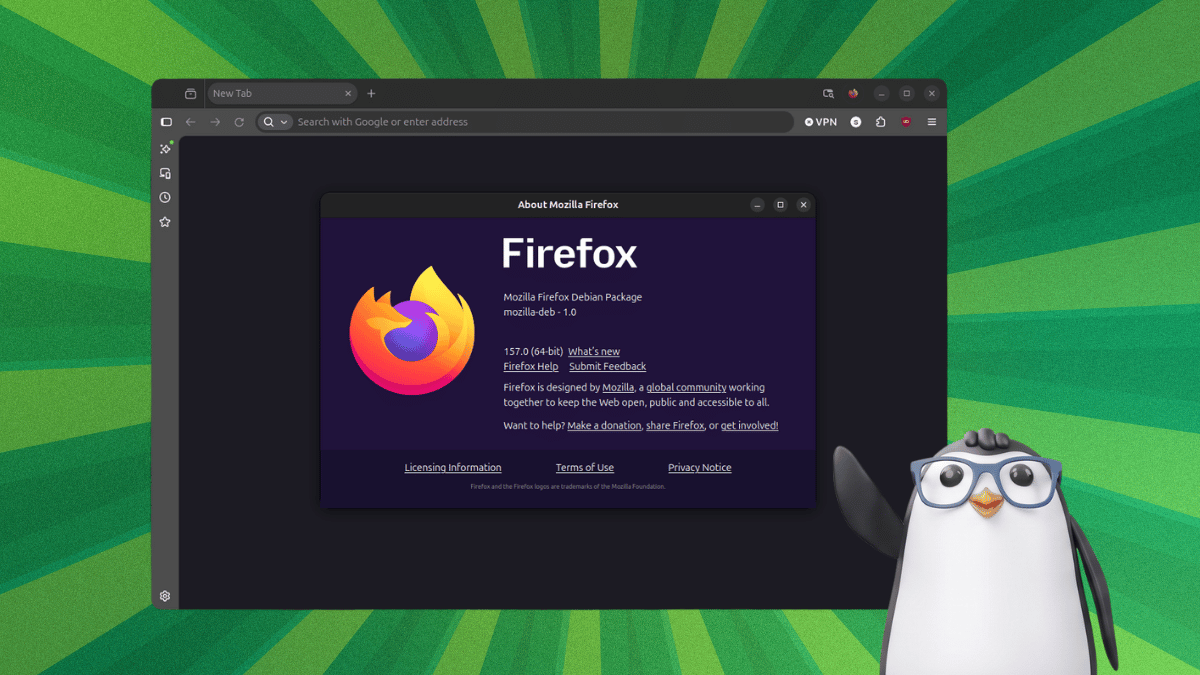
Six months after the mockups leaked, the Firefox 157 release is the one that got it done.
In development the past year has been the Mesa Gallium3D API implemented atop NVIDIA's CUDA driver API. Initially named "CLUDA" and now going by "NOCL", this Mesa code paired with Rusticl is working well for OpenCL atop the NVIDIA proprietary driver as a new compute option...
Over the past year Jay has been in development as a new open-source shader compiler for Intel GPUs. Alyssa Rosenzweig has been leading its development since joining Intel in 2025. For Mesa 26.3 the Jay shader compiler is being enabled by default for modern Intel graphics hardware and is around ~10% faster than the existing BRW compiler code...
As an initiative from NVIDIA for improving the Linux ecosystem outside the world of AI, they have been developing Display-Config-Server as a new solution to help enhance the Linux capabilities for complex display walls...

D7VK is a Vulkan-based translation layer for Direct3D 7, 6, 5 and 3 for use with Wine / Proton, and with version 2.3 out now it's entering maintenance mode.Read the full article on GamingOnLinux.
BPF-based HID drivers have helped to deliver quirks/fixes for different HID devices more quickly than being bound by the conventional kernel cycle. Loading these eBPF programs from user-space have shown a lot of potential for innovating and iterating more quickly with BPF drivers for different subsystems. The latest area now seeing the BPF treatment are display panel drivers...

Are you one of the lucky people who got the new Steam Frame? Having issues streaming with the wireless Dongle? Valve are doing something about it.Read the full article on GamingOnLinux.
D7VK as a Vulkan-based implementation of the Microsoft Direct3D 7 / 6 / 5 / 3 APIs for Linux/Wine (Steam Play) usage is out with version 2.3 and the developer now believing its marking the point that the project is rather mature...

If you're a fan of challenging tower defense games that are a bit puzzling, Jarred Defense is one to stick onto that Steam wishlist you've got growing.Read the full article on GamingOnLinux.
Git 2.56 has been released today as the latest stable update to this free and open-source distributed version control system designed to handle everything from small to very large projects with speed and efficiency.
Following the FUSE improvements in Linux 7.3 for file-systems in user-space, it looks like the upcoming Linux 7.4 kernel will be ready to enable the large folios feature...

The Witcher 3: Wild Hunt — Remastered from CD PROJEKT RED (developed in collaboration with Yigsoft) has now been officially released.Read the full article on GamingOnLinux.
The Igalia consulting firm working with Valve is aiming to improve the Firefox web browsing experience when running on the Steam Deck handheld Linux-powered device...
AMD engineers continue to prepare for upcoming Zen 6 powered Ryzen client processors on Linux...

Bleach & Blood is another interesting retro horror slayer for fans of the PS1 era style, with a demo available to play it right now.Read the full article on GamingOnLinux.
Qualcomm hiring one of Red Hat's top x86_64 Linux laptop experts last year, Hans de Goede, is indeed having a positive benefit on enhancing the Fedora Linux support for Qualcomm Snapdragon X powered hardware...