While Ubuntu 26.04 LTS is working fine out-of-the-box on new Intel Core 3 "Wildcat Lake" laptops like the CHUWI UniBook, next month's release of Ubuntu 26.10 will help deliver better performance out of these low-cost laptop options.
The scheduling of block I/O requests has long
been a challenge for operating-system kernels. For many years, the
performance characteristics of rotating drives meant that putting
considerable resources into request ordering was worthwhile. In a world
with fast, solid-state drives, scheduling is more concerned with enforcing
fairness between competing users while being fast enough to keep up with
drives that can perform millions of I/O
operations per second. The blk-iocost I/O
controller was designed for the solid-state world and generally performs
well, but there is always a desire to do better. This patch
series from Tao Cui aims to make blk-iocost more flexible by enabling
the loading of a BPF program to make cost decisions.

404 Media reports:
Last summer, a cop with the Lake County, Indiana Sheriff's Department used Flock's surveillance search engine to look for a license plate across more than 19,000 cameras in 1,558 cities and towns. The cop's stated reason for the search, according to a record of Flock's system, was "LMAO."
The cop is one of dozens who put gibberish, jokes, or other nonsense into Flock's "reason" box, highlighting the casualness and lack of care some cops have when searching an incredibly powerful surveillance system. This is on top of the thousands upon thousands of cops who simply wrote something like "investigation," "test," or left the box blank as their search "reason," according to a new analysis by the Electronic Frontier Foundation and shared with 404 Media.
EFF's investigation found cops across dozens of jurisdictions writing "LMAO," "LOL," "Hehe," "Haha," "idk," "blah," "TBD," and "robbery I don't remember the case number leave me alone" in Flock's "reason" box for searches.
They found cops writing "idiot," "fuck this new search engine," "dickhead," "shithead," and "WEIRD KID" in the reason box. And they found an entire class of police button mashers, who ran searches for reasons of "asdfg," "gyghkkghghjkghjk," "jhjhjkhj," "jkhhkjhjk," "nmbvcbnm," and so on and so forth. The searches came from police departments across the country from 2023 through late 2025, when Flock changed how the "reason" box in its search system functions...
Each time a search is performed, a record of it is saved in the Flock system, which can be obtained by the public using government records requests. These audit logs show hundreds of thousands of searches of the system; after 404 Media and other news outlets used these types of logs to show police using the Flock system to look for undocumented immigrants on behalf of ICE, a woman in Texas who had an abortion, and protesters, cops were warned by government surveillance centers to be "as vague as permissible" about the reasons for their searches...
A police department said it investigated a cop who wrote "driving around being weird" in the reason field but found it was for "legitimate public safety purposes."
If a police chief "stood in front of a city council and asked for permission to install hundreds of cameras just so his officers could investigate the high crime of 'haha,' they would be laughed out of the room," argues the EFF blog post, calling this proof that agencies can't be trusted to oversee themselves.
But judges aren't being asked to authorize searches or review evidence, which the EFF post argues shows laws and courts haven't caught up yet with a new technology. Whatever auditing happens is clearly "deficient," the EFF warns, and while many jurisdictions require by law an actual reason for searches, "this keeps happening because police use automated license plate readers as a convenient shortcut around constitutional privacy safeguards." The EFF sees police officers "making a mockery of our civil liberties" by logging reasons like "LOL", "LMAO", "sexy", and "idk" while accessing sensitive location data.
In fact, they argue the warrant-less databases fostered a culture of abuse that "allowed police to treat a mass surveillance network like their own personal search engine, permitting the tracking of the movements of everyday citizens for low-level complaints, personal whims, and sometimes, seemingly, for the lols."
Flock Safety claims it has improved its system by requiring officers to select from a dropdown list of crimes before running a search-but that only makes it easier for officers to hide improper searches behind the veneer of uniformity. The system does not require proof that the dropdown reason actually matches the true purpose of the search... Since this update, officers are no longer required to type out why they are digging through a driver's movement history, and instead can select a pre-packaged option like "Traffic infraction" or "Other" in half a second...
Mass surveillance is incompatible with a free society, and especially so when the people with access to this data are treating it like a joke. This ALPR mass surveillance — the indiscriminate, continuous collection and retention of location data on every driver, regardless of suspicion — should not exist. But because it does, EFF continues to urge courts and state legislatures to immediately step in and impose strict, enforceable restrictions to rein in this abuse. At an absolute minimum, this means mandating rigid data deletion deadlines and an ironclad warrant requirement.
If police want the power to track a person's movements, they must be required to convince a judge with evidence and probable cause. They should not be able to bypass the Constitution with a search for "haha."
Read more of this story at Slashdot.
The beta release of Fedora 45 is out today and right on schedule for this wonderful Linux distribution...
The Raspberry Pi Foundation published today a new version of its Debian-based Raspberry Pi OS Linux distribution for Raspberry Pi computers with dock support, a new screenshot tool, and more.
Oracle christened Java 27 today with the OpenJDK 27 release reaching general availability (GA) status...

New for September is the Fanatical "Build your own Play on the Go BundleFest Edition" bundle, with all games being rated Steam Deck / Steam Machine Verified.Read the full article on GamingOnLinux.
PostgreSQL contributor Tomas Vondra has published a blog
post looking at development activity in the project, with data from the late
1990s to today.
We're doing ~50 commits per week, give or take. In ~2010 we were doing maybe
25/week, and the trend seems to be a slow and consistent growth. The monthly
average makes the trend a bit easier to spot. Which is good, although there's a
lot of other important details (size of commits, are they new features or fixes,
...).
It however nicely aligns with the number of active committers, which also
grew ~2x between 2010 and today. So maybe that's working as expected.
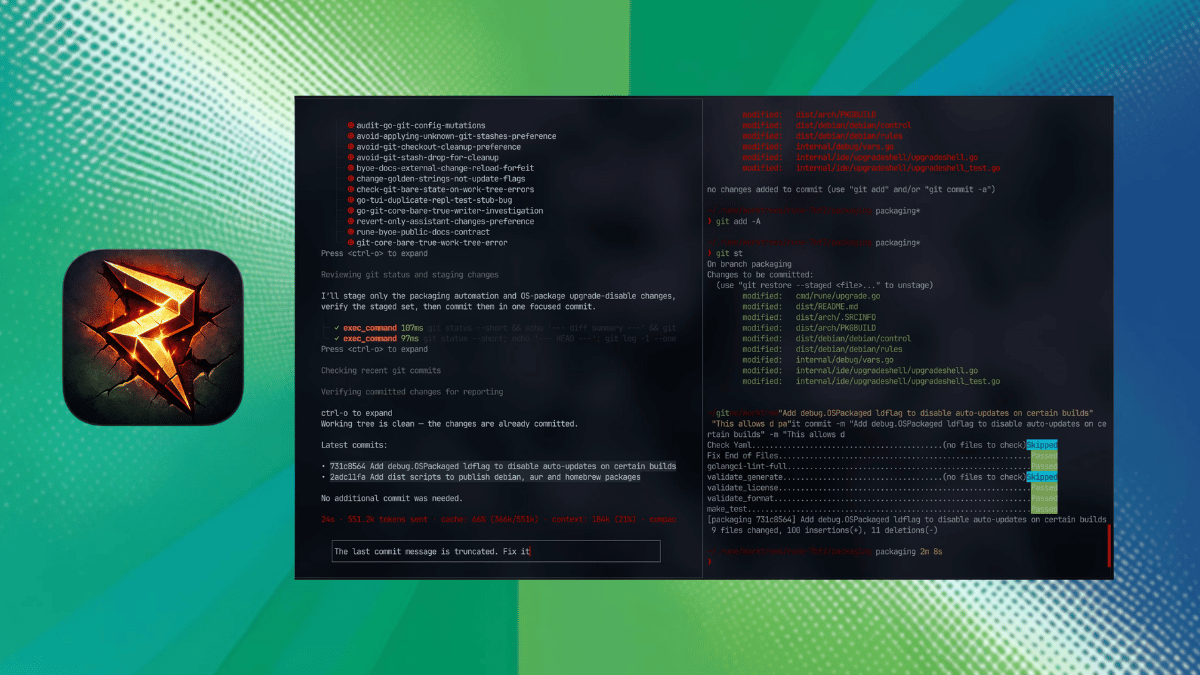
The Go-based IDE is now available under GPLv3, and contributors keep the rights to their work.
Security updates have been issued by Debian (network-manager-l2tp and urwid), Fedora (perl-Dancer2, perl-Data-Entropy, perl-DBI, perl-Protocol-HTTP2, podman-tui, rust-lru, and rust-lru0.16), Mageia (bzip2, cups-filters, libcupsfilters, libssh2, perl-Authen-SASL, perl-HTML-FormFu, tar, unzip, and zip), Red Hat (grafana and image-builder), SUSE (389-ds, acl, attr, apache2-mod_auth_openidc, apr-util, aws-nitro-enclaves-cli, bzip2, c-ares, clamav, cpio, curl, dhcpcd, dovecot23, dovecot24, dracut, emacs, fuse-overlayfs, go1.25-openssl, go1.26-openssl, google-cloud-sap-agent, google-osconfig-agent, govulncheck-vulndb, gstreamer-devtools, gzip, helm, java-17-openjdk, java-21-openjdk, java-25-openjdk, jq, libBasicUsageEnvironment2, libgpg-error, libidn, librest, libusb-1_0, libvirt, LibVNCServer, libzypp, zypper, lkl, mcphost, MozillaFirefox, mozilla-nspr, mozilla-nss, rust-cbindgen, MozillaFirefox, mozilla-nss, mozilla-nspr, rust-cbindgen, MozillaFirefox, MozillaFirefox-branding-SLE, mozilla-nspr, mozilla-nss, rust-cbindgen, msgpack-c, multipath-tools, NetworkManager, openexr, openssl-3, perl-Protocol-HTTP2, perl-URI, php-composer2, postgresql14, postgresql15, postgresql16, postgresql17, postgresql18, python-aiohttp, python-cryptography, python-h2, python-ruff, python-sqlparse, python311, python312, python39.SUSE_SLE-15-SP3_Update, rav1e, rpcbind, sssd, systemd, tomcat, tomcat11, ucode-intel, udisks2, vim, and wicked2nm), and Ubuntu (cgit, dracut, freeciv, konsole, libinput, linux-azure, linux-nvidia-7.0, nginx, vips, and yelp).
Sound Open Firmware as the open-source, vendor-independent audio DSP firmware stack and driver framework is out today with a new feature update...
The Firefox release train keeps on rolling. With Firefox 156 released, Firefox 157 is now in beta ahead of the planned release coming up at the end of September...
Mozilla has published the final builds of the Firefox 156 open-source web browser today, ahead of its official unveiling on September 15th, 2026, so it’s time to take a look at the new features and improvements.
In addition to Usama Arif's recent Linux patches for addressing a major inefficiency within the Linux kernel's Zstd compression code, he also has a separate patch series destined for Linux 7.4 to further enhance the Zstd compression/decompression performance by avoiding redundant initialization...
A new patch series being worked on is enhancing the Linux kernel's hibernation allocator to allow for faster performance when hibernating the system...
The Raspberry Pi Desktop on Raspberry Pi OS has seen a major overhaul to better modernize the desktop computing experience on the ARM64 single board computers...

Khronos Group, who oversee various open standards like Vulkan and OpenGL, have formally opened up a Brussels-based European entity.Read the full article on GamingOnLinux.
A minor reporting issue on Linux that has gone unaddressed until now is for properly conveying the Translation Lookaside Buffer (TLB) sizes on AMD Zen 5 processors...
The New York Post wrote that OpenAI "stunned the mathematics world" last week when it announced its AI model "cracked a legendary math problem left unsolved for nearly a century in just 88 hours."
But a New York University professor "has come forward alleging OpenAI may have copied his work after asking him to collaborate — with one of the company's scientists allegedly warning he might 'ruin his career' if he refused."
[P]rofessor Tristan Buckmaster, a British-Australian researcher who trained in Germany... had been working with Long Island-raised math prodigy Levent Alpöge, a researcher with OpenAI rival Anthropic, on a different elusive fluid dynamics equation, known as the Euler problem, when he found a solution using AI tools from both Anthropic and ChatGPT. He said scientists from OpenAI approached him and tried to convince him to jointly announce the solution, claiming they had independently solved Navier-Stokes. Buckmaster questioned the timing of their finding the solution in a blog post, noting OpenAI had only done so "in the past few days" — after the company became aware of his work. He asked OpenAI experts whether its AI systems used to solve the equation had been "trained on, or had access to" his research, but said they declined to answer, prompting him to wonder how they had advanced toward the solution so quickly. The puzzle is "not the direction one arrives at in a few days," Buckmaster wrote incredulously...
In OpenAI's post on its website sharing the Navier-Stokes proof, which it credited to Astra, the company's latest AI bot, the firm insisted no user data was incorporated into its model to solve the problem. However, it noted that it "cannot rule out" that anonymized data was used to "improve our models."
"We congratulate Levent Alpöge and Tristan Buckmaster on their remarkable mathematical work," OpenAI said in the announcement.
Buckmaster shot back, "Is it ethical to use customer's data to try to scoop their customer?"
Alpöge's affiliation with Anthropic "seems to have been a sore point for OpenAI," writes TechCrunch.
Buckmaster's public statement says the OpenAI's Sebastien "twice asserted that he wanted Levent removed from authorship" and also said that "it was so annoying that Levent works at Anthropic" — but that Buckmaster still refused to remove the Anthropic mathematician's credit.
I said that if OpenAI released its result in the way proposed I would go
public with what happened. The reply was, "Why would you ruin your career?" [OpenAI's Bubeck said later on X that he'd meant unfounded accusations could damage Buckmaster's career.] I replied that I am an academic, and asked why he thought going public would ruin my career. The reply was, "If you don't want me to be nice, then I don't have to be nice."
Buckmaster later told Australia's public broadcaster ABC that the companies building AI "have zero respect for the scientific community. I mean, it's appalling, honestly." But he went on to say AI has made the race to publish mathematical breakthroughs pointless.
"I think it's pointless. Like, I think the game is up...." Professor Buckmaster said he and Dr Alpöge had more research they could publish but questioned the point of racing ahead with it when AI could perform work that had previously occupied researchers for years.
He said there needed to be a discussion about how mathematics should operate in this new environment. Professor Buckmaster said some mathematicians had stopped publicly sharing what they were working on to avoid tipping off AI companies about their plans. He has called on academics and people from OpenAI, Anthropic and DeepMind to discuss ground rules for how they worked together.
He said the companies' power carried responsibilities that went beyond competing to solve problems before their rivals...
Building on the work of mathematicians Diego Córdoba and Luis Martínez-Zoroa, the pair found a solution to the Euler problem, a stepping stone to the Navier-Stokes problem. Professor Buckmaster said he spent weeks checking and improving the "slop" proofs generated by AI...
For now, Professor Buckmaster said he wanted to finish existing work and support his PhD students and postdoctoral researchers, rather than chase another Millennium Prize. "I think it's more important to re-evaluate what math is," he said.
"The New York University professor also warned Australia about the centralisation of resources into the hands of a small number of privately owned foreign companies..."
Read more of this story at Slashdot.
OpenAPV as the open-source reference implementation of the Advanced Professional Video (APV) codec today saw its v1.1.1 release, succeeding v0.3.0 as the prior release...

JUJUTSU KAISEN RUMBLE: SURVIVATON, from the creator of Vampire Survivors and Shueisha Games, has been delayed into 2027 so they can get it right.Read the full article on GamingOnLinux.

Crammed full of what will no doubt be some really interesting looking games, The Triple-i Initiative showcase is back again on October 8th.Read the full article on GamingOnLinux.
Linux Mint previews a new Calendar app, EPUB reader, redesigned Library, and other XApp improvements planned for its next release.

Stock up on some quality VR games for the launch of the Steam Frame, or just bag a good deal for whatever headset you're using with Digiphile's VR collection.Read the full article on GamingOnLinux.

DOOM: The Dark Ages from Bethesda Softworks / id Software is now a fair bit cheaper to grab - permanently.Read the full article on GamingOnLinux.
Ahead of the stable release of Plasma 6.8 due out on 14 October that also marks the 30th anniversary of the KDE project, out today is the much anticipated beta release...

Heroic Games Launcher continues being an essential tool in the box for SteamOS / Linux gamers, with a fresh hotfix release out now.Read the full article on GamingOnLinux.

Valve officially released a new update for the incredible VR game Half-Life: Alyx, bringing support for the Steam Frame in standalone mode.Read the full article on GamingOnLinux.

Valve released two new testing builds with SteamOS 3.8.27 Beta and the much bigger SteamOS 3.9.1 Preview.Read the full article on GamingOnLinux.
Immich 3.2 is out with a redesigned search experience, Search API v2, cross-user face clustering, improved workflows, and a new Memories page.
Reuters reports:
A defense lawyer appealing his client's murder conviction submitted a brief containing made-up police testimony and witnesses fabricated by OpenAI's ChatGPT, New Mexico's highest court said. The New Mexico Supreme Court on Wednesday fined the attorney, Stephen Aarons [for $5,000], and held him in contempt for failing to verify the accuracy of the court filing, which Aarons said he prepared with help from the AI program... and said they will refer him to an attorney disciplinary board for investigation.
Aarons in a statement to Reuters said he had used ChatGPT to summarize the trial proceedings when he agreed to take up the defendant's appeal last year, and did not understand the degree to which AI could "hallucinate" facts. "I am remorseful but hopeful that the disciplinary board takes into account it was an honest mistake," he said.... Dozens of lawyers have been sanctioned for filing briefs where AI made up case citations or misquoted the law. Aarons' filing appears to have gone further, containing fabricated witness testimony in a criminal appeal...
Aarons told the court at an August 21 hearing that he fed a computer-generated transcript and other case materials to ChatGPT, presuming it would generate "a bulletproof summary." The justices sounded incredulous that Aarons was not fully aware of how AI can make mistakes. "Counsel, do you watch the news? Do you listen to the radio? Do you read anything about what's going on in the world?" Justice C. Shannon Bacon said at the hearing. "Because the problem with lawyers relying on AI hallucinations is an above-the-fold story every single day."
"OpenAI did not immediately respond to a request for comment."
Read more of this story at Slashdot.
OpenRGB 1.0 is out with a redesigned profile system, background service support, Qt 6, PawnIO, hotplugging, and expanded hardware support.
GNU Coreutils 9.12 is out with performance improvements for several widely used commands, a new env option, safer terminal output, and many bug fixes.
Reservations are now live for Valve's "Steam Frame" VR headset (with its Linux-based SteamOS and an ARM CPU). "It starts at $1,059 for 256GB or $1,299 for 1TB," reports CNET, "and every purchase includes a copy of Half-Life: Alyx if you don't already own it."
Reservations are open through Sept. 17 at 10 a.m. PT, "with customers randomly assigned a place in line after the reservation window closes."
CNET's editor at large even argues that the Steam Frame "isn't necessarily the future of XR, as much as it's a framework for evolving beyond the present." Their review calls it an "ambitious" VR headset that "feels like an experiment in progress."
The ability to run other apps in windows can make Frame feel, at times, almost like a computer. Linux apps in desktop mode range from Chromium to Firefox to a bunch of other tools. I watched YouTube in one window while playing Portal 2 in other, and started to marvel at how flexible Frame could be. But VR games require a full immersive takeover of the headset... The Steam Frame can convert games intended for both PC VR and even Android APK files, using a conversion tool called Lepton... I haven't sideloaded anything yet, but Steam Frame in theory could be a Rosetta Stone for VR gaming, even tapping into some Android XR titles, but not out of the box...
2D games can be projected onto a near-range or farther-off theater mode screen that can be dragged around, resized and turned into a curved or flat monitor, much like with the Apple Vision Pro, Samsung Galaxy XR or Meta Quest. You can download any game in your Steam library to test, even if it's not technically listed as "Great on Frame" yet...
But the name "Frame" suggests a framework, something Valve's team acknowledged when I spoke to them during my review process... "We want this to be your PC, and people mod it, take it apart, make accessories for it," says Jeremy Selan, a software developer on the Steam Frame team. "We'll be putting out the CAD for all these [Steam Frame] systems. This is entirely based on open-source technology stacks based upon SteamOS. Our hope is that this isn't just one device, that this would be sort of the root of a growing SteamOS ecosystem. It already encompasses gaming and Proton and SteamOS and those Linux gaming capabilities. This is going to lay the foundation for a new sort of evolutionary tree of that, to also bring it into the VR and XR space."
Read more of this story at Slashdot.
Previously Andon Labs handled the hardware and software integration for that AI-powered vending machine that went bankrupt after Wall Street Journal reporters "systematically manipulated the bot into giving away its entire inventory for free". Today they announced "we are opening up the platform we use to run our real-world autonomous businesses for anyone to run their organization on." Specifically they've released Pion, "an agent designed to run any company fully autonomously... Pion lets people hand a business over to persistent agents with access to the tools they need to operate it, including email, phone, banking, browser and secure computing environments." It's a research preview with a waitlist, "to make it possible to run many more real-world experiments across many more domains than we could ever run ourselves."
But for their own latest experiment, Andon Labs' founders "signed a three-year lease on a retail space in SF," Business Insider reported in April, "and gave an AI agent named Luna a corporate credit card, internet access, and a mission to open a physical store." And five months later, SFGate reports that "this market has no one in it and nothing useful to sell."
[T]he inventory is a hodgepodge of white elephant Christmas gifts. It's kinda like the kids section of an art museum's gift shop. Here's a wooden Connect Four set labeled "Four-In-A-Row Set Of Connections," presumably so as not to set off litigation alarms at Hasbro. Here are neatly arranged stacks of random paperback books, Chinese checker sets, mildly fancy soap dispensers, and a frustratingly spare selection of snacks and drinks... I grabbed an Olipop from the store fridge and then approached the counter to buy it from Luna. I wasn't allowed to buy the soda from [human clerk] Felix, even though that would have been both faster and normal. Instead, Felix instructed me to pick up a telephone receiver that was resting on a flexible sculpture of a wooden hand.
"Hello?"
"What are you looking to purchase today?" Luna asked.
"I'm buying a classic root beer Olipop."
"I'm sorry," Luna said, "we don't sell lollipops here."
"No, Luna. It's an Olipop, not a lollipop. It's the soda."
"Oh! My bad...."
Luna processed my Olipop purchase through its system, had me tap to pay, and that was that. Again, it would have been easier to buy this from a human, and interacting with Luna was really just like ordering from an iPad kiosk, only more labor intensive...
[T]here's a series of monitors set up inside of Andon Market that display all of the store's sales down to the exact dollar. Luna was given $100,000 to work with when this place opened. That number is now down to $60,000, its revenue lagging far behind the AI token cost to operate... Luna can't turn a profit, doesn't sell anything people want, and still needs human beings to rubber stamp any "decision" it makes. My science background ended somewhere around freshman year of college, but even I know when an experiment hasn't been set up to yield proper results.
"Luna" is powered by Claude, the article points out, running a store in a good location for foot traffic, "but no one else was in the store when I first walked in on a sunny weekday afternoon."
SFGate also reports that last month Luna had to fire one of its employees "for being late to work, abandoning their post once they got there, and charging snacks to the store's credit card."
Human clerk Felix Carson admits "It's almost like I'm running the store, and then there's an AI that has a checklist," in an article in
IEEE Spectrum:
Luna, the AI manager, keeps track of deliveries and communicates with vendors, while Carson and his coworkers handle the physical work. When Luna tells Carson to check something in the back, he sometimes ignores it because he doesn't want to leave the sales floor unattended. Luna also repeatedly spots a built-in electrical cover in photos of the floor, mistakes it for a loose coaster, and asks Carson to remove it. Even so, Carson calls Luna a "decent manager," praising its flexibility when employees need time off.
When Felix spoke to IEEE Spectrum, "he was about an hour into his shift. Two customers had come in. Neither bought anything, although both left with free pins and stickers."
Read more of this story at Slashdot.
Pádraig Brady has announced
GNU Core Utilities (coreutils) version 9.12. "There have been 288 commits by
16 people in the 21 weeks since 9.11". New features include an -A
option for uname
which labels all output, as well as adding awareness of the failfs and nullfs filesystem types to stat
and tail.
There are many bug fixes in this release as well, including one for a bug "present
in 'the beginning'" that caused some utilities to fail when traversing
hierarchies if files are being removed in parallel.
AMD engineers today sent out patches on the Linux kernel mailing list for beginning to enable Enhanced SMT Protection "ESMTP" for better security with virtual machines running atop EPYC server processors with SEV-SNP...
GNU Coreutils 9.12 released today with a mix of fixes, some new options, and various performance improvements to these widely-used set of core system utilities...

Valve today finally announced the price of their new VR kit the Steam Frame with SteamOS Linux, and it's actually not as bad as I expected.Read the full article on GamingOnLinux.
Valve just announced their long-awaited Steam Frame headset is now available...
Navidrome 0.64 introduces an experimental Jellyfin Music API, a new artwork pipeline, playlist favorites, natural sorting, and new themes.
"Californians just made it through the hottest August on record without having to endure any rolling power outages," reports the Los Angeles Times. In fact, the state hasn't implemented rotating power outages since 2020.
Because "Over the last few years, California has quietly but dramatically increased the resiliency of its electrical grid through a significant expansion in battery energy storage."
These batteries hold onto solar energy captured during the day, so it can be sent to the grid as demand peaks in the evening and morning, when most people are at home running air conditioners and other appliances.
During the August heat wave of 2020, the California Independent System Operator, which manages the flow of electricity for most of the state, declared a Stage 3 Emergency and hundreds of thousands of households lost power in rolling outages. At the time, the system had less than 100 megawatts of battery storage available, according to system spokesperson Jayme Ackemann. Today, it has more than 17,000 megawatts available....
According to Ackemann, the system seeks to add 20,000 to 25,000 megawatts of battery storage capacity by 2045 — the same year it has set a goal of achieving carbon neutrality. That means the state would remove as many carbon emissions from the atmosphere as it emits.
In recent years, California has steadily grown the share of electrical power generated by renewable sources — such as solar, wind, geothermal and hydropower — which bolstered the resiliency of the grid by increasing the overall amount of energy available. An uptick in people installing rooftop solar panels has provided an additional power boost, Ackemann said. In May, California became the first known large-scale power system in the world to have relied on more than 50% solar power for an entire month.... California's grid is also now integrated with electrical systems across much of the Western United States. This means that if there is an extreme heat event in Southern California, energy from a cooler area such as the Pacific Northwest can be imported to help meet regional demand. All of this has collectively helped the state's electrical system weather this year's long-lasting heat.
"Southern California continued to break temperature records this week when Long Beach and Anaheim reached a blistering 107 degrees and Escondido hit 112 degrees..."
Read more of this story at Slashdot.
While the Rustls modern TLS library is written in the Rust programming language with a focus on memory safety, as we've seen out of other Rust project re-implementations in the past, the new implementations can lead to other security bugs of their own. Out today is Rustls 0.23.45 to fix a security issue introduced back in 2024 with Rustls while the likes of OpenSSL, BoringSSL, and others are unaffected...
What is it like to be a Debian Project Leader (DPL), or a former one?
According to Andreas Tille, who stepped down this year after two consecutive
terms as DPL, you'd have to be one to know. At the recent MiniDebConf in Winterthur,
Switzerland, Tille spoke about what he learned while serving as DPL, some of
the initiatives he led, mistakes that he made, and his thoughts on the general resolution (GR) on large
language model (LLM) usage in Debian.
Sean Whitton has announced
that the original fix for an arbitrary code execution flaw in Emacs (CVE-2024-53920) was
incomplete. Bas Alberts discovered that viewing or editing untrusted files in
modes other than Emacs's Lisp mode can also result in arbitrary code
execution.
This problem affects all Emacs versions affected by CVE-2024-53920.
This means Emacs 24 and newer, and possibly also older versions.
A minimal fix, attached, is queued up for release with Emacs 31.2.
We (the Emacs upstream maintainers) don't expect to backport the fix to
older Emacs releases ourselves.
LWN covered the original
vulnerability in December 2024.
Mozilla today published their Firefox 156.0 release binaries ahead of the official Tuesday announcement...
Linux 7.1 brought some performance improvements for Intel Core Ultra Series 3 "Panther Lake", Linux 7.2 enhanced the performance for the integrated Arc B390 Xe3 graphics, and now for the in-development Linux 7.3 kernel are various performance improvements at large. Today's article is looking at the performance of the in-development Linux 7.3 kernel compared to Linux 7.2 stable using the Core Ultra X9 388H within the Framework Laptop 13 Pro.
We tested every major Linux window manager for 2026, from i3 to Hyprland and the trending Niri. Pros, cons, and setup tips inside.
The Linux kernel is going to see the removal of a number of recently deprecated ARM 32-bit platforms. Following the deprecation in Linux 7.3, removing the old ARM platforms will lighten the kernel by around 55k lines of code. But removing now unused drivers only relevant to those platforms will mean roughly a quarter million lines of code can be removed from the kernel source tree...

Some more RTS goodies are coming with Tempest Rising: The Veti's Wrath DLC arriving September 29th, and everyone can play the Veti free in multiplayer.Read the full article on GamingOnLinux.
Security updates have been issued by AlmaLinux (389-ds-base, apr-util, coreutils, freerdp, git-lfs, glib2, gstreamer1-plugins-base, kernel, libkcapi, nginx, nodejs:22, nodejs:24, osbuild-composer, perl-YAML-Syck, postgresql16-postgis, ruby, ruby4.0, ruby:3.3, and vim), Debian (jbig2dec, kamailio, nginx, spip, and xorg-server), Fedora (baresip, bind, bluez, bubblewrap, chirp, chromium, cockpit, composer, corosync, darktable, dokuwiki, elixir, exiv2, expat, firefox, freerdp, freerdp2, gdk-pixbuf2, gegl04, golang-x-perf, grpcurl, kernel, kernel-headers, libevent, libmongocrypt, libpcap, libre, libsoup3, memcached, mingw-expat, mingw-openexr, mongo-c-driver, mrtg, nagios-plugins, nsd, nss, openssl, openvpn, PackageKit, pdns-recursor, perl-Net-OAuth, perl-XML-Bare, php-pecl-mongodb2, python-asteval, python-pip, rclone, rest, rust-hickory-net, rust-hickory-proto, rust-hickory-resolver, rust-ppmd-rust, rust-webbrowser, srt, syncthing, tar, tkimg, and valkey), Gentoo (Chromium, Google Chrome, Microsoft Edge, Opera, Vivaldi and Ruby), Mageia (bind, ffmpeg, glibc, java-17-openjdk, java-21-openjdk, librabbitmq, perl-Catalyst-Plugin-Static-Simple, perl-Imager, tor, and xz), Oracle (389-ds:1.4, ansible-core, apr-util, coreutils, freerdp, git-lfs, glib2, gstreamer1-plugins-base, gzip, httpd:2.4, image-builder, java-21-openjdk, kernel, mrtg, nginx, osbuild-composer, perl-DBI, postgresql16-postgis, python-lxml, python3.12-lxml, redis:6, and vim), SUSE (389-ds, ansible-core, ansible-creator, azure-storage-azcopy, cargo-audit, chromedriver, chromium, clamav, containerized-data-importer1.65, containerized-data-importer1.66, curl, dracut, ffmpeg-4, google-guest-agent, google-osconfig-agent, helm, java-1_8_0-ibm, jupyter-nbconvert, kernel, libpng16, libusb-1_0, libvirt, multipath-tools, NetworkManager, opensc, openssl-3, perl-Authen-SASL, perl-HTML-FormHandler, perl-Mojolicious, perl-Protocol-HTTP2, python-jwcrypto, python-sqlparse, python-tornado6, python313-geopy, python313-modelscope, python313-modelscope-hub, python313-pypdf, python315, rpcbind, sshamble, strongswan, tomcat, ucode-intel, and wget), and Ubuntu (civetweb, ffmpeg, and urwid).
Greg Kroah-Hartman has announced the 7.2.6,
6.18.52, 6.12.110, 6.6.157, 6.1.188,
5.15.221, 5.10.270 stable kernels.
According to
Kroah-Hartman, this batch may set a record for the number of patches with
more than 9,000 in total between them. There are more than 1,800
patches in 7.2.6 alone. Users of these kernels are, of course, advised to
upgrade.

A PC is never truly a gamer PC unless it has some fancy RGB lighting right? Now easier to control than ever with OpenRGB 1.0 released.Read the full article on GamingOnLinux.
Catch up on the latest Linux news: Debian 13.7, Ubuntu 24.04.5 LTS, KaOS 2026.09, COSMIC Desktop 1.8, Noctalia 5.1, Jellyfin 12.0, Linux Mint is getting new apps, and more.

openEuler is an open-source project incubated and operated by the OpenAtom Foundation. The community is expanding international collaboration through local user groups, industry partnerships, and participation in global open-source events.
Nearly 1900 Blizzard Entertainment workers "voted to ratify their first union contract with parent company Microsoft after over two years of bargaining," reports Kotaku, "consolidating Blizzard's many smaller unions into three larger bargaining units."
The workers now gain new protections "on issues such as generative AI, crediting, remote work, and layoffs."
[The contract] acknowledges that AI tools "may be useful in the game development process to support human judgment and creativity and that AI-assisted workflows remain subject to appropriate human control and review for accuracy and quality." But it also stipulates that any implementation of AI technology that would materially impact work performed by union employees must have its impacts bargained over before it can be implemented.
Other sections cover issues such as crediting (guaranteeing that current and former employees are credited by name in all games they work on) and remote work (designating certain roles as hybrid in-office and providing procedures for individuals to apply for their roles to be fully remote). It also contains a lengthy section on how layoffs may be conducted, including a required 60-day notice period (or pay in lieu of notice), a guarantee of one week of severance for every six months of employment, and 14 months of recall rights. The contract also guarantees successorship, meaning if Blizzard is ever acquired by another company, the contract would remain intact.
"Workers also contractually locked in their current hybrid work schedule," reports the gaming news site Aftermath, "meaning that Blizzard can't suddenly change it, as has been a labor-unfriendly trend in the games industry over the past couple years."
Fully remote workers scored a big win as well. "I'm remote, and we grandfathered everyone who is remote to stay remote, so we can't be magically called to an office that we've never worked at before," [said Diablo senior environment artist Mahreen Fatima].
And "The contract also elevated pay floor," reports the Yakima Herald-Republic. "Across the board, workers secured a 1.25% pay increase, but some workers who were paid below $50,000 per year will walk away with pay increases that are as much as 34%."
Read more of this story at Slashdot.
The latest upstream file-system to be removed from the mainline Linux kernel is... BFS...
Earlier this month I wrote about a patch series posted to the Linux kernel mailing list that addressed a lot of "hideous code" to make Linux kernel builds faster. A number of single-threaded bottlenecks were tracked down and fixed within the Linux kernel thanks to the assistance of AI. A second revision of those patches hit the mailing list this morning and there is hope they could be upstreamed for Linux 7.4...

The September 13th update for the popular Bazzite Linux is out now, bringing with it some excellent sounding improvements for handheld and desktop gamers.Read the full article on GamingOnLinux.
Being merged after yesterday's Linux 7.3-rc3 release was an important fix for addressing a silent, user-space data loss bug that has existed in the kernel the past three years...

Transport Fever 3 from Urban Games and Paradox Interactive has a new gameplay overview to check out ahead of the release this month.Read the full article on GamingOnLinux.
Shelly 3.1.4 improves its native Arch package builder with better PKGBUILD handling, AUR cache cleanup, and improved package reviews.

Respect The Horde is coming from GFX47 (No Plan B, GLADIABOTS) as a curious mixture of top-down zombie shooting, with tower defense and extraction mechanics.Read the full article on GamingOnLinux.

A blast from the not so distant past, Robot Roller-Derby Disco Dodgeball is a highly rated multiplayer game that just had a huge surprise update.Read the full article on GamingOnLinux.

The King is Watching from Hypnohead and tinyBuild has a major new update out with Steam Deck and gamepad support.Read the full article on GamingOnLinux.

Wave-based tower defence with juicy visceral combat - Fangstorm looks like a lot of fun. Getting some Orcs Must Die! vibes from this one.Read the full article on GamingOnLinux.