
An anonymous reader quotes a report from Wired: Michele Spagnuolo, the Google engineer arrested in May by U.S. authorities for alleged insider trading on Polymarket, is making a new bold bet. On Wednesday, his legal team filed a motion to dismiss the charges against him. Spagnuolo isn't outright denying that he made money using internal information from Google. Instead, his legal team says that the wagers were not financial instruments subject to regulation by the United States' Commodities Exchange Act but rather good old-fashioned international betting that the U.S. has no authority over.
Spagnuolo, who has been placed on leave from Google, is accused of committing commodities fraud, wire fraud, and money laundering. Using the alias "AlphaRaccoon," he allegedly made a series of wagers on Polymarket's flagship platform that resulted in profits totaling over $1.2 million. According to the criminal complaint, "AlphaRaccoon" correctly wagered that the singer D4vd, who gained notoriety for his suspected connection to a grisly killing, would be Google's most-searched person of the year in 2025. (D4vd was later charged with murder; he pleaded not guilty.) [...] Spagnuolo's lawyers argue that defining swaps to include wagers like who the most-searched person on Google will be each year "would fly in the face of the statute's purpose and history" and lead to "absurd results." They say it would make it so that any wager in the world, from a charity raffle to a local Ping-Pong match, could be classified as a financial instrument. "Spagnuolo is basically making the same argument as the states that are suing prediction markets," says a financial services regulation expert Todd Phillips. "This is the issue that will likely go up to the Supreme Court."
Featured Video
In addition to disputing the idea that prediction markets offer swaps, Spagnuolo's legal team argues that the U.S. government had no jurisdiction over him in the first place because he's a non-U.S. citizen who was wagering on a non-U.S. platform. Although Polymarket is headquartered in New York, the company's flagship prediction market is banned in the United States and technically is administered by an ostensibly Panama-based entity known as Adventure One QSS. Spagnuolo was living in Zurich, Switzerland, when he allegedly made the Google-related trades on Polymarket. "The extraterritorial argument is interesting and raises the question of whether the U.S. should be the world's prediction markets cop," Philipps says. Spagnuolo's team also claims that the charges should be dismissed because the internal information he supposedly leveraged did not have any commercial value to Google.
Read more of this story at Slashdot.
Tiered-memory systems are built with multiple types of memory, each of
which has different performance characteristics. In addition to the usual
DRAM, a tiered system might also provide faster high-bandwidth memory or
slower CXL memory. On these systems, the placement of memory allocations
has a significant effect on the performance that a workload will obtain.
While work on tiered-memory improvements has been ongoing for years, it
feels like the pace has slowed a bit recently. Even so, there are a few
efforts underway, but they are facing questions about whether the tiering
design makes sense.

The itch.io app has been upgraded with some very useful additions, that make using it actually a whole lot nicer.Read the full article on GamingOnLinux.
Version
4.0 of the Audacity audio editor has been released. Notable changes in this
release include a rewritten interface using Qt, ability to save user-interface
layouts as "Workspaces", improvements in working with audio clips, and a new
.aup4 project format.
The release is not fully feature-compatible with the Audacity 3.x
series; see the compatibility
notes for a list of missing features.

METRO 2039 from 4A Games now has a firm release date of February 4th, 2027. On top of that we have some fresh footage of it.Read the full article on GamingOnLinux.

A faster Firefox is a better Firefox.
Security updates have been issued by AlmaLinux (freerdp, go-fdo-server, golang-github-openprinting-ipp-usb, kernel, kernel-rt, nodejs:24, perl-DBI, and php), Debian (firefox-esr, libapache2-mod-auth-openidc, and libass), Fedora (dracut, exiv2, firefox, freerdp, gvfs, mingw-expat, mingw-gstreamer1, mingw-gstreamer1-plugins-bad-free, mingw-gstreamer1-plugins-base, mingw-gstreamer1-plugins-good, mingw-openexr, nss, proftpd, and syncthing), Mageia (apr-util, bubblewrap, libalsa2, libarchive, perl-Net-OAuth, perl-Text-CSV_XS, perl-XML-Bare, and perl-YAML-Syck), Oracle (freerdp, gimp, golang, iperf3, nginx:1.24, nodejs:22, nodejs:24, pipewire, wget, xmlrpc-c, and xorg-x11-server-Xwayland), SUSE (apache2-mod_auth_openidc, apptainer, apr-util, bzip2, c-ares, cosign, dhcpcd, dovecot22, emacs, erlang, gegl, gopass, gzip, httpcomponents-client, incus, kernel-devel, libgpg-error, libsoup2, mozillafirefox, mozilla-nss, mozilla-nspr,, MozillaFirefox, mozilla-nss, mozilla-nspr, rust-cbindgen, nodejs20, orthanc, orthanc-authorization, orthanc-postgresql,, postgresql14, python-cryptography, python-msgpack, quagga, snpguest, snphost, texlive, tuxguitar, udisks2, vim, wget, and yast2-users), and Ubuntu (apr-util, biosig, linux, linux-aws, linux-azure, linux-azure-fips, linux-fips,
linux-hwe-5.4, linux-ibm, linux-ibm-5.4, linux-iot, linux-kvm,
linux-oracle, linux-raspi, linux-raspi-5.4, linux-xilinx-zynqmp, linux-aws-5.15, linux-gcp-5.15, linux-oracle-5.4, sssd, and tika).
Being worked on for over two years has been the latest attempt for async device shutdown support for Linux for getting Linux systems -- especially servers with lots of hardware like many NVMe drives -- to shutdown faster. That work is now up to its 21st version as it works toward hopefully making it to the mainline kernel in the not too distant future...

Internal Slack messages show the CEO and cofounder gave staff two very different explanations for the decision.
This is your friendly reminder that the Linux 7.1 kernel series has reached the end of its supported life and that you should consider upgrading to Linux kernel 7.2 as soon as possible.
Following rumors in recent days of NVIDIA courting Hugging Face, it's now been officially announced that NVIDIA is acquiring Hugging Face...
While Rust programming language use may help with memory safety and other security advantages, the default Linux kernel configuration is now losing randomization of sensitive kernel structures if Rust support is present...

Just announced by Aggro Crab (PEAK, Another Crab's Treasure) is the insanely cool looking Rebounder.Read the full article on GamingOnLinux.

Stories of Somnia has a really fun style and an interesting mixture of game mechanics that blurs the line between different genres and now you can try it.Read the full article on GamingOnLinux.
BrianFagioli writes: Perplexity has built a local artificial intelligence engine designed specifically for Apple silicon and the Qwen3.6-35B-A3B model. Called Lily, the engine uses a Rust runtime and custom Metal kernels, with neither PyTorch nor MLX in its execution path. Perplexity says Lily averaged 23 percent faster prompt processing and 35 percent faster token generation than MLX-LM on an M5 Max MacBook Pro with 128GB of unified memory. Lily is more specialized than MLX-LM, which supports a much wider range of models and architectures. Perplexity says it plans to release Lily as open source, but the code is not available yet, leaving its performance claims dependent on internal testing for now.
Read more of this story at Slashdot.

Infinity Bounce is a fresh reveal from Stray Fawn Studio (The Wandering Village, Dungeon Clawler) that has you turn a galaxy into a chaotic pinball machine.Read the full article on GamingOnLinux.

I love discovering new games, especially when they look as fascinating as the roguelike Rangedrifter.Read the full article on GamingOnLinux.
The longtime Audacity open-source audio editor had been using wxWidgets for years but with today's Audacity 4.0 release they have transitioned to using the Qt6 toolkit...
As a follow up to last month's article about patches being posted for enabling "-mcpu=native -mtune=native" support for RISC-V with the GCC compiler, that code is now merged for what will become the GCC 17.1 release in the early months of 2027...

Originally released back in 2006 for the Xbox 360, the classic JRPG 'Blue Dragon' can now be played on PC thanks to the re:Blue project.Read the full article on GamingOnLinux.
InputPlumber is the open-source router and remapping daemon for Linux that is particularly popular among Linux gaming handhelds for combining multiple input devices and translating actions into various virtual device formats. InputPlumber supports emulating mouse, keyboard, ad gamepad inputs. With the new InputPlumber 0.79 release there is expanded hardware support and bug fixes...

Nighthawks from developer The Curiosity Engine and publisher Wadjet Eye Games looks really interesting and it's now set for release on September 22nd.Read the full article on GamingOnLinux.
Mozilla Thunderbird 155 improves Exchange account setup, expands custom OAuth support for IMAP and SMTP, and delivers a broad set of fixes.

Star Wars: Episode I – The Phantom Menace, the video game from 1999 is a bit of a blast from the past and now kept alive by OpenPhantom.Read the full article on GamingOnLinux.
"Enshittification of car controls [is] rapidly accelerating," writes longtime Slashdot reader sinij, pointing to a new report from Car and Driver. From the report: Remember when iPhones used to come with free headphones and a phone charger (including the wall plug)? It didn't feel so much like Apple giving you free goodies as it did that the company was providing you with the relevant hardware to use the device. Apple stopped including headphones and charging blocks in 2020. Now, Hyundai is pulling some of its standard hardware from the box, at least for two models.
Hyundai is charging customers extra for a driver's display in the new Elantra generation (more specifically, the Korea-market Avante), as well as the Ioniq 3, Motor1 reported. Both models feature Pleos Connect, Hyundai's new infotainment setup that pairs a center touchscreen with a slim 9.9-inch instrument cluster mounted above the dashboard -- except where it doesn't.
In its domestic market, the instrument cluster screen is offered as a 350,000 won ($255) option for the base trim. Not the most expensive optional extra in the world, but still kind of a slap in the face for a feature traditionally viewed as standard fare. Things are more expensive for the electric Ioniq 3. In the EV's case, the base trim gives customers the full Tesla-screen experience, meaning if customers want the driver's display, they'll need to fork over the additional $5000 necessary to move up to the next-level trim. [...] Hyundai plans to have the setup equipped in 20 million cars globally by the end of the decade.
Read more of this story at Slashdot.
Makerfabs has showcased an nRF52840 development board combining Bluetooth connectivity with a DW3000-series ultra-wideband radio for ranging and positioning applications. The board includes a 1.3-inch OLED display, dual USB Type-C connections, LiPo battery support, a fuel gauge, and expansion headers, while accompanying Arduino examples cover single- and multi-node UWB ranging. The board is based on […]
We get mail: A reader recently suggested we take today's Distro of the Week - Fluff Linux - on a test drive, and we obliged. This American distro based on Arch Linux with the KDE Plasma desktop environment did not disappoint, and was impressive on several levels.
An anonymous reader quotes a report from The Guardian: Global heating will reach at least 1.8C under even the most optimistic future, well beyond the Paris agreement goal of 1.5C, according to a UN report that warns every fraction of temperature rise intensifies destructive extreme weather, glacier melt, ecosystem loss, and island and coastal city submersion. The report by the Nairobi-based UN Environment Program confirmed overshooting the 1.5C goal inscribed in the landmark Paris agreement of 2015 was now "unavoidable" and, despite some progress in addressing the human-caused climate crisis driven by burning fossil fuels, likely in the next few years. It said: "There are no good outcomes above 1.5C."
Heating of up to 3C above preindustrial levels could lead to glaciers losing more than a quarter of their mass by 2100, raising sea levels by up to 13cm. Global food production could decline by up to 14% by 2050 if there are not effective strategies to adapt. Human health, water supplies, nature, cities, infrastructure and economies could all be severely damaged. Some losses would be irreversible. Many communities may have to relocate or change their livelihoods. The report said the best hope for humanity to limit damage was to adopt an "overshoot, peak and decline" pathway that required immediate and sustained greenhouse gas emissions cuts combined with steps to remove carbon dioxide from the atmosphere.
It described the goal of net zero emissions -- increasingly politically contentious in some countries -- as "an essential milestone that cannot be skipped" and stressed carbon dioxide removal through steps such as establishing vast new forests must occur alongside, not as an alternative to, deep cuts in fossil pollution. Crucially, the authors of the report, titled Limiting Overshoot, said the average global temperature could be returned to 1.5C this century only if heating stayed below about 1.8C. They warned nature's capacity to store carbon was uncertain and would shrink the more the planet heats. [...] The report's authors cited earlier work that found limiting heating to about 1.8C required global emissions to be halved by 2035. They said existing national policies were projected to lead to at least 2.3C heating, but it would still be possible to limit stay below 2C if countries delivered on net zero emissions commitments by mid-century.
Read more of this story at Slashdot.
Lemonade 11.9 is out today as the newest feature release to this AMD-backed, open-source local AI server solution across Linux, Windows, and macOS. Lemonade has long been focused on offering "100% free and private" AI use with local hardware whether it be GPUs, CPUs, or NPUs. With Lemonade 11.9's release today it's very interesting for having experimental ROCm HRX back-end support with Llama.cpp. HRX is the new exciting thing to watch out for on the AMD ROCm compute landscape...
Inside this week's LWN.net Weekly Edition:
Front: Python JIT; rnull block driver; steal time; GNOME governance; 7.3 merge window; LUKS.
Briefs: Kernel infrastructure; Debian AI; Dolphin 26.08; Firefox 155; Incus 7.4; OpenShot 4.0; Quotes; ...
Announcements: Newsletters, conferences, security updates, patches, and more.
Boardcon’s CM311Y3 system-on-module and accompanying Idea311Y3 development board are based on the Amlogic A311Y3 processor. The platform provides an 8-TOPS NPU, up to 16GB of LPDDR5/LPDDR5X memory, PCIe 3.0 storage expansion, dual Gigabit Ethernet, HDMI input and output, and multiple MIPI camera and display interfaces. The Amlogic A311Y3 integrates two Arm Cortex-A78 cores running at […]
The FCC is proposing (PDF) a public "robocall mitigation scorecard" that would grade phone companies on how well they block illegal spam calls while avoiding false positives on the legitimate ones. "The Scorecard will empower consumers and encourage providers to continue to combat illegal robocalls by providing the public with an assessment of the effectiveness of voice service providers' efforts to protect consumers from illegal robocalls," the FCC Consumer and Governmental Affairs Bureau said in a public notice. Ars Technica reports: The scorecards could include call-blocking statistics along with data on customer complaints and enforcement actions. The FCC said scorecards could grade providers on a number scale, with letter grades, or by classifying providers as low risk, medium risk, or high risk. The proposed tool would rate wireless, wireline, and VoIP providers on efforts to block robocalls and their "actual results in protecting [consumers] from illegal robocalls," the FCC said. "In practice, that means moving beyond a simple administrative checklist (i.e., did the provider file the right paperwork, did they offer the right tools) and toward a composite set of metrics that reflects both operational practices and measurable outcomes, including how often legitimate calls are blocked."
Whether the tool is useful for consumers will depend on how it's designed, how easy each provider's scorecard is to find, and what data sources it relies on. The proposed scorecard would apply to domestic voice service providers with retail customers, but not telcos that operate solely as wholesale or intermediate providers. "Combatting the scourge of illegal robocalls remains the FCC's top consumer protection priority... As proposed in today's public notice, the FCC aims to develop a scorecard that will give consumers more information about the measures providers are taking to fight illegal robocalls, and it will also incentivize providers to improve their efforts," FCC Chairman Brendan Carr said in a press release.
Read more of this story at Slashdot.
Want AI-generated cover art for your ebook? Calibre now offers it, along with a substantial collection of less controversial improvements for Kobo users and readers.
1Password is facing customer and internal employee backlash after pledging $300,000 to support a Linux distro created by David Heinemeier Hansson, who has regularly published racist and anti-immigrant rhetoric. "The popular password manager is now a 'distinguished corporate patron' of Omacom, the nonprofit foundation that oversees a popular Linux distribution known as Omarchy," reports The Verge. From the report: One viral blog post declared that 1Password "Supports the Ethnic Cleansing of Europe" because of the donation. Others on social media asked for suggestions for alternative password managers so they would not support the funding of a project from Heinemeier Hansson, better known as DHH. The donation has also resulted in internal pushback from employees of 1Password who are disappointed by the affiliation, The Verge has learned. 1Password CEO David Faugno and cofounder Roustem Karimov have since posted internal messages addressing what Faugno describes as "concerns, both internally and externally" that have been raised "due to the polarizing nature" of DHH.
DHH is a Danish entrepreneur best known for creating Ruby on Rails, Basecamp, and the Hey email client. Omarchy is DHH's "opinionated" version of Linux, meaning it's Linux the way he likes to use it. It's based on Arch Linux, with certain apps that install by default. It's also, apparently, one of 1Password's big customer environments. [...] In an internal Slack message obtained by The Verge, 1Password's Karimov downplayed the overtly racist comments from DHH, telling staff the following: "As I said, people have different personal opinions. You believe in your heart that DHH is evil, that you have the moral high ground, and that nothing will change your mind. However, not everyone believes that. It is not fair to claim a monopoly and ostracize team members who might disagree with you. There are people who are afraid to speak up simply because they will be personally attacked."
1Password CEO Faugno took a different approach, trying to reassure staff that "1Password does not endorse hateful, dehumanizing, or exclusionary views, including those shared publicly by DHH." Nonetheless, it seems the company has sacrificed a moral position for a "mission-driven" position. In the same message to staff, Faugno says "the scale and growth of [Omarchy's] use among our customers is significant -- Omarchy has grown to be the second most used Linux distribution among 1Password users." Faugno then tries to create distance, telling staff that its contribution is "to the Omacom Foundation, not an individual." Still, he says "we recognize that Omarchy is associated with DHH, its founder. Our donation is not in any way an endorsement of his personal views or conduct."
Read more of this story at Slashdot.
This is your friendly reminder that Arch Linux 2026.09.01 is out now as a new ISO snapshot for September 2026, powered by the latest and greatest Linux 7.2 kernel series.
Longtime Slashdot reader Microsplat: CERN plans to have all 2,200+ industrial computers and embedded systems in its accelerator-control infrastructure running Debian 13 by the end of 2026. These are systems used for accelerator control, laboratory equipment and other operational functions ... They also generate and interact with a hefty amount of data, although this Linux.com article refers more broadly to CERN's computing infrastructure. It's unclear whether the Debian migration covers all server infrastructure or what scientific-research-based systems are included. Our shops have done much the same in recent years, mostly due to CentOS and CFEngine getting the can. Phoronix adds some additional context in its article: CERN was a longtime RHEL/CentOS shop, previously co-maintained the Scientific Linux RHEL derivative, moved to CentOS in 2015, and later considered CentOS Stream. CERN says Red Hat's adoption of the "-march=x86-64-v2" compiler flag by default, which it viewed as "forced obsolescence" of older hardware, was the "straw that broke the camel's back."
Read more of this story at Slashdot.
A new change proposal that's been filed for evaluation with next year's Fedora 46 release is to provide official, native support for the Crystal programming language...
OpenAI CEO Sam Altman said AI adoption is "non-negotiable" for countries, comparing rejecting it to refusing electricity a century ago and predicting it will unleash an unprecedented boom in entrepreneurship. "The economic growth and benefit to people that can come from this, the value to a country, is too high to ignore," he said. His comments were made during a fireside chat with U.S. Commerce Secretary Howard Lutnick at the G20 Innovation Ministerial in Chapel Hill, North Carolina. CNBC reports: Altman thinks the public won't be talking as much about AI a decade from now -- it'll be expected everywhere. "A kid growing up today will never be smarter than AI, but he or she will also never have understood a world where every product and service that they interact with is not really smart and really capable and really helpful," he said.
Altman referenced the adoption of electricity multiple times in his comments and drew a line between that and AI. "I think it would be approximately as bad of an idea to say we're not going to have AI in our country as it was to say we're not going to have electricity in our country, you know, back 100 plus years ago," he said.
Altman called cybersecurity one of the biggest challenges to navigate in the age of AI and one that leaders shouldn't sidestep. "I think some things are going to go very wrong with cybersecurity unless people act quite urgently," he said. Altman said that falling short in cyber defense and other areas "could set this technology back a great deal." You can watch a recording of the chat on YouTube.
Read more of this story at Slashdot.
After years of using my first-generation MX Master, I finally found a simple way to fix the annoying reverse scrolling / “scroll bounce” that can occur on Linux, especially with Wayland.
New York City Public Schools is banning generative AI for students from pre-K through eighth grade for the 2026-27 school year, affecting more than half a million students in the nation's largest school district. ABC News reports: In a statement to ABC News, New York City Mayor Zohran Mamdani said that the city is implementing a moratorium on generative AI for students in pre-school or 2-K through eighth grade and will spend the next year "studying the impacts of this technology." Mamdani wrote in part, "the tech industry wants us to believe that A.I.-powered early education is not only inevitable, but necessary." "We do not see it that way," he added.
[...] The district said it is implementing the most expansive AI moratorium in the nation, eliminating software that uses student-facing AI and banning companion chatbots. The city's AI moratorium does not apply to high school students. The district said it will offer twice-yearly AI literacy classes designed to help high school students "think critically" about the technology before they start to "rely" on it.
Read more of this story at Slashdot.
Earlier this year NVIDIA led an effort with more than two dozen other companies to launch the Open Secure AI Alliance with a focus on keeping open-source AI models secure. The Open Secure AI Alliance today is transitioning from being stewarded by NVIDIA to becoming a Linux Foundation project...
An anonymous reader quotes a report from Reuters: Alphabet's Google escaped a breakup of its advertising technology business on Wednesday, when a judge in Virginia rejected U.S. antitrust enforcers' bid to force a sale of Google's online advertising exchange. While the ad exchange is a small part of Google's business, the ruling is the second powerful symbolic victory against the U.S. Department of Justice in its efforts to force Google to sell assets to address illegal monopolies. U.S. Judge Leonie Brinkema in Alexandria, Virginia, declined to make Google sell AdX, where publishers pay Google a 20% fee to sell ads in auctions that happen instantly when users load websites. She accepted most of the parties' proposed behavioral remedies.
The DOJ and a broad coalition of states sued Google in 2023 over its dominance in markets for advertising technology used by online publishers and websites. In April 2025, Brinkema ruled that Google holds illegal monopolies on servers that host publisher ads and ad exchanges which sit between buyers and sellers. Google unlawfully locked publishers on its ad server into using its AdX, the judge found. The tech giant's anticompetitive conduct "substantially harmed Google's publisher customers, the competitive process, and, ultimately, consumers of information on the open web," Brinkema said at the time.
At a trial last year on remedies in the case, the DOJ argued that Google cannot be trusted to run AdX, given its past behavior. Google argued that a forced sale would be technically difficult and result in a long and painful transition that would hurt customers. During the remedies trial, Google's lawyers warned that forcing it to sell parts of its ad-tech business would cause disruption and damage. [...] The ruling is the third time in a row that a judge has rejected a bid by U.S. antitrust enforcers to break up Big Tech in a crackdown that started during President Donald Trump's first term. In another major Google antitrust case, a judge similarly rejected the DOJ's push to force Google to sell Chrome. It is likely to fuel questions about whether courts are up to the task of checking the industry's unprecedented power over the U.S. economy.
Read more of this story at Slashdot.
In preparations for Plasma 6.8 going Wayland-exclusive in abandoning the X11 session, another feature gap compared to X11 has been addressed...
When a laptop is asleep, its memory is not unreadable. The right
tooling can attach to the computer's memory bus and read out its contents, and
cold-boot attacks can theoretically read values from memory for a short time
after the computer loses power. That
is really an unavoidable fact about the hardware, but some users would still
like to ensure that, even if this happens, their long-term encryption keys, such as
the key for full-disk encryption, remain unreadable. In June 2026, Ingo
Blechschmidt
discovered that Linux kernel versions after 6.9 (released in
May 2024)
were not erasing disk-encryption keys when a laptop was put to sleep, even
when configured to do so. He quickly identified a potential fix, which has been
merged, but it was not a comprehensive solution.
Mesa 26.2.2 is out today as the newest bi-weekly stable point release for these open-source OpenGL and Vulkan drivers...
Uber is laying off about 3,300 employees, or roughly 10% of its workforce, as part of a restructuring aimed at cutting management layers and redirecting investment toward ridesharing, delivery, and robotaxis. CEO Dara Khosrowshahi announced the changes in an internal email that was also published online.TechCrunch reports: According to the email, the layoffs are part of a restructuring exercise that would shrink the number of managers by 20%, and some personnel in these roles would work as individual contributors going forward.
The ridesharing giant is reducing the number of teams with one or two members by 50%, and letting go staff who are "more than seven layers down from the CEO," per Bloomberg. Khosrowshahi's email said the company is combining its engineering, science, and delivery divisions. The company is also bringing together its delivery operations across restaurants, retail, and direct divisions.
Remote jobs at the company are going away, too, with Uber only allowing less than 1% of its staff to work remotely.
Read more of this story at Slashdot.
Thinking about switching to Linux for design work? We break down the 7 best distros for graphic designers, from beginner picks to NVIDIA powerhouses.
A dark-web identity theft service called Nexus claims to be selling scans of more than 153 million U.S. and Canadian driver's licenses, along with millions of other identity documents. "Based on interviews with individuals whose licenses are available for purchase through the service, it appears to be siphoning images collected by a widely used Louisiana-based identity verification company," reports KrebsOnSecurity. The outlet also reports that the FBI's New Orleans field office has launched an official inquiry into the source of the images. From the report: On Monday, Aug. 31, a source alerted KrebsOnSecurity to a service advertised by a new user on the Russian cybercrime forum Exploit, offering access to digital scans of identity documents on more than 170 million people in North America. The source brought it to my attention because the proprietor of this identity theft service offered my Virginia drivers license as a free sample in their initial sales thread on Exploit. The service, dubbed Nexus, claims to have more than 153 million drivers licenses for people in the United States and Canada, as well as more than 10 million identification cards; more than three million travel documents and/or international IDs; and at least 579,000 medical cards.
[...] The people behind Nexus claim the license images are coming from an active breach at "a major identity verification company" whose customers include multiple Fortune 500 companies. "We have been continuously exfiltrating new data for over a year into our private database," the service enthused in its introductory post on Exploit. "Records are available to preview before purchase with pertinent information redacted. Customer photos are displayed if available." Indeed, over the past 24 hours, the number of drivers license records listed as available in Nexus has increased by nearly 400,000, suggesting that freshly stolen license data is being harvested and uploaded to this service on a semi-regular basis. KrebsOnSecurity traced the apparent source by comparing timestamps on stolen license images with when their owners had their IDs scanned, including at Hertz rental counters and a Planet13 dispensary. Both companies use identity-verification services from Louisiana-based idscan.net, whose technology also scans IDs using infrared and ultraviolet light.
Since the story was published, Krebs reports that the Nexus identity theft service website "vanished from the darkweb, replacing its login page with a plain text message that reads, 'This service is no longer available.'"
Read more of this story at Slashdot.
With Linux 7.3-rc1 out this week and marking the end of the merge window, it's onto a lot of Linux 7.3 performance testing at Phoronix and looking at all the new features of Linux 7.3. In today's article is a first look at the AMD EPYC Turin server performance on Linux 7.3-rc1 compared to Linux 7.2 stable with a few nice performance improvements to show.
CERN, the European Organization for Nuclear Research, besides being well known for its Large Hadron Collider (LHC) is known among longtime Linux users as a RHEL/CentOS shop. CERN formally even co-maintained the Scientific Linux RHEL derivative with other educational/research institutions in the past. So to much surprise now, CERN is transitioning to Debian Linux for industrial accelerator-control computers...
Emmanuele Bassi kicked off a project to improve GNOME's technical governance
with a presentation about his
ideas (video) at
GUADEC 2025. His nudging
has led the project to, slowly, work on creating more formal structures for
technical governance. It is adopting a teams structure and looking toward
creating a steering committee, as well as bootstrapping a Request for Comments
(RFC) process. If adopted, GNOME would require RFCs for design, user experience,
architectural, and other changes that carry a major impact on the project.
Version
7.4 of the Incus container and virtual-machine management system has been
released. Notable changes in this release include UEFI Secure Boot key
management, "near-live" migration of containers between Incus instances, as well
as burst I/O limits for disk and network
devices.
Dell reported record fiscal Q2 results as AI server demand surged, booking $60.9 billion in AI server orders and ending the quarter with a $95 billion backlog. From a report: The company posted record revenue of $47 billion, up 58% year over year. Earnings per share came in at $6.34, up 273% from a year ago. Adjusted earnings rose 203% to $7.04 per share.
"With AI momentum accelerating and our opportunity expanding across the portfolio, we're raising our full-year FY27 revenue outlook by $25 billion to $192 billion, up nearly 70% year over year," said Jeff Clarke, CEO of Dell Technologies, in the company's earnings release.
Dell has seen its orders balloon as enterprise customers adopt artificial intelligence and use AI servers locally to run agentic AI queries. Dell stock is up more than 230% year to date. Peer Hewlett Packard Enterprise (HPE), which also moved up 110% since the start of the year, jumped in after-hours trading.
Read more of this story at Slashdot.
CERN is moving its industrial computers and embedded systems to Debian 13, with over 2,200 devices targeted by year’s end.

JSAUX had a few announcements lately including pretty cool looking Steam Machine E-Ink and Pixel Matrix faceplates, along with controllers.Read the full article on GamingOnLinux.
Greg Kroah-Hartman has announced the 7.2.3,
7.1.13, 6.18.49, 6.12.108, 6.6.156, 6.1.187,
5.15.220, and 5.10.269 stable kernels. Each contains a number of
important fixes throughout the tree. Users are advised to upgrade.
Note that 7.1.13 is the last of the 7.1 updates
Being worked on the past few months for the Linux kernel has been an AVX-512 optimized version of xor_gen() that is used for generating and validating parity blocks such as with Linux's software RAID 5 and RAID 6 arrays. The latest iteration of AVX-512 xor_gen() was posted today and shows some impressive results on AMD Zen 5 hardware...
Security updates have been issued by AlmaLinux (dbus-broker, freerdp, gegl, gegl04, gimp, gimp:2.8, glib2, grafana, gzip, iperf3, libssh, nodejs22, nodejs24, nodejs:22, nodejs:24, php:7.4, php:8.2, pipewire, ruby:3.3, ruby:4.0, tar, wget, and xmlrpc-c), Debian (cyrus-imapd, keystone, and lemonldap-ng), Fedora (bubblewrap, cockpit, emacs, gdk-pixbuf2, openssl, openvkl, python-linkify-it-py, python-llm, and rkcommon), Gentoo (Chromium, Google Chrome, Microsoft Edge, Opera, Vivaldi), Oracle (glib2, gzip, mingw-sqlite, nodejs22, xorg-x11-server, and xorg-x11-server-Xwayland), Red Hat (go-toolset:rhel8, golang, and grafana), Slackware (pcre2), SUSE (apache2-mod_auth_openidc, busybox, cups-filters, java-17-openj9, java-1_8_0-openj9, libapr-util1, libgcrypt, python-sqlparse, python3-sqlparse, python313-uv, terraform-provider-aws, terraform-provider-azurerm, terraform-provider-external, terraform-provider-google, terraform-provider-helm, terraform-provider-kubernetes, terraform-provid, ucode-intel, wicked, and yast2-auth-client), and Ubuntu (libevent, libgcrypt20, ncurses, opencryptoki, pam, pyasn1, rust-sudo-rs, and ubuntu-advantage-tools).
The release candidates are out today for the GNOME Shell and Mutter in preparing for the formal "GNOME 51.rc" release in the coming days...

Another interesting game bundle for you to grab - Humble Choice for September 2026 has some highly rated games included like SONIC X SHADOW GENERATIONS.Read the full article on GamingOnLinux.

ONTOS is the next horror game coming from Amnesia and SOMA developer Frictional Games and we've just got a real good look at it.Read the full article on GamingOnLinux.
An anonymous reader quotes a report from Wired: Sonos has a new app. Stop me if you've heard this one before. The smart speaker company, long a darling of the audio industry, undid much of the goodwill it earned with its multiroom speakers through a bevy of software updates that broke its app in 2024. Almost all app users hated it, citing the loss of features like volume control and accessibility tools meant to help blind people use the wireless speaker system. Sonos eventually owned up to the mistake, considered bringing back the old app again, then booted its CEO and marched its new leaders out to apologize profusely to win back the company's furious customers.
Now, Sonos says it has a brand-new app update, infused with lots of generative AI features. The company also announced a new soundbar and its second pair of over-the-ear headphones. Sonos representatives say it doesn't want to be seen as a speaker company anymore, but as something bigger and more holistic. "For years people have been seeing us as a speaker company," says Brandon Holley, the interim hardware lead at Sonos. "What we actually are is an audio operating system." The company is calling that operating system Sonos 27, and it manifests in a few ways.
[...] This is a lot of change for Sonos, something the company hasn't always handled gracefully. Sonos' home systems already aren't the easiest to set up, sometimes requiring separate apps for older products. The company may be rejiggering itself as an "audio operating system," but its software has long been the source of its troubles with getting its products to work right. Will AI smarts fix that? Maybe for its newer devices. But anyone with an existing system may still struggle. The AI features on products and in the Sonos 27 app will be opt-in, meaning you can avoid them entirely. "That really is our new approach to our app release," Patel says. "We're going to bring our customers along. We're going to listen more." That would be a good plan. Sounds like Sonos' speakers will be listening more, too. Sonos is emphasizing a more "customer-centric feedback listening approach" after the backlash to its previous redesign. Improvements include easier tab navigation, better room sorting, revamped volume controls, and new system-health tools for diagnosing connection problems.
The centerpiece is Sonos 27voice, a generative AI voice assistant that can handle conversational music requests, connect with services like ChatGPT through Model Context Protocol, and power customizable "Sonos Custom Agents" for tasks such as automatically activating certain speakers. "Obviously AI is something that's very hot these days," Sonos software VP Sid Patel said. "So we have integrated various pieces of AI into our system." However, the features will only work with the newer S2 app, and Sonos cautions that "not every product will support every new feature," with detailed compatibility information coming later.
Sonos is also branding its multiroom networking technology Sonos Fabric, which what Patel calls "the magic that has existed for what Sonos was built on." New Fabric features include portable surround, which lets users temporarily move speakers between rooms and have them automatically configure themselves for surround sound, and Headphone Linking, which lets users seamlessly switch audio between Sonos speakers and headphones.
Read more of this story at Slashdot.

For Honor is being kneecapped on Linux, and by extension, the Steam Deck.

Something quite unexpected here - the newer owners of Nexus Mods have now acquired the popular community website SteamDB, a site that many rely on.Read the full article on GamingOnLinux.
While Linux 7.3-rc1 only released this week and there are another roughly seven weeks to go until the official kernel release, Linux's second-in-command Greg Kroah-Hartman is already warning that it's likely to be another "rough" kernel cycle given the ongoing noise caused by AI/LLM with the increase in bug reports and kernel patches...
Landing today in the GNU Compiler Collection (GCC) codebase is initial support for the AI Compute Extensions (ACEv1) as the initial work out of the x86 Ecosystem Advisory Group between Intel and AMD for a common matrix acceleration architecture for helping AI/ML workloads with future CPUs...

Capcom released the latest major update for Dragon's Dogma 2 ahead of the Dragon's Dogma 2: Dark Arisen Expansion releasing in October.Read the full article on GamingOnLinux.
The newest FreeDesktop SDK is now available for this collection of components used for Flatpak runtimes as well as for building out of containers and other software stacks...

After a short Beta release, Facepunch have now updated s&box on Steam to provide Native Linux support.Read the full article on GamingOnLinux.
For those looking for the smoothest experience to get vLLM up and running on Intel Arc (Pro) graphics hardware, out today is the newest beta of Intel's LLM-Scaler-vLLM project for a Docker-based setup of vLLM ready to go on Intel GPUs...
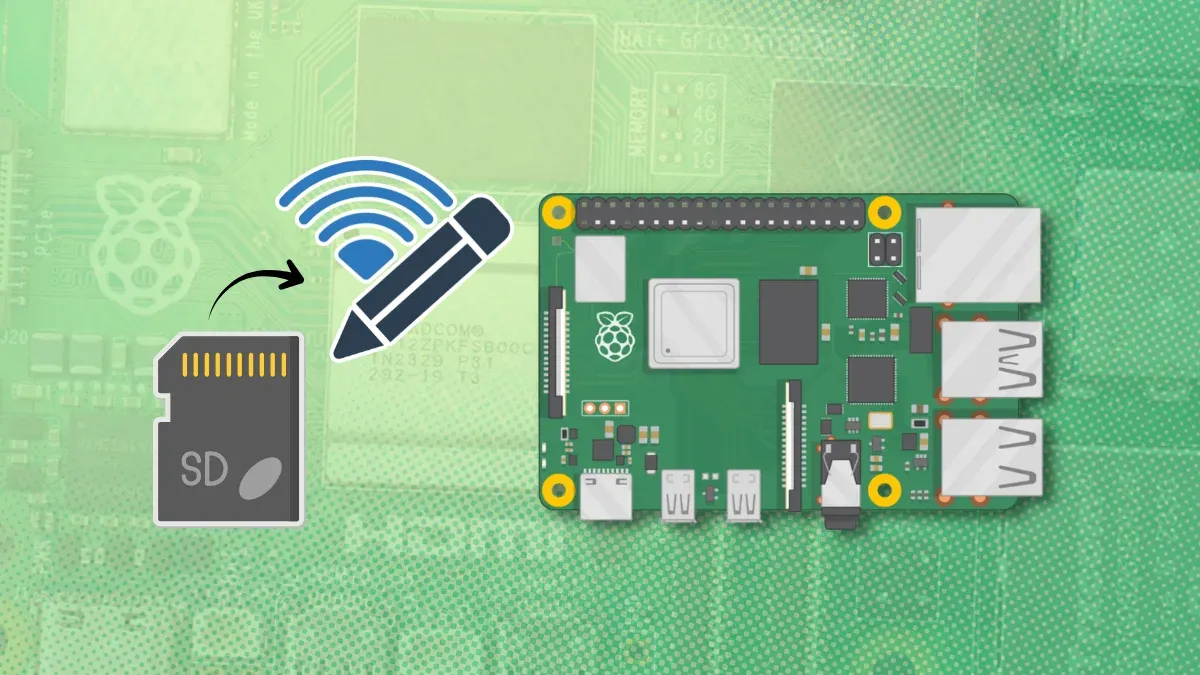
No need to connect the Raspberry Pi to a display and keyboard. Take out the SD card and modify the WiFi credentials directly.

The Steam Hardware & Software Survey for August 2026 is now live, and with it we can see the latest system details for gamers on Steam.Read the full article on GamingOnLinux.

Valve are clearly making preparations for the Steam Frame to finally get a proper release this month - with a new Release Candidate Beta build of SteamVR.Read the full article on GamingOnLinux.

Valve just released the latest main stable Steam update for Desktop, Steam Deck, Steam Machine and SteamOS. Here's everything that's changed.Read the full article on GamingOnLinux.