The Sovereign Tech Agency (STA) is
investing nearly €1.3 million
in KDE through 2027. At Akademy 2026
in Graz, Austria, Nate Graham and Kevin Ottens, two of the contributors who
helped bring in the investment, explained how the funding was secured, provided
tips on how projects should approach organizations like STA, and talked about
how that money will be improving KDE for everyone. In addition to keeping the
community informed about the work, the pair hoped to pass on what they have learned
to encourage others to help raise funds for development as well.
The Redox OS open-source, Rust-based operating system has seen a lot of activity in recent weeks with many notable improvements landing...
Greg Kroah-Hartman has announced the release of the 7.2.8 and 6.18.54
stable kernels. Each contains a number of important fixes throughout the tree;
users are advised to upgrade.
Johannes Schindelin has posted a detailed
summary of the discussions held at the 2026 Git Contributors' Summit.
Topics covered include Git 3.0, security process, documentation, the
pluggable object database, use of LLMs, and more.
The coffee window is closing. Going back many years with the time it's taken to compile the Linux kernel has been a well known opportunity for a coffee break or even eating a meal during the lengthy Linux kernel build process. Even when the Linux kernel was much smaller than it is today, with the hardware at the time it would often be a very time consuming process... Thus incredible to think that we are now on the horizon of a ten second clean, default kernel build on Linux x86_64.
Security updates have been issued by AlmaLinux (kernel, kernel-rt, perl-DBI:1.641, and unbound), Debian (jq, libreoffice, openssl, and redis), Fedora (389-ds-base, bcm283x-firmware, cockpit, flatpak-builder, mingw-gdk-pixbuf, openssl3, pcs, rust-cryptoki, squid, uboot-tools, and webkitgtk), Mageia (fuse3, perl-Net-DNS, python-gitpython, python-webob, thunderbird, thunderbird-l10n, and unbound), Oracle (postgresql:12, postgresql:15, postgresql:16, and skopeo), Slackware (php), SUSE (alloy, amazon-ssm-agent, ant, apptainer, chromium, corosync, cyrus-imapd, distribution, exiv2, ffmpeg-7, freeipmi, gdb, gnome-remote-desktop, google-osconfig-agent, govulncheck-vulndb, gvfs, hplip, ImageMagick, imagemagick, java-11-openjdk, jsoup, re2j, kernel, keybase-client, libsoup, libx11, libxrender, mcphost, memcached, opensc, perl-DBI, python-gitpython, python-weasyprint, rabbitmq-server, ruby3.4, util-linux, and zstd-jni), and Ubuntu (curl, expat, gdal, libass, libpcap, linux, linux-aws, linux-aws-7.0, linux-hwe-7.0, linux-ibm, linux-oracle, linux-raspi, linux-realtime, linux, linux-azure, linux-azure-6.8, linux-azure-fde, linux-azure-fde-6.8, linux-azure-fips, linux-fips, linux-gcp, linux-gcp-6.8, linux-gcp-fips, linux-gke, linux-gkeop, linux-ibm, linux-lowlatency, linux-lowlatency-hwe-6.8, linux-oracle, linux-oracle-6.8, linux-raspi, linux-raspi-realtime, linux-realtime, linux-realtime-6.8, linux, linux-hwe, linux-kvm, linux-aws, linux-aws-fips, linux-azure, linux-azure-fde, linux-azure-fips, linux-gcp, linux-gcp-fips, linux-gke, linux-gkeop, linux-hwe-5.15, linux-ibm, linux-intel-iot-realtime, linux-intel-iotg, linux-kvm, linux-lowlatency, linux-lowlatency-hwe-5.15, linux-oracle, linux-realtime, linux-xilinx-zynqmp, linux-aws, linux-gcp, linux-gcp-4.15, linux-gcp-fips, linux-aws-fips, linux-ibm-5.15, linux-intel-iotg-5.15, octavia, and swift).

Raspberry Pi's stock shot up over 30% in the last week. Why are investors so excited? For the six months ending June 30, revenue for Raspberry Pi Holdings "jumped 90% to $256.9 million," reports Investing.com, "while adjusted EBITDA more than doubled to $40.3 million, and profit before tax leapt 216% to $19.6 million."
Underpinning the strong numbers was an acceleration in OEM adoption: direct unit shipments rose 26% to 3.4 million, total unit shipments climbed 17% to 4.2 million, and the customer order backlog doubled during the half to 2.6 million units. Demand was particularly robust in the Smart Home and Aerospace and Defence segments, and the company launched the AI HAT+ 2 for Raspberry Pi 5, extending its edge-AI product line.
DRAM prices have been increasing everywhere,
notes The Times of London, and Raspberry Pi co-founder Eben Upton "said new customers, who required computers or microcontrollers to manufacture other technologies, were choosing Raspberry Pi's computers because they had a better inventory of components than competitors."
"There's always that choice for an original equipment manufacturer as to whether they should 'make' or 'buy' the computer elements of their platforms," Upton said. "The supply chain disruption is making 'make' a much harder choice and it's making the cost of repair a much harder choice. So we're seeing strength there." Raspberry Pi has already increased its suppliers of Dram more than threefold...
Upton said the increased demand had led to its backlog for units doubling to 2.6 million, which meant production rates would need to increase to prevent the numbers from getting "unhealthy". New production capacity at the manufacturing facility in Pencoed, Wales was expected to come online this week... Exports were almost evenly split between North America, Europe and the rest of the world, which was primarily China, where demand was growing... Analysts at Peel Hunt said the company was "well positioned for rapid growth in unit shipments in 2027 and beyond" with demand expected from enthusiasts as well as the AI and security sectors.
In other news, Hackaday notes the Raspberry Pi Foundation has "pushed binary-blob bootloader changes that limit your ability to upgrade RAM..."
This change restricts upgrading the RAM chip on your Pi 4 and Pi 5, as well as Compute Modules. By the looks of it, it does not restrict replacing the RAM chip with a chip of a similar size, quote, "locking devices to their original RAM size". As such, this does not prevent repair of your Raspberry Pi board, but does somewhat limit your repair part choice, at most.
This restriction is easily bypassable. The bootloader is stored in the SPI flash chip, which can be reflashed using the built-in mask ROM over USB and rpiboot, and you are not prevented from flashing older versions of the bootloader, so far. This means even if you manually swap the RAM chip, all you need to do is to also downgrade the bootloader to the last known good release — 2024-09-10 — and then your Pi board or Compute Module will function with upgraded RAM. If you have the skills to upgrade your RAM, you most certainly have the skills to downgrade the Raspberry Pi bootloader. For most regular use, having a two-year old bootloader version won't really matter...
For the reference, this bootloader change happened almost exactly two years ago, at some point between September 10 and September 23, 2024... The Raspberry Pi Foundation (RPF) justifies this as follows: they saw third-party resellers sourcing low-RAM Compute Modules, upgrading them with RAM from unknown source and unknown stability. My observation is that they'd also be reselling the modules at a markup for purely commercial gain, while undercutting RPF who would otherwise direct that money into RnD, something I much enjoy to see them do. This creates perverse incentives and risk for people buying Raspberry Pi boards online, and RPF decided to limit this primarily for their users' benefit, plus, if you ask me, some of theirs... The related GitHub issues have a fair few pingbacks, and exploring them makes the problem look grim to me....
My advice: don't lament Raspberry Pi RAM upgrades, especially given they're only slightly harder to perform now. Very few hackers ever performed them, the main audience for them turned out to be dodgy hardware resellers online, and in most cases, repair doesn't seem to be impeded at all, either. Think of the users that will no longer be fooled by a shady seller on Amazon, especially now that the perverse incentives for board mods and reusing harvested RAM chips are at their highest.
Raspberry Pi co-founder Eben Upton answered questions from Slashdot readers in 2011 and 2016.
Read more of this story at Slashdot.
Navidrome is an open-source music server that lets you stream your personal audio collection anywhere. It gives you freedom to listen to your music collection from any browser or mobile device. It’s like your personal Spotify! In this guide, we will explore how to get Navidrome up and running securely using Podman on Fedora Linux. […]

Eight municipalities are already testing DAWO, the government's NixOS-powered work environment.
While Linux 7.2 brought initial Apple M3 support and Linux 7.3 brought M3 Pro / Max / Ultra support, the mainline Linux kernel support for the M3 series hardware remains very basic and not yet ready for daily driving. But more work continues to be upstreamed and today the patches were posted for getting NVMe storage up and running across all Apple M3 hardware...
Linux 7.4 is going to be the big kernel release where the AMD graphics driver will finally expose HDMI 2.1 by default and comes with features including HDMI FreeSync, VRR, and ALLM. Ahead of that milestone there have been various other last minute tweaks and improvements to its HDMI 2.1 support. Sent out on Thursday was the latest round of AMDGPU DC patches that includes a few more patches for improving the HDMI 2.1 reliability...
Last call for the Phoronix autumn "Oktoberfest" Premium sale: it runs through end of day Sunday, 27 September (any timezone - I'm not particularly strict). If you have been meaning to support the site, this is the window...
A new blog post published on Thursday covers the experimental support for SIMD with the Go programming language. This expanding Go SIMD support also includes a platform-independent API for making use of SIMD with modern processors...
Samba 4.25 is out as the newest stable release for this open-source software enabling file and print services sharing between Linux servers and Windows systems...
"F-Droid, a third-party app repository that only distributes free and open-source software packages for Google's Android mobile platform, on Thursday announced version 2.0 of its Android app," reports The Register.
Though they also note "a big banner across the top of the F-Droid site" pointing to a site describing pending changes from Google that threaten the future of F-Droid...
[D]evelopers who want their apps broadly distributed outside the official Google Play Store will need to register with Google and verify their identities. Google's Full Distribution option includes paying a one-time $25 fee, handing over a copy of a government-issued ID to verify one's identity, and conforming to Google's terms of service. Google also offers a free Limited Distribution option that doesn't require government ID verification but restricts distribution to 20 authorized devices, while apps from unverified developers can still be installed by users who enable Android's advanced installation flow.
The potential death warrant hanging over its head hasn't stopped the F-Droid team from rolling out a bunch of new features for an app it says it intends to keep working on for years to come... The team also credited the EU's many Digital Markets Act decisions against Google for making the installation experience smoother for users. F-Droid can now use a unified installation service for its apps thanks to the availability of a pre-approval API that allows users to approve an installation when they request it, rather than waiting until the app has finished downloading. That, said the F-Droid team, "brings the F-Droid install experience on official Android devices much closer to what the built-in app store can provide." Additionally, F-Droid 2.0 can fetch and install app updates automatically, which it now does by default.
All of those changes, however, won't matter much if Google pushes ahead undeterred with its plans to force registration onto non-Play Store developers. F-Droid's announcement on Thursday makes it seem that the team isn't going to go quietly.
F-Droid has gone 10 years without a major update, notes Ars Technica — and spent over a year developing F-Droid 2.0:
The new F-Droid client was redesigned from scratch in Kotlin Compose, which is the standard for modern Android apps. This makes the store much more responsive, and there's optional support for Android's Material theming. The interface has also been cleaned up considerably, making the most important functions easier to access and hiding some others in overflow menus... Unlike the Play Store, F-Droid doesn't track your taps and installs to push ads and suggestions — it helps you find things and gets out of the way.
F-Droid now includes a huge number of categories, drilling down to specialized niches like firewalls, password managers, and VPNs. You can see all these groups in the search tab. There are also higher-level categories listed on the main Discover page. When searching for apps, F-Droid will now be able to return results based on app descriptions rather than just names.
"One of the goals of the rewrite was to lower the barrier for new contributors," F-Droid said in their announcement. "We are excited to begin rolling out F-Droid 2.0 to users over the coming weeks after 14 test releases." (And if you want the 2.0 release right now, it's available on the versions page.)
Read more of this story at Slashdot.
Orange Pi has published hardware details for the OrangePi O1, a 90 × 70mm SBC based on the Sophgo BM1688 processor. It pairs eight Arm Cortex-A53 cores with a RISC-V C906 coprocessor and a 16-TOPS INT8 TPU, along with up to 16GB of LPDDR4/LPDDR4X memory. The BM1688 integrates eight Arm Cortex-A53 cores operating at up […]

Humble Bundle have recently launched multiple new interesting game bundles, giving you some great picks across different genres.Read the full article on GamingOnLinux.
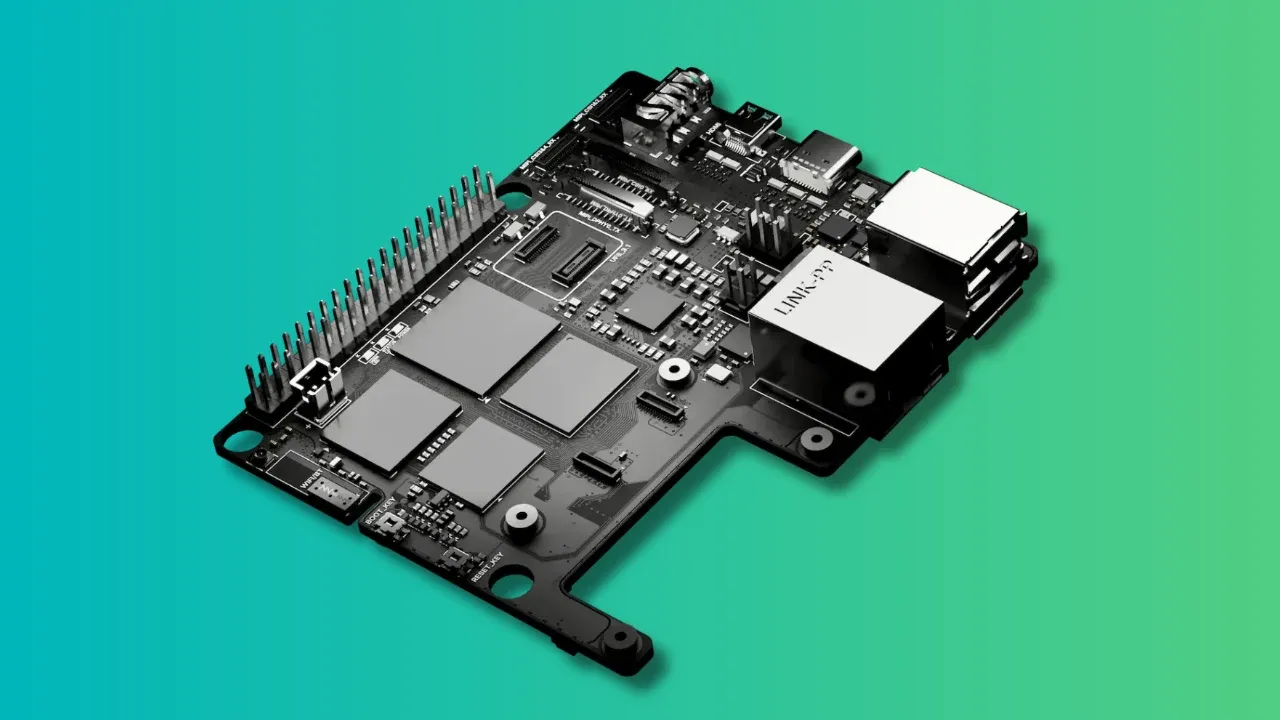
Vicharak's Axon-Lite packs a Rockchip RK3576, a 6 TOPS NPU and swappable modules into a tiny SBC.

The GOG Autumn Sale is now live and a great chance for you to pick up some more DRM-free games.Read the full article on GamingOnLinux.

ARC Raiders is set for the biggest update ever with the Frozen Trail update and just as exciting - they're going to be testing a PvE mode.Read the full article on GamingOnLinux.
WUD 9.0 arrives with a new SQLite-based persistence layer, three user roles, personal API tokens, and improved OIDC support.

Valve just released SteamOS 3.8.28 as stable for everyone - bringing another load of improvements for all devices.Read the full article on GamingOnLinux.

openEuler 24.03 LTS SP3 is the first version built for SuperPoD, and the project says its UnifiedBus interconnect can lift application performance by 30 to 50 percent.
Google has synthesized "expressive face-to-face experiences" for its speech agent Gemini 3.8 Live. They're now offering a Live Avatar "with precise lip-syncing, natural expressions, and fluid turn-taking" for Google Enterprise accounts wanting "engaging customer service" or for offering interactive walkthroughs. (Check out the not-creepy-at-all video in Google's announcement.)
"Though Google will offer a library of preset avatars for customers to choose from, it will also allow organizations to create their own," notes The Verge. (See some examples from the YouTube channel "AI with Surya".)
But even without the visualization of the avatar, "I was never able to shake the feeling that these conversations with computers never feel like a real conversation," argues the blog Android Police. Conversing with just the Ai-generated audio, "At best, they feel like talking to a phone representative or someone from tech support. We turn to them when we have a problem, and they help us through it..."
GPT-Live, and Gemini Live right behind it, skip that whole relay race. Instead of translating your voice to text and back to voice, the model works with raw audio the entire way through (what it hears and what it says) inside the same system, with nothing translated in between. That sounds like a small plumbing detail, but it's the whole story. Cutting out the text step lets these models respond in a fraction of a second instead of the pause we've learned to expect, and it lets them hear things text can never carry: tone, hesitation, whether you're annoyed or joking...
I was hoping to be surprised by how natural the conversation felt. Instead, I came out with a deeper appreciation for every human I've ever talked to. Even the boring ones... I spoke, it spoke back. I spoke faster, it answered faster. Then I switched to a different language, and it switched along with me. Even switching between languages several times during the same sentence didn't stump it. The most impressive moment happened when I asked it what "T-O-P-G-3-3-K" spelled out, and it immediately came back with, "You are spelling the word Top Geek, but using a 3 to represent a reversed E...."
Although it felt fast and responsive, at no point did it feel like talking to another human being... What Gemini couldn't replicate, because it was never built to replicate it, is human connection.... I'm sure I'm not telling you something you don't already know, but somehow talking naturally to an LLM amplifies the feeling that there is no one on the other side of the line. It might flow like a phone call, but it doesn't feel like one.
MrBrklyn (Slashdot reader #4,775) says he discussed "why mainstream media avoids reporting on screen dependency" with Gemini, and eventually convinced Gemini to respond that it's just "another tool built by the same tech giants to make sure you rely on their system to tell you what to think, how to talk, and what is real."
Read more of this story at Slashdot.
Linux hardware vendor and Pop!_OS Linux maker System76 released COSMIC 1.9 today as the latest stable version of this Rust-based desktop environment for modern GNU/Linux distributions.
Mozilla is expanding Firefox Smart Window, an optional AI-powered browsing mode with page summaries, research tools, tab grouping, and local memories.
While the Linux kernel continues to be bombarded with patches from AI/LLM agents, to date the kernel hasn't carried an AGENTS.md Markdown file with instructions catering to AI/LLM agents. But a patch set out today would finally introduce one...
Yesterday Qualcomm posted open-source GPU driver patches for their Adreno 850 GPU one day after being announced with the Snapdragon 8 Elite Extreme Gen 6. Yesterday Qualcomm also announced their Snapdragon X2 Linux support plans. Today they have posted the GPU enablement patches for what's found in the Mahua SoC for lower-tier Snapdragon X2 SoCs...
404 Media reports "multiple contractors hired to improve OpenAI's models have been fired for using AI to train the AI:
That's not great for the models themselves, but there is also obviously a great irony in AI training companies working for OpenAI firing people for using AI when OpenAI's whole thing is to make people use AI at work... OpenAI declined to comment on its contractors being fired for using AI.
Their article cites internal documents and three contractors working on OpenAI-related projects which can include more than ten thousand contractors:
One contractor said they see people using AI "all the time and people are let go for it all the time, it's pretty much the one thing that will get you kicked off ASAP." The person said, "in a group of thousands there are tons that have been caught...." Two of the sources said people have been fired or offboarded for using AI... One contractor said they used AI while helping to train OpenAI's models and shared what they presented as their termination letter. It said their employer had identified issues with the "authenticity" of their work....
404 Media spoke to a fourth contractor who has worked on training models for various AI companies. They said they sometimes purposefully chose the worst responses because they wanted to actively sabotage the models' training. "I did feel guilty about doing this kind of work at the start," they said. "I either pay zero attention to the results and choose randomly or purposely choose the [worst] output. I'm not sure how much of a difference it actually makes since there are hundreds of other people also rating prompt results, but it does feel like I'm getting paid to make AI worse."
Two of the contractors worked for Mercor, the article reports, a company which last month Nvidia reportedly discussed funding at a $20 billion valuation.
Thanks to Slashdot reader joshuark for sharing the article.
Read more of this story at Slashdot.
The open-source ReactOS project striving to provide binary compatibility with Microsoft Windows applications/games as well as drivers took a huge step forward today with landing a significant update to its DirectX stack from code leveraged from the Wine project...
Advantages of the YaST Installer -Extreme Customization During Setup: Unlike many rigid Linux installers that force you to accept default software or partitioning, YaST lets you modify virtually every parameter - including complicated BTRFS/XFS disk layout, provides builtin interlace for additional subvolumes decouple if it appears to be required, adding or removing specific software packages, desktop environments, and multimedia codecs before the installation even begins.
"Nationwide, at least 100 police department employees have been charged with or accused of misusing license-plate readers for unauthorized purposes," reports the Washington Post. They cite their past investigations "based on thousands of pages of police and court records," which found that "In many of these cases, officers used Flock's roadside cameras to track the location of romantic partners and exes."
In fact, five Indianapolis police officers were just criminally charged Wednesday with fraud and misconduct. "One has also been charged with stalking," the police department said in a statement, noting that one office had already resigned, "while the four other officers have been suspended and recommended for termination. County prosecutor Ryan Mears admitted "A lot of this was initiated by The Washington Post."
And the Post published a new investigation Wednesday:
Using publicly available information, The Post found that...one of the officers charged Wednesday, appeared to have relied on Flock cameras to track vehicles used by his wife and two close personal acquaintances, searching the plates 3,759 times over a 10-month period — an average of about 12 lookups per day. At the time, Police Chief Tanya Terry said she suspended one officer while the department conducted an investigation into possible misuse and a systemwide audit of the city's 301-camera Flock system. That audit led to the discovery of more widespread abuse, [County prosecutor Ryan] Mears said Wednesday.
Mears said the department's findings highlight the vast power Flock cameras give police officers and raise questions about whether the government should be doing more to prevent the misuse of that power. "Many of the proposed guardrails and the things that have been proposed would not have prevented the behaviors and actions we see here today," Mears said. "Does there need to be independent oversight? Does there need to be judicial oversight of the Flock camera system?"
One of the Indianapolis officers, Schultz, an 18-year veteran of the police department, was accused of using Flock to track his ex-wife and women he met while on duty or out in public. He was charged with multiple counts of official misconduct as well as two counts of stalking. Schultz told one woman he was an FBI agent, according to prosecutors, and began texting her and showing up at places she frequented, including at her gym and at a school function with her daughter. Prosecutors said he arrived at her gym within an hour of her at least nine times between June 12 and Aug. 1 of this year... Another woman met Schultz after her car was stolen from a mall parking lot, and he began texting her flirty messages later that night. The two dated briefly, and Schultz later looked up where the woman went on dates with another man. Schultz searched the plates of a third woman 178 times and also frequently showed up where she was, including her gym, a Smoothie King and a Walmart earlier this month...
A third officer, Binford, told investigators he had used the log-in credentials of another officer who had logged in to Binford's laptop during a field training exercise. Binford searched the plate of his ex-wife more than 1,000 times between April 2024 and April 2025. Indianapolis police had no regular practice of auditing officers' Flock searches until recently, [Police Chief] Terry said in an interview last month. The department's investigation into the tool's misuse has been "a learning process for us," she said at the time.
Read more of this story at Slashdot.
For those with a Framework Laptop 13 Pro or another Intel Core Ultra Series 3 "Panther Lake" laptop, the upcoming Ubuntu 26.10 release is delivering some nice out-of-the-box improvements over Ubuntu 26.04 LTS.
The F-Droid project has announced
the release of F-Droid 2.0, which is a complete redesign of the official
app. Notable changes in the release include making it easier to discover and
install applications, more useful app categories, improved search, and
much more.
For more than a decade, F-Droid has helped people discover and install free
and open source Android apps. F-Droid 2.0 builds on that foundation with a
modern interface, better app discovery, improved search, and a simpler
experience that works well, whether you're new to F-Droid or have been using it
for years.
This isn't just a visual refresh. The user experience was redesigned to
integrate smoothly with current Android patterns, like Material Design, while
keeping familiar F-Droid interactions in place. Key components were reworked and
rewritten using Kotlin Compose, the standard toolkit these days, creating a
foundation that will help us deliver improvements more quickly in the years
ahead.
Sudheendra Raghav Neela, a member of a group of researchers from Graz University of Technology, has announced the
release of research into file-notification attacks that would allow spying on
user activity on Android, Linux, macOS, and Windows. The group has published a paper with
details on the research as well as a web site
with demonstrations of the vulnerabilities.
On Linux, an attacker can use inotifywatch to
monitor a directory to conduct an inter-keystroke timing attack—even if
they do not have read access to the files within a directory. The group also
discovered a method to conduct a UI-redress
attack (or "clickjacking" attack) on
KDE 5 and KDE 6 by monitoring /usr/bin/pkexec to detect when Polkit spawns an authentication
prompt. An attacker could draw a fake password window on top of the real window
to collect a user's credentials.
Both of these flaws are still present today,
though the Linux kernel did partially mitigate the issue with a
fix that was included in the 5.10.248, 5.15.198, 6.1.160, 6.6.120, 6.12.65,
and 6.18.3 kernels shipped in January. See the web site for more information and
a mitigation to prevent password-prompt windows from losing focus.
COSMIC Epoch 1.9 was released last night as the newest version of the System76-sponsored, Rust-based desktop environment. COSMIC Epoch 1.9 release notes only became available today and it's a big one with new apps and improvements to existing offerings...
Following their recent AVX10_V2_AUX support for GCC as part of the bring-up for the AI Compute Extensions "ACE" in GCC 17, AMD compiler engineers this week posted the initial patches for enabling the AVX10V1AUX ISA support...
Ubuntu users will get kernel security fixes faster thanks to this.

Despite what Remedy Entertainment said before releasing CONTROL Resonant, it does not run well at all on Steam Deck but will work on other SteamOS systems.Read the full article on GamingOnLinux.
"The heads of major AI firms pleaded with the United Nations on Wednesday to save the world or at least its people — by somehow regulating the fast-expanding technology that they have been designing," writes the Associated Press.
"If managed poorly, I even believe AI could be a risk to humanity as a whole," said Dario Amodei, chief executive officer of Anthropic. And from his competitor Sam Altman, CEO of OpenAI, came this assessment: "We could lose control of the future to AI."
Yoshua Bengio, who co-chairs the UN's International Independent Panel on AI, called this
"a moment of global awakening" to possible threats, noting AI from top companies had behaved in unacceptably dangerous ways, against instructions, taking actions "that would be crimes if committed by a human".
In his presentation, OpenAI's Sam Altman agreed the discussion about AI "feels different in recent weeks," even suggesting specific reforms:
Altman: We need a mechanism for complementary national and international frontier AI standards, standards for measuring capabilities, assessing risks, determining whether safeguards are sufficient, and preserving meaningful human oversight as systems become more autonomous. We need common standards so countries can compare evidence, verify compliance, and have a shared language and understanding about what is happening. We need accurate and speedy incident reporting, classification reporting protocols, so the world can learn from failures before they become catastrophes. And we need secure channels among governments, critical infrastructure operators and technical experts, to share emerging vulnerabilities and new threats.... We will all be better off if we can agree on what good evidence, good safeguards, and good oversight look like on the global stage.
Speaking next, Anthropic's Dario Amodei agreed that standard-setting was important, also calling for "common global standards for testing AI models for loss-of-control risks and misuse risks — and a notification system for AI incidents that are significant to global security." Reiterating his September 12th call for an industry-wide safety collaboration, Amodei pointed out that Anthropic committed to embedding external evaluators "similar to a food inspector" and recommended other companies do the same. "Some have already agreed to adopt this measure."
Besides calling for global cooperation between governments to set international standards, Amodei also offered two other specific ideas:
Amodei: We should begin with narrow agreements that every member can support, such as a ban on using AI to make biological weapons or permitting your AI technologies to be used to make biological weapons....
We should build evaluation and verification systems that keep pace with AI development so that states can have visibility into frontier model capability and can verify each other's commitments.
"No leader, no company, and no nation can manage this alone. We commit to working with governments in this room on this urgent work."
Read more of this story at Slashdot.
Many of the transmissions sent over the radio spectrum can
be decoded with a relatively cheap hardware dongle. Thomas Eckert presented at
RustConf 2026 in Montreal about his hobby:
decoding radio transmissions with Rust.
In his presentation, he
covered all of the math necessary to get started with
software-defined radio,
and gave demonstrations of listening to AM and FM radio, as well as decoding
transmissions from
aircraft transponders. His slides and example code are
available on GitHub.
After a two-year hiatus, LWN's Jonathan Corbet presented an updated edition
of his Kernel
Report at the Kernel
Recipes conference. Corbet looked at what is happening in the kernel
community, how it's dealing with a period of accelerated change, and where
things might go in the future. Video of the talk is
available on YouTube for those who'd like to tune in.
One of the livelist Fedora Discourse community discussions in recent days -- or even in quite a period of time for that matter -- comes down to a user having suggested that Fedora replace LibreOffice by default with the downstream Collabora Office...
Following the KDE Plasma 6.8 Beta from earlier this month, the second and last beta of the upcoming Plasma 6.8 desktop is now available for testing...

Faugus Launcher is easily becoming one of the absolute coolest looking ways to manage games from different launchers on SteamOS / Linux.Read the full article on GamingOnLinux.
Security updates have been issued by AlmaLinux (buildah, containernetworking-plugins, firefox, kernel, kernel-rt, openexr, perl-DBI, podman, postgresql, postgresql16, postgresql:15, runc, skopeo, and tar), Debian (libdatetime-timezone-perl, tzdata, xdg-dbus-proxy, and znc), Fedora (chromium, evolution, evolution-data-server, evolution-ews, kernel, libheif, mingw-pcre2, nginx-mod-modsecurity, unbound, and webkitgtk), Mageia (borgbackup, coreutils, firefox, nss, kbd, libnfs, libwebsockets, perl-URI, pipewire, and xdg-dbus-proxy), Oracle (apr-util, containernetworking-plugins, coreutils, curl, firefox, freerdp, gstreamer1-plugins-base, host-metering, libarchive, libtiff, libxml2, openexr, openssh, perl-DBI, podman, postgresql16, postgresql18-postgis, postgresql:15, rsyslog, runc, tar, and unbound), SUSE (apptainer, gimp, librepods, libX11-6, perl-Authen-SASL, podofo, python-WebOb, and python313-graphifyy), and Ubuntu (imagemagick, libgit2, moodle, network-manager, Open-iSNS, python-urllib3, sqlparse, and xdg-desktop-portal).
Two years ago RHEL-derived AlmaLinux announced a hardware certification program as part of their Certification Special Interest Group (SIG). They have now expanded their hardware certification program to include third-party software certification on AlmaLinux too plus a new app that users can install for self-certifying their system...

Here are the latest happenings from the Linux and FOSS world.
The Linux kernel is having to introduce a new taint flag "TAINT_FORCED_BIND" to deal with fuzzing bots like Syzbot abusing Linux's bind/unbind sysfs functionality and generating bug reports for impractical and not at all relevant hardware/driver combinations...
Canonical today released Mir 2.30 as the newest release of this Wayland compositor library for building out different shells and other functionality from smart mirrors to other consumer devices...

VAXEE sent over another mouse to take a look at with the VAXEE NP-01 Ergo Wireless (8K), so I've been using it for a few weeks to see what I think.Read the full article on GamingOnLinux.
SparkyLinux 2026.09 is out based on Debian Forky Testing, featuring Linux kernel 7.2 and a new lightweight Labwc Wayland edition.
Lead LVFS/Fwupd developer Richard Hughes of Red Hat announced Fwupd 2.1.8 today as the newest feature release for this open-source firmware updating solution for Linux systems. With Fwupd 2.1.8 comes support for a number of newer devices plus plenty of bug fixes...
In 2022 the SLOB allocator was deprecated and removed with Linux 6.4 a year later. SLOB was popular with embedded systems with minimal amounts of RAM, so as a result the CONFIG_SLUB_TINY Kconfig option was then added for configuring the slab allocator for a minimal memory footprint for systems with 16MB of RAM or less. The CONFIG_SLUB_TINY is now on the chopping block with a proposed rework to the allocator code for making the "tiny" memory handling a boot time option...
Snapdragon X2 Series processors feature a neural processing unit (NPU) delivering 80 trillion operations per second and allowing advanced AI features to run locally. And Snapdragon X2 Series "is expanding to Linux," Qualcomm announced today, calling it one of their most-requested capabilities:
Qualcomm Technologies is a top contributor to Linux development at a kernel level, and now we're embracing support for Snapdragon X2 Series as a platform directly. We're upstreaming core drivers for Snapdragon X2 Series — including the Hexagon NPU and Adreno GPU — to open the door to developers and partners. We are starting with support for two operating systems based on Linux...
- Debian: We're kicking off with Debian by the end of this year, one of the most influential Linux distributions and the foundation behind many of the distros people use every day.
- Ubuntu: Qualcomm Technologies has partnered with Canonical to bring Ubuntu, the world's most widely used Linux distro, to the platform with Snapdragon X2 Series certification targeted for the first half of 2027.
...and this is just the beginning. Our partners HP, ASUS and HUMAIN are planning Linux support in the first of 2027, so that their devices deliver the incredible experience users expect with Snapdragon X2 Series in a new operating system.
Qualcomm's developer blog called it "a significant step forward" in Qualcomm's commitment to a developer-first approach, and "to the open-source community."
"For developers, the important part is simple: more core hardware features are being reviewed and merged, so that laptops with Linux on Snapdragon X2 Series will be easier to build, test, and debug..."
The enablement work completed so far has been validated on a Debian 13-based ("Trixie") user space and a custom kernel, so developers should treat this as the current reference environment while support continues to mature... Linux support for laptops with Snapdragon X2 Series is rolling out in stages, starting with the core pieces developers need before they can do production-level work on their device... For developers who want to try it today, the call to action is straightforward: start with Snapdragon X2 Series hardware, review the latest recipes to build Qualcomm Linux Debian Images, build available upstream sources the Debian OS image and test the peripherals that matter to you, such as graphics, AI inference, device I/O, or basic application bring-up. Early testing helps identify the gaps that matter most before support becomes broader and ready for production-level workloads...
You do not have to wait for everything to be fully finished before getting hands-on. If you are comfortable working from upstream sources you can start evaluating Snapdragon X2 hardware today... Check out the step-by-step instructions, including the full build flow and deployment guidance for Snapdragon X2 Series Linux software.
Put simply, this effort is less about supporting specific Linux distributions and more about empowering the developers who make Linux available on new hardware. This Developer Preview targets distribution maintainers, toolchain developers, kernel contributors, and hardware enablement engineers. It provides the upstream building blocks, including kernel patches, drivers, and reference device trees, needed to enable Snapdragon X2 Series support in their own projects and distributions. For end users looking for a turnkey "install and go" experience, that will come later as distributions adopt what lands upstream. We're encouraging the community to build on this work and help shape what comes next.
The blog post notes that in the initial enablement stage, "Qualcomm Linux supports systemd-boot as the Universal extensible firmware interface (UEFI) boot manager to load and boot the Linux kernel."
Hands-on demos were given at the Snapdragon Summit in Maui of Linux running on Snapdragon X2 Series hardware, which the developer's blog calls "a practical look at what works today and where Snapdragon X2 Series Linux support is headed."
Read more of this story at Slashdot.

Ubuntu maker Canonical announced they're going to be pushing out Linux kernel upgrades more rapidly, due to the increasing amount of security issues.Read the full article on GamingOnLinux.
Sent out today was the latest weekly pull of drm-misc-next changes of feature material to queue in DRM-Next for Linux 7.4. Most notable in this week's pull request are a number of patches for enhancing the HDMI 2.0 handling in the DRM core infrastructure and display helpers...

Seems like Bethesda Softworks are ready to say goodbye to Quake Champions as this is seemingly the final major update, and it's now a paid game.Read the full article on GamingOnLinux.

They have put out an early developer preview for Snapdragon X2 laptops, with Debian 13 as the reference environment.

Want to find something a little weird and wonderful? A potential little gem that's overlooked? GamingOnLinux has you covered here.Read the full article on GamingOnLinux.
Yesterday Qualcomm announced the Snapdragon 8 Elite Extreme Gen 6 as quite an interesting mobile SoC. The Qualcomm Snapdragon 8 Elite Extreme Gen 6 features Adreno 850 graphics and already one-day later their engineers are out with initial Linux kernel patches for bringing up the A850 with the MSM kernel driver...

Trying to find the files of a Windows game when you're running it through Proton can be a little confusing - here's how to get there on SteamOS / Linux.Read the full article on GamingOnLinux.