
The Register reports:
When Microsoft's developers and engineers sit down to code, they can now choose to work in Rust, which Redmond has added to its list of canonical languages. "Rust now is a Tier One language at Microsoft, and that just means that it sits among C++, C# and TypeScript as the best supported languages for internal development in the company," explained Victor Ciura, Microsoft principal engineer for the Rust tooling team, during a keynote talk today at this year's annual RustConf, being held this week in Montréal. Ciura said Microsoft has "paved a path" of tools and processes that support local Rust development across the entire software development lifecycle.
Rust is no stranger at Microsoft and is already present in over 100 Microsoft project repositories. The company has built Oxidizer, a set of crates to build scalable services in Rust, which have been used to build and refine the Microsoft 365 core services such as Outlook, Word, Excel, OneDrive, and SharePoint. The Copilot tech stack also owes quite a bit to Rust... [C]ompany engineers built rustc_codegen_utc, a custom Rust compiler code-generation backend that wires the rustc compiler directly into the Microsoft Visual C++ internal toolchain for Windows... "The result is a unified code generation platform for Rust and C++ on Windows" [Ciura wrote in a blog post, noting that more than 100 Microsoft project repositories now build with rustc_codegen_utc.]
Still, Redmond running towards Rust is a welcome development. In his 2025 RustConf keynote, Microsoft Azure CTO Mark Russinovich noted that ~70 percent of Windows CVEs are memory issues.
"One of the things that I realized a long time ago is that no matter how much we really want to make C and C++ better, we can't make it as good as what Rust starts with," he said.
Read more of this story at Slashdot.

GrapheneOS is calling out Google over its negligence in providing certain patches.
The Git source-code management system is
at the core of development processes worldwide, so changes, especially
incompatible changes, are of great interest to the developers involved.
The Git 2.56 release, which can be expected around the end of September, is
currently available in release-candidate form. It
is not the most earth-shaking of releases, but the one that follows, which
might be the long-awaited Git 3.0, may well be.
Ahead of next week's Ubuntu 26.10 beta release I have been testing the "Stonking Stingray" on a variety of systems. Ubuntu 26.10 is performing well overall with some nice upgrades over Ubuntu 26.04 LTS, especially if opting to use the new snapshot/daily ISOs of Ubuntu 26.10 in amd64v3 form for x86_64-v3 packages. In today's tests are a look at the performance benefits of Ubuntu 26.10 on an AMD Ryzen AI Max+ "Strix Halo".
If you missed out on the Phoronix Premium special back during the 22nd birthday of Phoronix.com in June, there is another promotion now active for helping to support the site and allow for continued daily original content and relentless Linux performance benchmarking and other open-sourced focused hardware testing...
Recently there have been some bug reports to Mesa around Intel Panther Lake graphics crashing with some games like Red Dead Redemption 2 and Elden Ring crashing or freezing quite quickly. This turns out not to be an Intel Xe3 Arc Graphics B390 driver bug with Panther Lake but rather due to a kernel issue with the new Flexible and Return Event Delivery "FRED" that debuted with the Core Ultra Series 3 processors...
Version 5.6 of the Systemtap tracing tool has been released.
BPF LSM hooks and XDP packet-processing probes for the --bpf
runtime, BTF-based kernel.tracepoint probes, statement execution
tracing, a new @enumname() operator, richer runtime error context,
dyninst hardware watchpoints, modern systemd service templates, and
broad Linux 7.2 runtime/tapset compatibility work. Multithreaded
speedups throughout.
Security updates have been issued by AlmaLinux (.NET 10.0, coreutils, kernel, libevent, libsoup3, microcode_ctl, perl-Net-DNS, postgresql18, postgresql:16, postgresql:18, tomcat, and unbound), Debian (bind9, chromium, libapache2-mod-auth-openidc, nginx, xz-utils, and zip), Fedora (chromium, freeipmi, GitPython, gnatcoll, nodejs-undici, parted, python-django5, and sblim-cmpi-base), Mageia (imagemagick and python-starlette), Oracle (.NET 10.0, .NET 8.0, .NET 9.0, coreutils, corosync, firewalld, kernel, libevent, libsoup, microcode_ctl, nginx:1.24, perl, perl:5.32, postgresql:16, postgresql:18, redis, rsync, rsyslog, tesseract, and unbound), Red Hat (vim), SUSE (alsa, chirp, chromium, cjose, cups, discount, firefox, gh, glibc, gvfs, jq, kernel, libcjose-devel, libmbedcrypto7, libpcap, mbedtls-2, netcdf, nodejs18, openai-codex, openvpn, pcre2, perl-net-dns, sngrep, tiff, and znc), and Ubuntu (bison, bubblewrap, and gst-plugins-good1.0).
This architectural review validates a methodology for structural state-decoupling on a Linux hypervisor host. Traditional unified storage typologies expose nested. By designing a hybrid layout that maps the host operating system to a Timeshift-tracked Btrfs subvolume tree while binding guest runtime files to an independent, non-Copy-on-Write (No-CoW) enterprise XFS partition, we establish complete rollback immunity.

Wube Software gave Factorio something players have been asking for 11 years - a full ARM64 Linux port to play anywhere, which is ready for the Steam Frame.Read the full article on GamingOnLinux.

Online extraction shooters are still a genre pretty lacking on SteamOS / Linux, but EVE Vanguard will be another you can add to your wishlist.Read the full article on GamingOnLinux.
HP released the HP Linux Imaging and Printing (HPLIP) 3.26.6 drivers, an update that adds support for several new printers in the HP LaserJet Pro, HP ScanJet Enterprise Flow, and HP ScanJet Pro series.

The Lepton project is aimed at game developers who want to bring VR-focused Android titles over to Steam Frame.
The Ubuntu 26.10 desktop is adjusting its default out-of-memory (OOM) daemon behavior when dealing with memory pressure on the system...
The past few weeks we have eagerly been following a Linux kernel patch series after AI found some major bottlenecks in the Linux kernel build code. With AI helping to address these bottlenecks, Linux kernel build times are substantially reduced. These optimizations might be ready in time for Linux 7.4 for reducing incremental kernel build times as much as around 70%. This week the latest iteration of these patches were posted by Arm engineer Lorenzo Stoakes...
Linux 7.4 is set to be a very exciting holiday gift for AMD Radeon graphics customers. As covered last week on Phoronix, with this next kernel AMD Is enabling HDMI 2.1 support by default now that FreeSync, VRR, and ALLM support is included too. This week another round of AMDGPU kernel graphics driver updates were sent out ahead of the Linux 7.4 merge window in October...
"Turns out, Silicon Valley isn't especially altruistic," writes the nonprofit education news site The 74. They're reading a new book promising "the inside story of how Big Tech catalyzed, co-opted, and ultimately came to capture computer science and AI education in America". Written by
New York Times business reporter Natasha Singer, Coding Kids: Big Tech's Battle to Remake Public Schools tells "the story of the nonprofit Code.org and its charismatic, Harvard-educated leader, Hadi Partovi," according to their review:
Thirteen years ago, Partovi... delivered a worrying message: Kids who didn't learn to write code would be left behind. And the long-term success of the United States economy depended on training these students to fill a million open tech jobs.... Fast-forward to 2026, and now we're dealing with AI, and tech is reading from a similar playbook.
Asked by The74's Greg Toppo, "Does this moment seem different to you?", Singer replies, "This moment is different, but also similar.
"We are in a moment in society where a lot of people have increased distrust of these huge tech companies, and we see a wave of parents pushing back against tech in schools. But we also see waves of people pushing back against Flock cameras, against data centers, that there's this feeling that tech has taken so much, and that people feel like they have lost control — that tech is being enacted on them... And parents are worried about the effects of unfettered tech access and kids' compulsive use of social media and phones, and so there's a different climate.
And yet there seems to be a disconnect in some ways with AI because you see that Microsoft and OpenAI and Anthropic and Google are all competing to get their AI tools into schools, and you see school districts across the country say "We've partnered with OpenAI." "We are a ChatGPT Pioneer School," or "We've partnered with Microsoft, and we're going to use 10,000 licenses of CoPilot." It's amazing to me. We have had these cycles of tech in schools where there are all these promises about the latest tech, laptops, learning apps, massive open online courses, virtual reality, big data's going to revolutionize schools and like democratize access to education for kids and get them these great career skills, and we keep having these cycles. My concern is that we don't learn anything.
One of the reasons I wrote this book is because it feels like we have collective amnesia. Now we're in the sixth or eighth cycle of this — and shouldn't we be asking questions about the push for AI in schools, based on what we've learned about the push for all the other things that came before?
Two Slashdot posts are cited in the book, both submitted by long-time Slashdot reader theodp (Slashdot UID #442,580), who even gets a shout-out in the book's "Acknowledgements" section (along with consumer advocate Ralph Nader).
Ironically, one member of Amazon's "Vine" program received a free copy of the book in exchange for a review — and apparently misunderstood its topic, writing that it made coding "feel approachable and even fun... [T]his is exactly the kind of book that could help a child become interested in technology without feeling overwhelmed by it. I particularly liked the way it encourages kids to be curious, experiment, and solve problems on their own. I would definitely recommend Coding Kids to parents, grandparents, or teachers looking for a good introduction to coding..."
Read more of this story at Slashdot.
Amid a boom of bug reporting in general due to AI/LLMs across the entire software ecosystem, Intel this week appears to have ended its paid bug bounty program. They have (re)launched a new bug reporting program but with the bounties removed...

A genre blending roguelike that casts players as a rogue AI automating an escalating war against waves of bugs - BELTFED is an instant wishlist.Read the full article on GamingOnLinux.

A big day for what was previously an MMO, Dune: Awakening version 1.5 has been released expanding the game to let you play however you want.Read the full article on GamingOnLinux.

OpenFront has jumped over from being a browser game to a Steam release, and I can see it easily sucking away lots of my time firing off nukes at my neighbours.Read the full article on GamingOnLinux.

Canonical developers have been working to improve Ubuntu Linux Desktop performance, specifically when under memory pressure making it a bit smarter.Read the full article on GamingOnLinux.
PipeWire 1.6.9 has been released today as the ninth maintenance update in the latest PipeWire 1.6 series of this open-source software for handling audio and video streams under Linux-based operating systems.

Raw Fury announced they're publishing the very unique looking Dungeon Automata, that blends dungeon crawling with visual scripting for auto battling.Read the full article on GamingOnLinux.

Gears of War: E-Day has gone gold, making it ready for release - and now the final system requirements have been revealed.Read the full article on GamingOnLinux.

From the developers of the rather good The King is Watching, an apocalypse city-builder with giant creatures! The Crab is Walking sounds fun.Read the full article on GamingOnLinux.

Valve are now beginning to announce SteamOS updates for the Steam Frame, with the first public notification being SteamOS 0.3.0 for Steam Frame.Read the full article on GamingOnLinux.
Described by Radxa as its flagship edge AI module, the rCore-Q8550 targets robotics and machine vision with the Qualcomm Dragonwing QCS8550 platform and an optional Hexagon AI processor delivering up to 48 Dense INT8 TOPS. The 36 x 32mm module also supports up to 16GB of LPDDR5X, 128GB of UFS 3.1 storage, PCIe Gen 4, […]
Tuesday U.S. Space Force chief Douglas Schiess said his branch of the U.S. military operates "on-orbit weapons," reports Reuters, to defend "against space-enabled attacks." He promised "disciplined and responsible choices" when scaling America's orbital defense arsenal in the coming years.
NPR calls this week's reveleations "remarkable... after previous warnings about countries such as Russia possibly weaponizing a global frontier long agreed in treaties to be used for only peaceful purposes."
The revelation comes as the Trump administration puts a growing focus on space. In 2019, during his first term, Trump created the Space Force as a separate military branch. In his second term, he has announced the "Golden Dome" missile defense system, which includes plans to put U.S. weapons in space. Trump said last year that he expected the system would be "fully operational before the end of my term," which ends in January 2029, and have the capability of intercepting missiles "even if they are launched from space." Trump also has directed the Pentagon to pursue the space-based interceptors, in an executive order during the first week of his presidency. The Congressional Budget Office estimated that just the space-based components of the Golden Dome could cost as much as $542 billion over the next 20 years.
The Biden administration announced in 2024 that Russia was developing a space-based nuclear weapon that could loiter in space for long durations, then release a burst that would take out satellites around it. That kicked off a renewed debate on the idea of weapons in space at the United Nations. In April 2024, Russia vetoed a joint U.S.-Japanese resolution that would have called on all countries not to develop or deploy nuclear arms or other weapons of mass destruction in space, as banned under a 1967 international treaty that included the U.S. and Russia... The Russian delegation called the resolution hypocritical and a double standard and instead proposed a rival resolution to ban all weapons in space "for all time." It ultimately failed. Russia had argued that the United States and its allies opposed a ban on all weapons in outer space because they planned to deploy weapons there.
Reuters calls this "a landmark moment in space militarization," while noting that it's "aimed at deterring what U.S. officials describe as aggressive orbital activities from China and Russia, officials and analysts said."
The remarks this week by Washington's top military-space officials are part of "the increasing comfort level of the U.S. government to speak about aggressive actions in space" that has been building up in recent years, said Victoria Samson, chief director of space security and stability at the nonprofit Secure World Foundation. "We've gone from not talking about counter-space capabilities... to now saying flat-out we have weapons in space," Samson said. "The pendulum keeps on shifting over that way..."
"The acknowledgment of these space-control capabilities is fundamental to ensuring that we prevent deterrence from failing, and that we are postured and ready should deterrence fail to employ them effectively," Richard Palmer, the director of the Capability and Resource Integration Directorate at U.S. Space Command, said on Tuesday.... "The bottom line is that our joint force and our allied forces require space. Our economies require space," added Palmer. "We are ready in the U.S. to preserve that."
Reuters adds that Russia's Foreign Ministry issued criticism of America's move, saying "In pursuit of its narrow self-interests, Washington is ready to completely ignore the catastrophic consequences for humanity of any armed conflict in orbit."
Read more of this story at Slashdot.
The Rust replacement for GNU Coreutils fixes all of the Ubuntu-prioritized compatibility issues, eliminates expr’s last C dependency, and adds more security hardening.

Mistral Small 4 is the latest in Smart Window's model lineup, available for users in France, Canada, and the US.
Reuters reports that a former Google DeepMind employee "became the latest AI researcher to warn that the technology could 'kill all humans', saying time could be running out to avoid the outcome:
Public alarm about the potential danger posed by AI is growing, after Anthropic researcher Jacob Coxon said last week he had resigned, in part because the "people building AI earnestly believe that it could kill us all by the end of the decade." Anthropic scientist Evan Hubinger then responded to Coxon's comments, saying he was correct and that he believed there was a greater than 10% chance that AI could kill all humans within the next decade.
"I recently resigned from Google DeepMind, where I worked on AGI safety and alignment research," Bilal Chughtai wrote on X. "I earnestly believe that AI has the potential to kill us all, and that we might be running out of time to avoid this outcome." Chughtai, who co-authored research papers while at Google DeepMind, worked there as a research engineer and left the company in July 2026, according to his LinkedIn profile.
Meanwhile, Meta CEO Mark Zuckerberg "said it's up to each AI company to make sure its technology is safe," reports the Associated Press, "distancing himself from calls by rival companies for a coordinated slowdown in the development of advanced artificial intelligence.
AI companies are already motivated to develop their models in a safe way and face "significant liability" to prevent them from causing harm, Zuckerberg said. "Every lab has the responsibility and incentive to move at the pace required to train its models safely, and the ability to take its own actions to ensure that happens," he wrote on X... Zuckerberg said Meta delayed releasing its Muse AI agent for several months to ensure its safety and security. "We didn't call for everyone else to do this before we would," he said.
Companies should prioritize building safe AI models instead of systems that can automatically improve themselves, a function known as recursive self-improvement, Zuckerberg wrote. "Committing the significant majority of compute towards serving people rather than racing towards recursive self-improvement is one of the best ways to ensure we develop this technology safely."
But Zuckerberg also agreed that engaging independent evaluators and advisors "is industry best practice," adding that Meta Superintelligence Labs "already does this today in several areas because it helps produce better work...
"I believe the key to building a positive future for everyone is maintaining the right balance of power. This is within our power to do."
Read more of this story at Slashdot.
The Khronos Group today released the newest revision of the OpenCL specification with a handful of changes...
Of all the Arch-based distros in the Linux universe, this week's Distro of the Week -- Artix Linux -- stands out as one of the few free of systemd, giving the user the option of either OpenRC and dinit in its place.
Earlier this year Meta announced a renewed investment into the jemalloc memory allocator that's been popular for server and HPC use among various desktop use-cases too. After stagnating a bit in recent years, Jemalloc has been off to seeing new developments since Meta's announcement and out today is Jemalloc 5.4 as the latest step forward...
Hat & Hammer has launched a Crowd Supply campaign for OpenMote, a programmable universal remote built around an ESP32-S3-WROOM-1 module. The device supports infrared transmission and reception, Bluetooth LE, Wi-Fi, motion sensing, audio, haptic feedback, and Qwiic/STEMMA QT expansion, while also targeting smart-home and game-controller applications. The OpenMote is based on an ESP32-S3-WROOM-1 module with […]
Ars Technica reports:
Half a year after Iranian drone strikes knocked out multiple Amazon data centers, the US tech company has acknowledged the permanent loss of some customer data that was hosted in Bahrain and the United Arab Emirates.
Amazon Web Services was "unable to restore access to the resources and data" hosted in some of the war-damaged data centers, according to an AWS dashboard update posted on September 15. The development was first reported by Reuters and suggests that the Iranian strikes inflicted catastrophic damage on the data centers.
Customer data was irretrievably lost in one of three AWS availability zones in the United Arab Emirates region, specifically the mec1-az2 availability zone.
Each availability zone is serviced by one or more Amazon data centers. The company is still working on "recovering regional resources" and restoring resources hosted in the other two availability zones in the United Arab Emirates... But the destruction was apparently even more widespread for the data centers in the Bahrain region, because Amazon said it was unable to restore access to resources and data across all three availability zones there. "The damage to our infrastructure spanned multiple Availability Zones and exceeded what our regional and multi-AZ services are designed to withstand," the AWS update said.
The company had already suspended customer billing in the affected AWS regions in Bahrain and the United Arab Emirates and has spent the past six months attempting to restore normal operations... [When the war began] AWS immediately urged customers to migrate resources to other cloud regions and use remote backups to restore any "inaccessible resources." The cloud service also reportedly issued $150 million in customer credits following the initial Iranian strikes in March.
Read more of this story at Slashdot.
Canonical released Snapshot 4 of the upcoming Ubuntu 26.10 (Stonking Stingray) release as the fourth and last development milestone targeting early adopters and application developers who want to test their apps.
As a follow-up to the article earlier this month of the Intel Xeon 600 workstation performance against AMD Ryzen Threadripper 9000 series in over 400 benchmarks -- including when carried out at the same core count and memory configuration -- today's article is exploring the Hyper Threading / SMT impact on both the Intel Redwood Cove and AMD Zen 5 cores for workstations.
The Rust security response working group and Crates.io team have issued a warning that a targeted attack is underway against key Rust programming language developers...
The Fedora CoreOS and QA teams are gearing up for Fedora 45, and we need your help! We are organizing a Fedora CoreOS Test Week starting on September 21, 2026. This event is a great opportunity for the community to test Fedora CoreOS (FCOS) based on Fedora 45 content before it officially reaches the testing […]
Last month Modular's Mojo language was open-sourced following the acquisition of Modular by Qualcomm. Modular was the AI startup founded by Chris Lattner of LLVM and Swift fame. Released today was Mojo 1.1 and also marks the project recently now beginning code contributions from the community to its compiler...
"Hackers ripped down a Flock camera above a roadway, made a near-complete copy of the data stored inside it, and shared the files with 404 Media and WIRED," according to an article published on both sites.
Though Flock has described its system as protected by on-device encryption, "The hackers were able to copy the camera's storage and recover an encryption key stored on the device, which unlocked videos of thousands of vehicle detections."
The hackers shared the material with 404 Media and the transparency nonprofit Distributed Denial of Secrets, which shared the data with WIRED. 404 Media and WIRED then analyzed those files as part of a joint investigation... [T]he joint analysis of the recovered data shows that software running on the device explicitly detects people as well as vehicles, license plates, and bicycles. The camera can produce dozens of images of a single passing vehicle and, according to several weeks of recovered logs, generated more than a million images. Its computer-vision software also sometimes isolated bumper stickers and other graphics, including, in one case, an American flag patch on a motorcyclist's saddlebag...
According to our analysis, the camera's logs recorded about 21 days of activity across several periods. During those windows, the device photographed roughly 50,200 vehicles and generated about 1.6 million images. On a typical day, it logged around 3,300 vehicles, with a high of 4,454... The software running on the camera explicitly detects people, something which is typically overlooked in discussions around Flock cameras. When it spots a person, it records where they appear in the image and how confident it is in the detection.
It was a collective calling itself stegan0gram that breached the cameras, according to the interview they did with Wired and 404 Media. "Why just destroy them when we can reverse engineer them and find the secrets of those spying on us?"
Read more of this story at Slashdot.
The fourth monthly-ish snapshot of Ubuntu 26.10 "Stonking Stingray" is now available for testing and comes ahead of next week's Ubuntu 26.10 beta milestone...
The idea has been talked about before but in 2026 still hasn't made it to the mainline Linux kernel.... Standardized reporting of video memory statistics that would work across different vendors / kernel graphics drivers. A new proposal was raised today in an effort to get a standardized interface established...
The io_uring
subsystem is all about asynchronous execution; applications count on it
to not block — unless explicitly requested to. Within io_uring, maintaining
the "never blocks" guarantee has sometimes been a challenge, given that
many paths in the kernel were never designed for asynchronous execution.
This problem has been worked around, but at a significant cost to
performance. Now, io_uring maintainer Jens Axboe has posted an RFC patch set
with a somewhat radical (and potentially scary) solution to the problem.
Tails 7.13 is now available with Tor Browser 15.0.23, Tor 0.4.9.12, and a simplified shutdown process that removes unnecessary confirmation prompts.
For two years now we have been curious about the Fujitsu MONAKA CPU since some slides about this Arm-based server processor first appeared and they upstreamed compiler support in GCC 15. This week Fujitsu formally announced the MONAKA CPU and with availability beginning in November...
Version 51 of the GNOME desktop
environment has been released. The list of changes includes a number of
performance improvements, offline data and better transit information in
the Maps application, a new interface for the file previewer, and more.
Released today was the Intel Compute Runtime 26.35.39758.10 update for Windows and Linux systems. With this updated OpenCL and Level Zero GPU compute driver stack comes some exciting updates for this monthly feature update...

Latest assortment of Linux news and tips. Stay updated with FOSS Weekly.
Security updates have been issued by AlmaLinux (.NET 10.0, .NET 8.0, .NET 9.0, corosync, firewalld, kernel, kernel-rt, libevent, libsoup, microcode_ctl, nginx:1.26, python-lxml, rsyslog, tesseract, and unbound), Debian (firefox-esr, mkvtoolnix, thunderbird, and tor), Fedora (open62541, php-pecl-mongodb2, python-django6, python-jwcrypto, and roundcubemail), Mageia (aom, cockpit, libgd, packagekit, and python-h2), Red Hat (corosync, delve, git-lfs, grafana-pcp, gstreamer1-plugins-base, libvirt, opentelemetry-collector, and rhc-worker-playbook), Slackware (mozilla-firefox and mozilla-thunderbird), SUSE (acl, attr, alloy, ansible-core, clamav, containerized-data-importer, corosync, cups, distribution, glibc, google-cloud-sap-agent, govulncheck-vulndb, gvfs, helm, jq, kbd, kubernetes1.34-apiserver, kubernetes1.35-apiserver, lcms2, libcupsfilters, liblzmasdk26, libzypp, zypper, mistral-vibe, opensc, openvpn, pcre2, python-jwcrypto, tomcat, tomcat10, and tomcat11), and Ubuntu (guix, libheif, perl, python-cryptography, sqlite3, and valkey).
Krita 5.3.4 adds Android animation and timelapse rendering, while Krita 6.0.4 continues the Qt 6 transition with newer Wayland support.

Think you've mastered zsh? Test your knowledge with this quiz.
For those hopeful of running Linux well on the ASUS Zenbook A14 or A16 laptops powered by the latest Qualcomm Snapdragon X2 SoC, a new ASUS EC driver has been developed for enhancing the support...

Forefront is a multiplayer first-person shooter from Triangle Factory, and now they've upgraded it with support for Valve's Steam Frame.Read the full article on GamingOnLinux.
The New York Post reports:
A new app called Zuckoff can detect if a user is near someone with Meta's creepy AI-powered glasses, which have drawn criticism for enabling creeps to record video of women without their consent. Programmer Pawel Szydlowski says tales of dirtbags recording themselves perving on women or harassing strangers prompted him to launch the app...
Zuckoff — which detects Bluetooth signatures broadcast by smart glasses and can estimate their distance — has gained some 5,000 users since it hit Apple's App Store last month, according to Business Insider. "There's a need for such an application," the 30-year-old Polish techie told the outlet, adding that European Union regulators have contacted him for more info about his app. "We as a society have the right to at least know that someone is recording," Szydlowski said...
Earlier this month, the tech giant disabled thousands of glasses it found had been tampered with to keep a small light off that indicates the device is recording.
It's already #61 on the iPhone's list of best-selling utilities apps.
In a related story, "After accusations of selling 'perv glasses,' Meta prepares to sell a pair without a camera," writes TechCrunch, citing a report from The Information.
The glasses include six built-in microphones so users can communicate with the chatbot, as well as a button on the side of the glasses that, when pressed, activates the AI system... Meta's Reality Labs, which is responsible for developing its smart glasses line, is still losing a gargantuan amount of money, as its earnings report from April revealed.
In fact, Meta stock is off 13% over the last 12 months, reports Yahoo Finance. So Tuesday Meta announced subscription services for its social apps as "part of Meta's push to drive additional revenue from the billions it's investing in AI data centers and model development."
The plans, which start at $2.99 per month for single-product plans, $7.99 for individual bundles, and $14.99 for creator and business bundles, provide a number of features for users looking to get more out of their Instagram, Facebook, and WhatsApp accounts. Instagram Plus and Facebook Plus allow users to keep their stories up for 48 hours instead of 24, send animated super reactions and super hearts to stories, preview stories without showing up as a viewer in other users' lists, and more. WhatsApp Plus lets you share exclusive stickers, get exclusive ringtones for contacts, and pin up to 20 different chats.
Meta One also includes Core and Premium user plans that offer the features found in the single-product plans, along with increased AI usage limits for images and videos. The social media giant is also offering creator and business plans... that it says include capabilities such as enhanced profiles, automatic follow invitations to users that interact with your content, and increased access to the Meta Business Agent, which can respond on your behalf.
When Instagram head Adam Mosseri announced on Threads that the plans brought "more features and more AI across Instagram, WhatsApp, Facebook, and Meta AI," writer Joe Hill drew 13,300 likes for his response. "That's sweet--so pay a fee, get more AI, pay nothing, get a little less AI. Can we work out a deal where you pay ME and I get no AI at all?"
Read more of this story at Slashdot.
My honest hands-on review of JOPDF for Linux. I evaluate its PDF conversion tools, annotation features, edit utilities, performance, and limitations.
Sent out today was the latest weekly drm-misc-next pull request of new Direct Rendering Manager (DRM) material ready for the upcoming Linux 7.4 merge window...
Days after the recent release of GNU Coreutils 9.12, Rust Coreutils 0.12 was released overnight for advancing this alternative Rust-based implementation of these core utilities...
Released on Wednesday was a new version of the Dragonfly database that continues to promote itself as "the world's most efficient in-memory data store" and a modern replacement to the likes of Redis and Memcached while being fully compatible with their APIs...
Leading Linux input expert Peter Hutterer announced the release today of libinput 1.32 for improving input handling on Wayland and X.Org based environments...

Aniimo from Pawprint Studio has arrived on Steam as a new free-to-play, next-gen creature-catcher and it can work on SteamOS / Linux.Read the full article on GamingOnLinux.
Oracle released VirtualBox 7.2.18 today as the ninth maintenance update to the latest VirtualBox 7.2 series of their open-source, free, and cross-platform virtualization software for Linux, Solaris, macOS, and Windows.

Andy Nguyen blames AI-assisted bug reporters who ignored his request.

The latest content drop is out now with Minecraft Java Edition 26.3 'Wilderness Bound' update released.Read the full article on GamingOnLinux.
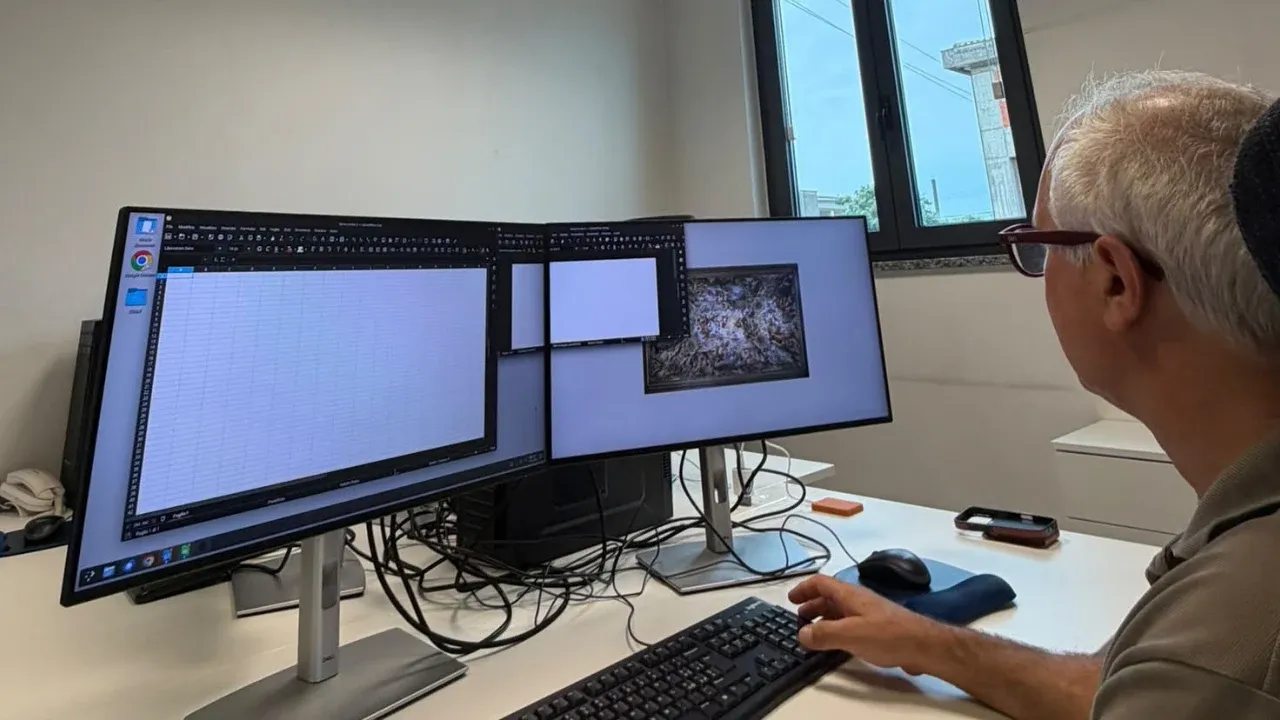
Mišo Oroz shares how he migrated a small transport and logistics company in,Bergamo, Italy to Linux and open source to reduce cost and ordinary technical problems.

Another Nintendo game has a new unofficial PC port with PaperBoat from Harbour Masters for Paper Mario 64.Read the full article on GamingOnLinux.
Canonical recently began producing Ubuntu 26.10 amd64v3 daily ISOs to complement their experimental amd64v3 package archive that they have been trialing the past few release cycles. While we still don't know what any official plans are for amd64v3 with Ubuntu 26.10, the performance gains can be very worthwhile over the generic amd64 binaries even for low-end/budget hardware.