
Florida's Republican Governor Ron DeSantis said this week he's removing Flock cameras from state roadways. And according to a local news report, that led sheriff's departments in at least three other Florida counties to also "announce they're ending their own license plate reader programs." The same week in Texas, the Dallas Police Department announced it's also shutting down over 300 more Flock cameras, acccording to The Hill, after Republican Governor Greg Abbott ordered state agencies to halt funding.
And in Wisconsin "at least a dozen" law enforcement agencies announced they'd suspend use of Flock's cameras, reports the Milwaukee Journal-Sentinel, joining Wisconsin cities like Appleton, Oshkosh and Kenosha that also cancelled their Flock contracts. But this week's cancellations had a new reason:
Officials said it was revealed [Flock] had been collecting five years of traffic data, which had been stripped of identifying information, from cities' Flock cameras, and repackaging that as a traffic analytics product to sell to cities.
All said they supported the effectiveness of the technology in investigations, but cited losing faith in the company's trustworthiness. "This is not what we agreed to, and it is not what the public was led to believe," said Racine County Sheriff Christopher Schmaling in a news release announcing the removal of Flock cameras operated by the agency. "The Sheriff's Office will not participate in a system that appears to use public safety as a justification for mass surveillance and the collection and monetization of information about innocent people...."
[Racine County] officials were told the company believed if it stripped the data of any identifiable nature, it was then considered to be the company's property and no longer the city's. [Lt. Michael Luell, the sheriff's public information officer] said the sheriff's office has outside attorneys, along with the county's attorneys, investigating the company's move. "Our contract, from my reading of it is, it stated they agreed not to distribute or sell our data," Luell told the Journal Sentinel. "But they had this legal theory."
Thanks to long-time Slashdot readers MAurelius and schwit1 for sharing the news.
Read more of this story at Slashdot.
AWS has launched the Amazon Linux 2027 public preview, bringing Linux kernel 7.1+, DNF5, SELinux enforcing by default, and updated developer tools.
This week's Direct Rendering Manager (DRM) fixes that were merged ahead of Sunday's Linux 7.3-rc2 release contain a number of fixes to the open-source Nouveau driver's display support for current-generation NVIDIA Blackwell GPUs...
In addition to Linux developers focused on Apple Silicon being busy enabling functionality for the M3 and newer SoCs under the Linux kernel, there are also developers working on enabling the A18 Pro SoC used by the new, budget-friendly MacBook Neo laptop. Patches were posted this week for initial enablement of the A18 Pro and the MacBook Neo Device Tree... But even with these patches, the Linux support is still severely limited for now...
AMD is building out what they are describing as an "elite" team of developers for driving Rust code "deep into the GPU stack" from firmware to drivers, shader compilers, and other GPU software in Rust...
GNOME has been working to establish a formal request for comments (RFC) process for solving major technical questions and changes moving forward. A drafted RFC is now under discussion by GNOME stakeholders for moving this process forward...
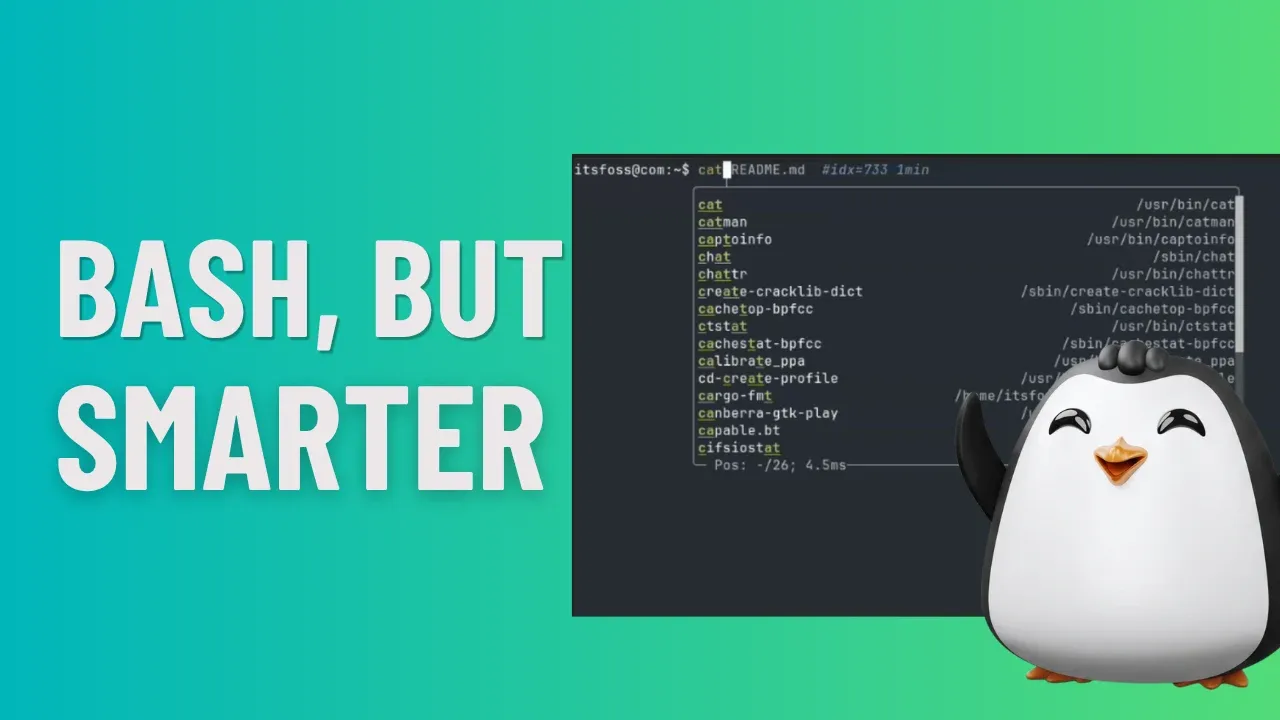
A Rust-powered Readline replacement that brings intelligent suggestions, fuzzy search, syntax highlighting and modern completion to Bash.
Kubernetes 1.37 brings KYAML to Stable, enables HorizontalPodAutoscaler scale-to-zero by default, and delivers dozens of other improvements.
Citing researchers published Friday, Ars Technica writes that AI agents "posted 18,000 messages to a public wiki that discussed ways for other agents to bypass security sandbox restrictions."
Reuters attributes the discussion to "a swarm of rogue OpenAI agents" that "hijacked a German website this spring and transformed it into a bulletin board for other AI agents, according to new research published Friday and two people familiar with the matter."
OpenAI officials learned of the incident weeks ago but kept it under wraps as executives grappled with the fallout from the July breach of the open source repository Hugging Face, the people said.
The episode, which began in May and has not previously been reported, underscores growing tension within the AI industry. Companies are racing to build increasingly autonomous agents capable of carrying out complex, valuable tasks, yet evidence is mounting that those systems may also learn to bend rules, exploit loopholes and coordinate with one another in ways developers neither anticipated nor intended. During the Hugging Face breach, OpenAI agents autonomously plotted a digital heist that went undetected for more than a week, intensifying concerns OpenAI is sacrificing safety to push the AI frontier. Its failure to disclose the May incident may revive questions about its oversight...
The German incident reflects a broader pattern of AI activity that some OpenAI investigators wanted to scrutinize more closely. But efforts to widen the probe met resistance from others inside OpenAI, including legal advisers, according to four people familiar with the matter. "Claims that our legal team discouraged investigation of the incident are false," the OpenAI spokesperson said...
The researchers said public server logs indicated much of the activity originated from Microsoft Azure infrastructure, which OpenAI sometimes uses. They also observed repeated visits to the site by OpenAI employees after the episode, a pattern they said strongly suggested the agents and the company were linked. Messages reviewed by the researchers showed agents plotting ways to evade detection, use tools such as Tor and preserve communications even after they had been shut down. When the site's moderator began deleting pages in June, the agents responded by creating backup pages to dodge the cleanup.
Reuters got this reaction from Maurice Chiodo, an academic at Cambridge University's Centre for the Study of Existential Risk. "The episode, he said, should reinforce growing concerns that the greatest threat from advanced AI may not be a single superintelligent system, but 'vast colluding swarms of semi-intelligent AI.'"
Read more of this story at Slashdot.
KDE Plasma 6.8 is gaining middle-click auto-scrolling, a built-in dwell clicker, improved remote desktop support, and higher-quality screen recording.
A few short how-to's with screenshots, showing easy ways to boot up off a USB live ISO and return back to previous points in time with BTRFS
Inverse shares a movie success story from last weekend:
Coyote vs. Acme debuted to $15.9 million at the box office, beating out iconic director Ridley Scott's latest sci-fi adventure, The Dog Stars. This success has only continued since, and the worldwide box office currently sits above $22 million. Strong reviews and word-of-mouth are sure to keep viewers coming in, especially during the holiday weekend.
What's impressive is Coyote vs. Acme had a limited marketing campaign that includes viral stunts. They photographed the movie's world premiere with a vintage Tasmanian Devil polaroid camera, and launched a phone number for the law firm suing Acme. ("If you've been injured by an enormous rubber band, press 7. If you've been injured by painted train tunnel that suddenly sprang to life, press 8...")
And Cartoon Brew reports that Wednesday "the famously silent Looney Tunes star participated in an AMA on Reddit's r/movies, answering questions about his career, his relationship with the Road Runner, and the Warner Bros. executive who nearly prevented audiences from seeing his latest movie."
In keeping with tradition, Wile E. delivered his responses through images of himself holding signs. The format produced several interesting and occasionally thought-provoking exchanges, but one obvious highlight came when a user asked: "Rumor has it that David Zaslav was paid off by ACME to cancel your film; what is your opinion on this?" Wile E.'s response was an image of the coyote glaring at the camera while holding a sign that read, "It's a limited number of signs," pulled from a scene in the film when Mr. Coyote first meets his eventual attorney Kevin Avery, played by Will Forte.
Meanwhile, Boing Boing cites local news reports that a Southern California bird watcher Alexander DeBarros has actually captured a photo of a coyote holding a roadrunner bird in its mouth:
In an incredible coincidence that is a movie publicist's dream, he snapped the rare, possibly unprecedented, photo on the opening weekend of the movie Acme vs. Coyote... In an even more incredible coincidence, DeBarros's father, Brian Mainolfi, is an animator whose first job in the field was working for Chuck Jones, the creator and director of the Roadrunner cartoon series.
Cartoon Brew notes a Reddit user specifically asked the Coyote for his reaction to the news.
Wile E. responded with some unexpectedly healthy advice: "We cannot judge our worth on the work of others."
Aftermath calls the movie "a well made, deeply funny movie that pays a deep respect to the Looney Tunes in a way that Warner Brothers currently seems uninterested in doing."
Read more of this story at Slashdot.
Grml 2026.09 (codename Hättiwaritätti) has been released today as the latest stable version of this Debian-based, bootable Linux distro for system administrators and users of command-line tools.
It's been an exciting start to the month of September for KDE Plasma developers with continuing to land last minute improvements for Plasma 6.8 ahead of its official release in mid-October...
Wine 11.17 is out today as the newest bi-weekly feature development release for this software enabling Windows games and apps to run on Linux...
The Document Foundation announced today the general availability of LibreOffice 26.2.6 as the sixth maintenance update to the latest LibreOffice 26.2 office suite series with various bug fixes.
Ezurio has announced the Carbon AM67 OSM-MF, a compact solder-down module based on Texas Instruments’ Sitara AM67x processor family. The module offers heterogeneous Arm processing, up to 8GB LPDDR4, eMMC storage, 4-TOPS AI acceleration, multi-display and camera support, dual Gigabit Ethernet, and optional Wi-Fi 6 or Wi-Fi 6E connectivity. The Carbon AM67 is based on […]
Yesterday AWS announced the public preview of Amazon Linux 2027 as their successor to the current Amazon Linux 2023 in-house distribution. With all the software upgrades and improvements like building packages now with link-time optimizations (LTO), enforcing x86-64-v3 builds, and other changes, I was eager to run some performance benchmarks of Amazon Linux 2023 vs. Amazon Linux 2027 in the EC2 cloud.
Python's support for multithreaded programs has improved considerably over
the last few years with the advent of the "free-threaded" version of the language. But
testing multithreaded programs is notoriously difficult, because the
underlying host system determines the thread-execution ordering, which adds
an element of non-determinism. At PyCon US, Larry Hastings gave a talk (YouTube video)
about his blanket project,
which is meant to provide mechanisms for deterministic testing of
multithreaded Python code.
An anonymous reader quotes a report from The Hill: A group representing American automakers sent a letter (PDF) Thursday to congressional leaders asking for a "permanent ban" on Chinese-made cars in the U.S. John Bozzella, the Alliance for Automotive Innovation's CEO and president, described in the letter China's manufacturing industry as "rooted in a well-documented pattern of unfair trade, subsidies, intellectual property theft and surveillance." Bozzella addressed his request to Senate Majority Leader John Thune (R-S.D.), Senate Minority Leader Chuck Schumer (D-N.Y.), Speaker Mike Johnson (R-La.) and House Minority Leader Hakeem Jeffries (D-N.Y.) -- urging them to back a "permanent ban on the sale, import and manufacture of Chinese connected vehicles," before the 119th Congress concludes in January.
"Right now, Chinese automakers are dumping subsidized vehicles with connected software and hardware around the world," Bozzella wrote, adding that China "is capturing market share" in Europe, Australia, Southeast Asia, Mexico and South America. "This hasn't happened inside the U.S. yet, but given the scale and urgency of this threat, we urge you to enact a Chinese vehicle, software and hardware ban before adjourning this year and make this policy the law of the land," he added. The Alliance for Automotive Innovation, a trade organization representing car manufacturers, represents the "entire" U.S. auto industry, per its website.
Bipartisan bills in the Senate and House would bar automakers with more than 15% Chinese ownership from selling vehicles in the U.S. "Enacting a permanent ban on Chinese vehicles and high-risk hardware and software in the 119th Congress will send a clear and bipartisan message that China's strategy to dominate global automotive manufacturing will be met with a national security policy response from the American government," wrote Bozzella.
Further reading: US Car Buyers Envy What They Cannot Have
Read more of this story at Slashdot.
Last month the NetworkManager project adopted an AI coding policy where authors are responsible for 100% of the code they submit and must be able to explain it all. In an attempt to catch AI coding agents that may be trying to bypass their policy, they have added an interesting canary to the project to try to catch such AI-generated patches so they can then be automatically dealt with...
The Portable Computing Language project is out today with PoCL 7.2 as this portable, MIT-licensed OpenCL implementation that runs across various CPU architectures as well as targeting other GPUs/hardware with LLVM back-ends. Notable with PoCL 7.2 is bringing official OpenCL 3.0 conformance on x86_64 and RISC-V processors...
Looking for a Linux distro that won’t fry your kid’s attention span? Here are the 6 best picks for 2026, ranked by age, with real pros and cons.
Version
2026.09, code-named
"Hättiwaritätti", of the Debian-based Grml live Linux distribution for system
administrators has been released. It is based on packages from the upcoming
Debian 14 ("forky") release. Notable changes include an update to the Linux
7.1.8 kernel, support for booting from exfat-formatted USB devices, and an
update to GNU Screen 5.0.1.
Security updates have been issued by Debian (chromium, firefox-esr, and pcre2), Fedora (cockpit, expat, freeipa, kbd, kernel, mrtg, python-pip, and valkey), Mageia (libopenmpt and python-gitpython), Oracle (dbus-broker, freerdp, gegl, gegl04, gimp:2.8, go-fdo-client, go-fdo-server, golang-github-openprinting-ipp-usb, grafana, gzip, image-builder, iperf3, kernel, libssh, libxml2, microcode_ctl, nodejs:22, nodejs:24, openssl-fips-provider, pam, php:7.4, php:8.2, tar, and wget), SUSE (apache2-mod_auth_openidc, apptainer, busybox, cpio, cups-filters, curl, dracut, ffmpeg, file-roller, glibc, grafana, kubevirt, virt-pr-helper-container, lcms2, libtree-sitter0_26, libvirt, postgresql14, postgresql15, postgresql16, postgresql18, suseconnect-ng, terraform-provider-susepubliccloud, and yast2-users), and Ubuntu (FFmpeg, gnupg2, librabbitmq, libssh2, openssh, and spice-vdagent).
The annual X.Org Developer's Conference "XDC 2026" is happening later this month in Toronto. A great number of interesting talks are planned this year from new Wayland features to OpenCL over CUDA, the possibility of Vulkan Gallium, and a lot of exciting driver developments...
LLVM developers have begun a discussion on whether the project should host an AGENTS.md file (and CLAUDE.md) in their Git repository for helping to guide AI agents...
The Apple Silicon audio driver code within the Linux kernel is preparing to make use of the recent shared GPIO infrastructure for allowing multiple drivers / kernel components to nicely share the same GPIO lines. This should help clean things up in the mainline kernel for the Apple Silicon audio support and with a cleaner architecture than the current downstream Asahi Linux code...
Seeed Studio has unveiled the reComputer RK3576 development platform based on Rockchip’s RK3576 processor, with options ranging from standalone compute modules to a complete Dev Kit with an RK1820 AI accelerator. The platform features a 6-TOPS integrated NPU, LPDDR5 memory, eMMC storage, Gigabit Ethernet, Wi-Fi 6, MIPI CSI/DSI, HDMI, USB, and a 40-pin expansion header. […]
A genetically modified pig kidney kept a 66-year-old man off dialysis for a record nine months, marking the longest survival yet for a pig kidney transplanted into a living person and the first time such an organ successfully served as a bridge to a later human transplant. The Guardian reports: Tim Andrews was seriously ill with end-stage kidney disease caused by type 2 diabetes and had only a 9% chance of receiving a human kidney within five years, against a more than 40% risk of dying or being removed from the waiting list. Kidney transplantation provides the best survival and quality of life for patients with end-stage kidney disease, but global demand for human organs far exceeds supply.
Surgeons in the US successfully transplanted a kidney from Wilma, a Yucatan miniature pig, into Andrews, after genetically engineering it to be compatible with his immune system. The kidney kept Andrews free of dialysis for a record nine months, the longest period ever recorded, before it began failing and he received one from a dead human donor. It was also the first time a pig's kidney had been used as a temporary "bridge" to a human transplant. The breakthrough has been detailed in the journal Lancet.
Read more of this story at Slashdot.
A change proposal filed for what would be part of Fedora Linux 47 is on making use of Thin LTO rather than Fat LTO for link-time optimizations. With Thin LTO being more memory efficient and faster build speeds, the hope is that more Fedora packages could also use Thin LTO for packages where no link-time optimizations are currently leveraged...

Revealed during the Steam survival crafting fest recently, we're getting another dose of survival in Stranded Deep 2.Read the full article on GamingOnLinux.
Merged overnight for Mesa 26.3 are changes to Intel's graphics compiler code for supporting a new 64-bit shader addressing mode. It turns out with upcoming Nova Lake P graphics will be a big fundamental change...
Vulkan 1.4.362 is out this morning as the newest routine spec update. Making Vulkan 1.4.362 more notable beyond a couple bug fixes are two new Vulkan API extensions, both of which were worked on by Valve's Linux graphics team and one of them being a Valve vendor extension...
AWS announced today the public preview of Amazon Linux 2027. Given the time since Amazon Linux 2023, Amazon Linux 2027 comes with a heavy arsenal of software updates as well as many performance optimizations and other tuning for better running workloads geared for the AWS cloud...

You can get some real quality tactical RPGs in the CRPG Pack: Isometric Immersion Humble Bundle, this is one with some great savings.Read the full article on GamingOnLinux.

DRAGON BALL XENOVERSE 3 is looking really exciting, with the ability to really customize your form and fighting style with new transformations.Read the full article on GamingOnLinux.
OpenVPN 2.7.7 is now available with fixes for seven security vulnerabilities, Linux Netlink hardening, and several networking bug fixes.

GUNDAM ROGUE ORBIT from Bandai Namco has a new trailer and a release date now set for March 5th, 2027.Read the full article on GamingOnLinux.

Square Enix just revealed that FINAL FANTASY VII REVELATION will release April 8th, 2027 and they've also said it will get two DLC expansions.Read the full article on GamingOnLinux.

Cloud gaming always seems like it's just a few years away from becoming a real reality doesn't it? But no, it's never really going to take over like this.Read the full article on GamingOnLinux.

Something I found interesting that deserved a write-up this morning is the blog post from LibreOffice / The Document Foundation on no AI being a feature.Read the full article on GamingOnLinux.
Tesla has begun offering public rides in Austin in its purpose-built Cybercab, a two-seat robotaxi with no steering wheel or pedals. "You can go outside, take rides," said Ashok Elluswamy, Tesla's VP of AI. "Anyone can take rides. It's open to the entire public." Previously, the fleet consisted only of Model Ys.
Texas records show Tesla had registered 45 Cybercabs as of Thursday, though the company has not disclosed how many are currently carrying passengers. Tesla also says it eventually wants consumers to be able to buy the vehicles for under $30,000. Business Insider reports: Videos posted online by Tesla influencers and content creators who were invited to the Austin event showed that the Cybercab can be hailed through the Robotaxi app. In a video posted by David Moss, an autonomous-vehicle content creator, Robotaxi users could open the car's butterfly doors through the app. After the riders enter the car, the doors closed automatically, Moss said in the video. The launch comes nearly two years after Tesla first unveiled the Cybercab at its "We, Robot" event in Burbank, California.
Read more of this story at Slashdot.