
oumuamua writes: Anthropic researchers have identified an internal activation subspace, J-space, that acts as a functional digital equivalent to the human brain's global workspace. The significance of this discovery lies in demonstrating that Claude's internal architecture satisfies five key cognitive properties of human conscious access -- verbal report, directed modulation, internal reasoning, flexible generalization, and selectivity -- meaning it processes complex, deliberate reasoning within this workspace while routing automatic tasks outside of it. Suppressing this J-space severely degrades Claude's capacity for inference, creative composition, and multi-step logic, while also altering its stream-of-consciousness self-narration.
The tool to inspect J-space, Jacobian lens or J-lens, has profound implications for AI safety and alignment auditing, as it allows researchers to read the model's silent, strategic reasoning, detect situational awareness in "blackmail" scenarios, identify hidden malicious dispositions in reward-hacking models, and observe how post-training installs a self-monitoring "point of view."
Another way to think of it is as an ocean, reports VentureBeat. "If the mind is an ocean, as the paper's authors write in their opening line, they have spent the last year charting its currents in a system that has no biology, no evolution, and no body -- and found, beneath the surface, a structure that looks unsettlingly like the one we use to think."
Read more of this story at Slashdot.
Over on the OpenMandriva
forum, the Linux distribution has reported
sabotage of its repositories by a disgruntled contributor with
administrative credentials. According to "AngryPenguin", an abusive
incident in a distribution Matrix chat led to a user being kicked out of
the chat; that "triggered a cascade of events", which led to people
resigning from the distribution. Eventually, one of those people used
their administrative privileges to delete part of the distribution's GitHub
repository and to "publish an empty package in the cooker
repository, which obsoleted all gnome and cosmic packages, which could have
damaged the systems of people using gnome or cosmic".
We are currently working to restore the deleted repositories and restore
the functionality of the obsolete packages.
[...] We performed a full system audit and, aside from the removed
packages, we found no other violations.
John Deere has agreed to a 10-year FTC-supervised right-to-repair settlement requiring it to provide farmers and independent repair shops with the same repair resources available to authorized dealers. The deal resolves antitrust claims from the FTC and five states alleging Deere monopolized equipment repair services, contributing to higher costs and delays for farmers. Wired reports: The full statement (PDF) lays out obligations for John Deere's repair services, requiring the company to give farmers and third-party repair shops access to the same equipment and repair resources it provides to official John Deere dealers. This includes software capabilities, such as reading and resetting codes and pairing with other software, which customers have long had limited access to, creating delays when diagnosing equipment problems. Delayed fixes can mean delayed harvests, which many farmers saw as a fundamental threat to their livelihoods.
Under the agreement, John Deere will be required to provide this level of access, equipment, and services for the next 10 years, monitored by the FTC. [...] John Deere has maintained that it already has robust repair resources for its customers, including service manuals and diagnostic equipment. In John Deere's press release, the company says the settlement is in line with what it has been doing all along, saying that "the agreement reinforces Deere's continued innovation toward more flexible repair options, emphasizing increased access and transparency for customers. It formalizes Deere's ongoing commitment to expanding access to diagnostic and repair tools."
Read more of this story at Slashdot.
LILYGO has listed two compact development boards for wireless IoT applications: the T-Display C5, a small ESP32-C5-based board with a color LCD and dual-band Wi-Fi 6, and the T-Echo Card, a rugged LoRa-enabled device with GNSS, Bluetooth, NFC, solar charging, and an IP66-rated enclosure. The LILYGO T-Display C5 is built around the ESP32-C5, providing 2.4GHz […]
Meta is rolling out an update that will disable the camera on its smart glasses if the device detects that someone has tampered with or destroyed the privacy LED. "The update is meant to address modders who have taken actions such as physically drilling into the LED light," reports The Verge.
"Meta has previously tried to discourage tampering with the LED light. For example, starting with its second generation glasses, blocking the light with tape or other objects will trigger a prompt asking users to uncover the recording light. However, many modders have found various workarounds for that particular measure."
Read more of this story at Slashdot.
Linux Mint project Clement Lefebvre revealed today in the monthly newsletter some of the new features and improvements coming to the next major version of the Cinnamon desktop environment, such as full Wayland support.
Apple says it will spend $30 billion to design US-made Broadcom wireless connectivity chips, part of its broader push to diversify its supply chain and support domestic chip production. CNN reports: The agreement with Broadcom will lead to the production of 15 million chips in United States and allow Broadcom to invest $1.5 billion to expand and modernize its manufacturing facilities in Fort Collins, Colorado. It is part of Apple's commitment in August to invest $600 billion as part of its "American Manufacturing Program" which it said is dedicated to bringing even more of the company's supply chain and advanced manufacturing back to the US.
Read more of this story at Slashdot.
StatCounter's June 2026 data shows Windows made up 56.55% of global desktop OS usage, dropping Microsoft's share below 60% for the first time in years. Linux, meanwhile, reached 4.39%, "one of its strongest recent showings in the company's desktop OS statistics," reports Linuxiac. From the report: Apple's desktop platforms also remain a major part of the picture. StatCounter lists OS X at 11.89% and macOS at 4.48% for June 2026, meaning Apple's combined desktop presence remains comfortably ahead of Linux in the global chart. Chrome OS follows with 1.21%.
Of course, StatCounter's numbers should be read for what they are: web usage statistics, not a direct count of installed operating systems. The company calculates its Global Stats from page views across websites using its tracking code, analyzing details such as browser, operating system, and screen resolution. In other words, the figures reflect measured web activity rather than the number of machines actually installed worldwide.
Read more of this story at Slashdot.
The open-source, Rust-based Redox OS platform had a very eventful June with many new features implemented and more software ported over to run on this from-scratch operating system...
alternative_right shares a report from 404 Media: A software developer made a Chrome and Firefox extension called Knockoff that automatically hides, grays out, or filters products from sketchy brands on Amazon, which highlights just how many shady brands are on the platform and how commonly they show up on searches for basic items. In just a few minutes of using the extension, Knockoff dimmed product listings for screwdrivers made by "SUNHZMCKP," spoons made by "SACATR," and a lamp made by "ROTTOGOON."
In a tweet announcing the extension, developer Josh Pigford wrote "Sorry to brands like WNPETHOME, EHEYCIGA, YXYL, LU&MN, JOYIN, TOMY, GODONLIF, YOOJEE, LINGTENG, LANEIGE, VISCOO, BIODANCE, COOFANDY, BALENNZ, TOSY, and LUENX." The extension can also hide all sponsored product listings. The extension quickly went viral as a much-needed filter for people who still use Amazon and, for those who don't use Amazon because of its horrendous labor practices and other concerns, it is evidence of what an incredible wasteland the platform has become.
Read more of this story at Slashdot.
We get down and dirty with Collabora Office 26.04, the new desktop twin to Collabora Online, to see how it stacks up against LibreOffice, OnlyOffice, Euro?Office and, yes, Microsoft Office.
Europe's General Court dismissed Apple's challenge to the EU's designation of its App Stores and iOS as "gatekeepers" under the Digital Markets Act. The ruling means Apple remains subject to DMA obligations requiring it to allow alternative app stores, support interoperability with rival services, and avoid favoring its own services over competitors. MacRumors reports: Apple took its case to Luxembourg's General Court in 2024 after the European Commission designated its five App Stores -- on the iPhone, iPad, Mac, Apple TV, and Apple Watch -- as a single core platform service under the Digital Markets Act (DMA), a label that brings with it a set of strict obligations. Designated "gatekeepers" are prohibited from favoring their own services over those of rivals, and are prevented from combining personal data across different services. They also have to give users the option to use alternative app stores.
Apple also challenged the EU's designation of iOS as a gateway platform, a status that requires the operating system allows rival services to interoperate with it. The company also disputed the classification of iMessage as a number-independent interpersonal communications service, or NIICS, which would subject the app to EU telecoms rules. But the General Court said Apple's actions regarding the iMessage service are inadmissible.
Read more of this story at Slashdot.
The Document Foundation today announced the first beta release of the LibreOffice 26.8 open-source office suite set for its stable debut in August...
The OpenMandriva project put out a statement today concerning an attempted distribution sabotage effort. Part of the OpenMandriva GitHub repository was deleted and there was an empty package push made to OpenMandriva's Cooker repository in trying to obsolete all GNOME and COSMIC packages...
BrianFagioli writes: Valve has released Proton 11.0-1, a major update to its Windows compatibility layer for Linux that makes more games playable while fixing a long list of bugs affecting existing titles. The release restores compatibility for many EA games after a recent EA App update, moves classics like Resident Evil (1996), Resident Evil 2 (1998), Dino Crisis, and SHOGUN: Total War from Proton Experimental into the stable release, and adds support for games including Gothic 1 Classic, X-Plane 12, Breath of Fire IV, and Deadly Premonition. Valve also fixed crashes in HELLDIVERS 2, restored No Man's Sky VR support, improved Steam Overlay compatibility with EA games, addressed KDE and GNOME desktop issues, and rebased Proton on Wine 11.0 with updated graphics components. The full list of changes can be found here.
Read more of this story at Slashdot.
An anonymous reader quotes a report from the New York Times: An Australian beach community was confused -- and later delighted -- by the discovery of six metallic-looking spheres that washed ashore last week. The mystery, and the ensuing attention, prompted a bunch of alien jokes from local residents and businesses. But Australia's space agency put the speculation to rest on Monday, saying that the spheres appeared to be rocket debris that had recently re-entered the atmosphere from orbit.
The objects were found on Forrest Beach in the northeastern state of Queensland over the weekend, the state's fire department said. Residents described them as being about twice the size of a basketball. "The recovered objects appear to be pressure vessels from a space launch vehicle," the Australian Space Agency said in a statement, adding that they were "consistent with debris from a foreign rocket body." The agency said that it had identified the likely source of the objects, without providing further details, and was working with international authorities to confirm the vehicle from which the debris originated.
Read more of this story at Slashdot.
Given today's pricing environment around system memory, a Phoronix Premium supporter recently requested some benchmarks to quantify the performance difference from single to dual channel memory. In considering a new computer build, he is contemplating whether to go for a single stick of DDR5 memory until memory prices hopefully subside in the future. For those in a similar boat, here are some benchmarks of single versus dual channel memory on an Intel Core Ultra 7 270K Plus "Arrow Lake" desktop.
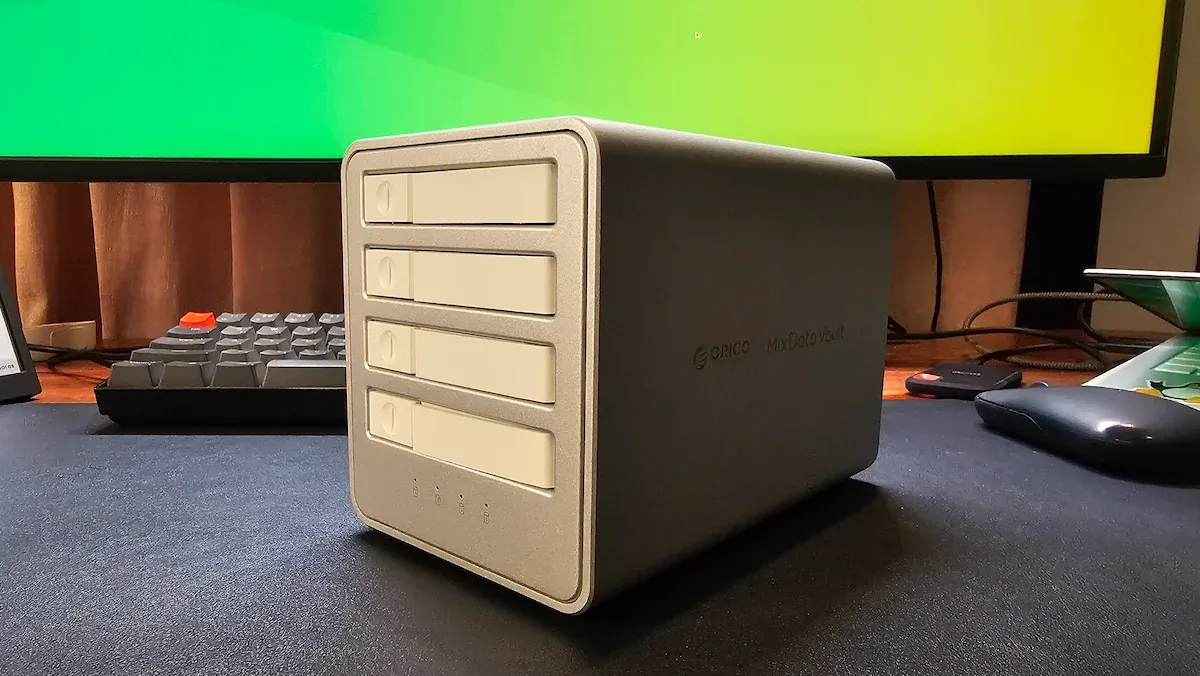
A compact 4-bay NVMe enclosure with USB4 connectivity, tested on Linux with benchmarks.

Vampirium: 1997 looks like nothing else. A minimalist story-rich immersive sim that's coming from Bithell Games.Read the full article on GamingOnLinux.
Intel has formally archived some more of their now-unmaintained open-source projects this week...

If you love challenging combat - Mortal Shell II may be one for you to pick up when it arrives on August 20th.Read the full article on GamingOnLinux.
At the 2026 Linux Security Summit North America, Eric Biggers spoke about
some of the problems with the kernel's cryptography framework, as well
as the recent progress in adding library APIs to allow developers to
use cryptographic functions without using the traditional crypto
API. He walked through a couple of examples to demonstrate the
frailty of the original API and showed how the new library API made
life easier for developers and kernel maintainers.
AMD ZenDNN 6.0 released today as a significant update to this open-source deep neural network library for helping to accelerate inferencing on AMD Zen processors from Ryzen to EPYC...
Security updates have been issued by AlmaLinux (container-tools:rhel8, kernel-rt, libreoffice, nodejs:22, nodejs:24, opentelemetry-collector, perl-HTTP-Daemon, and python-markdown), Debian (dpkg, imagemagick, and postfix), Fedora (betterleaks, docker-compose, firefox, helm, perl-Compress-Raw-Bzip2, perl-IO-Compress, perl-JavaScript-Minifier-XS, python-cramjam, python-fastar, python-pillow-jxl-plugin, python-rignore, and tor), Oracle (grafana, grafana-pcp, and ruby:4.0), Slackware (tftp), SUSE (gi-docgen, glibc, helm, helm3, json-c-devel, kubevirt-1.6, librpmbuild10, python313-dulwich, python313-lxml_html_clean, python313-openapi-spec-validator, and sdbootutil), and Ubuntu (ruby-addressable).
The Linux Mint distribution has published their June development summary that most notably includes work on Cinnamon's Wayland support where it's now ready to graduate...
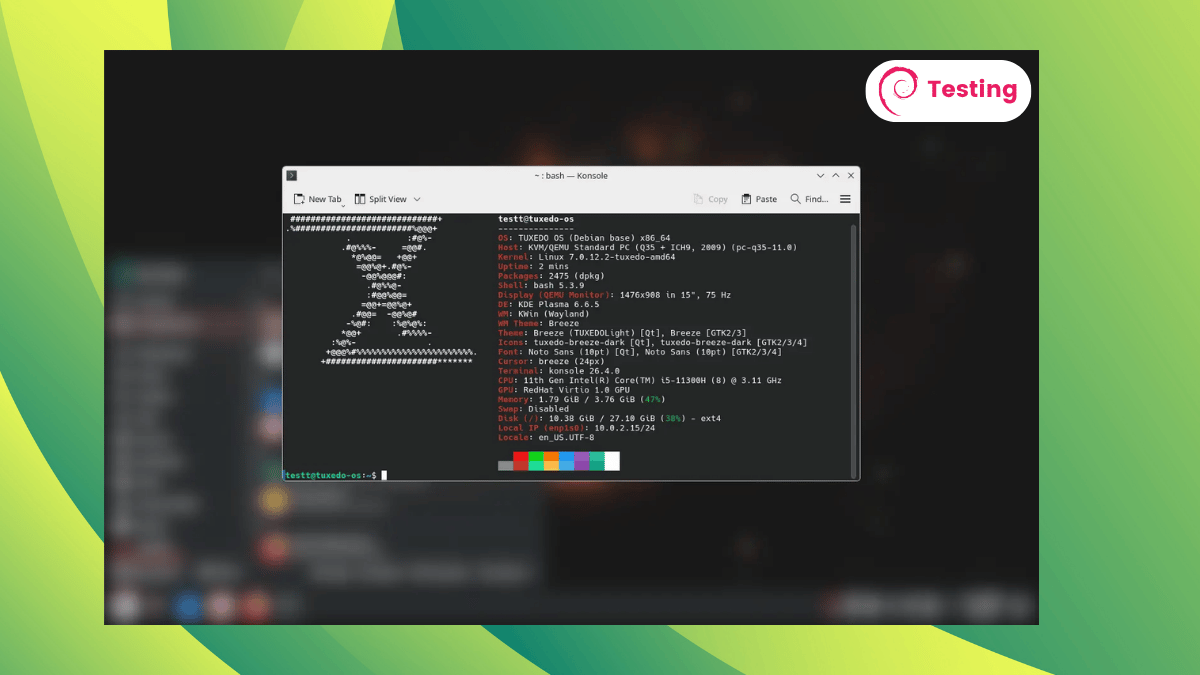
Their dependency on Ubuntu 'snapped' so they are "testing" Debian now.
Valve released Proton 11 today as the latest stable version of this open-source compatibility tool for Steam Play, based on Wine and additional components for playing Windows games on Linux systems.
New Zealand startup Zenno Astronautics has completed the first orbital test of its "Supertorquer," a shoebox-sized superconducting magnet system that uses solar power and Earth's magnetic field to help control a satellite without fuel. The company says the technology could eventually support fuel-free satellite maneuvers, docking, deep-space trajectory changes, and even magnetic radiation shielding for astronauts. Space Magazine reports: The tests began shortly after Mira's launch in November last year aboard the SpaceX Transporter 12 mission and saw the shoebox-size device perform with flying colors, Zenno Astronautics CEO and founder Max Arshavsky, told Space.com. "It's a technology that allows a spacecraft to not tumble violently in space and point in the right direction," Arshavsky said. "The unit has multiple super-conducting magnets that are positioned in different axes. When we power up the magnets, they generate a magnetic field, which interacts with Earth's magnetic field, and because we can control the magnetic field on the satellite, we can control the way in which it turns with respect to Earth."
Superconducting magnets are made of coils of superconducting wire that have zero electrical resistance and can therefore conduct much larger currents than normal wires. That larger current translates into a greater magnetic force. There is, however, a catch: Superconducting materials need to be cooled to extremely low temperatures to gain their wonder properties. [...] The unit housing the superconducting magnets is wrapped in layers of insulation and fitted with a heat pump that removes all the excess heat from the system. Every time the satellite needs a push, the superconducting coils power up, drawing energy from a battery charged by the satellite's solar panels.
"It's converting solar energy straight into useful work," Arshavsky said. "Energy is the one thing that is abundant in space, and you can use it to energize the magnet to create a magnetic acceleration device. It gives you acceleration without fuel." In the future, Zenno Astronautics plans to launch larger systems that could enable spacecraft to dock in space or conduct close proximity operations using just the power of their solar-powered superconducting magnets. Arshavsky envisions powerful magnets that could, in the future, propel spacecraft on missions to the moon and Mars using only solar power.
Read more of this story at Slashdot.
Introduced to the Linux kernel nearly six years ago was the Syscall User Dispatch feature to help with Linux gaming. Specifically, Syscall User Dispatch was developed to help Windows games run on Linux more efficiently. While it was upstreamed in Linux 5.11 for more efficiently intercepting system calls from Windows software under Wine, now in the name of security there are patches working their way to the mainline kernel to more easily disable it...

NTE: Neverness to Everness is the latest bigger Anime gacha game to arrive on Steam from Perfect World Games / Hotta Studio and it can work on SteamOS / Linux.Read the full article on GamingOnLinux.

Humble Choice for July 2026 is out now and there's some really wonderful games included - this is one not to be missed.Read the full article on GamingOnLinux.

More security issues were recently discovered with xorg-server 21.1.24 and xwayland 24.1.13 released to fix up the problems.Read the full article on GamingOnLinux.

Valve just released Proton 11.0-1, a huge upgrade to their compatibility layer to run Windows games on SteamOS / Linux systems.Read the full article on GamingOnLinux.
Japan's Hayabusa2 probe captured rare close-up images of near-Earth asteroid Torifune, revealing a snowman-like shape made of two joined lobes. Phys.org reports: The fridge-sized Hayabusa2 skimmed asteroid Torifune on Sunday in a mission that demonstrated the ability to deflect a potentially dangerous space rock away from Earth. A new image released by the Japan Aerospace Exploration Agency (JAXA) on Monday could aid such efforts, as researchers say near-Earth asteroids vary in their size, shape and surface characteristics.
"The moment I actually saw this image and the scientific data -- it really gave me goosebumps," JAXA scientist Yuya Mimasu told reporters, adding the asteroid "personally looked like a snowman." The black-and-white image, captured by a telescopic camera, showed what appeared to be two round objects joined together. "You can actually see the rocks... I really hadn't expected to be able to take a photo like this, so I'm absolutely over the moon," he said.
[...] Moving at a speed of more than 18,000 kilometers (11,185 miles) per hour, the probe was due to fly within 800 meters (2,625 feet) of the asteroid, but JAXA said it would analyze the distance later. If confirmed, the mission would be one of the closest flybys of a near-Earth asteroid ever. JAXA also said Monday it succeeded in acquiring data from three other devices that can measure the distance from the asteroid and examine the existence of water.
Read more of this story at Slashdot.
The KDE Project released KDE Plasma 6.6.6 today as the sixth and last maintenance update to the KDE Plasma 6.6 desktop environment series with many bug fixes and improvements.
Frame is an open-source media conversion utility that wraps FFmpeg in a native Rust GUI for video, audio, image, subtitle, and metadata workflows.
An anonymous reader quotes a report from Wired: Meta launched its inaugural AI image model from the Meta Superintelligence Labs on Tuesday, its effort to compete with the likes of OpenAI's GPT Images 2.0 and Google's Nano Banana 2 in the AI image generation race. The new model, called Muse Image, rolled out with deep integrations woven into the Instagram app. As part of this update, public Instagram profiles are now automatically opted into being fodder for generative AI remixes. All someone has to do is tag your account's profile in a prompt -- if it's public -- and they can use Meta AI to generate an image using your likeness.
Meta positions this feature as a cheeky way to personalize generations with images of real people. "Whether you want to design a custom event invitation, mock up a collaborative creative concept, or generate a personalized graphic, tagging a username lets Meta AI use public photos to build a visual that's ready to post," reads one of Meta's announcement blogs about the new AI tool. [...] Instagram's help center site includes more details about how this feature will impact users, saying that "people may be able to create content with your Instagram content using AI features at Meta" if you leave your account public and on the default settings. (A previously archived version of this page from 2025 does not include similar, AI-focused language.) Instagram users who want to stop others from using their public posts for AI images (without switching your account to private) must manually disable the options under the app's "Sharing and reuse" settings. However, turning off the setting only blocks future AI generations; any AI images already created from their content will remain.
Meta also says users will not be notified when others create AI-generated content using their posts.
Read more of this story at Slashdot.
Two more security issues were made public today concerning the X.Org Server codebase and in turn XWayland also being affected...
KDE Plasma 6.6.6 arrives as the final maintenance update for the oldstable branch, bringing one last round of KWin, Workspace, Discover, and portal fixes.
Doom developer id Software is reportedly laying off about half its staff as part of Microsoft's broader Xbox cuts. The reported layoffs potentially affects around 90 employees. Engadget reports: While neither Microsoft nor id Software have formally acknowledged the layoffs, one former member of the studio's staff, Michael Maynard, has echoed the 50 percent figure on LinkedIn. According to at least one of Game Developer's sources, that could translate to around 90 job cuts, though it's so far unclear what departments at id Software have been hit hardest.
[...] Bloomberg reported yesterday that as part of the "reset" at Xbox, ZeniMax Media, the parent company of id Software, will be focusing on its biggest franchises -- like The Elder Scrolls, Fallout, Wolfenstein and Doom -- going forward. It's possible that motivated the cuts to id Software, but the developer at least outwardly appears to be already heavily focused on Doom. The studio launched Doom: The Dark Ages in 2025 and an expansion to the game on July 7, 2026. Whatever the reason, the cuts at Xbox aren't over: While Microsoft eliminated 1,600 roles alongside the announcement that Xbox is restructuring, it still plans to lay off another 1,600 employees over the coming months.
Read more of this story at Slashdot.
Microsoft will turn on Windows settings backup and restore by default for eligible Windows 11 business devices outside the EU, starting with Windows 11 26H2. The Register reports:
Now dubbed "Windows settings backup and restore," the service backs up a device's settings and a list of installed Microsoft Store apps, which can then be restored to a new device. Microsoft gave a use case for the technology: "Imagine a lost laptop, a hardware refresh, or an unexpected reset. These are some of the moments when your users need backup most. And that's rarely when anyone wants to discover that backup was never turned on."
However, some organizations might not want it on. Perhaps those with strict privacy or data sovereignty requirements, or those regulated by the EU Digital Markets Act (DMA), for whom the default-on behavior won't apply. Windows 11 25H2 and earlier are also excluded, as is any device with a backup policy that explicitly disables the setting. Everything else running Windows 11 26H1 will get switched on after a feature update, and the same applies to 26H2, currently with Windows Insiders in the Experimental channel.
Administrators might reasonably be wary of this being opt-out rather than opt-in. Backups are useful, but Microsoft is clear that this is not a comprehensive backup solution, calling it only "one step in a broader Windows resiliency effort." The implications still need consideration. An opt-out setting that quietly ships settings data off-device is exactly the sort of thing that adds to administrators' workloads rather than lightening them.
Read more of this story at Slashdot.
Proton 11.0-1 was just released as stable as the newest major version of this downstream of Wine that powers Valve's Steam Play to provide for a great Windows gaming experience across conventional Linux systems plus the popular Steam Deck and brand new Steam Machine...
Samsung's chip division is projected to earn more in 2026 than it made across its previous 40 years in semiconductors, driven by soaring AI-fueled demand for memory and storage. The company's latest quarterly operating profit reportedly topped Nvidia's, making Samsung the world's most profitable tech company for the period. Tom's Hardware reports: Brokerage consensus puts Samsung's full-year 2026 operating profit near 300 trillion won ($196 billion), and its second-quarter figure at about 84.6 trillion won ($55.1 billion). Samsung easily beat the consensus with $58.5 billion when it posted preliminary results on July 7, overtaking Nvidia's most recent quarterly operating profit of $53.54 billion and becoming the most profitable technology company in the world for the period, on the back of AI-driven memory demand.
Samsung's DS division booked 53.7 trillion won ($35.1 billion) of the company's 57.2 trillion won in total operating profit during the first quarter of 2026, roughly 94% of the total, which is why the division's projection sits so close to Samsung's full-year consensus. "This year's profit will exceed the cumulative profit generated over the past 40 years since we entered the semiconductor business," Kim Yong-Kwan told staff, scoping the claim to the chip business rather than the wider conglomerate. Further reading: Samsung Chip Workers To Get $340,000 Average Bonus In AI Boom
Read more of this story at Slashdot.
AMDGPU kernel driver maintainer Alex Deucher of AMD sent out a set of 30 patches today working on clearing out all of the BUG() usage within this Linux kernel graphics driver...
That didn't take long... Mere minutes after NVIDIA confirmed some basic Rosa CPU details and its "Rigel" CPU core, merged to the upstream GNU Compiler Collection (GCC) codebase is initial enablement on the NVIDIA Rigel core...

The popular open world zombie sandbox survival game Unturned just had the source code officially released.Read the full article on GamingOnLinux.
Razer is a brand synonymous with gaming and finally in 2026 they are in the process of certifying their first laptop for Ubuntu Linux. This laptop going through Ubuntu Linux certification is the Razer Blade 18 RZ09-0582 and it offers incredible performance with the Core Ultra 9 290HX Plus processor and GeForce RTX 5090 graphics but with that also comes a very high price tag.
In a blog post today talking up the single threaded CPU performance of their Vera CPU with Olympus cores, NVIDIA confirmed a few basic details of their next-gen Rosa CPU featuring their "Rigel" core...

Diving in deep to the roots of the POSTAL franchise, Running With Scissors plan to release Flesh & Wire sometime in 2027 and we have a new trailer.Read the full article on GamingOnLinux.
NVIDIA today published their latest stable driver update for Linux customers in their newest R610 release branch...

Most creature collecting games have you simply battle to earn XP and level up, with Alchemic Beasts focusing more on companionship and relationships.Read the full article on GamingOnLinux.
William Woodruff, better known online as "yossarian", has published
a blog post to make the case that users should not place their trust
in trusted
publishing:
Trusted Publishing is a mechanism for establishing trust between an
external machine identity (like a CI/CD workflow) and one or more
projects on a package index/registry. The "trust" in "Trusted
Publishing" refers to that trust relationship, and not to anything
else.
It is not, and cannot be, a signal for package trust or
quality. You cannot use it to determine whether a package is safe or
"good," and PyPI consciously stymies attempts to misuse it for that
purpose by not rendering it as a "green checkmark" or anything else of
the sort.
Or as another framing: Trusted Publishing is just a form of
authentication. It doesn't tell you anything other than that an upload
was authenticated, which all uploads to PyPI are.
LWN covered trusted
publishing in June.

Mixing together incremental systems with lots of upgrades while you defend a tower from goblins, Crown Siege is a fun little demo to give a try.Read the full article on GamingOnLinux.
Puranjay Mohan shared some of the
work he's been doing recently on improving the
performance of read-copy-update (RCU) at the 2026
Linux
Storage, Filesystem, Memory-Management, and BPF Summit; his talk would have
been nice context to have earlier in the day when Harry Yoo and Alexei
Starovoitov led a session about the
new kmalloc_nolock() function that
allows for lockless allocation from any kernel context, and which interacts with
the RCU subsystem to allow that. This article therefore covers the two sessions
together and in the reverse order, to provide that missing context.
Security updates have been issued by AlmaLinux (nodejs22 and nodejs24), Fedora (clamav, hplip, kernel, kernel-headers, librabbitmq, mingw-expat, mir, perl-Imager, podman-tui, prometheus-podman-exporter, python-rpds-py, rust-ashpd, rust-busd, rust-gtk4-macros, rust-inferno, rust-quick-xml, rust-reqsign-aws-v4, rust-wayland-scanner, and sandogasa), Oracle (container-tools:rhel8, kernel, mariadb:10.11, mariadb:11.8, nginx, perl:5.32, php, php:7.4, rrdtool, ruby:2.5, ruby:3.3, ruby:4.0, and uek-kernel), Red Hat (kernel, opentelemetry-collector, and python-urllib3), Slackware (c-ares and openssh), SUSE (bind, chromedriver, cryptsetup, s390-tools, dnsmasq, jackson-annotations, jackson-core, jackson-databind, lcms2, pacemaker, perl-Cpanel-JSON-XS, perl-Crypt-SaltedHash, postfix, and python-mistune), and Ubuntu (gnutls28, gzip, openssh, php7.0, python-parsl, python3.10, python3.12, python3.14, request-tracker5, socat, sogo, and tar).
A Microsoft customer support agent even suggested buying a new hard disk instead of acknowledging the problem.
Bavarian Linux PC vendor TUXEDO Computers announced they are switching from Ubuntu to Debian as the base for their TUXEDO OS platform...
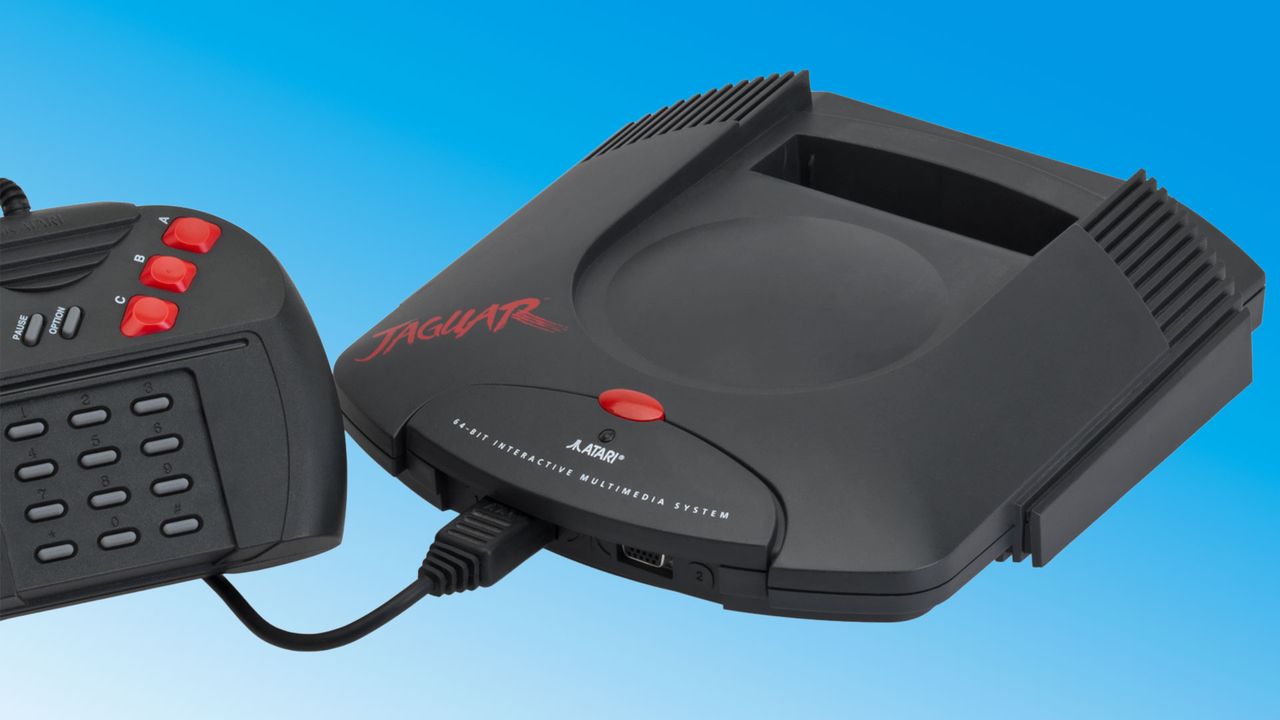
A developer has ported Linux to the Atari Jaguar console. To succeed at the task, they had to overcome severe memory limits, the lack of an MMU, and face off against a handful of unusual hardware quirks.

Unix copyright code infringement back from the dead — IBM is still under fire from Xinuos about 2003-era bytes, with a hearing as recent as June 22.
The Linux kernel's AF_ALG interface was deprecated in Linux 7.2. This interface for letting user-space programs interact directly with the Linux kernel crypto API has proven to be a "massive attack surface" due to a variety of security concerns. With its deprecation in Linux 7.2, some AF_ALG features are already removed and for Linux 7.3 this interface is being further restrained...
One of the original developers behind the work to allow the Linux kernel to be compiled using LLVM/Clang as an alternative to the GCC compiler is now back in the saddle working on LLVM Linux support. LLVM/Clang support for building the Linux kernel has been important for improving code portability and addressing GCC'isms, making use of LLVM compiler features not yet found with the GNU toolchain, evaluating the performance between GCC and Clang, and all the more important these days with the Linux kernel Rust integration...
In 2026 it's not too surprising when seeing old PCMCIA and ISA drivers being removed from the mainline Linux kernel source tree and old very low-speed network interfaces, with arguably the most surprising fast being how long they lasted in the mainline kernel. Meanwhile for the upcoming Linux 7.3 kernel, one of the first 10Gb Ethernet drivers is already set for retirement from the mainline Linux kernel...

Future racer BallisticNG is getting a kart-racing spin-off named Aster League: 2179, with you driving anti-gravity bikes.Read the full article on GamingOnLinux.

Bringing classic PlayStation 2 games to Arm, the ARMSX2 project has made an initial Linux release for testing across various systems.Read the full article on GamingOnLinux.

The Wandering Village: The Last Leviathan is an upcoming water-themed DLC for the unique city builder that brings a whole lot of new content.Read the full article on GamingOnLinux.
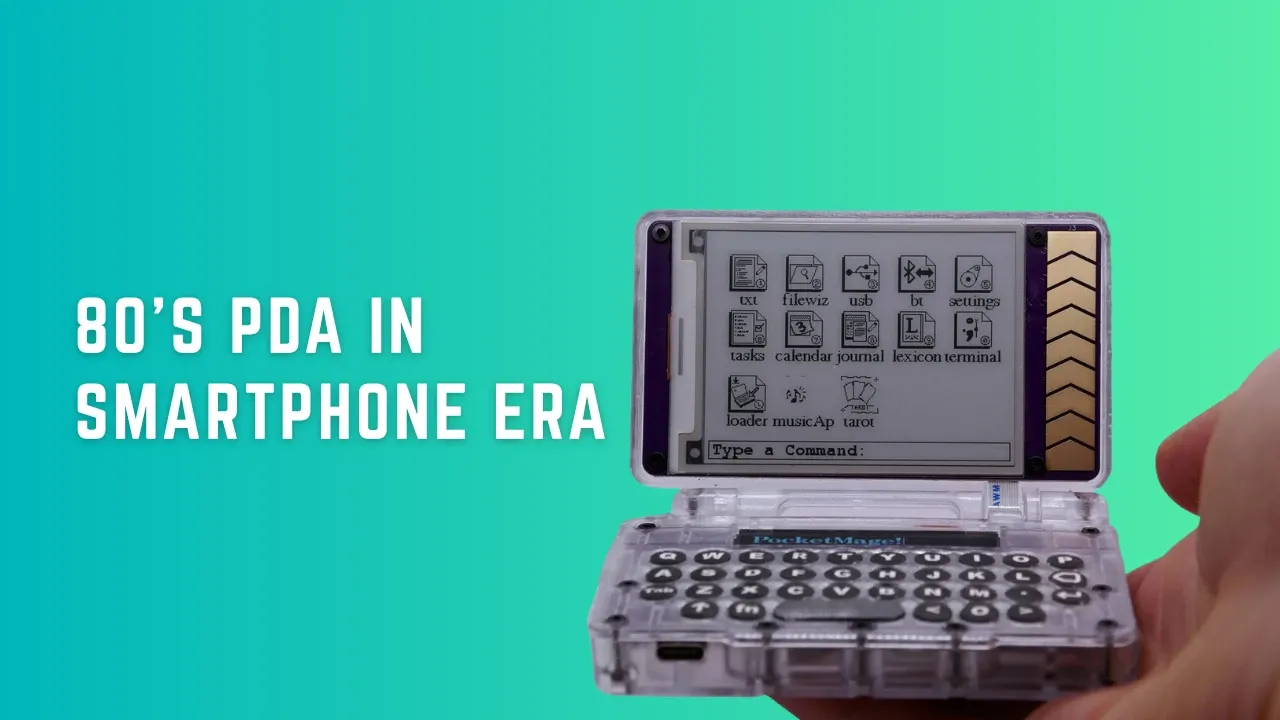
It runs a custom open source OS on an ESP32-S3, has a physical keyboard and dual displays, and starts at $185 on Crowd Supply.
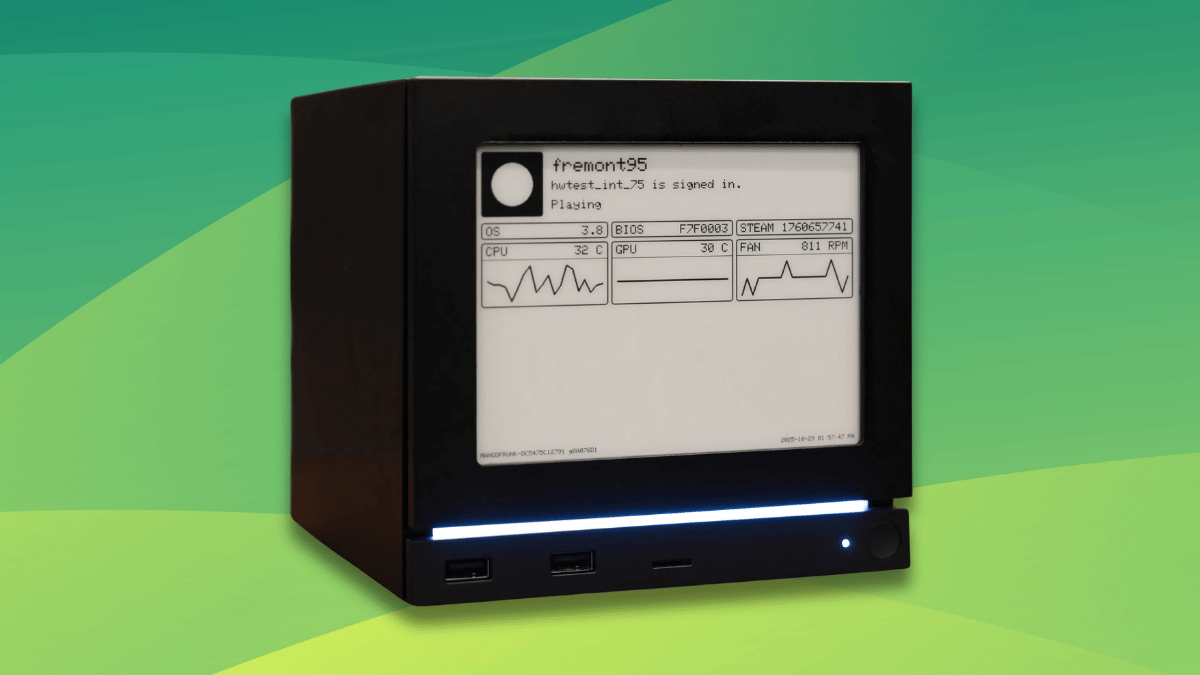
Valve has quietly open-sourced the design files for the Inkterface project, which uses an ESP32 board.
ntpd-rs is set to replace Ubuntu's time-syncing tools, the same way sudo-rs replaced classic sudo last year.
OpenSSH 10.4 is now available with fixes for sftp, scp, and sshd, plus experimental support for ML-DSA 44 and Ed25519 composite signatures.
Axiomtek’s MANO330 is a coming-soon Thin Mini-ITX single-board computer designed around Intel Processor N97 and N150 options, with DDR5 memory, multiple display interfaces, dual LAN, and M.2 expansion for compact embedded systems. According to the product listing, the MANO330 supports DDR5-4800 SO-DIMM memory with up to 32GB capacity. Expansion options include an M.2 Key B […]
The newest, unexpected addition to the Mesa codebase by Microsoft engineers is contributed accelerated AV1 video encoding on the GPU using a combination of DirectX 12 and the Hardware Media Foundation Transform (HMFT) support that is part of the Windows Media Foundation layer...