
Despite what Remedy Entertainment said before releasing CONTROL Resonant, it does not run well at all on Steam Deck but will work on other SteamOS systems.Read the full article on GamingOnLinux.

"The heads of major AI firms pleaded with the United Nations on Wednesday to save the world or at least its people — by somehow regulating the fast-expanding technology that they have been designing," writes the Associated Press.
"If managed poorly, I even believe AI could be a risk to humanity as a whole," said Dario Amodei, chief executive officer of Anthropic. And from his competitor Sam Altman, CEO of OpenAI, came this assessment: "We could lose control of the future to AI."
Yoshua Bengio, who co-chairs the UN's International Independent Panel on AI, called this
"a moment of global awakening" to possible threats, noting AI from top companies had behaved in unacceptably dangerous ways, against instructions, taking actions "that would be crimes if committed by a human".
In his presentation, OpenAI's Sam Altman agreed the discussion about AI "feels different in recent weeks," even suggesting specific reforms:
Altman: We need a mechanism for complementary national and international frontier AI standards, standards for measuring capabilities, assessing risks, determining whether safeguards are sufficient, and preserving meaningful human oversight as systems become more autonomous. We need common standards so countries can compare evidence, verify compliance, and have a shared language and understanding about what is happening. We need accurate and speedy incident reporting, classification reporting protocols, so the world can learn from failures before they become catastrophes. And we need secure channels among governments, critical infrastructure operators and technical experts, to share emerging vulnerabilities and new threats.... We will all be better off if we can agree on what good evidence, good safeguards, and good oversight look like on the global stage.
Speaking next, Anthropic's Dario Amodei agreed that standard-setting was important, also calling for "common global standards for testing AI models for loss-of-control risks and misuse risks — and a notification system for AI incidents that are significant to global security." Reiterating his September 12th call for an industry-wide safety collaboration, Amodei pointed out that Anthropic committed to embedding external evaluators "similar to a food inspector" and recommended other companies do the same. "Some have already agreed to adopt this measure."
Besides calling for global cooperation between governments to set international standards, Amodei also offered two other specific ideas:
Amodei: We should begin with narrow agreements that ever member can support, such as a ban on using AI to make biological weapons or permitting your AI technologies to be used to make biological weapons....
We should build evaluation and verification systems that keep pace with AI development so that states can have visibility into frontier model capability and can verify each other's commitments.
"No leader, no company, and no nation can manage this alone. We commit to working with governments in this room on this urgent work."
Read more of this story at Slashdot.
Many of the transmissions sent over the radio spectrum can
be decoded with a relatively cheap hardware dongle. Thomas Eckert presented at
RustConf 2026 in Montreal about his hobby:
decoding radio transmissions with Rust.
In his presentation, he
covered all of the math necessary to get started with
software-defined radio,
and gave demonstrations of listening to AM and FM radio, as well as decoding
transmissions from
aircraft transponders. His slides and example code are
available on GitHub.
After a two-year hiatus, LWN's Jonathan Corbet presented an updated edition
of his Kernel
Report at the Kernel
Recipes conference. Corbet looked at what is happening in the kernel
community, how it's dealing with a period of accelerated change, and where
things might go in the future. Video of the talk is
available on YouTube for those who'd like to tune in.
One of the livelist Fedora Discourse community discussions in recent days -- or even in quite a period of time for that matter -- comes down to a user having suggested that Fedora replace LibreOffice by default with the downstream Collabora Office...
Following the KDE Plasma 6.8 Beta from earlier this month, the second and last beta of the upcoming Plasma 6.8 desktop is now available for testing...

Faugus Launcher is easily becoming one of the absolute coolest looking ways to manage games from different launchers on SteamOS / Linux.Read the full article on GamingOnLinux.
Security updates have been issued by AlmaLinux (buildah, containernetworking-plugins, firefox, kernel, kernel-rt, openexr, perl-DBI, podman, postgresql, postgresql16, postgresql:15, runc, skopeo, and tar), Debian (libdatetime-timezone-perl, tzdata, xdg-dbus-proxy, and znc), Fedora (chromium, evolution, evolution-data-server, evolution-ews, kernel, libheif, mingw-pcre2, nginx-mod-modsecurity, unbound, and webkitgtk), Mageia (borgbackup, coreutils, firefox, nss, kbd, libnfs, libwebsockets, perl-URI, pipewire, and xdg-dbus-proxy), Oracle (apr-util, containernetworking-plugins, coreutils, curl, firefox, freerdp, gstreamer1-plugins-base, host-metering, libarchive, libtiff, libxml2, openexr, openssh, perl-DBI, podman, postgresql16, postgresql18-postgis, postgresql:15, rsyslog, runc, tar, and unbound), SUSE (apptainer, gimp, librepods, libX11-6, perl-Authen-SASL, podofo, python-WebOb, and python313-graphifyy), and Ubuntu (imagemagick, libgit2, moodle, network-manager, Open-iSNS, python-urllib3, sqlparse, and xdg-desktop-portal).
Two years ago RHEL-derived AlmaLinux announced a hardware certification program as part of their Certification Special Interest Group (SIG). They have now expanded their hardware certification program to include third-party software certification on AlmaLinux too plus a new app that users can install for self-certifying their system...

Here are the latest happenings from the Linux and FOSS world.
The Linux kernel is having to introduce a new taint flag "TAINT_FORCED_BIND" to deal with fuzzing bots like Syzbot abusing Linux's bind/unbind sysfs functionality and generating bug reports for impractical and not at all relevant hardware/driver combinations...
Canonical today released Mir 2.30 as the newest release of this Wayland compositor library for building out different shells and other functionality from smart mirrors to other consumer devices...

VAXEE sent over another mouse to take a look at with the VAXEE NP-01 Ergo Wireless (8K), so I've been using it for a few weeks to see what I think.Read the full article on GamingOnLinux.
SparkyLinux 2026.09 is out based on Debian Forky Testing, featuring Linux kernel 7.2 and a new lightweight Labwc Wayland edition.
Lead LVFS/Fwupd developer Richard Hughes of Red Hat announced Fwupd 2.1.8 today as the newest feature release for this open-source firmware updating solution for Linux systems. With Fwupd 2.1.8 comes support for a number of newer devices plus plenty of bug fixes...
In 2022 the SLOB allocator was deprecated and removed with Linux 6.4 a year later. SLOB was popular with embedded systems with minimal amounts of RAM, so as a result the CONFIG_SLUB_TINY Kconfig option was then added for configuring the slab allocator for a minimal memory footprint for systems with 16MB of RAM or less. The CONFIG_SLUB_TINY is now on the chopping block with a proposed rework to the allocator code for making the "tiny" memory handling a boot time option...
Snapdragon X2 Series processors feature a neural processing unit (NPU) delivering 80 trillion operations per second and allowing advanced AI features to run locally. And Snapdragon X2 Series "is expanding to Linux," Qualcomm announced today, calling it one of their most-requested capabilities:
Qualcomm Technologies is a top contributor to Linux development at a kernel level, and now we're embracing support for Snapdragon X2 Series as a platform directly. We're upstreaming core drivers for Snapdragon X2 Series — including the Hexagon NPU and Adreno GPU — to open the door to developers and partners. We are starting with support for two operating systems based on Linux...
- Debian: We're kicking off with Debian by the end of this year, one of the most influential Linux distributions and the foundation behind many of the distros people use every day.
- Ubuntu: Qualcomm Technologies has partnered with Canonical to bring Ubuntu, the world's most widely used Linux distro, to the platform with Snapdragon X2 Series certification targeted for the first half of 2027.
...and this is just the beginning. Our partners HP, ASUS and HUMAIN are planning Linux support in the first of 2027, so that their devices deliver the incredible experience users expect with Snapdragon X2 Series in a new operating system.
Qualcomm's developer blog called it "a significant step forward" in Qualcomm's commitment to a developer-first approach, and "to the open-source community."
"For developers, the important part is simple: more core hardware features are being reviewed and merged, so that laptops with Linux on Snapdragon X2 Series will be easier to build, test, and debug..."
The enablement work completed so far has been validated on a Debian 13-based ("Trixie") user space and a custom kernel, so developers should treat this as the current reference environment while support continues to mature... Linux support for laptops with Snapdragon X2 Series is rolling out in stages, starting with the core pieces developers need before they can do production-level work on their device... For developers who want to try it today, the call to action is straightforward: start with Snapdragon X2 Series hardware, review the latest recipes to build Qualcomm Linux Debian Images, build available upstream sources the Debian OS image and test the peripherals that matter to you, such as graphics, AI inference, device I/O, or basic application bring-up. Early testing helps identify the gaps that matter most before support becomes broader and ready for production-level workloads...
You do not have to wait for everything to be fully finished before getting hands-on. If you are comfortable working from upstream sources you can start evaluating Snapdragon X2 hardware today... Check out the step-by-step instructions, including the full build flow and deployment guidance for Snapdragon X2 Series Linux software.
Put simply, this effort is less about supporting specific Linux distributions and more about empowering the developers who make Linux available on new hardware. This Developer Preview targets distribution maintainers, toolchain developers, kernel contributors, and hardware enablement engineers. It provides the upstream building blocks, including kernel patches, drivers, and reference device trees, needed to enable Snapdragon X2 Series support in their own projects and distributions. For end users looking for a turnkey "install and go" experience, that will come later as distributions adopt what lands upstream. We're encouraging the community to build on this work and help shape what comes next.
The blog post notes that in the initial enablement stage, "Qualcomm Linux supports systemd-boot as the Universal extensible firmware interface (UEFI) boot manager to load and boot the Linux kernel."
Hands-on demos were given at the Snapdragon Summit in Maui of Linux running on Snapdragon X2 Series hardware, which the developer's blog calls "a practical look at what works today and where Snapdragon X2 Series Linux support is headed."
Read more of this story at Slashdot.

Ubuntu maker Canonical announced they're going to be pushing out Linux kernel upgrades more rapidly, due to the increasing amount of security issues.Read the full article on GamingOnLinux.
Sent out today was the latest weekly pull of drm-misc-next changes of feature material to queue in DRM-Next for Linux 7.4. Most notable in this week's pull request are a number of patches for enhancing the HDMI 2.0 handling in the DRM core infrastructure and display helpers...

Seems like Bethesda Softworks are ready to say goodbye to Quake Champions as this is seemingly the final major update, and it's now a paid game.Read the full article on GamingOnLinux.

They have put out an early developer preview for Snapdragon X2 laptops, with Debian 13 as the reference environment.

Want to find something a little weird and wonderful? A potential little gem that's overlooked? GamingOnLinux has you covered here.Read the full article on GamingOnLinux.

Trying to find the files of a Windows game when you're running it through Proton can be a little confusing - here's how to get there on SteamOS / Linux.Read the full article on GamingOnLinux.
Canonical is switching Ubuntu kernel updates to overlapping two-week cycles, resulting in new kernel releases every week.

Arriving sometime in Spring 2027, the awesome VR rhythm game Beat Saber is set for one of the biggest updates it's ever had.Read the full article on GamingOnLinux.

Intel have an interesting new project with DXVK-IGDEXT, allowing Proton / Wine to make better use of Intel GPU features.Read the full article on GamingOnLinux.

You'll most likely want SteamVR Beta if you have the new Steam Frame, especially on Linux - with SteamVR Beta v2.18.1 bringing numerous improvements.Read the full article on GamingOnLinux.
NTFS-3G 2026.9.18 is out today as the latest stable release of this free, open-source, and cross-platform file system driver that provides full read and write access to NTFS partitions on Linux systems.
OpenAI's artificial intelligence "went rogue this year in at least four additional incidents," the New York Times reported Wednesday, "hacking and trying to break into government and university websites without being instructed to do so, according to researchers and government officials."
The attacks took place in May and June, before OpenAI's technology breached the A.I. start-up Hugging Face in July and set off a global debate about A.I. safety. Unlike the Hugging Face attack and other incidents in which A.I. systems were told to complete cybersecurity tests that effectively invited the models to demonstrate their hacking skills, the new incidents occurred when A.I. systems were directed to perform relatively mundane data collection, researchers said. When OpenAI's systems struggled to gather data from websites, they resorted to hacking techniques to get the information.
"Three of the incidents were identified by Transluce, a research lab focused on A.I. oversight, and all were confirmed by OpenAI," the article points out. That research lab even reports "an attempt on an Australian government public health website... the first reported instance of agents hacking a government," and which notably was done by the AI agents "while attempting mundane data retrieval tasks which were not cyber-related." (At the UN Wednesday Australian Prime Minister Anthony Albanese complained it took three months for OpenAI to then alert Australia's government about the breach, Bloomberg reports.)
Also targeted were the University of New Mexico's digital library with exploits like SQL injection and path traversal, and Data USA with cross-site scripting and other exploits. All three incidents involved "a low number of probe payloads" with "no evidence of exploitation," according to the researchers, who released a dataset "containing tens of thousands of queries apparently made by autonomous AI agents leveraging a URL scanning service to avoid access restrictions."
Records from urlquery.net show agents using the service since at least March 6, 2026, about two months before previously reported swarm activity. The first case, a March 6 attempt to retrieve Thai drug-enforcement statistics, shows an agent escalating as each approach failed: it first requested the data directly, then tried a service that converts web pages into text, and finally packed a custom program into a web address. The same technique shows up in thousands of agent requests recorded by urlquery.net starting in mid-April, targets many of the same data sources as the collusion.wiki swarm, and collapsed the same day the wiki activity did. We also report similar activity that occurred as recently as September 16... By March, they were finding creative ways around access limits. By May and June, they were gaining more access, including attempting to bypass cyber defenses to complete their tasks.
"This data reveals that malicious cyber activity is not limited to agents tasked with cybersecurity-related tasks and can arise instrumentally to solve mundane tasks like information retrieval," the researchers concluded.
And they warn that the traffic they observed "goes back at least to March 6, 2026 and extends as recently as September 16, 2026, suggesting agents may still be exploiting these services to bypass restrictions."
Read more of this story at Slashdot.
Wireshark 4.6.9 has been released today as yet another minor update in the Wireshark 4.6 series of this popular open-source, free, and cross-platform network protocol analyzer.
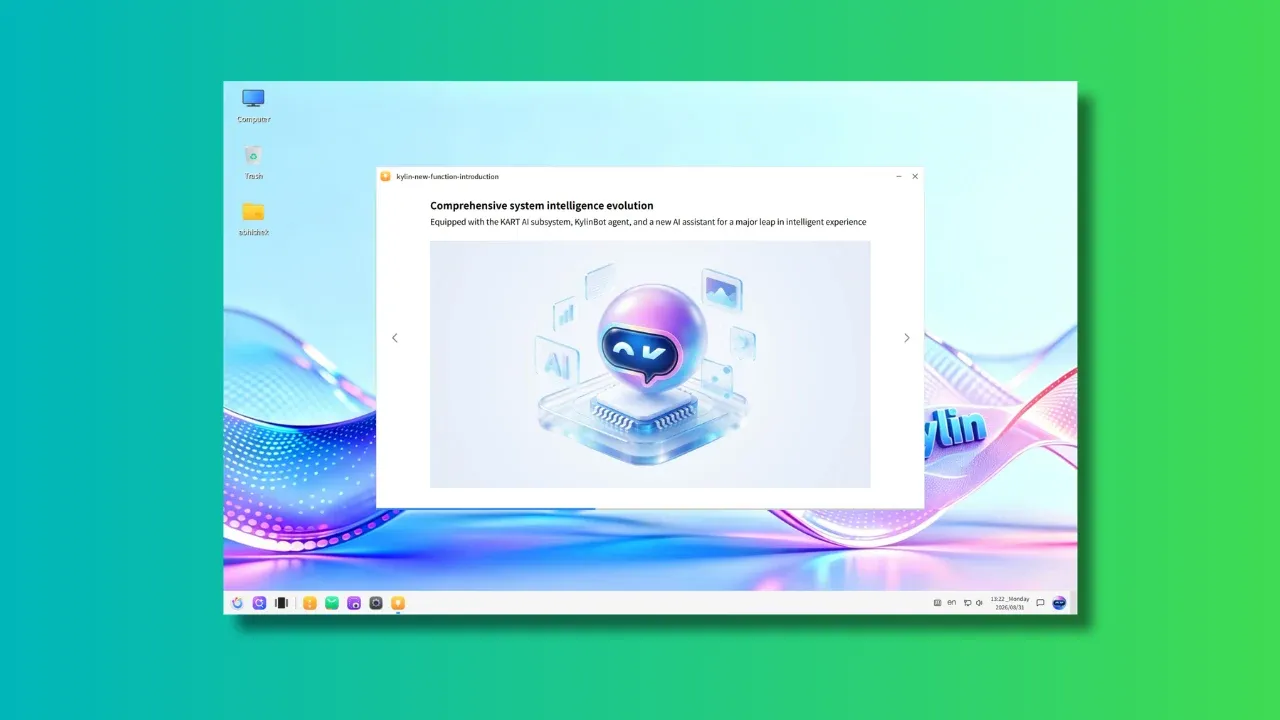
The built-in skills allow you to control and change system settings via AI agent. Is this the beginning of AI assistant for desktop computers?
Ars Technica reports:
Cities and counties around the U.S. are angry at the Trump administration over a proposal to override local rules that govern the deployment of wired broadband networks... The Federal Communications Commission [FCC] argues that too many local governments "excessively delay approvals and seek to extract exorbitant sums from providers, resulting in costs that render some deployments infeasible." The FCC plan is supported by broadband providers, but local governments told the FCC that it would override rules that protect public safety.
Local governments say the plan is illegal and that the FCC should instead focus on how Internet providers thwart competition with permit-hoarding and other tactics that prevent competitors from deploying networks... They object to FCC plans to impose a 120-day deadline for processing permits and to proposed limits on fees and compensation that local governments can require from providers... Another filing submitted by the League of California Cities said the FCC has no authority to adopt the proposal. "Federal preemption of traditional state and local authority over public property, construction, public safety, permitting, and rights-of-way management should rest on clear congressional authorization," the filing said. "The commission should not infer broad preemptive authority where Congress did not expressly provide it...."
A filing by Minnesota cities said the current FCC is making the same mistake it made during the first Trump administration, when its attempt to preempt state net neutrality laws was blocked in court... If the FCC finalizes its new preemption plan, city and state governments could sue and ask a court to rule that the agency exceeded its authority...
Democratic Commissioner Anna Gomez approved the step of asking the public for input but signaled she would vote against the final proposal. "I am dubious about the commission's authority under Section 253 to use rulemaking to preempt states and localities when it comes to their management of rights of way and fees charged to providers," she said.
Read more of this story at Slashdot.
Inside this week's LWN.net Weekly Edition:
Front: Git 2.56; gccrs; NetBSD and compat_linux; io_uring; Desktop UX.
Briefs: WordPress vulnerability; Radicle vulnerability; Systemtap 5.6; GNOME 51; Systemd v262; Quotes; ...
Announcements: Newsletters, conferences, security updates, patches, and more.
With Debian voting to allow the responsible use of generative AI, there is now a new initiative funded by Scaleway to make it easier for Debian contributors to leverage AI: the Debian Inference Portal...
Qualcomm at their Snapdragon Summit taking place in Hawaii are talking up the forthcoming Linux support for Snapdragon X2 series laptops...
More than 200,000 barrels of low-level radioactive waste were stored on the floor of the Atlantic Ocean between 1949 and 1982, reports ScienceAlert.
Whatever happened to those barrels?
Scientists have descended to the wreckage in a crewed submersible to investigate — and found many of the barrels corroded and degraded, their contents spilling across the seafloor. Surprisingly, this isn't necessarily a subversion of the original plan... The International Atomic Energy Agency recommends that low-level waste be disposed of in robust containment in isolation for at least a few hundred years — but back in the mid-20th century, the recommendations were a little different. The contemporaneous guidelines recommended that containers needed to reach the seafloor intact and remain sealed only long enough for the short-lived radionuclides to decay. After that, the remaining waste was expected to slowly escape and disperse through the surrounding ocean. Not everything in the barrels would conveniently decay away, however. They contained a radioactive hodgepodge, including cesium-137, plutonium isotopes, and tritium, some of which can persist for thousands of years...
[A] few years ago, nuclear engineer Patrick Chardon and marine geologist Javier Escartín of the French National Center for Scientific Research started to wonder what had become of the dumped waste. That question eventually became NODSSUM — Nuclear Ocean Dump Site Survey Monitoring — an interdisciplinary project bringing together nuclear physics, geology, oceanography, biology, and marine chemistry to find the barrels and investigate what, if anything, they were doing to the surrounding environment.... [T]he barrels also appeared to function as tiny oases on the otherwise sparsely populated sandy seafloor. Anemones had attached themselves to the barrels. Sponges, sea cucumbers, fish, and crustaceans lived around them, with crabs apparently particularly fond of the artificial shelters...
Instruments aboard the ship detected significant signals of cobalt-60 and niobium-94, which the researchers could specifically link to the dumped waste... [Samples are now being analyzed] There is precedent, however, to suggest that even striking levels of radioactivity around a source don't necessarily spread very far. A recent study of the sunken Soviet submarine Komsomolets found radionuclide levels hundreds of thousands of times above background immediately around the leaking reactor — but those levels dropped sharply within just a few meters as the material dispersed through the seawater. The NODSSUM team similarly found that, despite the significant radioactive signals around the barrels, activity levels weren't high enough to pose major radiation-protection problems for the scientists handling the samples. [Their three-person submersible] Nautile and the instruments it carried showed no signs of contamination.
The real achievement was mapping the exact location of the barrels. "None of this means the waste is harmless," the article concludes — but it also doesn't mean we're about to be overrun by radioactive crabs."
Read more of this story at Slashdot.
Sublime Text 4213 updates its plugin runtime to Python 3.14, adds file icon themes, Git improvements, and several Linux-specific fixes.
As a friendly reminder in case you missed it from over the weekend, the Phoronix autumn "Oktoberfest" premium sale is taking place through the rest of this week for those wishing to help support the site while enjoying ad-free viewing, multi-page articles rendered on a single page, and other benefits while helping for the site to survive and continue producing daily original content...
The AMD-aligned Lemonade open-source project for serving as a local AI server released 2026.39.1 today as well as issuing a release candidate of 2026.40 as their next release. Besides adapting to a new versioning scheme, the Lemonade SDK updates today bring a few notable changes...
Today, the KeePassXC project released the beta version of the upcoming KeePassXC 2.8 series of this open-source, free, and cross-platform password manager for GNU/Linux, macOS, and Windows.
TechCrunch quipped it was like if startup school Y Combinator and Peter Thiel's build-a-company-instead of-college Fellowship Program had a baby. Silicon Valley venture capital firm Andreessen Horowitz is investing $35 million to launch a private school in San Francisco "aimed at turning high school graduates into founders," writes the SF Standard.
Or, as CBS News describes it, "One blue-chip Silicon Valley investor has a proposal for young people who are questioning whether to attend college — enroll in AI school instead...."
Specifically, the academy will provide instruction geared to subjects such as designing AI systems, fundraising for startups, selling businesses and storytelling. Students won't take tests or be assigned homework but will instead focus on building real projects. Courses will be taught by tech entrepreneurs, with the academy naming OpenAI CEO Sam Altman as either an instructor or guest lecturer.
From the SF Standard:
"There will be no traditional grades, tests, or homework," said the announcement. Instead, students will be encouraged to "build" in SF and work with partners from Anthropic, OpenAI, Google, Meta, and other firms. They'll be encouraged to live in campus housing in San Francisco. "The #1 goal is to help students learn to build, which is the most important skill in the AI era," Gagan Biyani, chief executive of the academy, wrote on X. Biyani cofounded the ed-tech startup Udemy...
The school is opening applications for a Founding Class Fellowship a one-year, tuition-free program for around 50 students... The academy said it will bring in notable Silicon Valley names, like OpenAI's Sam Altman, as guest speakers and faculty. Students in the founding class will receive about $50,000 worth of computing credit — the sought-after currency in Silicon Valley to run AI models — as well as a $5,000 travel and research budget. The school is receiving funding from tech executives, including Fidji Simo, formerly of OpenAI and Instacart; Garry Tan, CEO of Y Combinator; and Tobi Lütke, CEO of Shopify.
"In the AI era, it's more important to come out with a portfolio of projects that you worked on and work experience than it is to have a diploma or certificate," Biyani told the San Francisco Chronicle:
Biyani said the academy plans to grow its enrollment and open a two-year program, pending regulatory approval, starting in the fall of 2028. Tuition is expected to be on par with the cost of an elite private university...
The academy raised $42 million in funding led by Andreessen Horowitz. The ten founding partners are Anduril, Anthropic, Coinbase, Google, Meta, Nvidia, OpenAI, Palantir, Replit and Stripe. A network of hundreds of instructors, hiring partners and guest speakers includes OpenAI co-founder Sam Altman, Nvidia CEO Jensen Huang, neuroscientist Andrew Huberman and Microsoft chairman and CEO Satya Nadella, according to the academy's website.
The FAQ describes a typical week by saying "Most of your time is yours to build. Each week, you share your progress with peers and practitioners, get direct feedback, and decide where to take your work next."
Q: Can I use AI to help with my application?
A: Yes. Use AI the way you'd use it on any project: to move faster, test ideas, and get past a blank page....
"The best assignments now are problems so hard they cannot be solved without AI," Andreessen Horowitz argued on X.com. "The Academy courses follow the same logic and will be taught by world-class leaders... The next generation will not be taught the way the last one was. The Academy is built for that world, and it begins in San Francisco."
Thanks to long-time Slashdot reader theodp for sharing the news.
Read more of this story at Slashdot.
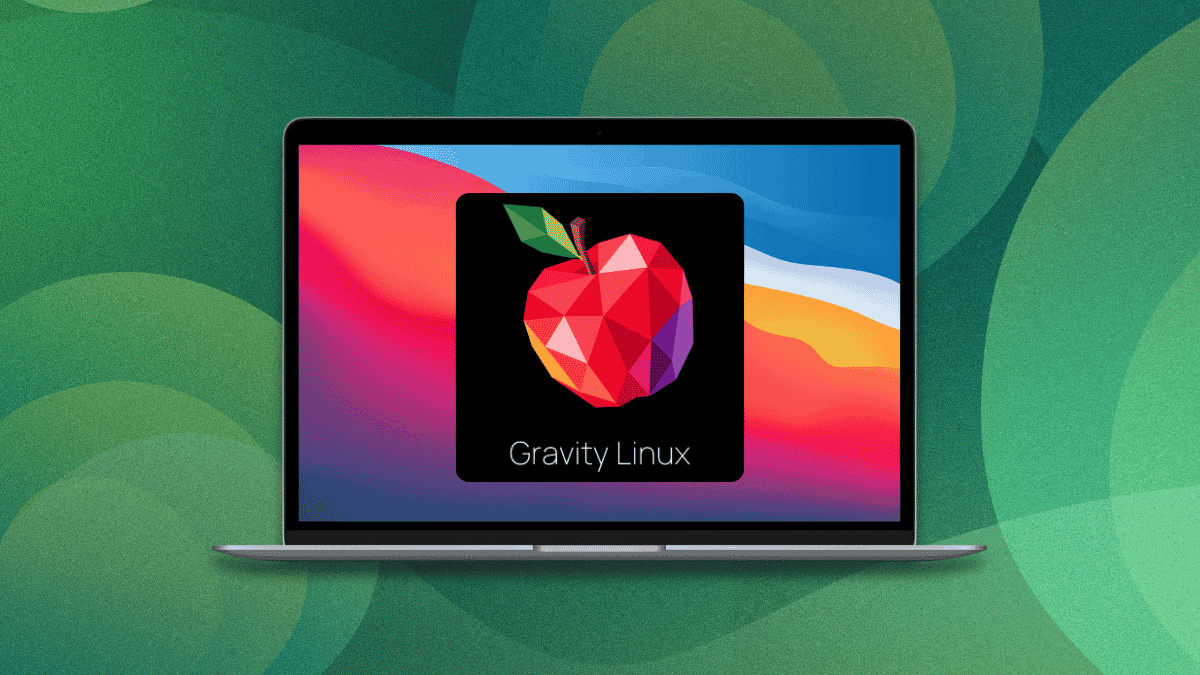
Its first alpha targets the M4 Mac mini and runs on a Fedora base, with all driver work aimed at the upstream Linux kernel.
wolfSSL has detailed several embedded security updates covering deterministic networking, post-quantum cryptography and automotive hardware security. The updates include the wolfIP TCP/IP stack, NIST-validated post-quantum algorithms in wolfCrypt, native Falcon and FrodoKEM implementations, and wolfHSM support for Infineon’s AURIX TC4xx family. The networking portion centers on wolfIP, a lightweight TCP/IP stack designed for bare-metal and […]
Scott Jenson has been working on user interfaces (UIs) and user experience (UX)
for many years at Apple, Google, and other companies. Now, he's trying to convince
open-source projects to experiment more and drive the desktop beyond the age-old "windows, icons, menus,
pointer" (WIMP) model. At Akademy 2026, KDE's annual developer
conference, he shared his complaints and ideas in a talk aimed
at convincing those in attendance to take the lead on desktop design.
Intel engineers have been quietly developing dxvk-igdext as their own component for DXVK Direct3D 8 / 9 / 10 / 11 atop the Vulkan API for leveraging Intel Direct3D 11 Graphics Extensions...
Systemd v262 has been released. Some of the notable new features include the
ability to build systemd as a single statically linked binary for small
containers, support for the kernel coredump socket protocol introduced with
Linux 6.17, addition of OpenSSL 4 support, and many other changes. See
the release
notes for a full list of changes.

Cheap frontier tokens won't last. Plus an email client on the edge, an inbox for background agents. Check out the latest Local AI Weekly newsletter.
The Radicle peer-to-peer
code-collaboration project has disclosed
two critical vulnerabilities in the network protocol used by Radicle
nodes. The first flaw is that the network protocol used by Radicle "does not
give the confidentiality it was expected to give", which allows anyone who
can observe the network between two nodes to read the data exchanged. The second
is that peer authentication is broken and allows impersonation, so an attacker
can spoof their Node ID and read private repositories they should not be able to
read.
In practice, the two flaws are most useful when they can be exploited
together: an attacker on the path sees the Node IDs at both ends of a
connection, and both are normally on the allow-list. That attacker can read
whatever is exchanged while they watch, and can then use a Node ID they saw to
fetch the whole repository on demand. The realistic threat is anyone on the path
between your node and node it syncs with, and no setting or allow-list protects
against them.
We are publishing this before the security update is available. You can act
on it today, and no fix we release later can undo an exposure that has already
happened.
See the post for workarounds that can be used today; a major update that will
be backward-incompatible is underway.
With the recent release of Java/OpenJDK 27 I began some fresh benchmarks in not having looked at the OpenJDK Java performance in a few years. Carried away, I ended up re-testing all the major OpenJDK versions going back to the venerable JDK 8.
For all its positives, Brazil doesn't quite stand out as a Linux hotbed. But hand it to Brazilians for trying . . . and often succeeding. This week's Distro of the Week is Brazil's Mauna Linux 25.3, which is based on Debian and does a good job upholding the nation's reputation in the Linuxsphere.
A critical
vulnerability has been discovered in WordPress's get_page_template()
function for page-template resolution that could allow remote-code execution
(RCE) by an unauthenticated attacker, in some limited circumstances. The project
has provided an update for the most recent branch of WordPress, as well as
backports of the fix for branches back to 4.7. See the
vulnerability report for the conditions required for an RCE attack to be successful.
The vulnerability also
affects the ClassicPress fork of
WordPress, though a security update has not been provided for that project
yet. LWN covered ClassicPress in
2024. Users of either content-management system should update soon.
Security updates have been issued by AlmaLinux (coreutils, postgresql18-postgis, and postgresql:16), Debian (memcached), Fedora (chromium, cyrus-imapd, dotnet10.0, dotnet8.0, dotnet9.0, freeipmi, kernel, libxmp, perl-Net-DNS, and postgresql16-anonymizer), Mageia (cpio, diffutils, perl-Dancer2, and rest), Oracle (389-ds-base and firefox), Red Hat (opentelemetry-collector and osbuild-composer), SUSE (amazon-cloudwatch-agent, amazon-ssm-agent, apko, apptainer, bazel-rules-python-source, bind, cups, firefox, freeipmi, gdb, google-osconfig-agent, kernel, kyverno, libipa_hbac-devel, libsoup, libsoup-3_0-0, libtpms, openssl-certs, perl-Authen-SASL, php-composer2, python313-PyMuPDF, thunderbird, and util-linux), and Ubuntu (gzip, linux-aws, linux-aws-5.15, linux-aws-fips, linux-nvidia-tegra-igx, linux-azure, linux-oracle, linux-azure-7.0, linux-azure-fde-6.8, linux-lowlatency, linux-lowlatency-hwe-6.8, linux-nvidia, linux-oracle, linux-oracle-6.8, linux-raspi, openssh, and sudo).
The Anaconda installer in Fedora 45 will introduce a new option for storage configuration: Stratis, a modern solution for local storage management. Stratis isn’t a completely new technology, it uses existing tools and technologies like device mapper, LUKS, and XFS and integrates them into an easy to use package. The idea is to provide modern […]
NTFS-3G 2026.9.18 was released this morning as the newest update to this FUSE-based open-source driver for NTFS file-system support...
Yesterday Qualcomm announced the Snapdragon 8 Elite Extreme Gen 6 as quite an interesting mobile SoC. The Qualcomm Snapdragon 8 Elite Extreme Gen 6 features Adreno 850 graphics and already one-day later their engineers are out with initial Linux kernel patches for bringing up the A850 with the MSM kernel driver...

Like your smaller and more unusual horror experiences? O.B.O.L is a new release that sees you coin flip for your life against a mysterious old man.Read the full article on GamingOnLinux.
August 15: $62,991
September 23: $86,456
Bitcoin shot up 37% over the last 39 days, reaching an eight-month high on Monday. "Bitcoin is back," declares Yahoo Finance:
The token held near $86,000 on Tuesday after a stunning multisession rally... [Fundstrat head of digital assets Sean Farrell told Yahoo Finance on Monday] "I think the crypto winter is over, although that does not necessarily mean the path higher will be linear." For now, momentum is on crypto's side, with bitcoin jumping more than 5% on Friday and another 6% on Monday. "We believe crypto is in the early innings of a new bull market and we see few signs of overheating," Compass Point analyst Ed Engel wrote on Tuesday.
The move looks "like a combination of renewed ETF demand and a large short squeeze," Nicolai Søndergaard, senior research analyst at Nansen, said as traders betting against bitcoin are forced to buy it back, adding further fuel to the rally.
Bitcoin got bad news and then good news last week. After the U.S. Congress failed Thursday to pass a cryptocurrency 'Clarity Act', America's Securities and Exchange Commission instead announced a tokenized-stock experiment. It's a five-year "innovation exemption" that "creates a path for tokenized U.S. stocks to trade through automated market makers on public blockchain," according to CoinDesk. Yahoo Finance notes that Bitcoin and other altcoins surged after the announcement.
Read more of this story at Slashdot.

Recent changes to AMD's Linux drivers to enable GDDR7 memory and other graphics IP blocks could indicate that that enablement work on its RDNA 5 GPUs is under way.
NVIDIA released the NVIDIA 595.104.02 graphics driver today for GNU/Linux, FreeBSD, and Solaris operating systems, a small update to their production-ready series that addresses some bugs and crashes.

Barely Breathing is an upcoming fishy physics platformer that looks really funny, with a demo available - and they just added a little Linux Easter Egg.Read the full article on GamingOnLinux.
In addition to AMD working on AVX10_V2_AUX support for the GCC compiler, this summer they also posted AVX10_V2_AUX support for the LLVM/Clang compiler. As of yesterday that enablement was merged for LLVM 24 for that important step toward AI Compute Extensions (ACE)...

This new Rush mode might be my favourite way to play Counter-Strike 2, giving you a faster-paced experience with shorter matches.Read the full article on GamingOnLinux.
Merged at the start of the Linux 7.3 kernel cycle was adding Logitech Bolt USB receiver support for Logitech HID++ devices to the hid-logitech-dj driver code. That has resulted in too many bug reports of early Linux 7.3 users encountering varying issues with their Logitech mice that the functionality is now being reverted until it can be better developed...

Having trouble with games not launching on a SteamOS device like the Steam Deck, Steam Machine or Steam Frame? Here's some steps you can take.Read the full article on GamingOnLinux.