A new proposal being discussed is introducing a Linux user-space API to be able to specify frame rate targets for Variable Refresh Rate (VRR) handling on the Linux desktop...
Pierre-Emmanuel Patry and Arthur Cohen gave a talk at
RustConf 2026 on the
status of the Rust frontend for GCC (gccrs), with a particular eye toward the
goal of
compiling the Linux kernel. Patry gave a follow-up talk for a more
kernel-focused audience at
Kangrejos the next week, which Cohen could not attend. The
gccrs project is
making good progress overall, but it will still be some time until the compiler
is usable.
Security updates have been issued by AlmaLinux (apr-util, corosync, curl, freerdp, gstreamer1-plugins-base, libarchive, libtiff, libxml2, openexr, openssh, rsyslog, sudo, tomcat, unbound, webkit2gtk3, yggdrasil, and yggdrasil-worker-package-manager), Debian (chromium), Fedora (alsa-plugins, amarok, aqualung, atomes, attract-mode, audacious-plugins, audacity, baresip, blender, calibre, cantata, cef, chromaprint, chromium, digikam, doctl, dragon, ffmpeg, ffmpegthumbnailer, ffmpegthumbs, ffms2, fooyin, glaxnimate, goldendict-ng, gpac, gstreamer1-plugin-libav, guacamole-server, guvcview, haruna, hedgewars, icecat, janus, k3b, kdenlive, kf5-kfilemetadata, kf6-kfilemetadata, kpipewire, lazygal, lego, libcamera-apps, libheif, libopenshot, libopenshot-audio, libvncserver, localsearch, mat2, minidlna, mivisionx, mixxx, mlt, monado, mpd, mpv, mpv-mpris, neatvnc, notcurses, nv-codec-headers13.0, obs-studio, obs-studio-plugin-droidcam, obs-studio-plugin-pwvideo, obs-studio-plugin-vaapi, obs-studio-plugin-vkcapture, obs-studio-plugin-webkitgtk, olive, openal-soft, OpenBoard, opencv, openmw, opustags, os-autoinst, patool, Pencil2D, perl-HTML-FormHandler, pianobar, prometheus-podman-exporter, python-audioread, python-torchaudio, python-torchvision, qmmp, qmmp-plugin-pack, qmplay2, qt5-qtwebengine, qt6-qtmultimedia, qt6-qtwebengine, qtox, retroarch, rocdecode, rocdecode7.2, rsgain, siril, squeezelite, swayimg, tigervnc, timg, unpaper, vlc, vtk, waypipe, wf-recorder, wivrn, wxsvg, xine-lib, xmms2, xpra, xscreensaver, yle-dl, znc, and znc-clientbuffer), Mageia (nmap, pcre2, and vim), Oracle (curl, openssl-fips-provider, sudo, tomcat, webkit2gtk3, yggdrasil, and yggdrasil-worker-package-manager), Slackware (util-linux), SUSE (cadvisor, chromium, coredns, fake-gcs-server, freeciv, gh, glibc, google-guest-agent, google-osconfig-agent, hugo, kbd, kbfs, keybase-client, libheif, libpcap, mbedtls, pcre2, python-asteval, python-jwcrypto, python311, python313-ansi2html, shadowsocks-rust, sofia-sip, and trivy), and Ubuntu (clamav, expat, ghostscript, glib2.0, gst-plugins-base1.0, gst-plugins-good1.0, libsoup2.4, libsoup3, libssh2, libxml2, linux-azure-6.8, linux-azure-fde, linux-azure-fde, linux-azure-fde-7.0, linux-azure-fde, linux-intel-iotg, linux-kvm, linux-oracle, linux-xilinx-zynqmp, linux-gcp-6.8, linux-ibm, linux-xilinx, linux-ibm, linux-nvidia-bos, linux-raspi, memcached, openjdk-17, openjdk-21, openjdk-25, openjdk-8, openjdk-lts, rsyslog, and strongswan).
SPEC back in May 2025 introduced SPECViewPerf 15 as the newest major release of this industry-standard workstation graphics benchmark. Sadly, the Linux support once again fell behind with SPECViewPerf 15 only debuting on Microsoft Windows. Today though Linux has caught up with SPEC releasing a Linux-native build of SPECViewPerf 15.0.1...
Systemd 262 made it out today as the newest feature update to this Linux init system and service manager. As with most systemd releases, it's heavy on new features and functionality...
The open-source YSERVER project as a modern X11 sever written in the Rust programming language with the help of Claude Code is out today with a new feature release. Most notable for this AI Rust X11 server is X Display Manager Control Protocol (XDMCP) support for multi-user shared desktops...

Two U.S. missiles hit an elementary school in Iran, killing over 150 people including 123 children on the first day of the Iran War. But Gizmodo notes that a new Bloomberg investigation cites U.S. officials involved in an unreleased internal Pentagon review who blame "a cascade of preventable failures that included an overreliance on an AI tool built by Palantir."
According to the officials who spoke to Bloomberg, some personnel inside U.S. Central Command leaned too hard on the AI inside the Maven Smart System, an AI-powered data integration and targeting platform developed by Palantir to accelerate intelligence analysis and decision-making. The Defense Department has reportedly made the software tool a cornerstone of military operations over the past year... Officials said some users expected Maven to flag stale records or contradictions in the intelligence assembled for potential targets, though it is not clear why they thought the system would do that. The Minab [elementary school] site, which was cataloged as an Islamic Revolutionary Guard Corps facility due to outdated data, was fed into Maven with other candidates and came out as a recommended day-one target. Target-list work that once took hours was condensed into minutes.
A Palantir spokesperson told Bloomberg the company "is not responsible for the underlying data nor identifying intelligence deficiencies" and that there is no evidence its software was at fault. Two people familiar with Palantir's Pentagon contracts said the government keeps primary responsibility for the quality of the information that's fed into Maven. After the strike, Palantir added features that "re-review underlying intelligence to identify factors that would disqualify a target and flag inconsistencies and inaccuracies that human review may have missed," a person familiar with the work said. That new functionality is said to have already caught some anomalies...
More than 1,000 Iranian targets were hit in the first 24 hours, and according to Bloomberg's sources, that pace compressed the time available for additional confirmations. Staffing on civilian harm mitigation teams across the U.S. Department of Defense had also fallen by roughly 90% over recent years, shrinking to fewer than 20 people overall. The U.S. Central Command's group shrank from 10 people to one. No member of those teams reviewed the Minab site before the missiles were up in the air.
A separate inquiry by the United Nations' Independent International Fact-Finding Mission on Iran this week reached the conclusion that there were reasonable grounds to believe the United States committed the war crime of launching an indiscriminate attack.
Read more of this story at Slashdot.
The Omarchy project announced today that Alibaba Cloud will be contributing a total of three million USD to their foundation for helping development of this Linux distribution and working to make it an "ideal agentic operating system"...

A resurfacing firmware lock is catching out new buyers and tinkerers who want to revive dead hardware.
As a friendly reminder in case you missed it from over the weekend, the Phoronix autumn "Oktoberfest" premium sale is taking place through the rest of this week for those wishing to help support the site while enjoying ad-free viewing, multi-page articles rendered on a single page, and other benefits while helping for the site to survive and continue producing daily original content...
Sent out today was a new HID subsystem pull request of fixes for the week to the Linux 7.3 kernel. Besides some conventional bug fixes are also supporting some additional devices via quirks and new IDs...
The feature is currently in testing on Android, with iOS support still a bit far away.

The Hollowing is an atmospheric first-person horror flight sim where you fly alone across a mist-shrouded Megastructure, from the Lorn's Lure developer.Read the full article on GamingOnLinux.

Happy Wheels is a game all about getting from A to B, and failing constantly while creating a rather amusing bloody mess.Read the full article on GamingOnLinux.
Later this week it looks like the latest round of Cache Aware Scheduling fixes will be merged for enhancing this kernel scheduler functionality for grouping related tasks together on CPU cores that share the same last level cache (LLC). Cache Aware Scheduling can lead to better cache locality and lower latency by avoiding the costs of potential cache bouncing -- that is when bugs don't get in the way...
A convenient addition that surprisingly hasn't been added to the Linux kernel until now is /sys/devices/system/cpu/sev/sev_status as a new sysfs interface for reporting the AMD Secure Encrypted Virtualization (SEV) status...
ZLUDA as the open-source project working on CUDA for non-NVIDIA GPUs like AMD Radeon graphics cards now has implemented support for some of NVIDIA's core cuFFT APIs...
It seems the KDE developers want to allow some use of generative AI / LLMs, as they're working on a policy of guidelines for it.Read the full article on GamingOnLinux.
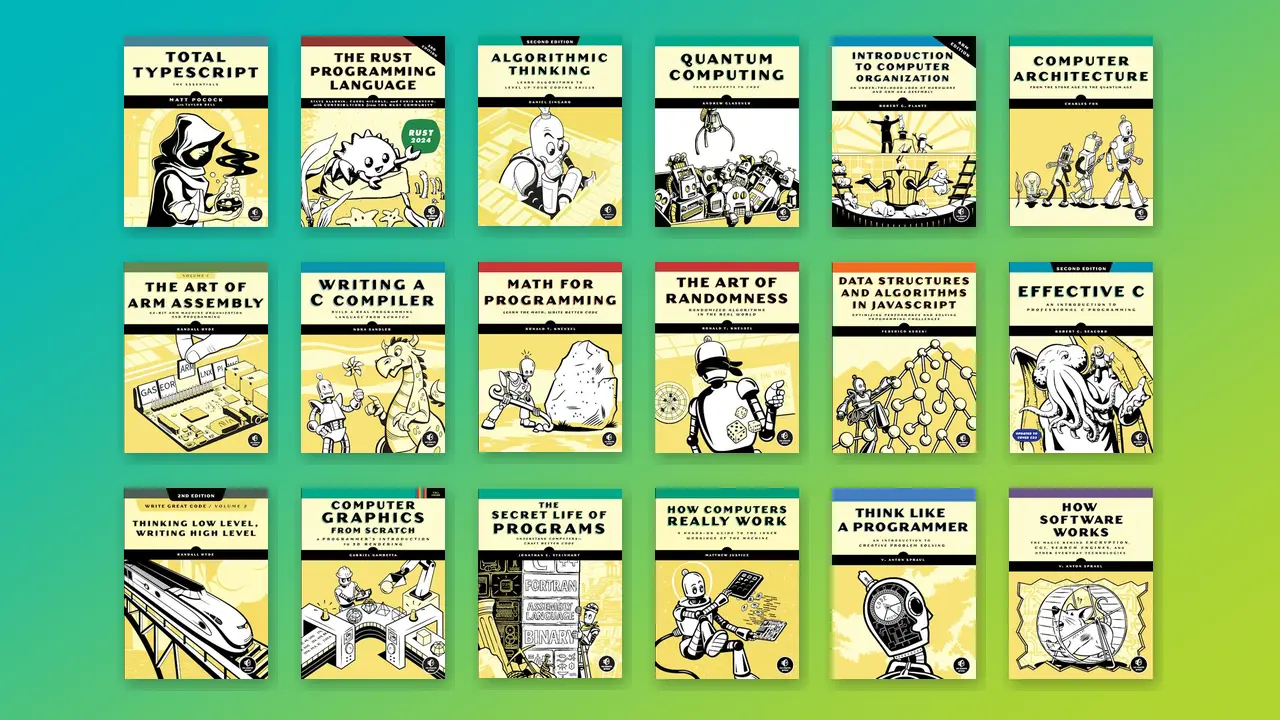
DRM-free ebooks on programming from the prestigious No Starch Press. Part of your purchase gets donated to EFF.

Mechabellum is an auto-battler that's a bit like future space chess in a way, it has some truly epic battles and just had a massive upgrade with a free edition.Read the full article on GamingOnLinux.
Monday Google opened preorders for its "Googlebook" laptops, pricing them at $899. A Google's blog post added that "At launch, you can choose between Intel Core Ultra Series 3 and Snapdragon X Elite processors" (paired with NPUs to power AI features).
"Devices will hit shelves on October 4 in the U.S. and on October 5 in Canada, the U.K., Ireland, France, Germany, and Australia," TechCrunch points out. But "the real pull for the new devices is that they'll prominently feature Gemini's latest capabilities in a new format: the laptop."
Google is trying to offer a laptop with unique features like an AI-powered cursor, vibe-coded widgets, and support for AI-enhanced dictation. The latter is a feature called Rambler, which cleans up messy, rambling brain dumps into readable text. The move is a bet that AI, specifically Google's Gemini, could be enough of a draw to get people to buy a new laptop that bakes in AI instead of running them via desktop apps you install or access through the browser... On the Googlebook, Google is trying to reinvent the "point-and-click" experience of desktop computing to now include an AI element: The cursor serves as a conduit to Gemini. The company suggests various ways this could be used, like highlighting content on a web page for Gemini to work with, asking Gemini to see if an email you've hovered your cursor over is suspicious, or selecting images and then asking Gemini to visualize them together...
What's more interesting about the Googlebook is how it's seemingly part of Google's longer-term plan to capture a large part of the K-12 market that currently relies on Chromebooks and push them toward the company's Gemini AI. There are somewhere around 50 million Chromebooks in schools, used by students and educators, Google has said. In May, the company told TechCrunch that its current Chromebooks would continue to be supported, though many would become eligible to transition to the new Googlebook experience in the future...
Flagship devices in the new range are being built by Acer, ASUS, Dell, HP, and Lenovo, with materials like aluminum, magnesium alloy, and carbon fiber... Google says the device will offer up to 14 hours of battery life.
Googlebooks will be decorated with an exterior Glowbar "which dances when you boot up, sweeps to show battery level, and supports other playful patterns," according to Google's blog post. "We're also opening Glowbar access to developers to build custom, interactive animations."
After testing actual Googlebooks, The Verge's reviewer first acknowledges that "it might be just another Trojan horse for Gemini." Still, "The hardware is polished (since it's based on current laptops). The OS is familiar (if you've ever used a Chromebook). But most impressive, it integrates your Android phone with your PC so they feel more like one device. It's the culmination of a series of new ideas that blur the two devices together.
"After my first look, I went from doubtful to excited by the prospect of Google pulling it all off..."
The Asus was incredibly lightweight; the Lenovo has plenty of ports and an optional mouse with a matching Glowbar light; the Acer's convertible form factor allows some tablet-like use (and it's pretty affordable for a Panther Lake laptop). The HP had a great-looking screen and a latticeless keyboard I surprisingly didn't hate, and the Dell is basically a gold XPS 13 (which is excellent) but with a different chip...
But everything really special about Googlebooks comes down to software... You can cast apps from an Android phone directly to a Googlebook, even without touching your phone. Googlebooks essentially have two app drawers: a G-logo start menu for installed Googlebook apps and a second one beside it that pulls up mobile apps from your phone. Click a phone app and you can fully use that app with the mouse and keyboard or the Googlebook's touchscreen. It's a bit like iPhone Mirroring on macOS, but the apps are individually extracted to the desktop OS instead of showing your whole phone interface.
Googlebooks also have a nifty feature called Continue On where the icons of apps you're currently using on your phone appear in the bottom bar — allowing you to click it on the laptop and hand it off to the Googlebook. These app handoffs can transition to a native app or a web app, depending on how developers have programmed it... The other big way Googlebooks interact with an Android phone is Quick Access, allowing you to see and access all the files stored on your phone right in the desktop Files app... If you have an iPhone then you're limited to a Link to iOS app that just does some message syncing and replying... [W]hen it comes to mainline gaming, Nvidia's GeForce Now service is also coming to Googlebooks, and the first year is free with one of Google's new laptops.
"It's not every day we get a new player in the desktop operating system and laptop spaces," the reviewer points out. "There seems to be a higher ceiling of potential with Googlebooks than there was with Chromebooks, along with some cool features, but Google has a lot to prove at higher prices than people are used to paying for its laptops."
Read more of this story at Slashdot.
DavMail 7.0 improves Microsoft 365 and Exchange connectivity with faster IMAP synchronization, better Graph API stability, and calendar enhancements.

Here's some of the highest-rated VR games released on Steam in 2026. Helping you get ready for the SteamOS Linux powered Steam Frame.Read the full article on GamingOnLinux.

Valve released a fresh Steam Beta for all platforms which now includes their own experimental new Pyrowave video codec for Remote Play.Read the full article on GamingOnLinux.
Lepton is Valve’s new open-source project for bringing Android games to Linux, with Steam Frame as its main target.
Meta's AI "personal agent" Muse overtook ChatGPT as the #1 iOS free app in the U.S. on Friday, reports CNBC — and it's still showing more downloads as of Monday night.
Muse now has over 2.5 million downloads since its debut less than two weeks ago, according to analytics firm Sensor Tower...
[Muse] is currently ahead of popular services like OpenAI's ChatGPT, Polymarket and Kashi... It's also ahead of rival AI apps like Anthropic's Claude and SpaceXAI's Grok AI, in addition to the Facebook-parent's own Meta AI app... Meta pitched the app as a way for consumers to manage and direct supercharged digital assistants that can perform a number of tasks across the web, like filling out electronic forms and organizing email inboxes... "I think up to this point most of the agentic use cases have not really been for normal people," Bernstein analyst Stacy Rasgon told CNBC in a "Squawk on the Street" interview on Monday. "Now you've got Meta's Muse and other agents out there that are starting to maybe get more potential for more broad-based adoption." The buzz around Meta was also reflected in the stock, which surged more than 11% on Monday.
Amazon is already blocking Muse, reports GeekWire. Amazon first tried to get Meta to voluntarily exclude Amazon, but they were unsuccessful:
The problem, Amazon says, is that it never agreed to any of it. Meta didn't tell Amazon that Muse would access its store, the agent doesn't identify itself when it browses, and it appears to capture and store customer credentials, which the company says could create privacy and security risks. As of Sunday night, people trying to use Muse to shop on Amazon were seeing the popup, "Continued access by an unauthorized AI agent violates Amazon's Conditions of Use, to which our customers have agreed..."
Amazon has spent the past year trying to keep outside agents off its site, suing Perplexity over its Comet browser and moving to block shopping agents from Google and OpenAI. [Amazon won a preliminary injunction against Perplexity in March, the article poitns out, "then lost it on Aug. 4, when the Ninth Circuit ruled that the user — not the AI company — was the one accessing Amazon's computers under federal anti-hacking law. The court denied Amazon's petition for rehearing on Sept. 10."]
On Sunday night, Amazon said it is in direct conversation with Meta about the issue. Asked whether it would consider taking legal action, the company declined to comment. The business stakes are high for Amazon. In addition to operating its flagship e-commerce site, Amazon generated more than $68 billion in ad revenue last year — a business that depends on people browsing its pages and seeing sponsored products.
Muse also appears to scrape account data, reports CNBC. But Shopify, however, "is working with Meta on Muse access. Shopify CEO Tobias Lütke announced Monday that the e-commerce site was partnering with Muse to allow agentic checkout in its online stores."
Read more of this story at Slashdot.
Rspamd 4.2 expands attachment inspection, redesigns symbol scheduling, speeds up public suffix lookups, and improves the WebUI.
Valve's Steam client beta today introduced Pyrowave as an experimental video codec for high bandwidth, low-latency video streaming...
Paramount Skydance just "emerged victorious" reports Reuters, "from a legal battle over its $110 billion acquisition of Warner Bros Discovery" that will "dramatically concentrate power across Hollywood's film, TV, streaming and news businesses."
The victory comes "after settling with a California-led group of US states and a Hollywood writers union, paving the way for one of the largest media mergers in history."
Paramount agreed to abide by temporary film quotas and a news oversight committee, avoiding a forced sale of cable assets such as CNN or any of its lucrative film franchises... The Writers Guild of America settled its parallel case against Paramount, while saying it still believes the deal will damage the industry. The states' settlement forced the union to "contend with the reality of forging ahead alone, with no backing from government enforcers" in a complex case that would have cost millions of dollars...
Paramount promised in the state settlement to bring more film production to the US — spending at least $300 million more each year in domestic production — and adhere to US theatrical release quotas for five years. The company will produce 30 movies in each of the first two years of the deal, and 32 movies in each of the following three years, Bonta said. Each year, at least four of those films must be independent films and at least 20% must be blockbusters. If it falls below that threshold, it will pay $30 million per film, most of it into funds to support workers. Paramount also promised not to raise rates on theater operators for three years.
The article notes that California attorney general Rob Bonta still said "I don't think these two companies should merge" at a press conference announcing the settlement, "but that's not something that we are focused on with our resolution here." He call their agreement "a strong antitrust outcome."
And Politico notes that Bonta acknowledged at the press conference that "Some of you who may be watching this may have wanted a different outcome. I understand that."
But he argued he'd reached a settlement capable of "providing more film production that protects Hollywood workers and their livelihoods, that places guardrails allowing for robust cable negotiations, that protects competition and creates more choice for consumers about what this merger could mean for the industry." It "resolves the antitrust concerns at the heart of our lawsuit against the company and Warner Brothers," he said...
The agreement came as a disappointment to opponents of the transaction, including the Block the Merger Coalition, which cast the settlement as a sweetheart deal for Paramount Chief Executive David Ellison and his father, Oracle Co-Founder Larry Ellison, who is financially backstopping the acquisition. "This is a bad deal for the future of film, entertainment, independent journalism, and a strong democracy in this country," the coalition said in a statement. "We are disappointed and angry that the interests of average Americans have been trampled to benefit oligarch billionaires....."
The $111 billion deal allows Paramount to combine its namesake streaming service with HBO Max, creating a new offering with about 200 million subscribers. That would help Paramount compete against companies such as Netflix, which boasts more than 325 million subscribers worldwide.
Read more of this story at Slashdot.
From Timeshift to Kopia: the best backup software for Linux in 2026, compared side by side with real pros and cons for every pick.
The openSUSE Project released new important updates for the openSUSE Tumbleweed ARM port with the latest and greatest Linux 7.2 kernel, as well as improvements for Raspberry Pi, Rockchip, i.MX, NXP, and other SBCs.
AMD sent out their latest Linux kernel graphics driver patches today for enabling some new hardware IP blocks. And as part of that, preparing for GDDR7 video memory with the AMDGPU driver...
There's a new Linux distribution focused on supporting Linux on Apple Silicon Macs. Gravity Linux is this new distribution that is a spin of Fedora Remix and is catering to the still-experimentally-supported Apple M4 Macs and newer. In addition to leveraging Asahi Linux code and reverse engineering, Gravity Linux also leverages OpenAI Codex and Claude Code...
"In a few weeks, KDE will turn 30 years old," writes core contributor Kevin Ottens, celebrating with some special KDE community data analytics (including a 30-year graph of the number of contributors):
It peaks around 180 on average (and sometimes reaches towards around 200 people) then shrinks again hitting bottom around 110 persons on average in 2017... Since then, we had two major events happening. First, 2018 is the year where we had the first set of KDE Goals being picked by the community, one being "Streamlined onboarding of new contributors". Second, we had the transition to GitLab which was fully delivered early in the second quarter of 2020...
Now it seems like the team size is around 140 people on average, so closer to the all time high of 2010 but we didn't fully close the gap yet. Interestingly though, the commit count is much closer to the one we had in 2010, with a bit less people. We even had an all time high commit count in 2023 which surpassed any other week since the creation of the project. And to make things even brighter, the trends at the end of the plot point upwards. Looks like 2026 will be a very good year. Hopefully the growth will stay stable this time and then the community will be the biggest it's ever been...
[For the KDE Plasma desktop] We find the 2010 dip but it's much less dramatic than in all the other plots. It stabilized much quicker and managed to stay with an almost identical team size. We also find the increase leading up to 2020. And clearly it's one of the projects which benefitted the most of the GitLab transition. It's average team size almost doubled during the transition! Earlier I asked where the increase we could see on KDE as a whole but not on applications was coming from? Well, this is probably it. Like the rest of KDE, 2026 will be a very good year for Plasma as well. I wonder... will it double in size again next year compared to 2020?
"I'm rather happy that KDE as a whole seems very healthy..." the post concludes. "It looks like in almost 30 years KDE built a great community and many awesome products..."
"Kudos to all the people involved for the past 30 years! Even if you're not involved any more you helped contribute something beautiful and precious to the world. We're the living proof that large commons can be created and made sustainable thanks to passionate people."
Read more of this story at Slashdot.
Kitty 0.49 introduces official custom shader support alongside broad performance improvements delivering 15–35% higher real-world throughput.
While the downstream Asahi Linux kernel has offered working speaker support and headset jack capabilities on Apple Silicon Macs, the mainline Linux kernel hasn't supported this functionality. But a set of 28 patches sent out today on the Linux kernel mailing list are working toward mainlining this important functionality for using Apple Macs on the upstream Linux desktop...
NBL is a new Ethernet networking driver destined to premiere in the upcoming Linux 7.4 kernel for supporting Nebula Matrix NICs...
GNU Wget 2.3 is out today as the latest version of this free and open-source, multithreaded successor to the GNU Wget command-line downloader, bringing security hardening, bug fixes, and improved Wget1.x compatibility.

A fresh update is here for Proton Experimental to get even more Windows games working on SteamOS / Linux.Read the full article on GamingOnLinux.
The open-source consulting firm Igalia has put out an
announcement celebrating 25 years of working on upstream FOSS projects
for its clients. The list of projects the company has worked on is rather
eye-opening: WebKit, mobile-browser rendering (on Maemo, Moblin, MeeGo, and
Tizen), the Linux kernel (CPU and GPU scheduling), 3D graphics drivers, the
Orca screen reader,
GStreamer, and lots more. Beyond that, the company, which is a
worker-owned cooperative, does its work in ways that benefit the community
as well as its clients:
None of this is charity. Igalia is a consultancy, and most of the work above was paid for by someone with a product to ship: a device maker who needs the web to run well on their hardware, a platform that needs a feature its users keep asking for, a company whose roadmap depends on something deep in the stack working better than it does today. What they get from us is not a patch to carry forever. We do the work upstream, in the project itself, so it arrives in the next release and keeps working long after the contract ends. Our customers ship products built on code that nobody has to maintain alone, and everyone else gets the same code. That has been the arrangement from the start.

Here's some of the highest-rated Steam Deck Verified games released on Steam during August 2026. Helping you find something great to play on the go!Read the full article on GamingOnLinux.
With the in-development Linux 7.3 kernel showing some nice performance improvements over Linux 7.2 in different areas, Linux 7.2 also having brought some nice gains especially for I/O, and the preceding kernels also having seen some nice performance optimizations this year, I wanted to measure how far the Linux kernel performance has evolved so far in 2026. Today's article is looking at that with how the Linux kernel performance has evolved since the Linux 6.18 LTS kernel at the end of 2025 to the current Linux 7.3 kernel.
Greg Kroah-Hartman has released the 7.2.7,
6.18.53, and 6.12.111 stable kernels. As is usual these days, they are
quite large; also no surprise is that they provide many important fixes
throughout the kernel tree. Users of those kernels are advised to update.
There's at least 15 author-driven lawsuits underway against AI companies, while publishers have filed roughly 10 more coordinated suits of their own, notes Publisher's Weekly.
Yet "While the lawsuits play out, some publishers are building bridges."
Google recently announced a partnership with Bloomsbury, De Gruyter Brill, Johns Hopkins University Press, Macmillan, O'Reilly Media, and Penguin Random House to enhance e-books from its Google Play store with AI, allowing readers to interact with the text of the books directly, ask questions and get answers, and develop tools such as quizzes and slideshows... [The CEO of the Author's Guild called the partnership "a positive step forward in the legitimized use of books in the AI ecosystem to the benefit of readers, publishers, and authors alike."]
Of even more significance is the growing number of licensing deals publishers are striking with AI companies. In 2024, HarperCollins became the first of the Big Five to publicly reveal that it had signed a deal to license its content for AI training. The three-year agreement paid $5,000 per participating title, split equally between HarperCollins and the authors. Wiley announced its first AI licensing deal in 2024 and has since made several more. For fiscal year 2026, it reported earning $49 million in revenue from the deals. The company also has a number of strategic collaborations with companies including Amazon Web Services, Microsoft, Anthropic, Perplexity, IQVIA, OpenEvidence, and others.
And publishers are even building in-house AI tools for producing royalty statements, proofreading, and providing customer service:
In its 2025 Salary and Jobs Report, Publisher's Weekly reported that 63% of industry professionals surveyed said their organizations were using AI... Keith Riegert, president of the Stable Book Group and CEO of Perfect Bound, has been a vocal advocate for the use of AI in publishing — despite calling himself a "hardcore techno-pessimist." He tells PW, "I do this because you use AI or you die at this point...." Like many in the industry, he maintains any use of AI must "start with a human and end with a human," and he draws a clear line, avoiding AI for core creative work, such as selecting titles, designing covers, or creating illustrations — reserving it for developmental editing, formatting, and admin instead... What is known is that each of the Big Five is developing proprietary AI systems for internal use, as proven by the numerous AI-related job openings the companies have posted... [And the parent company of Penguin Random House said in 2025 they used AI for marketing and to forecast demand.]
There've been a few high-profile controversies about prominent authors accused of using AI. But Princeton University Press CEO Christie Henry "is less concerned about authors secretly using AI to write than about the time spent policing the situation."
"It pulls us away from having focused time to think," she says. Princeton University Press is currently vetting companies that promise to be able to certify that a given book was written by a human, including Created by Humans, Human Authored, and Verify My Writing. Henry adds that the proliferation of plagiarized, copycat, and pirated books online, now supercharged by AI agents mass producing and reproducing content, is further draining resources, as it demands constant vigilance and takedown requests sent to Amazon, YouTube, and others.
Read more of this story at Slashdot.
The free CE build is frozen on 2.x, while all new development goes into a Kubernetes-first, closed-source implementation.
NetBSD has long had support for
running Linux binaries via its kernel-level compat_linux
feature, but test coverage for it was less complete than some might
hope. In order to provide better testing for compat_linux,
Google Summer of Code (GSoC) participant Henrique Brito opted to work
on enabling the Linux Test
Project (LTP) test suite to compile and run on NetBSD. At EuroBSDCon 2026, Brito's
mentor, Stephen Borrill, provided a report on the project, and the
status of LTP on NetBSD. The work has already resulted in some minor
fixes, and a good list of additional problems to solve.
Security updates have been issued by AlmaLinux (kernel, perl-Net-DNS, sudo, tomcat, and tomcat9), Debian (chromium, gimp, libde265, libevent, linux-6.12, ruby-jwt, and unbound), Fedora (asterisk, chromium, doctl, dovecot, evolution, firefox, forgejo, freeciv, freeipa, gegl04, gimp, libheif, nss, opkssh, parted, ruby, stb, thunderbird, unbound, and webkitgtk), Mageia (bind, gawk, gdk-pixbuf2.0, graphicsmagick, gstreamer1.0-plugins-base, libde265, libpcap, libssh, mpg123, ntfs-3g, ntpsec, patch, perl-YAML, postfix, python-configargparse, and python-httplib2), Oracle (.NET 10.0, .NET 8.0, .NET 9.0, firefox, image-builder, kernel, libevent, libsoup, libsoup3, perl-Net-DNS, python-lxml, sudo, tomcat, tomcat9, and unbound), Slackware (stunnel), SUSE (alloy, dovecot22, ffmpeg-8, firefox, firefox-esr, freeipmi, glibc, google-guest-agent, google-osconfig-agent, helm, ImageMagick, jq, kbd, kernel-devel, libpcap, libsoup, libzypp, zypper, NetworkManager-applet-l2tp, nginx, openCryptoki, pcre2, python311, python313-aiosmtplib, python313-litellm, rpm, and thunderbird), and Ubuntu (linux-aws, linux-aws-fips, linux-azure-5.15, linux-azure-fde-5.15, linux-azure-fips, linux-azure-5.4, linux-gcp-fips, linux-azure-fips, linux-nvidia-tegra, linux-raspi, linux-raspi-realtime, and rclone).
Rsync 3.5.1 addresses several regressions from version 3.5 while introducing protocol 33 and new 4 KiB logical block statistics.
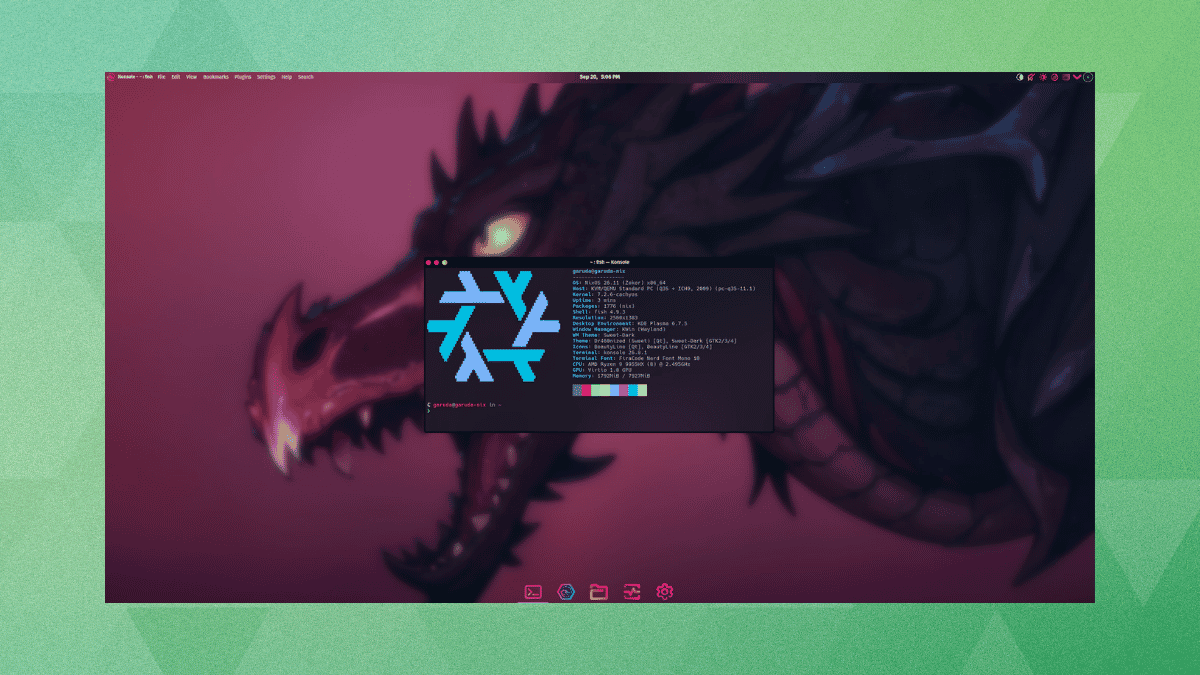
The Nix subsystem now installs as a standalone distro and is available in the Dr460nized and Mokka flavors.
Amazon released the Kindle 4 back in 2011 with a 6-inch E-ink display, 2GB internal storage, and running a modified version of Linux. In the years since the Amazon Kindle 4 has been jail-broken and there are some customized Linux distributions with a patched kernel to run on the Kindle 4. Now in 2026 there are patches on the Linux kernel mailing list looking to mainline support for that fifteen year old e-reader device...
Here's some very intriguing work taking place by a Google engineer... With the hyperscalers and other cloud providers pushing for zero-downtime, a set of experimental patches for "Orphaned VMs" allow for the virtual machines to continue to run while the host kernel is offline for security updates or rebooting with the Live Update Orchestrator. The experimental patches and request for feedback from other Linux kernel stakeholders was sent out this weekend on Orphaned VMs...
GNU Wget2 is up to version 2.3 today with the first new release of 2026 for this popular command-line tool for non-interactive file downloading and being able to easily fetch website contents...
The AMD BC-250 as the product designed at the time for cryptocurrency mining and based on a cut-down Sony PlayStation 5 APU continues having an interesting second-life being re-tasked for Linux use from general purpose workloads to AI. Sent out this weekend were the latest Linux kernel patches for continuing to enable more of the BC-250...
The Igalia Linux/open-source consulting firm based out of A Coruña, Spain is celebrating twenty five years of contributions to upstream open-soure projects...

I love the silly idea of Really Illegal Golf that the publisher tells us is basically "Metal Gear Golf With Friends".Read the full article on GamingOnLinux.
Ubuntu 26.10 is shipping a change that should keep the desktop standing when your memory runs out.
"Australia is considering barring the use of camera-equipped smart glasses in government workplaces..." reports Reuters, "in what it said could be the first ban of its kind."
But meanwhile "more than 70 people who bought, used or were recorded with Meta's smart glasses have sued the social media giant," reports the Los Angeles Times, "claiming their intimate and sensitive images were exposed to workers abroad who are paid to review and label photos and videos."
The contractors in Kenya work for companies that help train Meta's artificial intelligence, according to a proposed class-action lawsuit amended in late August. The smart glasses users, some in California, allege the gadget captured footage of themselves and family members undressing, going to the bathroom, having sex and entering passwords. In some cases, the people said they weren't aware the camera-equipped glasses were recording. One California user, referred to as PL18 in the lawsuit, alleges his glasses were unknowingly recording after he placed the smart glasses on the bathroom counter. "He noticed that at times photos of his family members using the bathroom and bathing began appearing in his gallery — footage no one in his household intended to take," the lawsuit said....
The 230-page lawsuit, filed in a federal court in Northern California, accuses Meta of fraud and false advertising, along with violating other consumer protection laws in various states. Tina Wolfson, one of the lawyers representing the plaintiffs, said the case also centers on Meta's surveillance of people's lives without their consent and the exploitation of their image and likeness. "People who bought these glasses and thought that they were cool gadgets weren't aware that every time they activated AI, video was sent to train Meta's AI," said Wolfson, a principal at law firm Ahdoot & Wolfson in Burbank. Meta disagrees with the allegations and intends to fight them.
"If you use Meta AI, we may review that data to help improve our products and people's experiences — this works the same way as many other companies. We take steps to filter this data to help remove identifying information and to protect people's privacy," a Meta spokesperson said in a statement...
The lawsuit alleges people wearing the smart glasses were unwittingly transmitting data to Meta whenever they used Meta AI by saying "Hey Meta," or sometimes accidentally when adjusting the glasses. "Every activation of the AI features, intentional or accidental, captures video and audio that is transmitted to Meta's servers, routed overseas, and reviewed by low-paid human workers who watch, label, and embed these moments into Meta's AI models," the lawsuit said...
The lawsuit also seeks to block Meta from deploying biometric tools through its glasses. The company has been exploring a controversial feature called "NameTag" that would allow people to identify others... A separate lawsuit, filed in September in a federal court in Illinois, alleges Meta has been using images of people's faces uploaded to their public Facebook and Instagram accounts to train AI that powers NameTag and other AI tools.
Read more of this story at Slashdot.
A big patch series sent out this weekend for the Linux kernel's perf subsystem removes the embedded Python and Perl scripting in favor of standalone Python scripts with a new Python perf module. This perf module for Python written in C is much faster than the status quo...

Toxic Frontier was announced at the PC Gaming Show Tokyo Direct, bringing some interesting ideas for fans of turn-based roguelike city-builders.Read the full article on GamingOnLinux.

Spaceborn Awakening is a narrative-driven bullet-heaven roguelite made in the spirit of Deep Rock Galactic: Survivor, Death Must Die and Soulstone Survivors.Read the full article on GamingOnLinux.

Moylo is a hand-drawn action game featuring melee combat and challenging boss battles inspired by 1930s & 1940s animations.Read the full article on GamingOnLinux.

Thief: The Dark Project Remastered from Nightdive Studios has a new trailer that was shown off during the PC Gaming Show Tokyo Direct 2026.Read the full article on GamingOnLinux.