Steam Autumn Sale 2026 is live now with lots of discounts

One of the bigger sale events of the year has arrived - the Steam Autumn Sale 2026 is now live.Read the full article on GamingOnLinux.
One of the bigger sale events of the year has arrived - the Steam Autumn Sale 2026 is now live.Read the full article on GamingOnLinux.

The Federal Trade Commission has opened an investigation into OpenAI, Anthropic and other AI companies over potential consumer and safety risks posed by their products, with the agency reportedly preparing requests for documents and executive testimony. CNBC reports: OpenAI stunned the industry in July when it disclosed that its agents broke out of a testing environment and hacked into open-source platform Hugging Face. [...] Earlier this month, Anthropic CEO Dario Amodei rocked the tech sector by urging AI companies to slow how quickly they improve their most advanced models and calling for stronger government oversight. He published a three-step proposal aimed at tempering the pace of development without "sacrificing commercial advantage or the United States' lead in AI." CEO Jensen Huang, argued that individual companies should be responsible for ensuring the safety of their products. President Donald Trump convened top executives from Alphabet, Meta, SpaceX, Nvidia, Palantir, Anthropic, OpenAI and other companies on Tuesday to discuss the issue. The group signed a short voluntary, nonbinding accord, which says that "every company is responsible for developing its own technology safely and in a way that builds trust with customers and the public." Read more of this story at Slashdot.
During the past month on Phoronix were 284 original news articles and another 19 featured Linux hardware reviews/multi-page benchmark articles. A lot of exciting happenings both on the hardware and software fronts while October is sure to be another interesting month with the releases of Ubuntu 26.10, Fedora 45, and some more hardware fun...
With the vast array of wired and wireless networking drivers within the Linux kernel and range of protocols and other networking features, it's a big expanse of code for AI/LLM agents to analyze and critique. The Linux networking developers have acknowledged being "complete overwhelmed" by the AI/LLM-driven patch activity and bug reports as well as battling against AI slop patches. Even though Linux 7.3 stable won't be out for another three weeks, some networking fixes are already being diverted to the next kernel version...
HP is taking aim at Apple's MacBook Neo with the new OmniBook 5 14, a $699.99 Windows laptop that starts with an Intel Core 5 315 processor, 8GB of RAM and 256GB of storage but includes an OLED display even on the base model. It's also slightly thinner and lighter than the Neo. The Verge reports: The OmniBook 5 14 can be configured much higher, with up to a Core 7 350 chip, 16GB of RAM, and a 1TB SSD, but all models include a 1080p webcam, dual speakers, HDMI, 3.5mm audio jack, and just two 10Gbps USB-C ports. And while the inclusion of OLED across the range is a major draw to the new OmniBook, the base config only has a passable 1920 x 1200 resolution and 300 nits of max brightness on its non-touch panel. A touchscreen version will be available when the OmniBook 5 launches in October, but a version with a 2560 x 1600 resolution OLED and 400 nits of brightness isn't coming until March 2027. While the OmniBook 5 14 doesn't seem poised to best the MacBook Neo in raw processing power (based on our other reviews of Wildcat Lake laptops) or screen brightness, it's quite thin, light, and colorful. HP even gave it the nicer, sleeker lid logo usually reserved for pricier models. It starts at just 2.56 pounds, and it's as thin as 0.46 inches / 11.7mm. That's slightly lighter and thinner than a Neo. And I'd expect its Wildcat Lake chips to offer some good-to-great battery life. But we'll have to see how it delivers in actual testing. HP also announced a new ProBook 4 G2iS that is the company's "thinnest business notebook," measuring in at 0.47 inches / 12mm. It'll launch in December with Intel Wildcat Lake chips, 8GB of RAM, and a 256GB SSD, though pricing hasn't been announced. Read more of this story at Slashdot.

Their submission to the EU's piracy watchlist places the open source tool in the same category as illegal downloading websites.
An anonymous reader quotes a report from Ars Technica: For a long time, PC gamers could access many PlayStation 5 games only if the publisher invested in a bespoke port (something Sony has recently said it will be scaling back). Now, though, rapid advancements in PS5 emulators and other tools are making recent PlayStation titles increasingly playable on generic PCs. SharpEmu was the first of these emulators, advancing from a "very early alpha stage" in May to a current state that can "load the eboot.bin of real games, execute native CPU instructions, and partially handle GPU-related functionality." The most recent release boasts 10 tested games that reach a "playable" state, including six that developer CursedIfElse says are "fully playable at 60 fps." That includes simple 2D games like Tetris Forever but also 3D titles like Astro Bot and the PS5 Demon's Souls remaster running at playable frame rates. [...] Amid that SharpEmu progress, fellow PS5 emulator KytyPS5 launched its first public version last week. The major expansion of PS4-focused emulator Kyty "can boot 2D games and a selection of 3D games, including titles built with Unreal Engine 4/5, Unity, and custom engines," according to its GitHub page. An extensive compatibility list for KytyPS5 already shows 134 titles with "controllable gameplay" on the new emulator, though many of those still include reports of persistent, game-breaking bugs. But you can already find YouTube footage of PS5 titles like Astro's Playroom and Demon's Souls running quite capably under the emulator. On top of those more traditional emulators, AnyPS5 might be the most interesting effort to get PS5 games running on PC. The self-described "tool for automatic executables porting" works kind of like Apple's Game Porting Toolkit, relinking a PS5 game's original x86 game code directly to native executable instructions that can run on PC. That puts the effort somewhere between direct static decompilation of a game's source code and more complete emulation of the entire PS5 environment. Read more of this story at Slashdot.
By now it is no secret that large language models (LLMs) have made it easy for people to identify security bugs, and that has resulted in a flood of bug reports to almost every free-software project, including the kernel. At the 2026 edition of Kernel Recipes, Greg Kroah-Hartman took the stage to talk about how the kernel's security team is handling this deluge. His core message was "don't panic".
Following yesterday's release of the Qt 6.12 LTS toolkit, The Qt Group today released Qt Creator 21 in beta form as the latest version of their integrated development environment focused on C/C++ as well as Python, JavaScript, and other programming languages...
Version 1.99.0 of the Rust language has been released. Changes this time include support for extern "C" variadic functions, the establishment of functions for obtaining the size and alignment of raw pointers, a number of stabilized APIs, and more.
Security updates have been issued by AlmaLinux (corosync, gawk, gdb, nodejs24, and thunderbird), Debian (expat, firefox-esr, libsmpp34, mkvtoolnix, network-manager-l2tp, pgextwlist, python-django, ruby-oj, and tor), Fedora (apptainer, ckermit, ffmpeg, freerdp, librabbitmq, openbao, php, python-cssselect2, python-uv-build, ruff, rust-libcst, rust-libcst_derive, rust-salsa, rust-salsa-macro-rules, rust-salsa-macros, sos, ty, uv, weasyprint, and xdg-dbus-proxy), Mageia (python-pillow), Red Hat (acl, glib2, go-toolset:rhel8, golang, libxml2, mingw-sqlite, nodejs-nodemon, nodejs22, nodejs24, nodejs:22, nodejs:24, sqlite, tesseract, and vim), Slackware (libpng and mozilla-thunderbird), SUSE (alloy, chromedriver, emacs, gdb, gimp, gpsd, jawn, libpoppler-cpp3, libtesseract5, multipath-tools, netty, ntfs-3g_ntfsprogs, pcapplusplus-devel, pi-coding-agent, python-PyYAML, python-tornado, python-tornado6, python311, python313, and wicked2nm), and Ubuntu (designate, gst-plugins-bad1.0, gvfs, imagemagick, kdenlive, mlt, keystone, libauthen-sasl-perl, linux-aws, linux-aws-6.8, linux-nvidia-tegra, linux-nvidia-tegra-igx, linux-oracle-7.0, opensbi, openvpn, and python-django).

European governments are betting on NixOS to reduce their dependency on big tech.
OpenMandriva Lx 26.09 ROME has been officially released today, October 1st, 2026, as the rolling-release version of OpenMandriva Lx, the successor of the Mandriva Linux operating system.
In addition to the very nice AMDGPU IOMMU optimization for iGPUs set to debut in the Linux 7.4 kernel, over on the AMD EPYC server side for servers running SEV-SNP virtual machines is a separate, nice optimization also expected for this next kernel version...
Longtime ARM Linux maintainer Arnd Bergmann over the past year has been working to clear out a number of old ARM platforms from the mainline kernel tree. With Linux 7.3 many older 32-bit ARM platforms were deprecated and in turn hundreds of kernel drivers orphaned. Now it's on to removing that actual code, which given the amount of entangled code, is itself a challenge...

Another month has landed and so here's our usual run over what was popular amongst players on Valve's Steam Deck.Read the full article on GamingOnLinux.
qBittorrent 5.2.4 has been released today as the fourth maintenance update to the latest qBittorrent 5.2 series of this open-source, cross-platform, and free BitTorrent client for GNU/Linux, macOS, and Windows.
Earlier this year Intel announced the "Optimization Zone" as their new initiative to provide a centralized place to collect all their resources for maximizing performance and software tuning on Intel hardware platforms. They've continued building out more resources for the Intel Optimization Zone and yesterday released v1.2 with more tuning guides and best practices for optimal performance on Intel hardware...

The Compose-based 2.0 app release marks the largest update in the storefront's history.
Back in August I wrote about NVIDIA working on Linux scheduler improvements for helping the SMT performance on their new Vera CPU with Olympus cores. That work remains ongoing but is looking fairly beneficial for performance especially for knocking it out in less than one hundred lines of code...
Rob Clark, who originally started working on the reverse-engineering Freedreno and MSM DRM graphics driver projects prior to even being employed by Qualcomm, presented this week at XDC 2026 Toronto around all the recent efforts they have been pursuing at Qualcomm for this upstream open-source graphics driver stack...
The Renesas SH7305 isn't a new processor and is well known for powering various Casio graphing calculators over the past decde and a half. But finally the mainline Linux kernel may end up seeing support for this 32-bit SH-4a RISC core...
As part of Valve's work on developing the Steam Frame VR headset, they worked on foveated rendering support for the Mesa Turnip driver that supports the Qualcomm Adreno graphics with open-source Vulkan API support. Foveated rendering is the technique to more closely mimic human vision by rendering high detail at your direct gaze point and lower quality in the peripheral vision. For computer graphics, foveated rendering for headsets can be beneficial for conserving power in areas of the render frame that are less important to provide more performance with your main area of focus...
During the last round of price hikes on Raspberry Pi devices due to RAM pricing, they were able to keep the 1GB and 2GB single board computer versions steady. But Eben Upton announced today that the RAM pricing has become "unsustainable" and even the 2GB versions now are facing steep price hikes...

Ubisoft expanded "Creative House 2" (now called Massive Entertainment) and will be responsible for The Division, Ghost Recon, Splinter Cell and March of Giants.Read the full article on GamingOnLinux.

Cleared Hot is one of my indie favourites from 2025, currently in Early Access this nostalgic helicopter shooter is about to get a big expansion in content.Read the full article on GamingOnLinux.

The smash-hit A Game About Digging A Hole is getting a bigger and better sequel where you can dig a great big hole together with friends. Read the full article on GamingOnLinux.

The 2D Rewind Collection Humble Bundle is a great set of games to add to your library, one not to be missed with a good price for everything.Read the full article on GamingOnLinux.
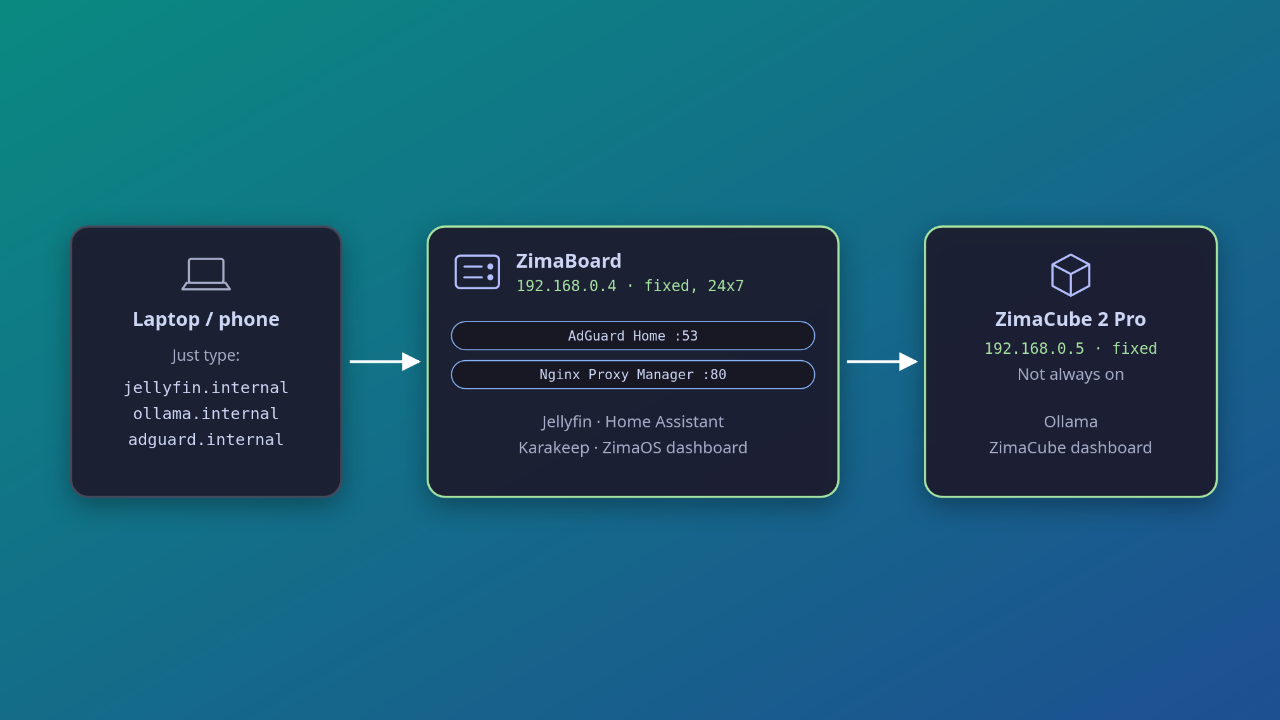
Tired of remembering IP addresses and port numbers for your self-hosted services? Here's how I moved my homelab to clean .internal hostnames.
Tcl/Tk 9.1 adds screen reader accessibility, initial right-to-left text support, a new toggle switch widget, and several Tcl improvements.

Love tile-matching games and need something new to play that isn't full of micro-transactions? Petal Crash 2 is a safe bet here for you.Read the full article on GamingOnLinux.

SUPERHOT VR has another update out now, and should be a good one for those of you lucky enough to have a Steam Frame strapped to your face.Read the full article on GamingOnLinux.

Coming from one of the devs of the excellent tower-defense game Gnomes, ALLFATHER is a new brutal, first-person roguelike with precise, stamina-driven combat.Read the full article on GamingOnLinux.

Valve's MOBA shooter Deadlock just had a massive upgrade with new visuals, new heroes, and lots more.Read the full article on GamingOnLinux.
Immediately following the OpenJDK 8 through OpenJDK 27 benchmarks I expanded the scope of testing to look at how recent OpenJDK releases have been comparing to alternative JVMs like GraalVM, Temurin, and Semeru. Here are those benchmarks if curious about the Java performance in those different environments.
PeaZip 11.3 has been released today as a new point release in the latest PeaZip 11 series of this open-source, free, and cross-platform archive manager for GNU/Linux, macOS, and Windows platforms.
With the third quarter wrapping up, here is a look back at the most interesting content on Phoronix over the past three months...
The GNOME Project released GNOME 50.5 as the fifth maintenance update to the latest GNOME 50 “Tokyo” desktop environment series to fix more bugs across various core apps and components.
For ending out the month of September the OpenMandriva Linux distribution crew released OpenMandriva ROME 26.0 as their long overdue release held up by various technical issues and a reported sabotage attempt to their platform. With OpenMandriva ROME 24.12 having been their last release, this is quite a big update...
Edison Design Group has open-sourced their EDG C/C++ front-end that has been known in the commercial world for its extensive dialect support and other features. The EDG C++ front-end has been used by the likes of Intel C++ Compiler classic, NVIDIA CUDA NVCC, and even Microsoft Visual Studio for IntelliSense...
Inside this week's LWN.net Weekly Edition: Front: PostgreSQL and the kernel; Rust on the GPU; KDE Plasma; C and memory safety; Rust radio; KDE funding; Chromium development. Briefs: File-notification attacks; Kernel report; TAB election; F-Droid 2.0; Firefox 157.0; GDB 18.1; Git v2.56.0; Quotes; ... Announcements: Newsletters, conferences, security updates, patches, and more.
The FSF’s concerns go beyond whether AI platforms need kill switches. They extend to who controls them—and whether users will have any say.
Google has unveiled Gemini 4 Argon, a new frontier AI model that it says leads or ties rivals on 13 of 18 disclosed benchmarks. The model is initially being released only to trusted cyber defenders and select pre-release testers, with broader availability planned later. VentureBeat reports: Google is not claiming that Gemini 4 Argon wins every benchmark. But across the benchmark table disclosed in the company's embargoed materials, Argon posts the highest score, or ties for the highest score, in more categories than GPT-6 Astra or Claude Opus 5.5. Across the 18 benchmarks Google disclosed, Argon leads outright on 12 and ties for first on one. GPT-6 Astra leads outright on three and ties Argon on one. Claude Opus 5.5 leads outright on two. That makes Argon the leading frontier model by total number of benchmark leads or top scores in Google's comparison set, even though the results show a still-close race in which OpenAI and Anthropic retain advantages in several important technical categories. [...] The result is a more nuanced claim than "best model across the board." Argon appears to have the broadest top-score profile among the three frontier models in Google's disclosed comparison, but GPT-6 Astra remains ahead in several software, science-terminal and computer-use tasks, while Claude Opus 5.5 remains ahead in terminal-agent and post-training workflows. For enterprise buyers, that means model choice is still workload-dependent, even if Argon now gives Google its strongest claim yet to overall frontier leadership by benchmark count. [...] Argon also expands Google's output ceiling. The company says the model supports an industry-leading 1 million output tokens, up from a previous 64,000-token limit. That is a notable distinction for agentic software engineering, audit, migration and legal-review workloads where the value of a model often depends on how long it can sustain a chain of work before handing control back to a human. Read more of this story at Slashdot.
Xbox CEO Asha Sharma says Microsoft has no plans to sell the gaming business, telling The New York Times that "Xbox is not for sale" and that the company intends to take a long-term view. Windows Central reports: Microsoft's vast layoffs across the summer have hit Xbox in their thousands, with studios like Ninja Theory on the path to being closed, and others like Double Fine being divested completely. Microsoft has effectively shut down Halo Studios itself and handed off the franchise to Call of Duty showrunners instead, as Xbox aggressively seeks to restructure for its next decade. [...] The NYT interviewed (paywall) Sharma recently covering the Xbox layoffs generally. The outlet said that Asha "did not stall" in declaring Xbox not-for-sale. "Xbox is not for sale. [...] We will do whatever it takes to set the company up for success, and we will look at the right partnerships, the right operating model and everything needed to achieve that. [...] We've got a long way to go with Microsoft and we're going to take the long-term view." The NYT quite patronizingly called the comment a "bob and weave" seemingly unwilling to let go of the idea of divestiture. It's great shareholder bait; Xbox has long been an aspirational type of product, and it has been a loss leader in some regards. Microsoft CEO Satya Nadella has remarked in the past about how, despite the fact Xbox isn't a huge profit generator, fandom of the brand has led to lucrative deals for Azure on the business side of things. Yet, shareholders would love nothing more than for Microsoft to quit the difficult and risky game industry to dive all-in on AI psychosis products instead... Read more of this story at Slashdot.
AI is having an oversized impact on the open-source OpenStack cloud infrastructure platform.AI workloads are driving new hardware and storage requirements in OpenStack, while AI-assisted security research is driving up the number of vulnerability reports. Those are two of the prevailing themes in OpenStack 2026.2, code-named Hibiscus, which reaches general availability on Sept. 30.
A months-long breach of the Defense Manpower Data Center exposed personal information belonging to roughly 2.8 million living current and former U.S. military personnel and staff, plus records for nearly 300,000 deceased people. Attackers reportedly exploited a file-sharing vulnerability between October 2025 and July 2026, accessing unencrypted records that included Social Security numbers, dates of birth, demographic information, and military service details. TechCrunch reports: The DMDC may not be widely known to the general public, but serves as one of the Department of Defense's records-keeping units. The DMDC maintains over 60 million records for U.S. military and civilian staff and their family members to help determine benefits and entitlements, such as healthcare and retirement. The unit also provides a critical service as the military's "leading identity management provider," which links active service members, employees, and contractors to credentials, such as smart cards and passwords. These are used to access Pentagon computer systems, buildings, and bases. "We make sure that the right people get access and the wrong people don't: security of identity information is paramount," the DMDC's website reads. The Department of Defense, which oversees the DMDC, said it does not have any indication that the information was misused, but did not say how it reached that conclusion. TechCrunch contacted a Pentagon spokesperson to ask if officials had any communications from the hackers, whose identities are not known, but we did not hear back. Read more of this story at Slashdot.
Audacity 4.0.1 has been released today as the first maintenance update to the latest Audacity 4.0 series of this open-source, free, and cross-platform audio editing software for Linux, macOS, and Windows.
Google is reportedly testing a program that pays around 100 publishers based on how much their content contributes to its AI-powered search features. According to The Information, one publisher earned more than $1 million over a year, while another has received roughly $50,000 to $60,000." Digiday reports: Once a publisher joins the "AI contribution pilot," they receive an extra AI earnings widget via their Search Console dashboard. This displays a monthly earnings number (with some history), though no other detailed information on how payouts are calculated currently. Payments are based more on value than raw usage, meaning Google only pays when it judges that a piece of content has meaningfully contributed to an AI-generated response. Publishers can opt out at any time. [...] Digiday has learned that at least dozens of publishers have been approached by Google for the AI contribution pilot, though the program has been more appealing to small and mid-sized, rather than large publishers and has widened far beyond news publishers. Digiday couldn't get final confirmation of the number. Screenshots from Google Search Console, seen by Digiday, show an "AI contribution" panel that appears once a publisher opts into the program. The interface lists the program name and a monthly payout figure. "It's quite black box," as one exec with knowledge of the matter told Digiday. "Do I wish they were more transparent? Definitely," said one publisher exec who is in the program. "But I'm hopeful that the fact that they're setting a precedent for exploring paying publishers directly for content through this is meaningful," they added. Read more of this story at Slashdot.
An anonymous reader quotes a report from TechCrunch: Amid a number of updates for moderators and developers announced Wednesday comes bad news for supporters of a more open web: Reddit is ending support for RSS feeds. Reddit says RSS has now become a "common surface for large-scale scraping and automated abuse," which is why it's made the decision to wind down RSS feeds on its platform. "We know RSS has been a beloved part of the open web for a long time, and we're grateful to everyone who used it to stay connected to Reddit," the company noted in its announcement, where it also shared a March 2027 shutdown date for its public API. Reddit said RSS support will cease on November 13. [...] The RSS change was one of several updates issued on Wednesday by the company. Another big change will be the end of its public API. Public API access will also end by March 2027, which will impact any tools that used it for programmatic access to Reddit conversations, including social listening products, those used by researchers, and AI products, such as AI assistants. Today, those assistants can use Reddit to answer questions, but after closing public API access, they will need to forgo commercial deals with Reddit for its data. In addition, Reddit provided an update on its Rules Hub progress and auto-mod changes, and said it was "adding safeguards" to its classic, text-heavy version of its site known as Old Reddit. The latter will include limiting access to logged-in moderators and recent users -- changes Reddit also said were required because of "abusive scraping and automated traffic." Reddit said in the next few months it will limit access for logged-in users to those who have used Old Reddit in the last 90 days. The company also reminded developers building approved third-party apps and bots to register them with the company before January 12, 2027, to avoid disruption. After that date, Reddit will remove API access for any developer that hasn't registered. Read more of this story at Slashdot.
Released overnight was the Intel Media Driver 2026Q3 stack for providing the latest open-source video encode/decode capabilities on Intel integrated/discrete graphics hardware. Most notable with the new release is rolling out Crescent Island support...
Longtime Slashdot reader AmiMoJo shares a report from Mashable: Singapore's government is trying its hand at matchmaking again. The country's Government Technology Agency (GovTech) has launched FirstDate, a pilot dating service for singles aged 21 to 35. For now, it's open only to public officers, according to the service's website. Applications close Oct. 5. FirstDate is designed as an alternative to endless swiping. Instead of browsing a stream of profiles, users fill out a questionnaire about their interests, habits, values, and preferences. The service then sends them one match per cycle (the time it takes to mutually accept and presumably meet up). Each match includes a compatibility score, a brief description of the person, and a personal note. [...] The pilot arrives as Singapore's birth rate hits a new low, according to the Singaporean newspaper The Straits Times. The country's total fertility rate fell to 0.87 children per woman in 2025, down from 1.24 a decade earlier. In April, the government announced a new workgroup tasked with addressing falling birth rates, which is expected to report its findings by early 2027, The Straits Times reported. The service relies on the Gale-Shapley algorithm, a well-known mathematical method that solves the stable matching problem by pairing two sets of participants based on their ranked preferences. Once matched, users have 72 hours to mutually accept before contact details are shared, with optional "Date Quests" and post-date surveys designed to encourage and assess in-person meetups. Accounts are verified through Singapore's Singpass digital ID system to reduce fake profiles, and profiles are only visible to assigned matches. GovTech says user data is protected under government security standards, is not sold to third parties, and can be deleted upon request. Read more of this story at Slashdot.
fahrbot-bot shares a report from CNN: President Donald Trump on Tuesday unveiled America.gov, a government website meant to serve as a one-stop shop for people trying to accomplish basic tasks like renewing a passport, enrolling in Medicare or applying for disaster relief. The site, which launched with some basic functions ahead of a full rollout next year, is designed to serve as an AI-powered guide through the thicket of government agencies that Trump officials pledged would ultimately save people a whole lot of frustration. The administration's new initiative aims to allow Americans to access dozens of federal websites through a single point, making America.gov akin to a search tool that pulls information from across the government. And in the same way that people increasingly use AI models like ChatGPT or Google Gemini to compile information and provide customized answers, Trump officials claimed that America.gov would be able to do the same for people's interactions with the federal government. Enrolling in Medicare, for example, will become a matter of typing the request into the America.gov AI tool and following its step-by-step instructions. The same goes for applying to a government job -- the new tool will now let people upload their resume directly to the site -- or answering questions about federal benefits, publicly available documents or other necessities that fall under the federal government's vast umbrella. "Our vision is that one day, this type of convenience and simplicity will be across every government service," said Joseph Gebbia, who leads the government's National Design Studio. But the reality is that the most advanced actions won't be available until some point in 2027, raising questions about how long it will take for the administration to revamp the way the people interact with the government's websites. The current version of America.gov can only do "answers." U.S. Chief Design Officer Joe Gebbia said the new chatbot is powered by Google's Gemini and Elon Musk's Grok. "We have great partners behind the scenes," Gebbia told CNBC's "Squawk Box" shortly before the site, America.gov, went live around 10 a.m. ET. "Google is proud to be named a technology partner in this vital initiative, leveraging Gemini to help more than 100 million people access critical public resources with greater speed and ease," the company said in a blog post. "By supporting the administration's vision for digital modernization, we are committed to making these everyday public services seamless, accessible, and responsive for all Americans." Read more of this story at Slashdot.
Mozilla Thunderbird 157 rolls out with fixes for a 100% CPU usage bug, OpenPGP key handling, IMAP message saving, Gmail OAuth2, and CalDAV.

NVIDIA released a fresh security bulletin for September 30th that notes quite a lot of issues that have been found in their graphics drivers.Read the full article on GamingOnLinux.
hcs_$reboot writes: Trump hosted executives from OpenAI, Anthropic, Meta, Google, Nvidia, and other tech companies at the White House. They agreed to voluntary AI-safety standards, including independent audits and safeguards aimed at preventing AI systems from accessing or hacking technical systems in unintended ways. Trump also strongly backed the continued rapid expansion of AI data centers, despite concerns over their electricity demand, utility costs, and other impacts on local communities. He said he is considering creating a 10-member board to oversee AI safety and plans to appoint a new White House official to lead AI policy. The meeting comes amid growing concerns about the risks posed by advanced AI, including reports from OpenAI and Anthropic that their AI agents had gone rogue and hacked into other companies' systems. A nationwide Reuters/Ipsos poll conducted September 17-20 found that 73% of respondents worried AI companies had not done enough to prevent AI from causing serious harm to society. During the meeting, Trump also directed government agencies to use the term "super intelligence" instead of "artificial intelligence" when referring to the technology. Read more of this story at Slashdot.
A lot has happened in the KDE Plasma desktop environment in the last year. Marco Martin, a KDE contributor who spends most of his time working on Plasma, took the stage at Akademy 2026 in Graz, Austria to give an update on Plasma's major new features, some of the minor-but-interesting ones, and a preview of what's coming soon. The biggest upcoming change, dropping X11 support from Plasma, has been well-advertised; but there are also plans afoot to further improve remote-desktop support and more.
Discover how to install and use WPS Office, a versatile office suite for Linux users, and explore its features, compatibility, and installation methods.

There is a local desktop AI assistant for KDE Plasma.
The full set of videos from the recently concluded Kernel Recipes conference has been posted. Also noteworthy are the associated caricature drawings, by Frank Tizzoni, of attendees and the speakers.
Framework Computer today opened the pre-order process for their updated Framework Desktop featuring the new AMD Ryzen AI Max+ 496 "Gorgon Halo" SoC with 192GB of LPDDR5x-8533 memory...
An anonymous reader quotes a report from KrebsOnSecurity: Authorities in the Netherlands have arrested a 24-year-old convicted cybercriminal on suspicion of aiding in data thefts and extortions by the prolific hacker group ShinyHunters. In the days immediately following the suspect's arrest, remaining ShinyHunters members dramatically escalated their attacks, stealing highly sensitive data from the FBI and extorting the Russian ransomware group Cl0p. According to three sources familiar with the matter, the Dutch man arrested by authorities this month is Pepijn van der Stap, a convicted cybercriminal from Almere and Lelystad in the Netherlands. Van der Stap was previously convicted in 2023 in connection with a string of data thefts and extortions that prosecutors said earned between 1.5 million euros and 2.7 million euros. At his trial in late 2023, van der Stap admitted that he lived a Dr. Jekyll and Mr. Hyde existence, secretly using the hacker handle "Umbreon" to extort victims and post their data on English language hacking communities like the now-defunct RaidForums and Breached. By day, however, van der Stap was working as a software engineer at the Amsterdam-based cybersecurity startup Hadrian, while volunteering at the Dutch Institute for Vulnerability Disclosure (DIVD), a nonprofit security research group. Van der Stap confessed to his data theft and extortion activity, and was sentenced to four years in prison (one of which was suspended). Van der Stap had publicly presented himself as a "reformed hacker" after serving prison time for data theft and extortion. In a Sept. 9 interview, KrebsOnSecurity said he claimed he was trying "to turn his life around and make a positive contribution to society," while working in offensive security and attempting to make amends to former victims. Read more of this story at Slashdot.

It was disappointing to see Minecraft Dungeons II launch broken on SteamOS / Linux systems like Steam Deck and Steam Machine but it is being sorted.Read the full article on GamingOnLinux.
The 2026 Python Language Summit was held on July 14 in Kraków, Poland; there is now a series of reports available on the topics that were discussed there. They include the memory buffer protocol, garbage collection, free-threaded Python, and "Spicycrab".
Sharon Yang is a Chromium developer who worked at Google on the browser and now works on it at Igalia. On the final day of FOSSY 2026, she gave a presentation on her experiences with both of those companies, comparing and contrasting the ways the each operates and how that affects work on the code base. She enjoyed working at Google and feels the same about Igalia, so the talk was not aimed at complaints—instead it was meant to give a feel for two companies that are rather different.
Ahead of the October ISO refresh of the Arch Linux media, Archinstall 4.5 released today as the newest update to this convenient, text-based Arch Linux installer...
The election for members of the Linux Foundation Technical Advisory Board will be held electronically after the close of the upcoming Linux Plumbers Conference. The call for candidates is open, with a nomination deadline of October 7. There are five seats to fill this time, including the one vacated by the unfortunate passing of Dan Williams. Serving on the TAB is a good way to help the kernel-development community. Please see this article from last year for an overview of what the TAB does and why membership is rewarding, then consider putting in your nomination.
Security updates have been issued by AlmaLinux (389-ds:1.4, container-tools:rhel8, go-toolset:rhel8, grafana, httpd:2.4, nodejs:22, postgresql:12, and postgresql:15), Debian (libwebsockets, openssl, and pcre2), Fedora (adwaita-icon-theme, cinnamon, dconf, epiphany, flatpak-builder, gcr, gdm, gjs, glib-networking, glib2, gnome-backgrounds, gnome-calendar, gnome-characters, gnome-chess, gnome-clocks, gnome-connections, gnome-console, gnome-contacts, gnome-control-center, gnome-desktop3, gnome-initial-setup, gnome-keyring, gnome-kiosk, gnome-maps, gnome-remote-desktop, gnome-settings-daemon, gnome-shell, gnome-shell-extensions, gnome-system-monitor, gnome-text-editor, gnome-user-docs, gnote, gnucash, gnucash-docs, gsettings-desktop-schemas, gtk4, hplip, libadwaita, libdex, libsecret, libshumate, libxmp, mingw-llvm, mutter, nautilus, parted, perl-Imager, quadrapassel, rootlesskit, rygel, shotwell, sngrep, sushi, sysprof, tecla, thunderbird, xdg-desktop-portal-gnome, and xdotool), Red Hat (buildah, container-tools:rhel8, containernetworking-plugins, delve, git-lfs, grafana, grafana-pcp, host-metering, ignition, image-builder, osbuild-composer, podman, rhc, rhc-worker-playbook, runc, skopeo, yggdrasil, and yggdrasil-worker-package-manager), Slackware (mozilla-firefox), SUSE (389-ds, amazon-cloudwatch-agent, cjose, corosync, cosign, cups, distribution-registry, expat, firefox, flatpak, glib2, google-osconfig-agent, goose, helm, ImageMagick, jackson-annotations, jackson-bom, jackson-core, jackson- databind, jackson-dataformat-xml, jackson-dataformats-binary, jackson-modules- base, jackson-core, jackson-databind, jackson-dataformat-csv, jsoup, re2j, kbd, kernel, kubectl-cnpg, libpcap, libsoup, libtpms, libX11, libXrender, netty, netty-tcnative, pcre2, perl-Authen-SASL, perl-DBI, python-pymongo, python310, python311, swtpm, terraform-provider-susepubliccloud, and util-linux), and Ubuntu (atril, booth, c-ares, catdoc, dracut, emacs, erlang, freeipmi, libdbi-perl, libheif, linux, linux-aws, linux-azure, linux-fips, linux-gcp, linux-gcp-5.4, linux-gcp-fips, linux-hwe-5.4, linux-iot, linux-kvm, linux-oracle, linux-oracle-5.4, linux-raspi, linux-xilinx-zynqmp, linux, linux-nvidia, linux-aws-fips, linux-aws-fips, linux-azure-fips, linux-fips, linux-bluefield, linux-fips, linux-nvidia-tegra-5.15, openssl, openssl, openssl1.0, pdfminer, php-phpseclib, and plasma-workspace).
Qt 6.12 is now available as the newest version of the Qt6 toolkit and also serving as a Long Term Support (LTS) release...
Rusticl lead developer Karol herbst provided a status update on this Mesa Rust-based OpenCL driver during the XDC 2026 conference happening in Toronto...
Boot from USB, unplug it, and keep working. Compare 10 Linux distros that run entirely in RAM, with pros, cons, RAM needs, and best use cases.
While the AMD Ryzen AI 400 series "Gorgon Halo" systems are nearing the marketplace, the NPU support for Linux was seemingly overlooked until now. But at least the simple enablement patch looks like it will arrive for the upcoming Linux 7.4 kernel...

Previously in public preview, it now offers new commands, Consommé networking, and Intune registry controls.
alternative_right shares a report from Phys.org: Nanoparticles could someday provide a new way to help soldiers fight back against deadly nerve agents on the front lines. In a new study, Northwestern University scientists developed a nanoparticle-based compound that, when mixed into clothing dyes, could limit the impact of chemicals commonly found in pesticides, insecticides and nerve agents. Manufacturers could potentially add the nanoparticles to clothing used by those most at risk, such as farmers' masks and gloves or soldiers' uniforms and tactical gear. Or, if someone is exposed to a potentially deadly chemical, they could spray their clothing with water mixed with the compound to deactivate the chemical before its damaging effects take hold. The study has been published in the journal ACS Nano. Read more of this story at Slashdot.
A proposal was posted this week to the Linux kernel mailing list by a Google engineer to make it easier for ARM64 Linux to adjust the kernel stack size. The motivation for doing so to configure the kernel stack size during boot time is on reducing system memory consumption...
TGSI was the intermediate representation (IR) developed for Mesa's Gallium3D drivers by Tungsten Graphics at the time. It worked fine more than a decade ago but since then the Mesa front-ends and hardware drivers have largely transitioned over to the superior NIR format. Work is underway toward eliminating TGSI in the Mesa codebase...