
An anonymous reader quotes a report from 9to5Mac: Today is Tim Cook's last day as Apple CEO, with John Ternus set to take over tomorrow. To mark his last day in the role, Cook penned an emotional memo to Apple employees today. In the memo sent to employees this morning and obtained by 9to5Mac, Cook reflects on his time at Apple and thanks employees for all of their work. He also says he takes "enormous comfort in handing the helm to someone as brilliant and wonderful and capable" as John Ternus. "Few people understand what it takes to build products that change the world the way John does and I could not be more excited for his leadership," Cook writes. "There is something truly special about Apple," writes Cook. "I am most proud of what an annual report could never capture. This place is proof that culture triumphs over everything. We share a belief that what we build matters, and that we have both the opportunity and the responsibility to leave the world better than we found it. That purpose is part of what makes this place extraordinary. Apple helps nurture it, but I believe it lived within each of you long before you arrived here. It is what brought you to this company and what continues to drive the work you do every day."
He continues: "Together, we have created something far greater than any one of us could have imagined or accomplished alone. And that's the secret to our success. We bring out the best in each other. We lift each other up. We have made it possible to leave our 'dent in the universe,' as Steve once described it, because of who we are and what we believe, because of what we value and how we see the world. How fortunate we are. How fortunate I am..."
Cook also thanked the Apple community in a post on social media, writing: "Sending lots of love to the Apple community on my last day as CEO. My title changes tomorrow, but the love I have for the Apple community never will. Thank you for being a constant source of inspiration. My gratitude is endless, and I'm excited for the next chapter!"
Read more of this story at Slashdot.
MapQuest's refusal to rename Lake Ontario as "Lake America" has sent its app surging up the charts, making it the No. 1 navigation app in the U.S. and driving "hundreds of thousands" of new downloads. In contrast, Google Maps announced on Saturday that it was complying with the Trump administration's name change. TechCrunch reports: The "OG of online mapping," as the company calls itself, announced on Thursday that it would not change the name of Lake Ontario on its maps to Lake America, despite Trump's executive order directing the U.S. Department of the Interior to update the lake's name in the U.S. geographic naming service. As a result, MapQuest's mobile app downloads soared, sending the iOS app to the No. 4 position on the U.S. App Store's Top Charts for apps (not including games) as of Monday morning on the U.S. east coast.
MapQuest also reached the No. 8 position overall in the U.S. App Store across both apps and games, and it became the No. 1 Navigation app in the United States. In Canada's App Store, the app reached No. 2 overall as of Sunday evening. The 30-year-old company remarked that it received "hundreds of thousands" of new downloads since its decision to keep the name Lake Ontario in place, and saw its app's usage climb to 50 times above its normal levels. "We took the same approach we did with the Gulf of Mexico: be part of the conversation, and give people an app that keeps the names they're familiar with," said Doug Berger, general manager of MapQuest, in a statement. "Hundreds of thousands of people signaled to us this weekend that we got it right by downloading our app."
Read more of this story at Slashdot.
Open-source firmware consulting firm 3mdeb is out with a new blog post highlighting their recent work on enhancing the UEFI update capsules experience for open-source firmware with Coreboot and their downstream Dasharo offerings...
A massive 12TB archive of old Steam2 content has surfaced online, apparently containing nearly every version of games uploaded to Valve's servers between 2003 and 2013, including unreleased prototypes, playtest builds, and cut content. Early discoveries include deleted Portal 2 material, files tied to Half-Life 2: Episode 3, and beta builds of games like Left 4 Dead 2, CS: GO, Spore, and Dragon Age: Origins. Researchers claim much of the material was once accessible through an unsecured public API. Ars Technica reports: The reason this weekend's leaked content cuts off abruptly in 2013 is because that's when Valve updated its content distribution system from "Steam2" to the current SteamPipe system. In moving from a proprietary file distribution format to standard HTTP file trees, the new system removed various update approval bottlenecks on Valve's end and streamlined update and patch downloads so they only reflected file differentials.
Publicly accessible early versions of some games released before this SteamPipe transition had been considered lost content by archivists, no longer accessible from Valve itself and living on only as local downloads on aging machines. Apparently all that content wasn't as lost as many thought, though. Longtime Valve watcher and data miner Gabe Follower (previously) wrote on social media this weekend that he had "verified that everything in Steam2 Teraleak was obtained via a publicly accessible [API] endpoint. It's Valve's fault..." Spanish-language Valve streamer and analyst Scolcer also said on social media (via machine translation) that the teraleak was "obtained from a site that was 100% accessible to the public. It was there for everyone to download. No passwords. Nothing. Hidden in plain sight, but with no protection whatsoever."
What's unclear right now if that API and publicly available Steam2 server content were accessed recently or if this weekend's leak represents content that was privately archived before the 2013 server transition and is just now being made public. "It could more-so be a collection of different people that knew about it and accumulated whatever people had downloaded back then into this massive archive," said The One Epicplayer, a moderator on the Valve Cut Content (VCC) Discord, which has long followed Valve betas and leaks. "I haven't been filled in on the full details but my suspicion is that these depot [files] were downloaded a long time ago and sat in a private collection," CrazyBubba, another VCC Discord moderator, told Ars. "There were a lot of leaks a few years back and many folks hoarded files for years. ... historically there have been issues with people lording content over other members."
A readme file included with the leak offers "warm n good wishes to all hoarders who had stuff from this collection" and encourages users to mirror and share it as widely as possible. On the VCC Discord, a user purporting to be the original uploader of the teraleak (who offered screenshots of a 22TB server upload log among their evidence) wrote that "getting this out really took a significant amount of effort from me and I would like it if it didn't go to waste."
Read more of this story at Slashdot.

A big milestone has been hit by Valve for the Steam Deck, and SteamOS for other devices like the Steam Machine, with over 30,000 Verified + Playable games.Read the full article on GamingOnLinux.
Version
4.0 of the OpenShot video editor has been released.
OpenShot 4.0 has arrived, bringing some of the biggest creative workflow
upgrades in our history. You can now record your screen, webcam, microphone, and
system audio directly into a project. You can correct and grade footage with
color wheels, curves, LUTs, and professional video scopes. You can also isolate
subjects with locally run machine learning models and create everything from
animated audio visualizations to cinematic film looks.
See the release
notes for a full list of changes.
An anonymous reader quotes a report from the BBC: Berlin is being blackmailed by hackers who were able to compromise city systems and steal data earlier this month, its mayor has said. Kai Wegner said officials would not cave in to the ransom demand, which came on Thursday evening. He did not say how much was being sought, though Der Spiegel reports the hackers are demanding 30 bitcoin, worth around 2 million euros. Some of the German capital's online systems were forced to close down as a result of the attack, while investigators were working to understand what data had been taken.
The Rhysida group, which is thought to operate from Russia and eastern Europe, and was behind a previous attack on the British Museum, has reportedly taken responsibility. It has said on its website it intends to begin auctioning the 5.79 terabytes of data it was able to steal from Berlin in seven days' time, according to news agency Reuters. [...] Officials for the city-state said an initial data leak occurred between August 7 and 12. Then, on August 14, two department networks were shut down, making applications for housing benefits and payments impossible for several days. "Berlin will not be blackmailed," Wegner said on Friday.
He said state police, prosecutors and federal security services were working to investigate the suspected perpetrators "with the utmost urgency," adding that inquiries into the "content and scope of the compromised data are being pursued with great intensity."
Read more of this story at Slashdot.
The Netdev 0x1A conference was
held in Rome, Italy from July 13 through July 16. Conference organizer
Jami Hadi Salim has let us know that the videos and slides for all sessions are now
available. Topics include Linux QUIC, shared memory socket transport, eBPF-based
DDoS protection, and more.
By the time Linus Torvalds released
7.3-rc1 and closed the merge window for this release, 15,267 non-merge
changesets had been pulled into the mainline repository. That is the
second-highest commit count for an -rc1 release in the kernel's history;
only the 6.7-rc1 release, which included nearly 3,000 commits of bcachefs
history, had more. About 13,000 of those commits entered the mainline
after the first 7.3 merge-window summary
was written so, needless to say, there are a lot of changes to cover.
With Linux 7.3-rc1 released to cap off the two week merge window, here is a look at the many exciting changes merged for the Linux 7.3 kernel that is working its way toward release in the second half of October.
Security updates have been issued by Debian (kernel, libarchive, libdbi-perl, libnet-dns-perl, librabbitmq, roundcube, starlette, and xrdp), Fedora (bluez, postgresql16-anonymizer, pyOpenSSL, python-cryptography, python-pynitrokey, and rust-h2), Gentoo (Chromium, Google Chrome, Microsoft Edge, Opera, Freenet, and Tor), Mageia (golang and python-nltk), Red Hat (nodejs22, nodejs24, nodejs:22, and nodejs:24), SUSE (7zip, apptainer, broot, cadvisor, coredns, coturn, distribution-registry, gh, git-lfs, grafana, gzip, java-25-openjdk, libopenssl-3-devel, libsoup-3_0-0, mozjs102, OpenRGB, openssl-3, openvpn, podman, pyenv, python, python-PyPDF2, python310, python312, python313-Authlib, python36, rekor, rsync, rsyslog, tor, trivy, v2ray-core, vim, wget, and wicked), and Ubuntu (bzip2 and openjdk-26).
There is a set of 19 patches out for review on the Linux kernel mailing list that would finally allow the mainline kernel running on Apple Silicon M1 / M2 / M3 SoCs to enjoy USB4/Thunderbolt support...
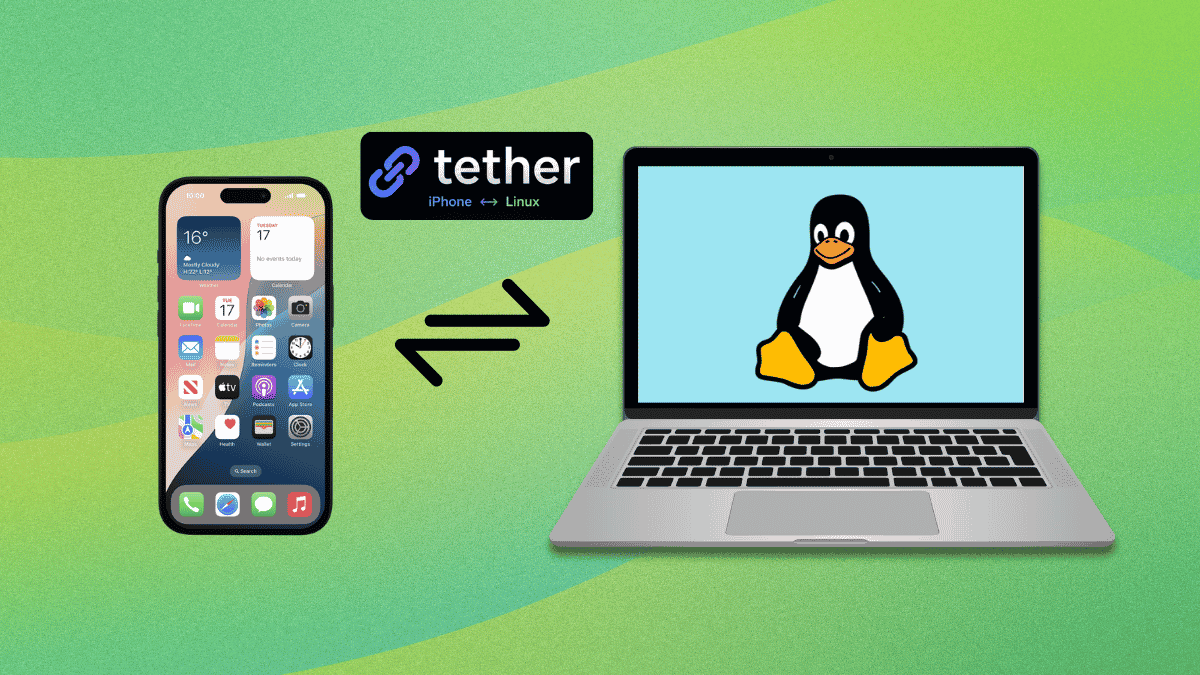
The open source offering syncs iMessage, SMS, and OTP codes between iPhone and Linux without needing a Mac device.

Hytale, the in-development open world RPG, has expanded with another huge update and there's lots of fun features added this time.Read the full article on GamingOnLinux.
California's age-verification bill has passed in its legislature — but with its open-source carve-out intact, reports the blog Linuxiac:
Back in May, we reported that California lawmakers amended Assembly Bill 1856 to carve open-source operating systems out of the state's upcoming age verification requirements. Three months later, that exemption survived the legislative process intact, and the bill has cleared both chambers of the California Legislature... sending the measure to Engrossing and Enrolling, the final legislative preparation stage before it can be presented to Governor Gavin Newsom...
For operating systems that are covered, AB 1856 builds on California's Digital Age Assurance Act, which is scheduled to take effect on January 1, 2027. Under the current text, when an operating system runs on a device and includes an account setup feature, its provider must offer an interface that asks the account holder for the birth date, age, or both, of the device's primary user during account setup. The operating system must then be capable of providing a digital age signal to covered application stores and application developers through a reasonably consistent real-time API. Instead of exposing a precise birth date, the signal identifies one of four age ranges: under 13, 13 through 15, 16 through 17, or 18 and older... Covered application stores must request the signal from the operating system and make it available to developers.
Read more of this story at Slashdot.

One missed from the recent flurry of announcements - the monster collecting RPG Cassette Beasts 2002 is set to release and it's going to be a good one.Read the full article on GamingOnLinux.

Everything that Spore could have been? A full evolution sim, Thrive, has a big new release out bringing in some brand new game mechanics.Read the full article on GamingOnLinux.
Servo 0.5 is out today as the newest monthly update to this open-source, Rust-based browser engine. Servo 0.5 ships many notable enhancements for benefiting those running the Servoshell example browser or looking at Servo as an opportunity for embedded use...

Portal: Alive & Kicking has officially arrived on Steam, giving the classic Valve game Portal a bit of a makeover.Read the full article on GamingOnLinux.
Ahead of the next-generation AMD Ryzen Zen 6 client processors debuting, an important patch series was posted overnight to the Linux kernel mailing list. These patches provide new Zen 6 client Energy Performance Preference "EPP" tunings that are important for optimizing performance and power consumption for these upcoming AMD Zen 6 desktop and laptop processors...
By comparison, only about two percent of the six million daily requests hitting the repo are likely human.

Spawned from GZDoom, the successor project UZDoom just had a massive new release with version 5.0 out now.Read the full article on GamingOnLinux.
One of the latest optimizations to the Mesa Vulkan drivers by Natalie Vock of Valve's Linux graphics team is faster and more vRAM efficient sorting for Morton code keys that are important for fast BVH construction and greater GPU parallelism...
Firefox has finally begun supporting Vulkan Video decoding to complement their long-used VA-API support on Linux. This is good news for the official NVIDIA Linux graphics driver stack as it's been the notable vendor not supporting the Video Acceleration API. But prior to Firefox rolling out its experimental Vulkan Video support, an independent implementation of VA-API built atop NVIDIA's NVDEC interface has been available for supporting GPU video acceleration in Firefox. That project is out today with its newest release...

During their recent celebration event and livestream, the developers of the popular game launcher Launchbox confirmed they are working on a Linux version.Read the full article on GamingOnLinux.

Command & Conquer: Tiberian Sun is a true classic - one I remember excitedly reading magazine previews about and it continues to live on.Read the full article on GamingOnLinux.

Whew! Quite a big release for DOSBOX Staging, the popular modern continuation of DOSBox with release 0.83.0 officially out now with many advancements.Read the full article on GamingOnLinux.

The age verification bill in California AB-1856 has passed with the exemptions for open source left intact.Read the full article on GamingOnLinux.
"OpenAI said on Friday that it plans to stop providing AI models to Cursor, the coding-tool company now owned by Elon Musk's SpaceX," reports Reuters:
"We are making this choice because we cannot be confident that SpaceX will use our technology within our terms of service, based on our experience with Elon Musk's companies violating contracts," OpenAI said in a blog post... However, Michael Truell, a co-founder of Cursor and now an executive at SpaceX, said on X that the company was speaking with the OpenAI team to resolve this issue.
Hours after OpenAI's announcement, Anthropic, which rivals both firms but has an ongoing partnership with SpaceX, said it planned to increase compute to support Claude models in Cursor, according to Tom Brown, one of the co-founders of the firm...
In its blog post, OpenAI said that X, formerly known as Twitter and now part of SpaceX, had breached the terms of its contract with OpenAI after Musk acquired the platform.
"To work with a large partner like SpaceX, we typically rely on custom contracts to ensure compliance with our terms of service and that the integration provides for safety at scale," the AI company added.
The article also notes Elon Musk's response Saturday in a post on X.com: "I couldn't care less."
He accused Altman and OpenAI President Greg Brockman of being "untrustworthy," while repeating his assertion that they "stole an open source nonprofit."
Read more of this story at Slashdot.
In an Amazon News blog post, their HR leader describes using AI to write 100,000 lines of code — 25 years after she last coded. "Do you know how empowering it is to realize that after 25 years away from coding, you can actually build again?" First she built a calendar app for her family, but then used Amazon's AI-powered coding tool Kiro to write an app for Amazon's internal "Everyone Can Build" event.
We opened the competition to every employee on our team, and within just a few weeks, more than 1,500 people were building. I couldn't believe what they built. One employee built an app that turned a nearly four-hour manual process into a one-second automated check, saving tens of thousands of hours annually. Another made a desktop pet named Momo that keeps your tasks, reminders, and shortcuts a click away.
Since then, I've written over 100,000 lines of code with AI. What I've found is that the more you work with these tools, the more natural the process becomes, and the more you realize they're expanding what you're capable of, not replacing it. You don't need perfection to start. You just need to dive in. When I decided to build the submission app for our team competition, I didn't know how to begin, so I asked our internal AI workplace assistant, called Aza. It pointed me to the right tools and helped me take the first step. From there, I opened Kiro and started building. When you give employees the ability and tools to solve problems themselves, they will surprise you with what they create...
At Amazon, every employee has access to AI tools. Whether someone needs a quick answer, wants to move faster in their day-to-day, or is ready to try building something new, the resources are there. The more people use these tools, the more capable they become with them, and that experience carries forward in their careers... We also want to make it easy for people to build credentials that are recognized across industries. That's why AI training is free for every Amazon employee. Amazon covers the full cost of one AWS AI certification exam per year, with options ranging from foundational AI concepts to professional-level generative AI. Employees can choose the path that fits where they are in their learning journey.
Long-time Slashdot reader theodp notes that 7 months ago Galetti also took to Amazon News to announce the elimination of 16,000 corporate jobs, a move which CNBC noted coincided "with a push to invest heavily in artificial intelligence."
The job reductions come just a few months after October's layoffs, when 14,000 employees were let go across Amazon's corporate workforce. At the time, the company indicated the cuts would continue in 2026 as it found "additional places we can remove layers."
Read more of this story at Slashdot.
"Multikernel Technologies has put out mklinux v7.0-mk2, the first public release of the multikernel Linux tree it's been building since last year," reports the blog It's FOSS:
The basic premise of the project is that one physical server can run several independent Linux kernels side by side, each with its own dedicated CPUs and memory. So, the same box could run a database on one kernel and a GPU training job on another without either kernel touching the other's resources... One kernel runs as the host, controlling the machine's CPUs, memory, and PCI devices. When it spins up a new kernel instance, that instance gets its own dedicated slice of hardware and boots straight onto it using Linux's kexec mechanism, running natively rather than under a hypervisor.
The host tracks all of this through device tree overlays under /sys/fs/multikernel/, and it can shift hardware between running instances while everything stays up.
That's a different setup from both VMs and containers. A VM still puts a hypervisor and a host kernel between the app and the hardware. A container skips the hypervisor, but every tenant on the machine shares one kernel... This release only supports x86_64 hardware, though Multikernel Technologies says the architecture-specific code is already modular enough for other ports to follow later.
The article notes they're selling multiple products based on the kernel tree, including one for running AI agents in their own kernel with direct GPU access and one that promises to patch a running kernel without taking the system down.
Read more of this story at Slashdot.
From the gaming news site Aftermath"
Game developer and consultant Ryan Laley traveled to Cologne, Germany from Essex, England to showcase his upcoming horror social deduction game Mimic at the annual Gamescom event. He paid "thousands of pounds" to get a booth at the show, where other game developers and press could try the game ahead of its October release. But Laley's Gamescom was cut short when he realized Friday morning that his brand new Alienware laptop, purchased for the event, was missing. The laptop was stored in a cupboard in the booth, and Laley started asking nearby vendors to see if someone had moved it. That's when he realized it was stolen — and that he wasn't alone. Laley's booth in Gamescom's business area, specifically in the International Game Developers Association Lounge, had been hit in what appears to be a string of thefts at the convention center. The business area of the convention is not open to the public, only press and others with specific tickets. Laley said Gamescom advertised this area as having 24/7 security and limited access after hours...
Publisher and merchandiser iam8bit, in a nearby booth showcasing Escape Academy 2: Back 2 School and Petal Runner, had two laptops with game builds stolen Thursday night from its booth, a representative confirmed to Aftermath.
"Meanwhile, Tessera Studios had two laptops and a Steam Deck taken from its cabinet," reports Tom's Hardware:
Gamescom organizers responded to the issues, saying that although they have arranged for uniformed guards to provide general security, individual booth security must be booked separately. They've also advised exhibitors to have insurance against theft, and said these warnings are noted in the terms and conditions for participants, as well as in the event's technical guidelines. "All cases have been reported to us and to the police, and investigations are already underway," the organizers' statement read. They also said that security is one of their priorities at the event, but also added, "At an event of this size, however, there will always be individuals attempting to take advantage of the situation."
Read more of this story at Slashdot.
California lawmakers unanimously approved a major exemption for open-source operating systems, leaving Windows, macOS, iOS, and Android facing the 2027 age-verification deadline.
With Linus Torvalds remarking in the Linux 7.3-rc1 release announcement of the AMD kernel graphics driver changes for amounting around a third of the -rc1 changes due to the big AMD GPU register files for DCN 6.0 and other new IP additions, here are some fresh code stats at large...
In time for the weekend Linux gamers, Valve last night released the first preview of SteamOS 3.9 for the Steam Deck, Steam Machine, and other devices. This early preview comes with some exciting software updates...
Linus has released 7.3-rc1 and closed the
merge window for this release. "Nothing really stands out - except for
the fact that it's big. It's not the biggest rc1 we've ever had, but it's
certainly up there, at least in number of commits." He pulled 15,267
commits during this merge window, making it the second busiest ever; only
6.7 has exceeded it.
The Linux Foundation's director of IT infrastructure says they now spend more CPU cycles "rendering commits for scrapers than we spend on all other kinds of legitimate access."
At any one time, across 5 geo-distributed nodes, there are 14 CPU cores doing nothing but rendering git commits as html....
[W]hen a source is guaranteed to be LLM-free, like the entire history of kernel commits, it's worth its weight in gold as a source of training data... At the time of writing, linux.git is about 1.48 million commits. Oh, and we have about 922 forks of it on git.kernel.org — but don't worry, it's actually extremely efficient on the backend, since it's mostly the same objects in every fork. Unless, of course, you're a scraper, in which case you have, oh, several BILLION valid URLs you can scrape, only to get 922 duplicates of the same 1.48 million commits — which is exactly what the scrapers are doing. But wait, it's not just commits itself. You can also ask for patches, plain renders, diffs between arbitrary commits — cgit is happy to let you, which was perfect for the times when the Internet was for humans or crawlers who obeyed robots.txt, and is AWFUL right about now, because we can generate 1.2 METRIC BAJILLION valid URLs just for a single fork of linux.git.
Initially, this was the solution — look through the logs, find out which IPs are obvious scraper bots, and fail2ban them. At first, this was easy, because the bots helpfully told you who they were via their user-agent. Then, they wised up and started pretending that they were random vanilla browsers. So, we started banning them by IP — after all, it's easy to figure out that an IP that is trying to grab every possible commit in a 8-year-old abandoned fork of linux is not really some lone Chrome on Windows user who is just furiously clicking every link that comes across their screen. The bots then started fanning out to entire subnets, but this was still meh, because obviously an IP coming from Google Compute is just pretending to be a Firefox user...
And... that's when things turned really, really ugly. Suddenly, the crawlers were coming from millions of random residential or mobile IPs, all pretending to be random modern browsers. An IP like that would make 4-5 requests and then never show up in the logs again... They descended like swarms of locust, hit hard and fast until the system fell over and then moved on to the next target until you recovered. Then, they returned. Rinse. Repeat. They still do that — welcome to the wonderful world of "proxy SDK monetization." It's big business, and your TV is probably doing it...
Today, git.kernel.org receives about 6M daily requests demanding to see random commits. Of these, 66% are still immediately batted away with the Anubis challenge, but 33% are now solving the math and getting through to the main site — because apparently what we have to offer is worth spending a ton of cycles to calculate the Anubis challenge... With a bunch of generous assumptions, legitimate requests are only about 2% of git.kernel.org traffic — everything else are scrapers...
[W]e're turning off features to reduce the number of crawlable URLs and to gate off actions that are expensive for us to run. Expect to lose some functionality, at least when accessing our resources anonymously. Trust me, we hate it just as much as you, but at this point it's a necessity... [W]e promise to still offer all of our data for download to anyone who asks. You just may have to jump through more hoops to get it.
Sorry.
Read more of this story at Slashdot.
Like clockwork, the Linux 7.3 merge window has concluded after two weeks and the Linux 7.3-rc1 kernel now available for testing...
In May Chess.com "quietly launched" a free educational poker site named Gambit, reports The Verge, where players can learn the game and improve an Elo-like rating without risking real money. And next Chess.com will expand into more classic games, including go, backgammon, and mahjong:
Like Gambit, Chess.com is developing Elo-style rating systems for these games, as well. [Chess.com's chief growth officer, Albert Cheng] didn't say when the new sites will launch but that "development is moving quite rapidly" on them, using the same playbook he used for Gambit... He and one other employee took Gambit from prototype to launch within a year, partly with help from AI, mainly for coding tasks. "I think the biggest advantage that it's provided is essentially being able to read our existing codebase and our design system and apply consistent patterns to how we develop Chess.com over to a different platform and do so quickly," Cheng said.... "Just because code is easier to write doesn't mean that you just let it run on its own, but it certainly is a superpower in getting things off the ground."
Cheng also said the version of Gambit that's live at the time of writing has "zero or close to zero" AI-created assets, which were used in early prototypes.
According to Cheng, without help from AI, getting another site up and running would have required a bigger team or "would have been a lot more disruptive to the status quo of building and growing Chess." Now that a "small, scrappy" team can get a new platform off the ground much faster, it's opened the door for Chess.com to dip into more games, starting with poker.
The poker site already has 75,000 members, according to a blog post Friday — and they've already played nearly 20 million hands and completed 100,000 lessons. The site is now holding a daily poker tournament, and on Monday will broadcast the event with live commentary on their Twitch and YouTube channels.
Read more of this story at Slashdot.
In a wide-ranging interview, the founder of the Free Software Movement discusses GNU, Linux, the open-source split, large language models, SaaSS, digital surveillance, and why software freedom remains a moral issue.
OpenShot 4.0 was tagged this afternoon on GitHub as the newest major feature release to this open-source non-linear video editing application...
It's already happened — at least on Google Maps.
Google's online maps reflect name changes in official government sources, Google posted Saturday. So when the U.S. Geographic Names Information System formally changed the name for "Lake Ontario" to "Lake America," Google also renamed it "Lake America" — for visitors from the U.S.
"Those in Canada will continue to see 'Lake Ontario'," Google said.
And people from every other country in the world... "will see both names." Though here's how it will be written...
Lake Ontario (Lake America)
"These updates follow our long-standing policy for bodies of water with names that vary from country to country, and are starting to roll out now."
Meanwhile, NPR reports that Ontario's Premier posted a billboard reading "Lake Ontario — Now and Always" on Canada's side of the lake (repeating the message in French). And The Daily Beast reports Google move has also drawn some criticism online:
"Hey you gave one of the Great Lakes the wrong name; pretty embarrassing mistake so you might want to fix that," one user wrote on X...
MapQuest has said it will not be changing the name, and instead launched a new tool that allows users to rename it themselves to whatever they want.
Read more of this story at Slashdot.
America's public education system has become "an avenue for multitrillion-dollar companies to enact their agendas," argues a NewYork Times reporter who's covered that tech industry influence for over 10 years. Big tech companies "advocate for new laws to require schools to teach industry-aligned subjects. They sit on committees that help shape learning standards for public school students..."
The reporter concludes that "Silicon Valley's efforts to capture the attention of education professionals and provide student training materials can also double as marketing or indoctrination."
They enable some of the most powerful corporations on the planet to spin rosy technology stories for administrators, teachers and students, giving them a sanitized view of industry practices and product risks. Many parents would likely object if, say, Exxon Mobil wrote their children's environmental science curriculum. Or if Purdue Pharma trained their children's biology teachers. Yet, over the last decade, schools have often embraced the technology industry in similar ways with few questions asked.
The article excerpts the soon-to-be-released book " Coding Kids: Big Tech's Battle to Remake Public Schools," with the reporter adding more thoughts on LinkedIn:
Every few years, Silicon Valley has urged American public schools to quickly adopt the latest technology or teach the latest tech subject: Big Data analytics; laptops for every child; algorithm-driven math and reading apps; compter programming; virtual reality. And each time the urgent arguments sounded remarkably similar: if schools just adopted the latest tech tool, or taught the latest tech subject, it would democratize learning for every child and equip students with valuable career skills.
Despite good intentions, "today we know some of those classroom tech drives did not exactly pan out as advertised."
Now some of the same companies that urged schools to provide laptops and coding lessons are employing similar arguments to urge schools to quickly adopt A.I. tools. I've spent years covering Chromebooks and student chatbot use. And I'm troubled by our collective amnesia around school tech.
Thanks to long-time Slashdot reader theodp for sharing the article.
Read more of this story at Slashdot.
ScienceDaily reports:
A microchip about the size of a grain of rice can generate a highly organized "rainbow" of light, a capability that could eventually support faster, higher-capacity 6G communications and extremely precise timing for quantum technologies. Physicists at Loughborough University, working with an international research team, demonstrated a system that produces a series of precisely spaced light frequencies. Those optical frequencies can then be converted into multiple high-frequency electromagnetic signals known as millimeter waves.
Millimeter waves are attracting growing interest for future communications because they can provide considerably more bandwidth, giving networks more room to transmit data. A major obstacle, however, has been producing these signals with the precision and stability required for advanced applications... "They could ultimately contribute to faster, higher capacity 6G networks," [said Dr. Luke Peters, of Loughborough University's Emergent Photonics Research Centre], "but the potential goes far beyond communications. These frequencies could also be used in radar systems as well as spectroscopy and astronomical instruments, helping scientists study materials and make extremely precise measurements of the universe.
"These applications are still some way off, and there are challenges to overcome before the technology can be used in real-world systems — but our latest work has tackled a major one..." A microcomb generates an extremely precise set of light frequencies arranged somewhat like the colors in a rainbow, although the light itself is invisible to the human eye. A specialized antenna can then convert those optical frequencies into millimeter waves. Earlier research demonstrated that microcombs could produce a single precise millimeter wave frequency. Generating many frequencies simultaneously could be far more useful because each could potentially serve as a separate channel for transmitting information at the same time. Achieving that, however, requires a microcomb with exceptional stability and signal quality.
In a new Nature Communications paper, the Loughborough led researchers report a system capable of doing exactly that.
Their system connects its chip-based microresonator to a much larger loop of optical fiber where laser light continuously travels through both parts of the system, according to the article.
"The team is now investigating how the microcomb system could eventually move from a laboratory experiment into practical technology."
Read more of this story at Slashdot.
When the open-source Kubernetes cloud-native project got started more than a decade ago, AI was not a major concern. Times have changed.Kubernetes 1.37 is now out, extending its networking and scheduling capabilities as more organizations run AI and machine learning workloads on the platform.
Citrix's Desktop as a Service (DaaS) product includes a lightweight, hardened second operating system called UniconOS (once called "eLux") to offer Windows customers a write-protected file system Citrix says is secure against computer viruses and other malware. Nerds.xyz reports:
According to the company, the environment remains isolated from the Windows filesystem and uses Secure Boot protections covering the shim, bootloader, kernel, and initial RAM filesystem. That separation matters when ransomware encrypts Windows or a faulty update leaves the operating system trapped in a boot loop. Instead of repairing Windows immediately, an employee can boot into UniconOS and use Citrix DaaS to access virtual applications and desktops.
Citrix SecurAccess with Chrome Enterprise provides access to internal web applications under the organization's existing security policies. In other words, UniconOS does not actually fix the damaged Windows installation. It gives employees another route to their applications while the IT department investigates or repairs Windows... [T]he installer shrinks the Windows volume, creates a new partition, copies UniconOS onto it, and registers the necessary boot entries. Windows remains the default operating system during ordinary use, although administrators can configure boot delays and fallback behavior...
The approach could prove useful following a widespread ransomware attack or another defective Windows update resembling the CrowdStrike incident of 2024. Recovery would happen independently on every compatible endpoint instead of requiring IT employees to physically handle thousands of computers.
Thanks to Slashdot reader BrianFagioli for sharing the news.
Read more of this story at Slashdot.
Following last week's main set of sound subsystem updates for Linux 7.3 that brought a lot of new audio hardware support, a second round of sound updates were merged this weekend ahead of today's Linux 7.3-rc1 release...
This summer an intern with the FreeBSD Foundation worked on porting AMD ROCm to FreeBSD. The internship is concluding while the FreeBSD ROCm code is almost to the stage of being able to perform simple vector addition workloads...
KDE’s upcoming Plasma 6.8 adds early QtWidgets support to the Union theming system, plus lower screencasting latency and better HDR handling.
The x86 platform driver changes are now in place for the Linux 7.3 kernel with additions for upcoming AMD Zen 6 hardware, the RGB LED driver controls for the Ryzen AI Halo PC, and a lot of laptop support additions and improvements for a variety of devices from different hardware vendors. Plus some handheld gaming device updates too...
This week was extremely eventful in the GNOME space with GPU reset recovery for GNOME Mutter now largely wrapped up and the merge request opened to facilitate the code review. There was also the announcement of the half million Euro Sovereign Tech Agency investment into Flatpak. Plus on the application side were a few more interesting advancements this week.'..
Upstreamed to the FFmpeg multimedia driver code this weekend is support for Frame Rate Up-Conversion "FRUC" making use of the NVIDIA Vulkan Optical Flow extension...
The Kernel-based Virtual Machine "KVM" changes have landed for the Linux 7.3 merge window that is wrapping up later today...