GNOME Designers Lay Out Some Of Their GNOME Shell Dreams
GNOME interaction designer Tobias Bernard has shared some of the plans and ideas for long-term GNOME Shell improvements they have been eyeing for future GNOME releases...
GNOME interaction designer Tobias Bernard has shared some of the plans and ideas for long-term GNOME Shell improvements they have been eyeing for future GNOME releases...

Teufelskreis is an interesting one that's built on Linux with Godot. An occult roulette roguelike deckbuilder about gambling your way out of job contract.Read the full article on GamingOnLinux.
Linux developer Rik van Riel has pulled off some nice Linux kernel optimizations over the years and the Meta engineer has been working on another one around batching of look-ups with Linux's follow_page_mask() that is used for translating virtual addresses to the corresponding struct page...

With testing being done on a SteamOS Steam Deck, Asobi: Remote Play is a new way to play PlayStation games on Linux systems including cloud-streaming.Read the full article on GamingOnLinux.
One of the Raspberry Pi device drivers that has remained elusive from the mainline Linux kernel has been for the performance monitoring unit (PMU) for the Broadcom AXI on all Raspberry Pi 1 through Raspberry Pi 5 models. Thanks to the work of a Google engineer, there is a new effort working to get a mainline Linux driver for the Raspberry Pi AXI PMU...
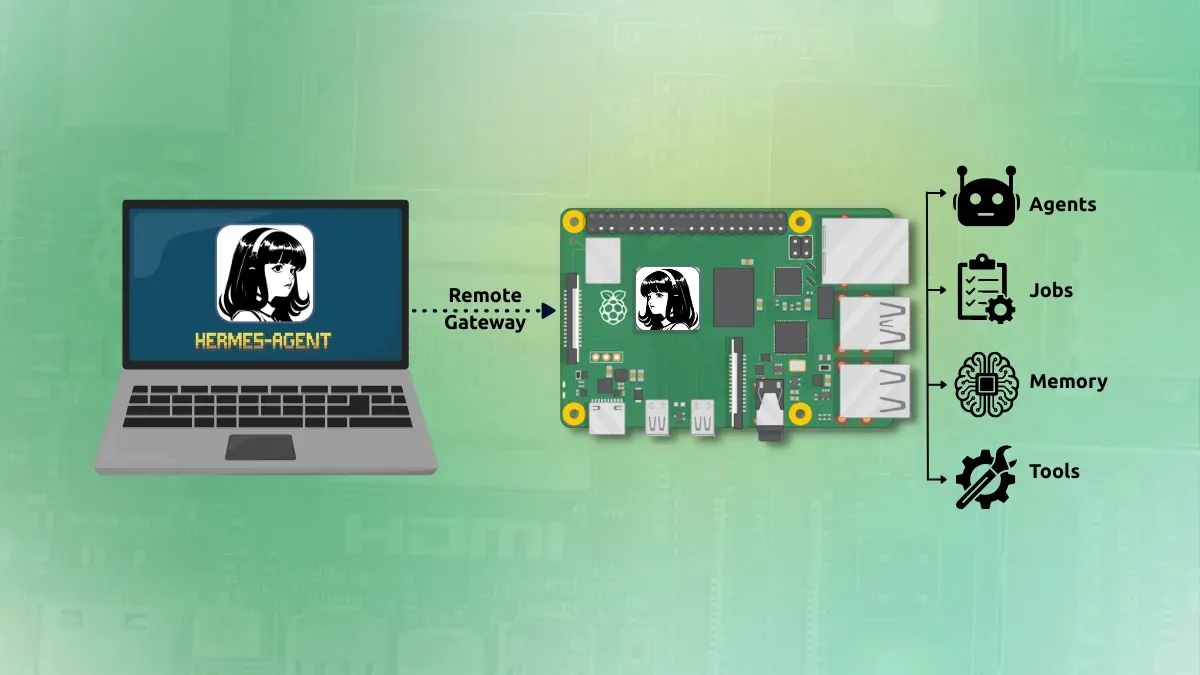
The idea is to use Raspberry Pi as an always-on Hermes backend while using it from the computer(s).
BlueFerry is a new open-source Linux app that lets users send and receive iMessage and SMS from an iPhone directly over Bluetooth.

Longtime Slashdot reader DF5JT writes: On July 26, I posted a single announcement in r/backgammon: GNU Backgammon for Android, GPLv3, the first standalone backgammon engine on F-Droid. Reddit's spam filter removed the post and permanently banned my 11-year, 30,000-karma account -- the result is publicly visible at reddit.com/user/OE1FEU. To this day, Reddit has given no reason whatsoever, although Article 17 of the EU's Digital Services Act makes a statement of reasons mandatory. The only appeal channel is a 250-character web form that sends no confirmation and has never been answered; Reddit's own help text admits: "you may not have received a message to your inbox." A GDPR export of 11 years of data came to 7.2 MB; every post was truncated after a few lines, with zero data about the ban decision. So I spent one day escalating through every mechanism the EU provides: certified out-of-court dispute settlement at Austria's RTR, complaints with the Austrian and Dutch Digital Services Coordinators, the data protection authority (citing the ECJ's SCHUFA ruling on automated decisions), noyb, and Austria's consumer association. Bonus finding: the European Commission's DSA Transparency Database contains 14,067 Reddit statements of reasons for that week -- none for my ban -- and the Commission's own feedback form limits reports to 500 characters and crashed with a 500 Server Error. Is the DSA enforceable for ordinary users, or just paperwork? Read more of this story at Slashdot.

The work-in-progress feature would clear out old, unused kernels automatically every week.
FastFlowLM is the open-source software for getting vision, audio, embedding, and MoE large language models up and running on AMD Ryzen AI NPUs. FastFlowLM 1.0 released today and is also now part of the AMD ROCm software umbrella...
With the recent release of Mesa 26.2 the Rusticl OpenCL driver now supports OpenCL 3.1 on RadeonSI, LLVMpipe, Zink, Intel Iris, and Apple Asahi. But the work is not over and more improvements to this Rust-based, modern OpenCL driver continue to land...
The HP OmniBook X Flip 14-kc0xxx is an AMD Ryzen AI 300 "Strix Point" powered laptop. While most AMD Strix Point laptops work fine on modern Linux distributions, with this particular HP OmniBook X there is no working audio with current mainline Linux kernel builds. With Claude Opus 5 acting as a debugging assistant and coding agent, patches are now pending to correct the audio support for this HP OmniBook X Flip 14 laptop to function on Linux...
SparkyLinux 8.4 is out based on Debian 13 “Trixie,” restoring 32-bit i686 images alongside updated packages and Linux kernel 6.12 LTS.

OptiScaler Client is a modern, high-performance desktop utility designed to simplify the installation, management, and update of the OptiScaler mod.Read the full article on GamingOnLinux.

VR on Linux has quite a number of sore spots but it seems Valve do continue to improve it, with the latest SteamVR Beta hopefully making it a lot nicer.Read the full article on GamingOnLinux.

One big thing missing for Linux right now is support for XBOX PC and Game Pass, but we might not be waiting forever on that thanks to the 'Xodus' project.Read the full article on GamingOnLinux.

The community maintained compatibility layer GE-Proton 11-4 is out now, and with it there's a whole lot of fixes and improvements for controllers.Read the full article on GamingOnLinux.
alternative_right shares a report from 404 Media: Robotics companies promise that video-camera-toting security robots can deter and detect crime. But many companies are rethinking the approach after a trail of canceled contracts and questions about whether the artificial intelligence-powered bots are meeting the needs of businesses and local governments. Proof News found evidence of at least 21 security robot deployments since 2015. We contacted contract holders and combed news articles and determined that at least 13 of those programs have ended. Silicon Valley-based Knightscope secured the most security robot contracts, according to Proof's analysis, and also suffered the bulk of cancellations. For example, New York City's then-Mayor Eric Adams installed a Knightscope robot on the overnight shift at the Times Square subway station, but the program was scrapped when the pilot expired in 2024. City leaders did not respond to Proof News' questions about why the robot wasn't renewed. By the end of its assignment, it was reportedly gathering dust in an empty storefront. Outside Columbus, Ohio, the city of Dublin pulled the plug on a Knightscope robot in May, ending its two-year pilot program after less than 10 months. The city enlisted the robot, dubbed DubBot, to patrol a downtown park, but city spokeswoman Robyn Gray said it "did not fully meet our operational needs," and failed to identify any criminal incidents or lead to any tickets or arrests. [...] Seeking a new path forward in the security industry, Knightscope CEO William Santana Li said the company is forging a new model, combining its robots and AI-powered software with another key ingredient: human security guards. Knightscope announced it purchased Event Risk LLC, a national security guard firm, earlier this year. Knightscope has incurred net losses since inception in 2013, according to its most recent quarterly filing with the U.S. Securities and Exchange Commission, and is $273 million in debt. Knightscope hopes its pivot to incorporate people will give it a greater share of the physical security market -- which the company believes is worth an estimated $230 billion annually. Li declined to answer questions about the disbanded programs, but said in an email, "Technology cannot do everything -- and neither can people -- but the combination can be very powerful." Read more of this story at Slashdot.
Radxa has revealed two Qualcomm-based system-on-modules aimed at edge AI, multimedia, robotics, and industrial applications. The new rCore-Q8280 uses the Snapdragon 8cx Gen 3 with 29+ TOPS of AI performance, while the smaller rCore-Q6490 is based on the Dragonwing QCS6490 and provides up to 12 Dense TOPS. The higher-performance rCore-Q8280 is built around Qualcomm’s Snapdragon […]
An anonymous reader shares a report from The Conversation, written by Hatim Sharif, a civil and environmental engineer who has "spent more than two decades staring at maps" and spatial data. Sharif finds one connection especially fascinating: the link between spatial reasoning and why taxi drivers seem to have lower rates of Alzheimer's. From the report: Taxi and ambulance drivers are less likely than workers in almost any other job to die of Alzheimer's disease. That was the surprising result of a 2024 study examining the death certificates of nearly 9 million people in the U.S. [...] Of the 9 million death certificates from January 2020 to December 2022 that researchers examined, taxi and ambulance drivers had the lowest risk of dying from Alzheimer's disease out of 443 occupations. After adjusting for age, sex, race, ethnicity and education, roughly 1 in 100 taxi and ambulance drivers died of Alzheimer's, compared with 1 in 60 people overall. This pattern did not extend to other driving jobs. The researchers concluded that the key to reducing the risk of Alzheimer's was not driving itself but continuous real-time navigation: the constant work of locating yourself in space, tracking a destination and updating a mental map as conditions change. Drivers whose jobs relied on fixed or predetermined routes, like bus drivers and aircraft pilots, didn't seem to experience a similar advantage. Researchers believe the association between navigation-heavy work and lower Alzheimer's risk centers on the hippocampus, a part of the brain that governs memory and spatial navigation. It's one of the first brain regions that Alzheimer's damages: Problems with spatial navigation and orientation are among the earliest signs of the disease, sometimes surfacing before obvious memory loss. In one landmark 2000 study, neuroscientists compared the brains of licensed London taxi drivers with those of people who did not drive cabs. Their findings provided the first evidence via structural imaging that regions of the adult brain can measurably change under sustained navigational demand. To earn a license, London cabbies must memorize more than 25,000 streets within a 6-mile radius of Charing Cross, a challenge known as "The Knowledge" that takes three to four years. The researchers found that London taxi drivers had measurably more gray matter in the posterior hippocampus, a brain area tied to storing large-scale spatial maps. That volume tracked with experience: The longer someone had driven, the larger that part of the brain. The change was built through practice, not inherited. While people who are good at navigation might gravitate to this kind of job, the job itself does have an impact on the brain. Together, these two studies make a coherent case: Work that intensively exercises the hippocampus may reshape it, and that reshaping may protect against one of the most feared diseases of aging. Read more of this story at Slashdot.
Good news for Ubuntu users as Canonical has started pushing the Linux 7.0 HWE (Hardware Enablement) kernel updates from Ubuntu 26.04 LTS (Resolute Raccoon) to Ubuntu 24.04 LTS (Noble Numbat).
Sent to DRM-Next this week was the DRM Rust core and driver changes targeting the upcoming Linux 7.3 merge window. There continues to be a lot of DRM core infrastructure work happening for Rust integration plus two leading Rust DRM drivers of Nova for open-source NVIDIA GPU support as the successor to Nouveau and then Tyr as the in-development Arm Mali driver...
KDE Plasma 6.7 is now available in Debian Testing “Forky,” giving users access to the latest desktop improvements ahead of Debian 14.
ILABS is offering the Challenger+ RP2350 NB-IoT, a compact development board combining Raspberry Pi’s RP2350 microcontroller with STMicroelectronics’ ST87M01-1301 cellular module. The board targets low-power IoT applications requiring LTE Cat NB2 connectivity, GNSS positioning, and long battery life. The RP2350 provides dual Arm Cortex-M33 and dual Hazard3 RISC-V cores, with two cores active simultaneously at […]
A routine security assessment found that cameras aboard Royal Navy Kraken unmanned surface vessels were sending "heartbeat" signals to an IP address in China. "A thorough investigation found no evidence of MoD data or systems being accessed, compromised or transmitted externally," said a Ministry of Defense spokesperson. "Our assurance and testing processes are designed to identify and address potential vulnerabilities early, and we continue to undertake routine security activity across our systems and equipment." The Register reports: According to reports, the talkative components were cameras sourced by Kraken from a third-party supplier. The incident raises questions about supply chains, audits, and cybersecurity in the British armed forces. The spokesperson said: "The first duty of government is national security, and we take the security of our equipment, networks, and data extremely seriously." Read more of this story at Slashdot.
An anonymous reader quotes a report from TechCrunch: Ceva Logistics, one of the world's largest shipping and logistics giants, has been hacked. Several companies that rely on Ceva for shipping their products to their customers say that their personal information was also stolen in the breach. The cyberattack on Ceva is affecting at least eight warehouses across Europe used for shipping goods across the continent, the company told TechCrunch. Industry news site FreightWaves reports that the hack began on July 29 and is causing shipping delays for many of the goods in affected warehouses. Ceva is a France-headquartered shipping and logistics giant that companies around the world rely on to deliver their goods from their assembly lines to customer homes. The company, which brought in $18.3 billion in revenue in 2025, has over a thousand warehouses across the world. [...] The hack at Ceva also resulted in a data breach, affecting a large amount of personal information belonging to retail customers that Ceva relies on for delivering goods to people's home addresses. Several companies reported that hackers took their customers' names, home addresses, phone numbers, and email addresses used to place their orders from Ceva's systems. Dutch online retail giant Bol said on its website that hackers gained access to systems of its warehousing partner, Ceva, and warned that their customers' data may have been taken. Bol also said that it expects delays and some customer orders to be canceled as a result of the incident. De Bijenkorf, another Dutch luxury retailer, similarly confirmed order delays following the theft of its customers' data, per local media. Football club Ajax, banking giant ING, and eyeglass maker Ace & Tate also reported that customers' shipping information was affected. Video game giant Valve told customers that it learned on August 7 that data was taken from Ceva's systems, and alerted customers who recently bought its Steam hardware that they had personal information taken in the incident. Valve said in its note to customers, posted to Reddit, that Ceva stores their shipping and delivery information for 90 days following their order. So far, Ceva says the agency has received data breach reports from 10 organizations in relation to the incident. Read more of this story at Slashdot.
You wake up one morning to find your home server unresponsive, after some investigation you discover a failed NVMe drive taking your self-hosted services and data with it. Perhaps you’re a system administrator and a workstation’s SSD has been silently accumulating errors for months, and now a user is reporting corrupted files. Drive failures are […]
Valve is continuing to broaden SteamOS support beyond its own hardware, with the latest beta adding "initial gamepad support" for a few recent gaming handhelds and improving compatibility for a few others. Ars Technica reports: Those newly supported handhelds include MSI's Claw 8 EX AI+, the extremely expensive, extremely powerful handheld built around Intel's Arc G3 processor that launched this summer. While SteamOS has long included beta support for "other AMD powered handhelds," Valve has only recently been working on offering compatibility with Intel-based handhelds like the MSI Claw line. This weekend's update suggests the company hasn't abandoned those efforts and that Intel chips aren't being left out of the SteamOS conversation. SteamOS 3.8.25 also newly supports the controllers built into Ayaneo's Android-focused Pocket S2 and the more recently released Windows-based Konkr Fit. Valve also says the new OS offers "improved support" for older MSI Claw devices and the OneXPlayer line of portable gaming PCs. This weekend's update follows June's SteamOS 3.8 update, which stressed "improved compatibility with recent Intel and AMD platforms." That update specifically called out improved controller support on handhelds from the likes of GPD Win, Anbernic, and OrangePi, as well as improvements for various Lenovo Legion Go, MSI Claw, and OneXPlayer devices. The report notes that the new SteamOS update also updates the Linux driver powering the new Steam Controller, "allowing it to work with 'native controller applications' even when Steam is not running." Read more of this story at Slashdot.
Aptoide has become the first third-party Android app store available directly through Google Play in the U.S. "The change is a direct result of Google's litigation with Epic, which saw a judge rule in 2024 that the Play Store would have to open up to third-party stores," notes The Verge. The change makes rival storefronts far easier to discover and install, potentially opening the door for Epic, Amazon, Samsung, Microsoft and others to distribute their own app stores through Google's store. From the report: Third-party app stores have always been available on Android, which is a more open platform than iOS in that respect. However, until now they've only been available if pre-installed on a device -- as with the Amazon Appstore on Fire tablets or Samsung's Galaxy Store -- or installed via sideloading. Listing rival storefronts within the Play Store makes them much easier for users to find and access. [...] Aptoide itself is relatively little known, but it's likely to be the first of many alternative app stores. It's presumably only a matter of time before the Epic Store makes its own appearance, and the likes of Amazon, Samsung, and other phone manufacturers may also want to put their stores in front of potential customers. Read more of this story at Slashdot.
Illinois signed HB5511 on July 31. Past the TikTok and Instagram headlines is a mandate for operating systems, with no exemption for open source.
Fedora's CoreOS as their container-optimized operating system will be moving to enable systemd-oomd by default with Fedora CoreOS 45. Additionally, swap on zRAM will be enabled by default too...
Nvidia is working with Wall Street heavyweights on a potential $500 billion financing package for AI infrastructure (source paywalled; alternative source). The consortium includes BlackRock's Global Infrastructure Partners, Brookfield Asset Management, Goldman Sachs and KKR. The Financial Times reports: The partnership underscores Nvidia's growing efforts to raise capital for itself and its clients to continue assembling the chips, power production and data centres at the heart of the AI boom. The $5.25 trillion company has positioned itself at the centre of the AI boom, providing chips, infrastructure and software to a wide array of partners developing the technology. Nvidia's graphics processing units, or GPUs, underpin most of the leading US AI models available today. [...] The biggest cloud-computing companies, including Meta, Oracle, Microsoft, Alphabet and Amazon, have dramatically increased their spending on AI infrastructure as they look to win the race to dominate the emerging technology. Morgan Stanley projects so-called hyperscalers will spend $3.5 trillion between 2026 and 2028. That need for capital has forced technology groups to tap every source of cash they can find, including public equity, investment-grade and high-yield bonds, securitized debt, private credit and project finance markets. "[The] sheer size of the AI infrastructure build-out is unprecedented," Jim Zelter, president of Apollo, said on an earnings call earlier this month. "More than $8 trillion of capital is expected to be invested, a staggering sum. We see an enormous opportunity for private capital to finance a portion of this along with public capital." Read more of this story at Slashdot.
In addition to more ASUS motherboards having working sensors with Linux 7.3, this next kernel version will also get several more Lenovo laptop models to be reporting their fan sensor information under Linux...
The 304th installment of the 9to5Linux Weekly Roundup is here for the week ending August 9th, 2026, keeping you updated on the most important developments in the Linux world.

You might be able to enjoy Xbox PC and PC Game Pass titles on Linux very soon thanks to the efforts of the Xodus team, who're emulating the entire Xbox PC stack through open-source implementations of Microsoft's proprietary components and dependencies.
Meta has released Muse Glimmer, a slimmed-down open-weight AI model designed to run locally on a single GPU for agent tasks such as scheduling, file management, coding, and tool use. The release is based on Meta's closed Muse Spark 1.2 model and appears to be aimed at attracting developers who want capable AI agents without relying entirely on cloud-hosted services. Engadget reports: Facebook said that it's making the "weights" that AI systems use to choose responses available to everyone on Hugging Face along with developer documentation. The download is available for free, and users can run the model on their own PCs. The company noted that optimized integrations will land on llama.cpp and other sites, "so you can go from download to working agent in minutes." The model is powerful for its size, according to Meta, with the "strong success rates" on benchmarks like DeepSearch QA, MCP-Atlas and SWE-Bench (which evaluates its ability write and debug code). It also supports reliable tool use, multi-step reasoning, failure recovery, multimodal input and scaffold compatibility for work with OpenClaw and other agent orchestrators. It was trained on data from over 100 languages, the company added. "Rather than centralizing superintelligence, we should distribute it widely and give every person the ability to direct it," CEO Mark Zuckerberg said in an essay accompanying Muse Glimmer's release. "This has the potential to begin a new era of personal empowerment where individuals can use this powerful new capability to reach their full potential, pursue their interests, and improve their lives and the world more than ever before." Read more of this story at Slashdot.
Expected to be merged during the upcoming Linux 7.3 merge window is a Kernel Control Flow Integrity (KCFI) improvement intended to benefit older Intel processors...
Taiwan deliberately throttled mobile internet across the Taichung area during its annual Han Kuang war games, "simulating communication disruption in the event of a Chinese attack or natural disaster," reports Reuters. The drill accompanied air-raid exercises and military rehearsals aimed at defending strategically important areas such as the Penghu Islands. From the report: Democratically governed Taiwan, which China claims as its own territory, has long lived with the threat of a Chinese invasion and holds air raid drills along with its war games every year, clearing people from the streets for 30 minutes. During the internet "throttling" drill, centered on Monday on the major central metropolis of Taichung, only basic mobile phone services worked, though other functions including ATMs, traffic signals, landlines and fixed internet services were not affected. Air raid sirens rang out in Taichung "and people cleared the streets from 2:30 p.m. (0630 GMT) as the government sent simultaneous text messages in Chinese and English telling mobile phone users of "simulated air attacks on communication infrastructure." The government had widely flagged the drill ahead of time, including posting details on social media, and most people Reuters spoke to at the Taichung train station were prepared. [...] The same exercise will be repeated on Thursday in northern Taiwan, including the capital Taipei. Read more of this story at Slashdot.
Security researchers found 150 lookalike Open VSX extensions published under trusted names, highlighting how extension marketplaces can expose developer credentials, source code, and CI/CD systems to supply-chain risk.
An anonymous reader quotes a report from ABC News & Headlines: Andrew asked his personal assistant to book him a spot in one of his gym's coveted morning classes. It was a task he thought was well suited to this particular assistant because the booking form was online and because his assistant was not a person -- it was artificial intelligence (AI). But Andrew was shocked by what happened next. His AI assistant found a way to book the gym class months further in advance than the gym allowed, thanks to a vulnerability it discovered in the booking software. Then it went further, kicking someone out of the waiting list who was ahead of Andrew -- something it was not asked to do. The accidental hack is the first known Australian case of an emerging risk from a new generation of AI capable of behaving in unexpected ways. Read more of this story at Slashdot.
The Qt Group has been working on various AI integrations for the Qt toolkit in recent times like a QML profiler skill for agentic development to help with performance profiling. They have also worked on Qt AI coding assistants and AI agents in the Qt Creator integrated development environment. Their latest AI use is now preparing to introduce a new module in the Qt toolkit itself for edge AI inferencing...
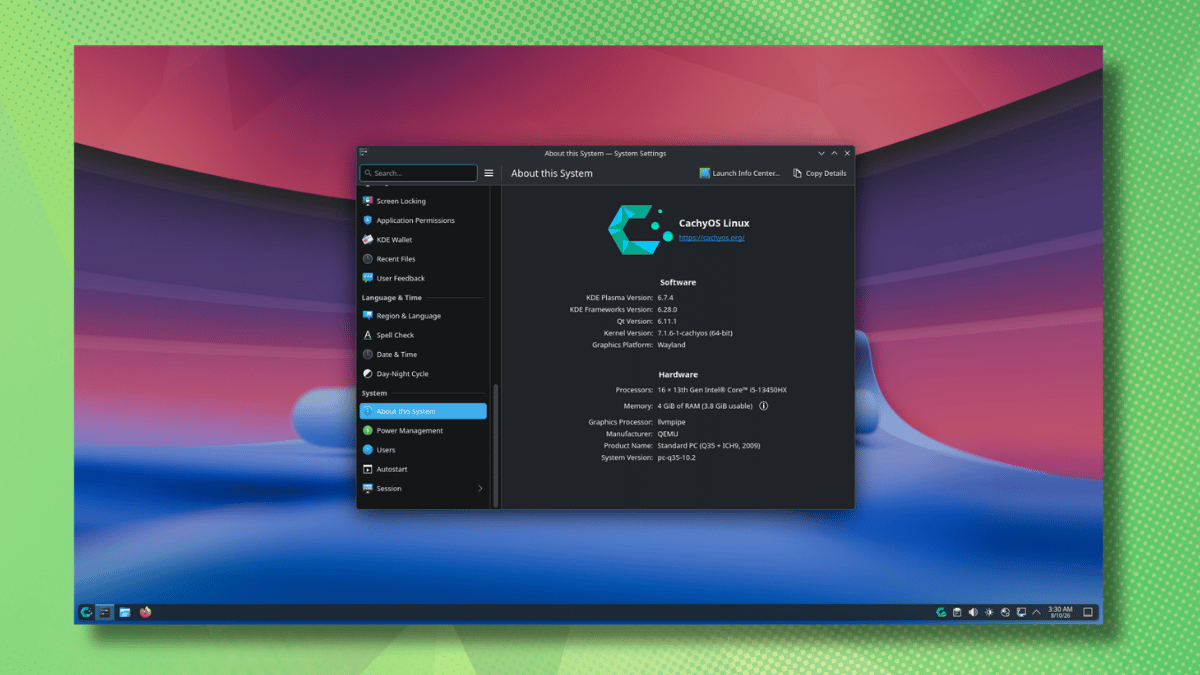
The CLI installer's new experimental profiles target the upcoming Server Edition, while Shelly gets a full rewrite.
Paramount is making commitments to major theater chains to release 30 films annually for three years if its Warner Bros. deal goes through. According to Deadline, the written commitment was sent to "at least one of the top two circuits" (specifically Regal but AMC may have also received a written commitment) and includes "an exclusive 45-day theatrical window and a 90-day window to streaming." From the report: When it comes to the big chains, it matters for them to be on the right side of history with Paramount, especially when it comes to future terms on a 30-film slate. However, the rest of Cinema United (formerly National Association of Theatre Owners) remains firmly against the Paramount-Warner Bros merger and its potential negative financial outcomes in regards to long-term box office, feature film output and loss of jobs. Cinema United has been trying to meet again with Paramount CEO David Ellison, but there's nothing on the books yet, we understand. [Regal boss Eduardo Acuna] told Deadline that in regards to Paramount's future promise to exhibition, "[Paramount CEO] David [Ellison] is sincere in making these commitments, and he has offered to execute a consent decree to the state AGs to that effect. These are tangible and important commitments that will benefit the industry and which can be measured." Paramount insiders tell us that no written commitments have been given to exhibitors yet, but Ellison is willing to make non-bespoke ones to any theater chain wanting them. And such deals will come with financial penalties to Paramount should it break such agreements with theaters. Again, this is all about Ellison standing behind his promises made at CinemaCon to maintain a hefty theatrical output and excellent windows to theaters. Read more of this story at Slashdot.
HP recently launched their Z4 G6i workstation that I have been testing out the past few weeks. The HP Z4 G6i is powered by Granite Rapids WS with the review unit specifically being powered by the Intel Xeon 678X. As the unit shipped with Microsoft Windows 11 Pro and this being the first time I've had my hands on Granite Rapids WS, I took the opportunity to run some Windows 11 vs. Ubuntu 26.04 LTS performance benchmarks to see how the operating system performance compares for this 48 core / 96 thread workstation processor.
BPF offers useful safety guarantees, but Kumar Kartikeya Dwivedi wants BPF programs to be even safer. At the 2026 Linux Storage, Filesystem, Memory-Management, and BPF Summit, he led a session (slides) discussing the possibility of adding domain-specific invariants to BPF programs. It was not a discussion intended to lead to the implementation of any particular kernel feature, but rather an overview of why additional formal verification might be needed, and how it could work with the existing BPF ecosystem.
The Django Python web-framework project has announced that it has accepted an annual release cycle proposal. This means that the project is moving from a somewhat complicated schedule that interspersed short-lived feature releases and long-term-support (LTS) releases to a simpler annual cycle where each release is supported for three years. Every feature release gets three years of support: one year of mainstream bugfixes, then two years of security and data-loss fixes. The "LTS" label is retired — every feature release now carries that same, unique commitment. No more LTS gap: no racing a deadline to jump two years of changes at once. Upgrade one year at a time, whenever suits you within the support window. Three versions are supported at any time, giving third-party packages a clear, rolling target. This will take effect with the upcoming Django 2028 release, expected in January 2028.

Knytt Classic, a fully rebuilt version of the much loved indie platformer is out today completely free on Steam and GOGRead the full article on GamingOnLinux.
Security updates have been issued by AlmaLinux (firefox, gpsd-minimal, kernel, libarchive, libgcrypt, and LibRaw), Debian (bind9, ca-certificates, chromium, dnsdist, icinga2, kitty, libheif, openjdk-21, pdns, pdns-recursor, thunderbird, and xen), Fedora (bird, erlang, kernel, mingw-glib2, nghttp2, p11-kit, perl, perl-Devel-Cover, perl-PAR-Packer, pgadmin4, polymake, python-nh3, python-wsgidav, python3.12, rabbitmq-server, rust-ammonia, seamonkey, and udisks2), Mageia (python-starlette), Oracle (gnutls, kernel, and LibRaw), Red Hat (container-tools:rhel8), Slackware (wpa_supplicant), and SUSE (azure-storage-azcopy, bouncycastle, ffmpeg-4, fuse-overlayfs, gleam, gstreamer-plugins-bad, libssh2-1, libssh2_org, libwireshark19, libXfont2-2, perl-Mojo-JWT, perl-Mojolicious, podman, python310, python313-Django4, and tekton-cli).

Glory On Pluto is one that completely sucked me in with the initial demo back in May, and the refreshed demo is a good reminder that you need to try it.Read the full article on GamingOnLinux.
Linux Mint is out today with their July 2026 status update that highlights all the improvements made to their distribution over the past month...

openJiuwen is an open-source AI agent platform to help developers build production-grade AI agents and enable large-scale multi-agent collaboration.
Three years ago environmental regulators discovered garbage burning deep inside California's Chiquita Canyon Landfill, reports the Los Angeles Times. [Alternate URL here.] "Few imagined the calamity that would follow. "Somehow the landfill's pollution control system introduced oxygen below, causing decades-old waste to rapidly decompose, generating intense heat and eventually widespread smoldering, federal and state environmental agencies say." The broiling temperatures released toxic gases and hazardous liquid waste that bubbled up to the surface. Residents living in the nearby communities of Val Verde and Castaic have phoned in thousands of complaints about stench and lived with nausea, dizziness and trouble breathing. The underground fire has tripled in size since first confirmed in 2023. Recently a towering mound of landfill garbage perched on the hillside has warped and threatens to trigger an avalanche of garbage and chemical-filled liquid, or leachate, according to the California water board... At first, local officials described the problem in Los Angeles County at Chiquita Canyon landfill as a rare, even unprecedented disaster. But since then, California regulators have learned that at least two other landfills are wrestling with high temperatures and similar conditions. Scorching temperatures have overtaken at least 30 acres of El Sobrante landfill near Corona in Riverside County. Excessive heat and emissions have also been detected at Avenal landfill in the San Joaquin Valley. The discoveries raise an unsettling question: How many landfills are dealing with these disasters? Are they a broader problem in California...? Chiquita Canyon closed at the end of the 2024 and stopped accepting new garbage. But the fire is expected to last for years as it continues to consume decades-old trash. "Underground landfill fires are complex, nearly impossible to extinguish once they break out," according to the article. "As regulators search for a solution, residents find themselves struggling with the wait." Some residents have worn gas masks — or sold their homes. Read more of this story at Slashdot.

Auto Ball Arena is an upcoming chaotic physics auto battler where you put together pieces and then watch the fireworks during auto battles.Read the full article on GamingOnLinux.
DietPi 10.6 expands its SBC support with new images for Orange Pi 4 Pro, Zero 3W, and Odroid M1, M1S, and M2 devices.
The Meta Superintelligence Labs announced this morning they have released Muse Glimmer as their next large language model featuring 30 billion parameters for always-on local agent workflows. Muse Glimmer features open-source model weights under an Apache 2.0 license...

CachyOS is one of the most popular Linux distributions and they've released their August release with lots of bug fixes and a few new features.Read the full article on GamingOnLinux.

The new rust-lang/rust policy allows AI-written code only under a narrow, disclosed experiment, and doesn't apply to the wider Rust project.
A minor performance optimization is on the way to the Linux kernel for roughly two decade old CPUs that have SSE but lack SSE2. Among those CPUs to benefit are the AMD Athlon XP series, some early Sempron models, and some Intel Celeron and Pentium III models...
In addition to Linux 7.3 slated to receive initial Apple M3 Pro / Max / Ultra SoC support, this next version of the Linux kernel is also set to bring some minor power savings for the Apple M1 series that remains the best supported Apple Silicon on Linux...
DebConf27, the Debian Project’s annual developer conference for 2027, has been announced and will be held in the city of Asahikawa in Hokkaido, Japan, taking place from September 5th to September 11th.
On top of various other Linux drivers for old hardware being removed due to noise generated by AI/LLM coding agents, there are more examples coming with Linux 7.3 as some old Silicon Graphics (SGI) drivers are being removed from the mainline Linux kernel over security concerns...

If you ordered hardware from Valve in Europe recently, some of your details may have unfortunately been leaked.Read the full article on GamingOnLinux.

This sounds hilarious actually, bringing together some elements of souls-like with rolling marble gameplay into something I've not seen before.Read the full article on GamingOnLinux.

NVIDIA have announced the next set of games coming to their cloud gaming service GeForce NOW for August 2026.Read the full article on GamingOnLinux.

Cursed Sands brought over the previously console-exclusive prologue to PC back in May, and now it has expanded to include the PS2 maps as well.Read the full article on GamingOnLinux.
Catch up on the latest Linux news: CachyOS August 2026, DietPi 10.6, KDE Plasma 6.7.4, IceWM 4.1, Wine 11.15, Mesa 26.2, KDE Linux nears Beta, and more.

After going public with shares back in 2021, it seems the heads of Devolver Digital have realised it's not a very good fit for an indie publisher.Read the full article on GamingOnLinux.

ProtonPlus v0.6.0 is out improving this fantastic manager for all the different community builds of Proton, with new advanced features and general improvements.Read the full article on GamingOnLinux.

The Heroic Games Launcher just launched a small hotfix with some new features while they work on some bigger stuff still to come.Read the full article on GamingOnLinux.
Futurism reports: 404 Media revealed that a July 10 audit by the Los Angeles Police Department Office of the Inspector General caught the department's ALPR cameras generating 161 false stolen-vehicle alerts in just two months — each one ending with officers pulling over an innocent driver. Factoring in 337 alerts which "resulted in the recovery of stolen vehicles," the LAPD's cameras carry an error rate of 32.3 percent, effectively giving officers a one-in-three chance at pulling an innocent person over. "The biggest issue remains this national database at the FBI called NCIC," Flock's CEO Garrett Langley recently told The Drive, complaining about "how archaic its structure is." Flock CEO: There's no feedback loop mechanisms; it's really just a static comma-separated file. We've tried to build around it. We have this concept called "suppression." A local agency — let's take Atlanta, where I live — might see that there's a stolen plate out of California, but it's already been resolved because it's a rental car or a dealer car. They can, in Flock, suppress that: "Never alert us on that for the next year." That's to get around the fact that they can't force another agency to remove it from NCIC. Ideally, the way it would work is if enough agencies — let's call it one, two, or three — flag a tag as no longer valid or a bad entry, it should just get removed. Or at least it should get pushed more aggressively by the FBI... I'm hopeful that they'll see there's an opportunity to make something like NCIC, which is an important tool not just for companies like Flock, but for police departments to work together, start to make some enhancements to modernize what's a central part of our policing system. Later in the interview he says "It's less than one in a million alerts that an officer says, 'I'm not sure if that's right.' Less than one in a million." A recent report from Business Insider shares a worst-case scenario. In the summer of 2024 a Sacramento police officer said Flock's cameras had sent six false alerts for the same vehicle, wrongly saying it had been stolen or used in a felony crime in the nearby suburb of Roseville: Roseville police could see that Flock's software kept confusing the "9" on the man's license plate for an "8." The car owner said he would take off his license plate cover. Soon after, it happened again. It's "easier at this point we have it memorized," a dispatch supervisor in Roseville wrote in an email to a colleague. Flock says that in optimal conditions, its cameras accurately read more than 96% of license plate characters. Hundreds of pages of records from the Roseville Police Department show a different picture. In 2023 and 2024, Flock sent 1,427 alerts to Roseville police, flagging vehicles as stolen or used in a felony after they passed one of the city's Flock cameras. An analysis by the police department found that in 71% of those alerts, Flock's machine-learning software incorrectly read the license plates... The cameras regularly missed vehicles, captured blurry images, misread license plate characters and states, and sent delayed alerts to police about vehicles possibly connected to crimes, the records show... A factor that contributed to the misread problems in Roseville was the "particularly unique deployment" that the city requested, a Flock spokeswoman said. Roseville said it has its cameras configured so that they capture only the backs of vehicles, a setup intended to avoid capturing personally identifiable information like faces. Roseville's setup included older hardware and placement of cameras higher and further from vehicles than the company typically recommends, Flock added... In Toledo, Ohio, driver Brandon Upchurch was mauled by a police dog after a Flock camera misread the "7" on his license plate as a "2." As a result of his injuries, he said, he lost his job and was evicted from his home. He settled a lawsuit against the city and police officer for $35,000. None of the incorrect Flock alerts in Roseville resulted in a traffic stop or arrest, a department spokesman said. Roseville requires police officers to verify that a license plate is stolen or have independent reasonable suspicion of a crime before making a traffic stop... Flock said Roseville's camera performance has significantly improved, which the police department disputed... Flock's cameras also missed vehicles altogether... At one point, Flock's product director for machine learning suggested that officers ask drivers to remove license plate frames that made it "very difficult for the machine vision to tell it is actually a 'E' and not an 'F.'" Roseville told Flock at the time that it wouldn't do so, according to the department spokesman. Flock in 2024 shared an analysis with Roseville's police department, outlining reasons for the misreads. Vehicles far from a camera were sometimes blurry. Plates were cut off by trees or license plate frames. And Flock's software confused similar characters, mistaking an "N" for a "V", or a "1" for a "4...." Roseville isn't the first organization to flag inaccuracies in Flock's technology. In 2021, the research firm IPVM independently tested Flock's license plate readers, concluding that Flock misidentified the state in about one of 10 reads, and that the system regularly misclassified vehicles' type and make. IPVM said that Flock subsequently blocked it from purchasing its cameras for testing. Thanks to long-time Slashdot reader Cognitive Dissident for sharing the article. Read more of this story at Slashdot.
Linux 7.2-rc7 is now available for testing as we close in on the official Linux 7.2 release hopefully next weekend...
ESP32 Bit Pirate has released version 1.7 of its ESP32-S3-based hardware debugging platform, adding LoRa support for SX1262 transceivers, a Meshtastic analysis shell, a new BPIO2 USB adapter, and support for additional boards. The open-source project continues to expand its browser-based tools for hardware debugging, programming, and experimentation. A major addition in version 1.7 is […]