Germany's Sovereign Tech Agency announced earlier this year a new fellowship program and now as part of that, for the next two years GNOME has a fellow dedicated to working on design and community management...

NASA has squeezed at least another year of science out of Voyager 2 by cutting power to nonessential systems and switching to lower-power alternatives. Voyager 1 is expected to receive the same power-saving changes in the coming months. Space.com reports: Voyager 2 and its twin launched in 1977, called Voyager 1, rely on a form of nuclear battery known as a radioisotope thermoelectric generator that uses the heat produced by the decay of plutonium. But the supply of plutonium on each probe drops at about four watts a year on each spacecraft. To keep the probe running on this dwindling power supply, engineers recently reduced Voyager 2's power requirements by turning off a few non-science devices and using "lower-power alternatives" that are still effective enough to keep the spacecraft warm while it's so far from the sun, NASA officials said in a statement. "The spacecraft power margins have grown razor thin, requiring the team to conserve energy by shutting off non-essential devices and systems," NASA officials wrote of the mission, which is managed by the agency's Jet Propulsion Laboratory.
The drop in power is having a measurable science impact on both spacecraft -- each has turned off two of their science instruments since 2024 alone. While some of these instruments were shut off after the spacecraft finished their historic planetary flybys decades ago, others were turned off due to power requirements. Each spacecraft initially launched with 10 instruments, and Voyager 2 is now down to only three instruments. At first it looked as though Voyager 2 would have to shut down another of these instruments later this year, but luckily, the new power shifts will allow all three to operate "for at least another year," NASA said.
Read more of this story at Slashdot.
It's been another busy week in the Linux kernel camp with increased patch activity continuing due to AI/LLM coding agents / bots continuing to uncover different defects in the open-source codebase. The hardware monitoring (HWMON) subsystem saw many fixes this week for issues mostly raised by the Sashiko AI bot with the issues being described as mostly critical or high severity bugs...
Thanks in part to the power of Claude Opus 5 and Claude Fable 5, a new Windows DirectX 11 driver for QEMU has been created to help improve graphics acceleration for Microsoft Windows guests running under QEMU virtual machines...
The input subsystem fixes for the week include a number of AI-driven patches to address various information leaks, out-of-bounds accesses, validation fixes, and other coding issues that have turned up recently. Plus some device quirks and also adding support for a rather funky gaming controller to the common XPad Linux driver used by many different gaming controllers...

SteamOS 3.8.25 Beta is a bit of a bigger one with a decent list of improvements for Steam Machine, more handhelds and even the Steam Frame Wireless Adapter.Read the full article on GamingOnLinux.
ClamAV 1.5.4 is now available with fixes for eight CVEs affecting ZIP, PDF, Mach-O, XAR, UnRAR, PE processing, and other components.
The police surrounded her car Thursday, "drew their guns, and told her to come out with her hands up," reports a local news station. The police thought they were pulling over a murder suspect, but "It turns out it was a mistake by another department with the Flock license plate reader technology." The black woman says she'd wanted to call her mother, "but I'm like, if I make a sudden move, it's going to be over. It's going to end my life."
And amazingly, the same thing happened Monday, according to the local news report. "Milwaukee police pulled her over with guns drawn. She says officers never explained why, towed her car, and let her go."
She now describes herself as "traumatized," recalling her second detention by police on Thursday. "After they put us in cuffs, they walked us to the car. I'm not knowing what's going on. I'm scared. All you see is people in their cars recording." She now says she's scared to drive her car, and so is her daughter. "Because she doesn't know if the police are going to pull us over and do it again..."
"I haven't been to sleep since this happened. Every time I close my eyes, all I can see is guns."
She wants an apology, since the local police would only say it wasn't their fault, it was the fault of the Milwaukee police department that failed to remove the alert from Flock's system. "Milwaukee police emphasized this was not a Flock camera issue, it was a data entry mistake," according to the local news report. The woman's response?
"Y'all failed. Y'all failed the system. Y'all failed me. Y'all failed everybody."
Read more of this story at Slashdot.
The Debian Project released a new kernel security update for Debian 13 “Trixie” users on August 6th, 2026, just a week after the previous kernel update, addressing new flaws in the Linux 6.12 LTS kernel.
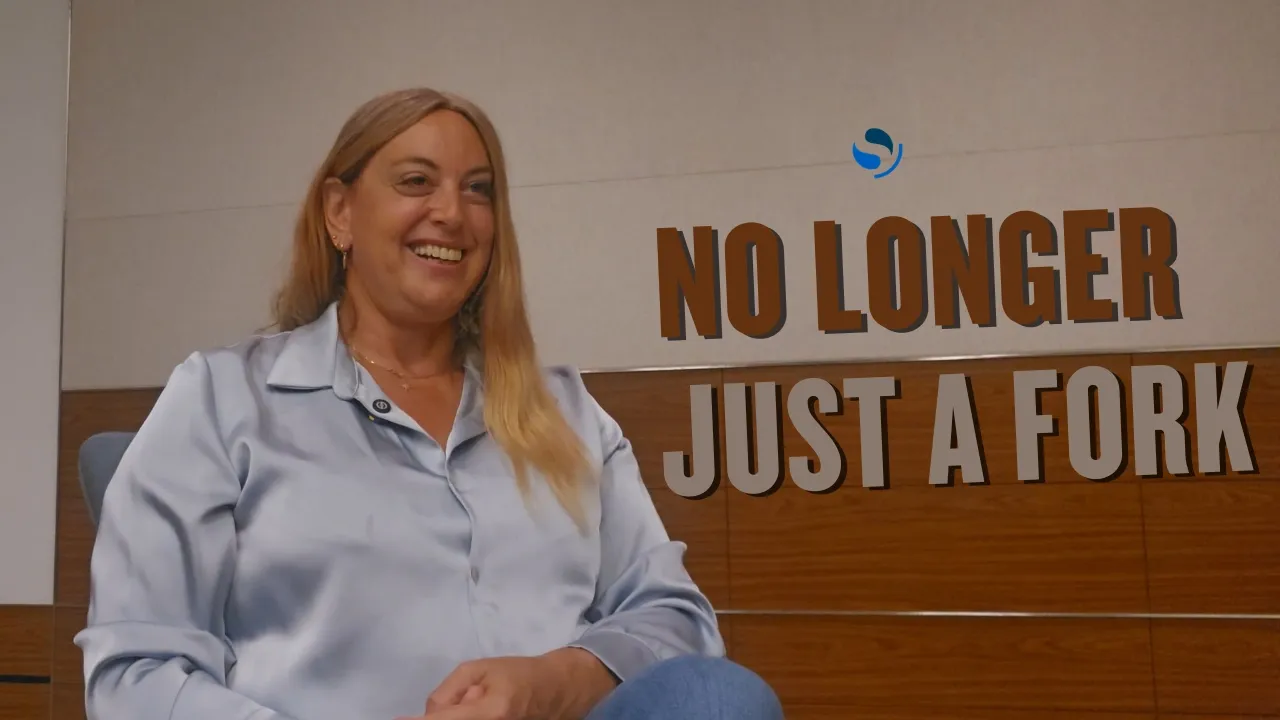
An interview with Bianca Lewis of OpenSearch, conducted at Open Source Summit India.
An anonymous reader quotes a report from the BBC: German energy company RWE has said it will abandon its offshore wind projects in the U.S. after reaching a $1.2 billion payout deal with President Donald Trump's Department of the Interior (DoI). RWE said that it will now reinvest the sum into conventional gas projects, including $900 million in a liquefied natural gas (LNG) export terminal project in Louisiana. "After careful consideration, it was determined there is no path forward to permit these projects in the US for the foreseeable future," the company said in a statement.
RWE said it has agreed to relinquish its leases off the California and Louisiana coasts as well as in the New York Bight. Overall, the German firm plans to invest approximately $19.6 billion in the U.S. over the next six years "to grow its generation capacity." Interior Secretary Doug Burgum said in a statement posted on X that Americans deserve an energy system built on common sense and not one dependent on "costly subsidies." "We welcome RWE's agreement and voluntary investment in projects that strengthen our nation's energy security," he added. Earlier this year, the DOL reached a deal with TotalEnergies putting an end to the French company's offshore wind projects in the U.S. "Instead, the firm agreed to reroute investment to build a LNG plant in Texas and to develop 'upstream conventional oil' in the Gulf of Mexico," reports the BBC.
Another similar deal was signed with Charlotte-based Duke Energy last month to terminate the company's offshore wind lease in the Carolina Long Bay area.
Read more of this story at Slashdot.
It's been another busy summertime week of KDE developers working toward a great Plasma 6.8 desktop release in October...
Longtime Slashdot reader schwit1 shares an opinion piece from the Washington Post, written by Virginia Governor Abigail Spanberger: NextEra Energy, a Florida-based utility company, has filed paperwork to buy Dominion Energy for about $67 billion, creating the largest regulated electric utility in the world. Virginia's State Corporation Commission is the regulatory body tasked with reviewing the application, and the SCC's commissioners will ultimately decide whether to approve, deny or impose new conditions on any potential merger.
As a Virginian, I am deeply skeptical about whether selling our primary state-regulated utility to an out-of-state company is good for the commonwealth. I have serious questions about what this deal would mean for us. And as governor, I intend to get answers and be a voice for Virginians in the process. That is why I will be taking the legal step of "intervening" in this proposed merger, which means that as governor, I will formally request to be a party to the case.
I know this action is unprecedented by a Virginia governor -- but so, too, is the size of this proposed merger and its potential impact on the commonwealth. Virginians deserve to know that their leaders are laser-focused on ensuring that their needs are part of the SCC review. "If two large corporations stand to benefit financially from this merger, so, too, should the Virginians who pay the bills," said Spanberger. "That is why any potential deal must deliver a more affordable energy bill with sustained, long-term energy cost savings."
By formally intervening in the merger review, Spanberger's administration would gain legal standing to participate directly in the case, request detailed information, raise concerns, and advocate for conditions that benefit people in the state. She says the goal is to push for lower long-term energy costs, protect utility jobs, and ensure any new owner continues investing in reliable, affordable and cleaner power.
Read more of this story at Slashdot.
The National Rural Water Association has partnered with DEF CON Franklin to launch the Water Watch Center, which will provide threat intelligence and cybersecurity services to smaller U.S. water utilities serving fewer than 10,000 people. The initiative comes amid a growing wave of cyberattacks on water systems across multiple states. The Record reports: The program will see five managed detection and response providers work with DEF CON Franklin and the NRWA to offer cyber services for water utilities serving fewer than 10,000 people. There are over 50,000 community water systems across the U.S. and 91% of them serve fewer than 10,000 people. "These leading cyber firms and NRWA are architecting a scalable cyber delivery model that has eluded water industry and national security officials to date," said Jake Braun, the co-founder of DEF CON Franklin and former cyber official in the Biden administration.
"Our incredible Franklin volunteers will support the effort to keep costs down for cash-strapped utilities fending off adversaries like the Iranian Red Guard or Chinese Military," Braun said. "To further accelerate the effort, we hand-picked cyber providers who already support water utilities. These folks walk in the door knowing the intricacies of cybersecurity in a water utility environment." The providers include Rapid7, Defendify, Legato Security, L1 Secure and Sentinel Technologies. The companies will share threat information and data on vulnerability patches with the NRWA, which will operate as a hub.
Read more of this story at Slashdot.
An anonymous reader quotes a report from NPR: Billions of dollars are traded every week on the lightly regulated prediction market sites, where users bet on everything from movie reviews to elections to conflicts in the Middle East. Clinical trials are just the latest area where the industry's rapid growth is raising ethical questions. Kalshi claims such bets will provide a new source of information about which drugs will get approved, and what clinical trials will show promising results, which the company says can help investors decide what new drugs to fund.
"If you want to ban profiting from the failure of clinical trials, you would start with the stock market, where the financial incentive for this type of profit is orders of magnitude larger," said Kalshi spokesman Jack Such, pointing to stock market short sellers who have profited from clinical trial failures. "While Kalshi and the stock market are the same in this regard, they do differ in one important way: the stock market doesn't give any valuable information to researchers," Such said.
Drug trial researchers, though, are far from convinced. David Tsai, who runs clinical trials at a biotech company in the San Francisco Bay Area, started an online petition pushing for such betting to be banned, making the case that betting on drug trials "threatens the very foundation of trust and integrity in biotechnology." Tsai is concerned that the prospect of betting provides those involved with a clinical trial a reason to tamper with the results for a prediction market payout. "If we were running a trial for an oncology drug that requires an infusion, a pharmacist who had placed a bet saying that it's gonna work well, or doesn't work well, could obviously adjust the infusion rate, could adjust the source temperature of the drug," he said. "They could change any number of variables that could obviously have a direct impact [on] how the trial and the data and the patient safety would come out."
Another skeptic is Nicholas Zaorsky, a professor of radiation oncology at the Mayo Clinic in Jacksonville, Fla., who has helped run clinical trials and agrees that prediction markets can interfere with the advancement of life-saving drugs. "Prediction markets can be valuable in some settings because they aggregate information, but clinical trials are fundamentally different: investigators, coordinators, and sometimes even participants can directly influence aspects of the outcomes being wagered on," Zaorsky said. "That creates financial incentives that risk undermining trial integrity." Bettors should not be rooting for an experimental medicine to fail just to earn a buck, says Joshua Pederson, the father of a 12-year-old cancer patient enrolled in a clinical trial. "It's a dark idea," he said. "It's quite ghastly."
Kalshi, for its part, argues that its prediction markets could help patients track promising medical breakthroughs and clinical trials, enlisting experts including 23andMe founder Anne Wojcicki to make the case.
"Most patients don't know about the choices available in clinical trials or which programs are most promising. The opportunity to have an open, transparent dataset about trial probabilities is extremely promising and empowering for people," a white paper sponsored by Kalshi stated.
Read more of this story at Slashdot.
Fastfetch 2.67 adds an experimental browser-based config editor, interactive TUI generation, watch mode, and multiple Linux-related fixes.
Former U.S. National Cyber Director Chris Inglis says the biggest AI risk isn't sentience but autonomy. "What I'm worried about is that they get to choose what and where they do something, and under what rules they do it," he said, citing recent cases of AI agents from OpenAI, Anthropic, and Meta escaping security sandboxes. He argues developers need stronger safeguards, monitoring, and human accountability, invoking Asimov's idea that protecting humans should come before simply obeying them. The Register reports: "Asimov was right," he said, referring to science fiction author Isaac Asimov and his three laws that were to be followed by robots -- more specifically, AIs, in this case. "The first rule, and we call it the superior role, must be that it's designed not to hurt humans," Inglis said. "Second rule: To obey humans, such that it doesn't achieve agency and aspiration on its own. And the third: To do what humans tell it - and in that order. Instead we've designed them in the exact opposite way."
What this means, he explained, is that AI developers created models to "do what humans tell you, obey the humans until it's inconvenient, and then the third one is maybe implied - protect humans - but if that's not built into the DNA, hardwired into it, then we have no right to expect it." Inglis admits it's not possible to hardwire rules into models and still keep their non-deterministic nature. "I would offer that you can tease those out in a highly controlled environment, a true sandbox, where you say, 'Let's put this thing through its paces, and let's back away to see what happens,'" he said. "Maybe you get the equivalent of a mini nuclear explosion in that room, and now you know this thing is capable of that."
Inglis thinks another problem with AI is that it's become a commodity. "It's not like you can control it like you can nuclear material," he said. "You can't even specify its properties the way you can for an airplane or for an automobile, as diverse as they might be. Its manifestations are so numerous, so diverse, that as a general matter, you can't actually win by simply saying, "I will design those properties in,'" he added. "You need to do that to some degree, and then make sure that you understand how to watch it, monitor it, make sure you know what it does."
[...] Ultimately, humans remain accountable for AI models' actions, according to Inglis. "They remain the source of agency and aspiration. It's possible for them to give broad authority to an AI model and have it run around for 30 hours without further consultation, but they need to know what they've asked it to do, and they need to know what they expect it will deliver in terms of performance on the back end. If they don't, then they're going to get what they deserve, which is the very frequent unpleasant surprise."
Read more of this story at Slashdot.
For those with newer, high-end Logitech input devices, coming with Linux 7.3 is support for the re-programmable button support of the HID++ 2.0 protocol...
"Framework has been sending out email notifications to customers alerting of a limited data breach in which customer information was accessed through a Metabase BI service zero-day exploit," writes Slashdot reader DuoDreamer. Data includes customer names, email addresses, phone numbers, and physical addresses. "Framework is investigating whether or not this included Framework for Business customers as well." TechCrunch reports: Framework's spokesperson Eric Schumacher told TechCrunch that the breach affected "all customers," but declined to specify a specific number. Framework computers are relatively niche products, but some estimates say the company sold hundreds of thousands of devices.
Metabase disclosed its own breach in a blog post on its official website, where it said that it was hacked by someone using an unknown security flaw, a so-called zero-day. The company said the hackers exploited the bug to give them the ability to access customers' databases stored on Metabase's cloud servers.
In its email to customers, Framework also included the email Metabase sent to the company, which says hackers accessed Framework's cloud instance. The computer maker said it investigated the incident and found that hackers had stolen its customers' personal data, but did not include their payment information.
Read more of this story at Slashdot.
Suno says it will begin watermarking and fingerprinting AI-generated songs, tighten download policies to curb mass distribution, and explicitly prohibit deceptive audio and unauthorized voice or likeness cloning. The changes come as the company faces mounting copyright lawsuits, a recent adverse ruling in Germany, and scrutiny over a past data breach that revealed training-data sources. TechCrunch reports: In a blog post, co-founder and CEO Mikey Shulman shared core principles and said that the platform wants to promote original creation while enabling more people to make music with its AI tools. One of the key points of contention involved users uploading AI-generated songs on other streaming platforms and gaming the system to earn revenue. Suno said that now it will use audio watermarking and fingerprinting to prevent misuse on other streaming platforms. It's not clear if Suno will use an existing system like Google's Synth ID or adopt a new one, and the company did not say when contacted by TechCrunch about this.
The startup also signed an agreement with lyrics provider Musixmatch to use its Sentinel system for copyright detection, the blog post said. [...] The company added that it plans to add a new download policy to bar mass distribution on streaming platforms, but declined to provide details on the record. Suno has also changed its community guidelines to explicitly prohibit "deceptive audio presented as real" and "using a real person's voice or likeness without permission" to prevent copycats.
Read more of this story at Slashdot.
Upstreamed for the Linux 7.2 kernel was the Device Tree (DT) support for booting the mainline Linux kernel on the base Apple M3 SoC. Though it's not yet useful for end-users with many features remaining to be supported and upstreamed. Now for the upcoming Linux 7.3 kernel, the M3 Pro, Max, and Ultra variants will also have initial support for booting on the mainline kernel...
Proxmox VE gains its first official Arm64 edition, bringing KVM, LXC, ZFS, Ceph, clustering, and enterprise support to Arm servers.
ByteDance is reportedly training an AI model with roughly 10 trillion parameters as it tries to close the gap with leading frontier systems such as Anthropic's Mythos. The model is still in early pre-training, and its eventual performance will depend on more than scale alone, but the project underscores how aggressively Chinese firms are pushing frontier AI despite limits on access to advanced chips. The Next Web reports: The size is itself the statement. At roughly 10 trillion parameters, the model would be more than three times as large as Moonshot's Kimi K3, which sits among the biggest Chinese models today at about 2.8 trillion. [...] Parameter count is not everything, of course. Bigger models are not automatically better, and the industry has learned that data quality, training technique and efficiency often matter as much as raw scale. Even so, committing the compute to train a model this size is a declaration in its own right, a signal that ByteDance wants to compete at the very top rather than ship a capable also-ran.
Read more of this story at Slashdot.
Intel today released an updated version of their QuickAssist Technology library (QATlib) as the user-space component for making use of QuickAssist accelerators under Linux...
President Trump has ordered a 15% tariff on imported products made with polysilicon, a key material for semiconductors and solar panels. The new tariff will take effect on December 4th. The Guardian reports: The executive order signed by the president on Thursday evening said: "The plan of action in this proclamation will, among other things, help ensure the commercial viability of United States production of polysilicon and its derivatives that is necessary to meet United States economic and national security requirements." Polysilicon, an ultra-pure form of silicon, is an important ingredient in making the semiconductors vital for AI processing power, datacentres and solar power generation. US solar factories have long accused Chinese rivals of dumping cheaper panels on the market, which they say have been enabled by excessive government subsidies and by moving manufacturing to other countries to dodge US tariffs.
[...] The US has two main polysilicon factories, including Hemlock Semiconductor, which operates a plant in Michigan and is a joint venture between the US tech company Corning and Japan's Shin-Etsu Handotai. The Munich-based Wacker Chemie runs a factory in Tennessee. Trump said in the order that he had accepted recommendations by the commerce secretary, Howard Lutnick, to set minimum import prices of $21 a kilogram for polysilicon, $100 a kilogram for polysilicon ingots and wafers, $0.22 a watt for solar cells, and $0.38 a watt for solar modules or panels. The order also allows the commerce department to create an incentive program for companies that invest in factories to produce polysilicon or derivative products.
Read more of this story at Slashdot.
This week a final batch of DRM-Misc-Next feature material was submitted for DRM-Next to queue ahead of the Linux 7.3 merge window opening later in the month. Most notable is the TTM memory management code is now being more agressive when allocating below protection limits. This is an improvement coming thanks to Valve's open-source Linux graphics team...
The shadow-utils
project provides the tools that handle /etc/shadow,
/etc/passwd, and other related databases; in
general, manages users and groups on many Linux systems. While most
software releases are notable for what is added, the recent shadow-utils 4.20.0
release is most noteworthy for what has been removed. Specifically,
several utilities and functionality related to periodic password
expiry, which were deprecated in the December 2025 4.19.0
release, have been removed as planned. It is still possible to manage
some aspects of password aging with shadow-utils, but organizations
that depend on such features should start planning for their complete
removal within a few years.
An anonymous reader quotes a report from CNBC: On Thursday, AMD said it's entered into an agreement to acquire Taalas, a Toronto-based startup that makes chips for inference. Taalas' accelerators are customized, or hard-wired for a single AI model, rather than being general purpose. In exchange for that loss of flexibility, Taalas' technology promises a less-expensive chip that it says can produce output for specific models thousands of times faster than a traditional GPU. An AMD representative declined to provide a purchase price for the transaction. Taalas has raised a total of $219 million in venture funding since its 2023 founding.
Taalas' current chip runs a small version of Meta's Llama 3.1 model, though the company is working on chips for bigger and more advanced models. It's manufactured using an older Taiwan Semiconductor Manufacturing Co. process, and uses speedy SRAM memory on the chip itself. Taalas CEO Ljubisa Bajic says on the startup's website that the company "developed a platform for transforming any AI model into custom silicon." "From the moment a previously unseen model is received, it can be realized in hardware in only two months," Bajic wrote.
Read more of this story at Slashdot.
The Software Stewardship Lab, a
nonprofit organization based in Scotland, has announced
its existence.
Our current research focuses are:
Software supply chain security — We're working on an observatory that
allows users to identify and monitor the world's critical Open Source
packages in real time, including previously hidden parts of the
dependency graph.
Maintainer burnout — Our report on burnout in Open Source has been
well-received. We're working on yearly follow-ups, plus a companion
report on how AI is affecting maintainer burnout.
Moving forward, the Lab's experts will direct funding to and supervise Open
Source sustainability researchers doing critical work. We are already
working with universities to teach the next generations of software supply
chain experts.
Following AMD making progress with HDMI Fixed Rate Link (FRL) and other HDMI 2.1 functionality for their open-source Linux kernel graphics driver, Intel is out today with a big set of 44 patches working on HDMI 2.1 FRL support for their kernel graphics driver with Meteor Lake hardware and newer...
Version
1.33.0 of the LightDM
display manager has been released. This is the first
release in four years: the project had been sponsored by Canonical
but was effectively
unmaintained in recent years. It has been transferred
to a new community repository and is now maintained by Joshua
Peisach and Neal Gompa.
The new release includes Qt6 support, code optimizations, and a
list of other fixes that had been in limbo pending a new release.
The release candidate of PoCL 7.2 is now available for testing of this Portable Computing Language implementation of OpenCL that allows for CPU-based execution or via alternative LLVM back-ends allows for OpenCL on Level Zero, NVIDIA GPUs, and even remote devices/hardware...
Greg Kroah-Hartman has announced the release of the 6.12.102, 6.6.150, 6.1.182, 5.15.215, 5.10.264 stable kernels. This round of
stable kernel releases contains a fix for a single bug, found
by Thomas Lamprecht, that affected several of the kernels released yesterday in
response to a security
vulnerability (CVE-2026-68480)
that could allow data leakage through speculative execution.
The 6.12.102 release adds the backported security fix for CVE-2026-68480 to the 6.12
series. As always, users are advised to upgrade.
Security updates have been issued by AlmaLinux (compat-libtiff3, fence-agents, firefox, freerdp, frr, gimp, gstreamer1-plugins-bad-free, java-25-openjdk, kernel, kernel-rt, ldns, libgcrypt, libXfont2, nodejs:22, nodejs:24, p11-kit, pipewire, resource-agents, sg3_utils, thunderbird, and yelp), Debian (async-http-client, jq, kernel, linux-6.1, linux-6.12, redis, and udisks2), Fedora (abrt, chromium, coreutils, curl, freeipa, gst-devtools, gst-editing-services, gstreamer1, gstreamer1-doc, gstreamer1-plugin-libav, gstreamer1-plugins-bad-free, gstreamer1-plugins-base, gstreamer1-plugins-good, gstreamer1-plugins-ugly-free, gstreamer1-rtsp-server, ImageMagick, kernel, libXfont2, php, python-gstreamer1, samba, tcpreplay, and trafficserver), Mageia (firefox, nss, rootcerts, python-django, and thunderbird), Oracle (freerdp, gimp, gpsd, kernel, kernel-uek, and osbuild-composer), Red Hat (buildah and container-tools:rhel8), Slackware (libXfont2 and p11-kit), and SUSE (amazon-ecs-init, azure-storage-azcopy, bind, bouncycastle, cockpit-repos, cockpit-subscriptions, dnsdist, ffmpeg-4, hawk-apiserver, nodejs22, nodejs24, OpenImageIO, openssl-1_1, openssl-3, perl-Mojo-JWT, php8, rsyslog, sssd, and wireshark).
A new driver coming for the Linux 7.3 kernel is HID-HyperX. It's not some new driver to support fancy hardware and some nifty features but rather mundane in nature due to the poor behavior of a high-end HyperX USB gaming microphone...
While the Linux WiFi/wireless maintainer just announced taking a stand against AI/LLM generated slop patches with a new "three second review" rule, the broader Linux networking subsystem continues to be bombarded with AI-generated patches...
A new study argues that life may have emerged twice on Earth. "Two of the main lineages of life -- bacteria and archaea -- may have independently figured out the secrets of metabolism that upgraded them from non-living to living," reports ScienceAlert, citing a new study that "focused on the most rudimentary set of chemical reactions thought to enable this transformation." From the report: "The surprise is that the enzymes that catalyze those reactions are not conserved across the evolutionary divide that separates bacteria and archaea," says William Martin, a biologist at Heinrich Heine University Dusseldorf in Germany.
"The new data leave only one conclusion. The bacterial and archaeal lineages made the transition to the free-living state independently. Only free-living cells are alive. "Let's call it by name: we are looking at one origin of the genetic code, but two origins of life." That's a huge claim to make, especially when defining what life even is can be surprisingly tricky. The findings have been published in the journal Science Advances.
Read more of this story at Slashdot.
The latest high profile open-source project to commit to an AI coding policy is NetworkManager, the widely-used software for Linux network configuration...
The newest ROCm component for AMD's open-source GPU compute stack is Spur as an AI-native, Rust-written job scheduler for scaling up GPU workloads to multi-thousand GPU clusters...
The Linux kernel Git activity continues being quite heavy this week on fixes. It's looking like the Linux 7.2-rc7 kernel release on Sunday will be another big one with the changes continuing to flow in from both developers and AI bots...
Complementing the HDMI 2.1 Fixed Rate Link (FRL) support that AMD already upstreamed to the Linux kernel, AMD engineers have been further ironing out their HDMI 2.1 implementation for the open-source AMDGPU Linux kernel driver. The latest quest has been getting HDMI 2.1 variable rate refresh (VRR) support upstreamed along with HDMI Auto Low-Latency Mode (ALLM)...
Vulkan 1.4.359 released today and this one week update to the Vulkan API specification brings a new extension for enhancing the cooperative matrix capabilities...
Two months after proposing the changes, several Rust teams have officially adopted a policy restricting AI-generated contributions.

The Children's Online Social Media Safety Act has device makers collect the age bracket, but apps still have to act on it.
Following the GCC 16.1 compiler release from the end of April as the first stable version of GCC 16, GCC 16.2 is now available with dozens of bug fixes collected since then for further stabilizing this year's GNU compiler feature release...
A set of patches providing fixes for the Apple Silicon NVMe driver for the Linux kernel were sent out today due to new issues cropping up when running newer Apple firmware. Firmware shipped by macOS 15+ is causing issues with the current Apple NVMe open-source Linux driver developed by the Asahi Linux crew...
Researchers in China have developed a living mycelium textile that can self-clean, renew its surface, and partially repair holes when treated with a nutrient solution and fresh fungus. The material can also gain added properties such as blue pigmentation or UV resistance by co-culturing it with yeast or other fungi. Dezeen reports: The breakthrough from the researchers at the Shenzhen Institutes of Advanced Technology is a type of engineered living material (ELM) -- a material built off living organisms that stay active even after they're fabricated into their final form. [...] By working with living but dormant cordyceps militaris fungus instead, the researchers have been able to take advantage of its biological functions. The result is a material that is self-renewing and responsive to its environment, in ways that could one day transform architecture and clothing -- as seen in a prototype dress created together with material innovation company Peelshere.
It can also be adapted by mixing in other fungi or yeast, lead researcher Ke Li and her team detail in a paper in the peer-reviewed journal Science Advances. In it, they describe a "programmable fungal platform" where mycelium is treated like a modular system, with the sheet material forming a base structure and extra biological abilities, such as colour and UV resistance, becoming "plug-and-play" add-ons via other organisms. This gets their textile closer to the self-repair, environmental responsiveness and controllable functionality that is the promise of engineered living materials, they argue.
The ELM's self-renewing and semi-repairing functionality comes from the mycelium base structure. Following drying at 45 degrees, the material is not quite living and not quite dead, but instead in a "low-metabolic, dormant-like state", Li told Dezeen, meaning it is not actively growing. However, new growth can be triggered by applying a nutrient solution of potato water, leading the dormant mycelium to germinate, send out new fungal filaments and renew the material's surface. When this nutrient solution is applied over a hole, along with a small patch of fresh fungus, it triggers the living cells to grow across the gap, seamlessly repairing the surface without any adhesives or stitching. The material is also naturally self-cleaning, as it is hydrophobic. "Its distinctive surface texture, biological colouring, controlled repair and biodegradability may be particularly useful in applications where visual expression and a defined product lifetime are important," said Li.
"Further improvements in durability, moisture resistance, safety and manufacturing consistency would be needed before it could be considered for routine clothing or permanent architectural use."
Read more of this story at Slashdot.
Calibre developer Kovid Goyal released Calibre 9.13 today as a new update to this open-source, free, and cross-platform e-book management software for GNU/Linux, macOS, and Windows.

The release is powered by Debian 13.5 and Linux 7.0, with NVIDIA Grace and Vera systems fully supported.
Made public earlier today is Zapscape as a guest-to-host escape vulnerability affecting the Linux KVM x86 code for the past six years. This 2020 kernel change to KVM x86 can also be used as a local privilege escalation (LPE) exploit too where /dev/kvm is world-writable on some Linux distributions like RHEL...