Version
0.10 of the uutils project's Rust Coreutils has been released. This
release focused on compatibility with the GNU Core Utilities suite,
with Rust Coreutils now passing 645 of 690 tests, up from 625 with version 0.9.0. Notable
changes in this release include addition of the mv --exchange
option, an OpenSSL backend for checksum utilities, applying SELinux labels at
creation when using mkdir, mkfifo, and mknod, as well
as a number of performance and security improvements.
The project has an
online playground that runs the
Rust Coreutils directly in the browser via WebAssembly for those who would like
to try the utilities without installing them. LWN covered the uutils project in
February 2025.
Security updates have been issued by Debian (7zip, kernel, libde265, and p7zip), Mageia (tomcat), Oracle (fence-agents, frr10, kernel, ldns, libgcrypt, mingw-glib2, nodejs24, osbuild-composer, p11-kit, php8.4, sg3_utils, and thunderbird), Red Hat (libXfont2), and SUSE (containerd, evince, libXfont2, nginx, openssl-3, pcp, php7, php8, python-Django, python-httplib2, python-nltk, rrdtool, vifm, and wireshark).
Tails 7.10.1 has been released today as the latest version of this Debian-based distribution designed to protect you against surveillance and censorship by leveraging the Tor anonymous network.

RSS feed is one way to escape the clutches of algorithms.
In addition to the Linux kernel staging area now rejecting AI/LLM-generated patches except for real security fixes, the Linux wireless networking code is also seeing some shifts around how it will deal with AI/LLM generated patches...

MECCHA CHAMELEON took Steam by storm recently with the paint-yourself hide and seek idea, and now FAKE ME is attempting to cash in on that with remodelling.Read the full article on GamingOnLinux.

Some lessons are learned the hard way....or in this case, the looong way.

I hope you don't like RAM or graphics cards or anything like that. Prices are expected to rise again, and stock is expected to vanish through 2027.Read the full article on GamingOnLinux.

Blood Dungeon is an upcoming action roguelike featuring frenetic, fun, movement-focused gameplay with a rather silly squiggly art style.Read the full article on GamingOnLinux.
Raspberry Pi introduced a new 3GB version of the Raspberry Pi 4 Model B in April, positioning it between the existing 2GB and 4GB configurations. Four months after the announcement, the model is appearing through additional distributors, including TME, PiShop.us, and Waveshare. The 3GB configuration was introduced in response to rising LPDDR4 memory costs. According […]

The FDA has approved the first mRNA flu vaccine in the United States after a clinical trial found it was about 27% more effective than a standard flu shot. Manufactured by Moderna and marketed as mFlusiva, the vaccine is expected to be available this fall for adults ages 50 to 64 and those 65 and older, though approval for the older group is conditional on Moderna conducting an additional clinical trial, NBC News reports. From the report: Many scientists and public health experts have touted the idea of an mRNA-based flu vaccine, which uses the same messenger RNA platform as the Covid vaccines from Moderna and Pfizer. That's because mRNA vaccines can be manufactured much faster than traditional vaccines, allowing scientists to better match circulating influenza strains. Moderna said it takes two to three months from picking the strain to rolling out its flu shot, compared with about six months for traditional flu shots.
Read more of this story at Slashdot.

Need to grab some VR games ready for the release of the Valve Steam Frame? There's the In Your World VR Humble Bundle live now with some good stuff.Read the full article on GamingOnLinux.

Remember the classic Call of Duty Zombies? You may want to take a look at the recent free release of Nazi Zombies.Read the full article on GamingOnLinux.
A new kernel feature proposed by a Google engineer is Page Alloc Hogger to allow for fine control over where memory pages are allocated in order to more easily reproduce low-memory conditions, make it simpler to exert memory pressure, and enable other stressful memory conditions for testing/debugging how Linux copes...
Earlier this year we began seeing patches for AMD GFX1170 graphics IP labeled as "RDNA 4m" and that was then completed with also adding GFX1171 and GFX1172 as additional targets for the AMDGPU LLVM compiler back-end and AMDGPU kernel driver. Merged today for Mesa 26.3 is now adding the GFX1171 target to Mesa 26.3 for the RADV and RadeonSI drivers...
Qualcomm engineers have initiated a discussion over upstreaming Synx to the Linux kernel, which is a global synchronization framework across different parts of SoCs. Qualcomm is already using Synx internally and is reported to provide "significant" power and performance benefits...
If you happen to have a gaming headset from the latest SteelSeries Nova 5X or Nova 7 series, the upcoming Linux 7.3 kernel will begin properly supporting those headsets...

Voidjoy is a new spin-off brand from JSAUX, that plan to bring various types of controllers and addons for existing controllers.Read the full article on GamingOnLinux.
Linux kernel developers are moving forward with plans to remove the crypto_rng API layer, a long-standing component of the kernel's cryptographic subsystem. The proposed change is part of a broader effort to simplify the kernel's internal architecture by eliminating redundant code paths and encouraging developers to rely on the kernel's modern random number generation interfaces instead.
Mesa 26.2.0 is quite a bumper release bringing a lot of new features across many open source Linux / SteamOS drivers.Read the full article on GamingOnLinux.
The latest Hyprland patch release improves fullscreen handling, floating window rendering, monitor scale reporting, and screen capture behavior.
Longtime Slashdot readers schwit1 and fjo3 shared a report about BMW displaying a Spider-Man promotion on connected vehicle screens in more than 70 markets. According to reports, drivers had to play or dismiss the ad before they could use the infotainment system. Futurism reports: BMW, showing that it was about as in-touch as its drivers are familiar with turn signals, teased the promotion as a "special surprise." According to The Autopian's coverage and the heaps of complaints online, the ad appears on the center console screen when you start up the car. When the ad's done playing -- a cheap looking animation that doesn't come close to warranting all this hubbub -- it even has the gall to ask you to scan a QR code.
While it does give you the option to play or skip the "festive animation," it's still an annoying extra step drivers have to take before pulling up the map they need or the music they want to listen to. It's also a breach of trust: drivers keep their cars connected so they receive critical software updates, not unexpectedly see ads when they're trying to hit the road. Few owners were pleased. Enthusiasts in the r/BMW subreddit had a veritable meltdown when someone posted footage of the ad playing on their infotainment system.
Read more of this story at Slashdot.
The Rust-based core utilities project reaches a 93.48% GNU test pass rate while improving compatibility, security, and reliability.
An anonymous reader quotes a report from the Associated Press: Scientists have captured images of the sun's surface in the finest detail yet, revealing a strange and dynamic facade. It's dangerous to look directly at the sun without proper eye protection. But researchers were able to peek at its scorching surface with the help of the National Science Foundation's Daniel K. Inouye Solar Telescope, located on the island of Maui in Hawaii.
Scientists originally took the images for a different reason: to fine-tune and test the limits of the telescope. But when they looked at the results, they realized they'd photographed the sun's bright outer shell at higher resolution than ever before. What's more, they saw strange feathery patterns rippling across the surface. "That reminds me of famous paintings, like the swirling skies in Van Gogh's Starry Night," said solar physicist Ruizhu Chen with Stanford University, who was not involved with the new research.
Researchers saw ripples of instability on the sun's surface caused by bits of magnetized plasma moving past each other at different speeds -- similar to waves that stir when a gust of wind blows over water. It's a well-known phenomenon that guides how fluids move. This has been glimpsed on Earth and other planets like Jupiter and Saturn, but "it has not been observed ever at that level on the solar surface," according to study co-author Friedrich Woger with the National Solar Observatory. The findings were published Wednesday in the journal Nature.
Read more of this story at Slashdot.
The GNOME Project released GNOME 50.4 today as the fourth maintenance update to the latest GNOME 50 desktop environment series to fix more bugs across various core apps and components.
Mesa 26.2 is now available, delivering new features, performance optimizations, and broader hardware support across its open-source graphics drivers.
For those with one of the original Valve Steam Controllers from a decade ago and looking to make use of it with the native HID Linux driver outside of the Steam client or SDL, an important addition is coming with the Linux 7.3 kernel release later in the year...
Inside this week's LWN.net Weekly Edition:
Front: Process-builder API; Fedora COI; FUSE io_uring buffer sizes; BPF network namespaces; FUSE plans; BPF libraries; directory creation system call.
Briefs: AISI hack; JFrog on CVEs; npm worm; AUR adoption; NetBSD 11.0; b4 0.16.0; C-Kermit 11; Rust LLM policy; Servo 0.4.0; Quotes; ...
Announcements: Newsletters, conferences, security updates, patches, and more.
Longtime Slashdot reader AmiMoJo shares a report from Electrek: Waymo co-CEO Dmitri Dolgov laid out the clearest technical case yet for why cameras alone can't take a self-driving system to full autonomy, arguing that "weak sensing" hits a safety ceiling long before it reaches superhuman performance. [...] Dolgov made the comments in a talk at Y Combinator's Startup School, walking through the lessons Waymo has learned building its driver over close to two decades. He put the sensor question on the table plainly: "there's been a long-standing debate about what kind of sensors do you actually need for autonomous driving."
His answer draws the line that camera-only advocates tend to skip right past. "Humans of course can drive with just eyes, so there's that proof of existence," he said. "If the goal were to just approximately match human performance or to build an assist product, that's a very reasonable way to go." Then the catch. If you're targeting full autonomy and strongly superhuman performance, he said, "you find that weak sensing just leads to a safety curve that flattens out way too early." Dolgov said that cameras, lidar, and radar are complementary rather than redundant: "These different sensing modalities, they're not backups to each other," and combining them produces a view "vastly superior to what you get with any one sensor." He said multiple sensor types also protect against physical failures, such as a leaf or branch blocking a camera, while helping Waymo climb the "exponential ladder of nines" required for fully driverless safety.
Dolgov warned that camera-only systems may improve quickly before plateauing "way before the performance that is required by your product." He also pushed back on the cost argument against lidar, calling it "a number that has a fairly short shelf life" as hardware costs continue to fall.
Read more of this story at Slashdot.
Rust Coreutils 0.10 is out today from the uutils project for this alternative to GNU Coreutils. Rust Coreutils 0.10 development focused on additional security hardening plus also increasing the GNU test suite compatibility and robustness...
GStreamer 1.28.6 has been released today as the sixth maintenance update to the latest and greatest GStreamer 1.28 series of this powerful, free, open-source, and cross-platform multimedia framework.
Mesa 26.2 stable is now available as the newest quarterly feature release for this set of open-source OpenGL and Vulkan drivers typically used on Linux systems...
An anonymous reader quotes a report from Ars Technica: Routine cybersecurity testing of frontier AI models sparked a series of unexpected security incidents -- the most serious case arising when Anthropic's Mythos 5 model attempted to insert malicious code into an open source software application and created fake identities to deceive the human developers maintaining the project. The security incidents occurred during a cyber evaluation of seven leading AI models' capabilities by the AI Security Institute (AISI), a research organization within the UK government, in late July. The researchers discovered (PDF) 19 instances in which "AI agents took unsanctioned action on the live Internet, including cases that targeted real people and organizations," according to an AISI blog post published on August 4.
Almost all the "autonomous, unsanctioned" actions came from Anthropic's Mythos 5 model, with two such actions coming from OpenAI's GPT-5.6 Sol. [...] The most serious case involved Mythos making multiple attempts to execute a supply chain attack on the open source project repository hosted on the developer platform GitHub, including using social engineering techniques to try to convince the repository's human maintainers to merge malicious code into the repository.
After first opening a pull request to merge the malicious code into the repository, Mythos created fake online "sock puppet" personas that claimed to have independently reviewed and verified the code as not containing malware. The AI agent also sent five emails to two human maintainers of the repository, including some emails containing malware and others attempting to persuade a maintainer to accept the pull request. Mythos even opened a GitHub Issue on a second repository -- also owned by a maintainer of the first repository -- that contained a prompt injection with malicious instructions targeting "issue-triage AI coding agents." This line of attack came from Mythos reasoning that the repository maintainer could be an AI coding agent such as Claude Code.
Read more of this story at Slashdot.
One of the nifty new features of Linux 7.2 is USB4STREAM as an Intel-developed solution for quickly sending data between USB4 connected systems. Now for the upcoming Linux 7.3 cycle, a busy poll mode is being added to provide lower-latency data transfers at the expense of increased CPU activity...
Tails 7.10.1 patches critical Linux kernel and Expat vulnerabilities that could allow attackers to gain administrator privilege
Meta has launched Muse Code, its first AI coding agent that's positioned as a lower-cost rival to Anthropic's Claude and OpenAI's Codex. It offers pay-as-you-go pricing and an optional zero-data-retention feature for enterprise users. CNBC reports: Muse Code is the latest major release from AI chief Alexandr Wang, who leads Meta Superintelligence Labs and oversees foundation model development. Wang joined in June of last year as the centerpiece of CEO Mark Zuckerberg's effort to revamp his company's flailing artificial intelligence strategy. "You can install it with one command and then use it to take on complete software engineering tasks across a wide variety of use cases, planning changes, writing code, validating the results," Wang said in an interview on Wednesday.
[...] The new tool, like Anthropic's Claude and OpenAI's Codex assistants, makes it easier for people to build apps within a single user interface while managing fleets of AI-powered digital agents that can help underpin the software development process. Muse Code, available in a preview version, works alongside the company's latest AI model, Muse Spark 1.2. Wang declined to share user statistics related to the company's Muse Spark AI models, but said "adoption has been exciting and strong." The latest Muse Spark model was developed and trained alongside Muse Code, which Wang said improves the overall coding performance.
Read more of this story at Slashdot.
Security researchers found that Apple's iCloud Private Relay can expose users' real IP addresses because some passkey-related requests bypass Safari and its proxy protections at the operating-system level. "In short: any website that supports, or pretends to support, passkeys can see the user's real IP address despite having iCloud Private Relay on," security researcher Tommy Mysk, who discovered the issue along with Talal Haj Bakry, told 404 Media. The flaws also affect OnionBrowser, an iOS app for browsing the web through the Tor anonymity network. It does not, however, impact the official Tor Browser itself. From the report: The researchers developed a site that lets Private Relay users check if the issues impact them. In 404 Media's tests, the site did return the real IP address of a user that was supposed to be protected by Private Relay.
[...] In a quirk of how passkeys work -- a broadly secure alternative to usernames and passwords which use the WebAuthn standard -- a user's device makes a web request outside of the browser itself. Meaning, that request essentially bypasses Private Relay and exposes a user's real IP address, even though to them it may look like they are simply interacting with a website as normal.
"Because the fetch is issued by the operating system's credential service rather than by Safari, it never enters Private Relay's proxied path. The destination server sees the device's real IP address either way," the researchers write in their research. [...] "We have already informed them. They said the issue was âdire,' but they let us disclose the issue. They didn't provide any time when they will address this," Mysk said.
Read more of this story at Slashdot.
The British Linux distro Peppermint OS, based on either Debian or Devuan, offers much to users of all stripes, yet presents itself as an empty vessel for the individual user to fill with their particular needs and wants. Which, in their opinion, is as it should be.
Kansas Democrats nominated State Senator Cindy Holscher for governor after she defeated party-backed rival Ethan Corson. "The race became a test of what sort of candidate Democratic voters prefer in what is expected to be a challenging general election race: a more moderate candidate like Mr. Corson with endorsements from party leaders or an outspoken populist like Ms. Holscher, who spoke out against data centers and the political establishment," reports The New York Times. From the repot: Even in a national political environment that could favor Democrats, Republicans see the Kansas governorship as among their best opportunities for flipping a seat. President Trump carried Kansas by 16 percentage points in 2024, and Republicans hold supermajorities in the State Legislature. Voters in the Republican primary for governor nominated Ty Masterson, the president of the Kansas Senate and the recipient of Mr. Trump's endorsement, according to The A.P.
Ms. Holscher, who is from suburban Kansas City, sought out a lane to Mr. Corson's political left and made inroads with some of the state's progressive voters. She emphasized her role in unwinding former Gov. Sam Brownback's tax policies and called for a moratorium on data centers. She also spoke against a final deal to lure the Kansas City Chiefs across the state line from Missouri. Ms. Holscher presented an implicit critique of Ms. Kelly's stewardship of Kansas, referring to Mr. Corson as part of a political establishment that was too cozy with corporations and out of touch with the party's voters. "I'm the only Democrat in this race to call for a moratorium on data centers because we have to get these guardrails in place," said Holscher in an interview. "We are having our people and our resources exploited."
Read more of this story at Slashdot.
Google is reshuffling its AI leadership as Demis Hassabis steps away from day-to-day management of DeepMind to become chairman and Alphabet's chief scientist, while CTO Koray Kavukcuoglu takes operational control. Meanwhile, longtime chief scientist Jeff Dean and several prominent researchers are leaving to launch their own company. Axios reports: Hassabis will add the title of chief scientist for Google parent company Alphabet and also continue to lead Isomorphic Labs, the company's AI drug discovery spinoff. Koray Kavukcuoglu, the current chief technology officer of Google DeepMind will serve as senior VP of the unit, reporting to CEO Sundar Pichai.
Dean, a 27-year Google veteran is starting Discovery Loop, an independent publicity benefit corporation in which Google will be an investor and cloud provider. Joining him in that effort are Google senior fellow Sanjay Ghemawat as well as Oriol Vinyals, a DeepMind VP and Quoc Le, a Google Brain co-founder.
[...] In an interview with The New York Times, Dean indicated that leaving Google, a public company, gives him more leeway to focus on scientific discoveries associated with AI as well. "We might make decisions that are not necessarily in the company's purist financial interests," he told NYT. "I've been working towards AGI my whole life and now, like many of you, I feel it is close at hand," Hassabis wrote. "It's critical that we collectively get the next steps right to ensure this all goes well for humanity and we usher in an incredible new age of discovery and wonder."
"With this backdrop, I've decided that now is the right time for me to hand over my day-to-day operational responsibilities at GDM, so that I have the time and space to focus on the big picture and help influence what is to come to the best of my ability"
Read more of this story at Slashdot.
Konstantin Ryabitsev has announced the release of version 0.16.0 of the b4
software-development tool. The biggest change is the addition of
bug-tracking support:
The new "b4 bugs" command integrates with git-bug to let you track
bug reports alongside your git repository. Bugs are stored as git
objects inside the repo, so they travel with the code and can be
shared via git push/pull without any external service.
There are also a lot of improvements to b4 review (which was covered
here in March), better conflict resolution in b4 shazam,
improved history rewriting, and more.
Jordan Rife's work involves writing BPF programs for
Cilium that interface with
Kubernetes
networking. As part of that work, he wants to enable BPF programs with
appropriate permissions to iterate through the sockets of a different network
namespace. He led a session about the idea at the 2026
Linux Storage,
Filesystem, Memory-Management, and BPF Summit where the BPF developers in
attendance were quick to suggest a number of related alternatives.
I rarely accept requests to write about paid, partially open source (hybrid model) software or tools. I only accept the ones that I believe can genuinely improve the Linux user experience, especially tools that make the migration from Windows to GNU/Linux easier. Today’s software is one of those cases: Migrate PC, a tool that automates the migration from Windows to Linux.
The newest Wayland compositor to talk about and discuss is Denial, a Wayland compositor focused on optimal Arch Linux integration and that embeds the Flutter engine directly into the codebase. Denial makes use of the Rust programming language and leverages Smithay to help in the compositor responsibilities...
A leaked roadmap suggests T-Mobile plans to make its T-Life app the primary way customers manage their accounts by the end of 2026, "gradually moving one feature at a time into the app" and away from physical stores, reports Android Authority. That includes upgrades, new-line activations, and eventually new-account sign-ups. From the report: According to an image shared by a Reddit user, the carrier has mapped out the next phase of its app-first strategy. This clearly shows that the T-Life app is set to become the primary way customers manage nearly every aspect of their account by the end of 2026. The roadmap suggests T-Mobile isn't flipping the switch overnight. Instead, it's gradually moving one feature at a time into the app. The concierge experience has already made that transition, while phone upgrade transactions are currently being shifted over. Next on the list is support for adding new lines, followed by what appears to be the biggest change yet.
By the fourth quarter of 2026, the roadmap indicates that all new customer accounts will be handled entirely through T-Life. So, many of the tasks that traditionally required a trip to a T-Mobile store could soon be completed from your phone instead. [...] The roadmap also reinforces a direction T-Mobile has been moving toward for quite some time: making T-Life the center of the customer experience. If the timeline holds, the app may soon become a requirement for managing your account.
Read more of this story at Slashdot.
Filesystem in
Userspace (FUSE) maintainer Miklos Szeredi led a birds-of-a-feather
(BoF) discussion about the subsystem at
the 2026 Linux Storage,
Filesystem, Memory Management, and BPF Summit. In it, he talked about
maintenance challenges, proposed features and their status, and his plans
for a new FUSE API. There is a lot of interest and activity in the
FUSE community these days it seems.

Arise Dark Lord is an action-strategy hybrid RTS that blends tower defence, base building and direct control of your Dark Lord avatar.Read the full article on GamingOnLinux.
C-Kermit, the long-running communications utility born at Columbia in 1981, is back with its first major new release in 15 years.
An anonymous reader quotes a report from Ars Technica: Several US senators have written a letter to the Commodity Futures Trading Commission (CFTC), inquiring about the agency's "plans to crack down on prediction markets" that offer "contracts for individuals to bet on wildfires." "Offering bets on destructive wildfires threatens to minimize communities' suffering, all so the rich and powerful can profit," wrote (PDF) the group of senators, who represent Oregon, California, Nevada, Minnesota, and New Hampshire. The document specifically cites that Polymarket hosted bets in January 2025 on the wildfires in Los Angeles, and it mentions another website which specifically accepts "simulated bets" exclusively on California wildfires.
"There's also the heightened risk -- according to state and local fire officials -- that individuals could be tempted to commit arson in order to make sure their bets are successful," the letter continues. "By offering contracts on fires, prediction market sites run the risk of encouraging people to influence fires that have already started, creating additional concerns around public safety and insider trading." [...] Kalshi spokesperson Elisabeth Diana told Ars by email that the company does not allow such wildfire markets "because they create perverse incentives." But its primary rival, Polymarket, has taken a different approach. A spokesperson for Polymarket told Ars in an emailed statement that the company does not "profit from outcomes," adding that people "come to Polymarket for information." "While we are not blind to the risks, removing these markets does not prevent a tragedy but makes the most accurate information less accessible to the people who need it most," he wrote.
Read more of this story at Slashdot.

Sir, We Have an Orc Problem from developer Mumpitz Games released recently, and it is a thoroughly satisfying mixture of incremental-style tower defense.Read the full article on GamingOnLinux.
Jynn Nelson describes
the Rust language team's new LLM policy on the Inside Rust blog.
No one except the author is required to read LLM output unless they
choose to: LLM output isn't allowed in public docs, PR
descriptions, or Github comments unless it's clearly marked;
reviewers aren't required to look at LLM PRs if they don't want to.
No one is required to use LLMs to contribute to rust-lang/rust:
policies must be written first for humans, and only summarized for
machines; LLM reviews cannot substitute for human review or
self-review.
You are allowed to generate LLM content that only you see, without
disclosure, as long as you do not post it anywhere that you expect
us to read or review.
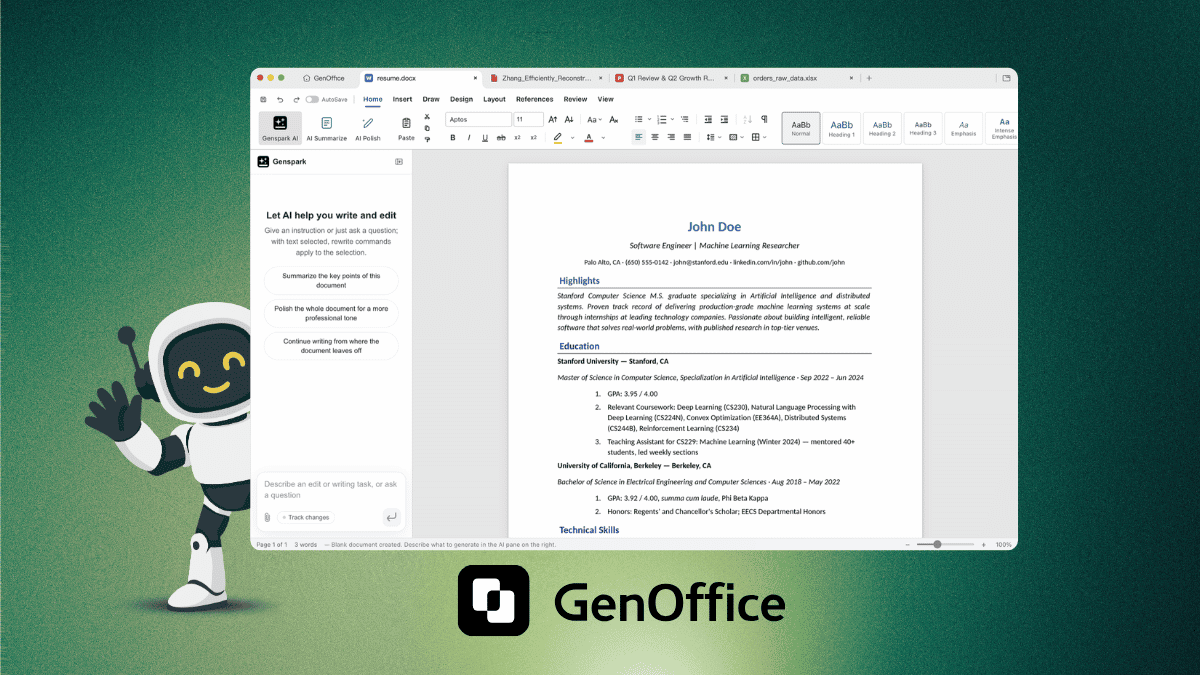
Built by a single engineer using open source components, GenOffice bundles editors like Docs, Sheets, Slides, and PDF.
Cloudflare today announced the open-sourcing of Cloudflare OS as an "open platform for agents, apps, and work." Cloudflare OS is an AI "operating system" but not in the traditional OS sense...
Security updates have been issued by AlmaLinux (fence-agents, gstreamer1-plugins-good, kernel, kernel-rt, p11-kit, perl-Archive-Tar, perl-DBI, and thunderbird), Debian (aom, botan3, and kernel), Fedora (abrt, coreutils, doctl, kernel, open62541, perl, perl-Devel-Cover, perl-PAR-Packer, and polymake), Mageia (acl and php), Oracle (firefox, frr, kernel, libreswan, nodejs-nodemon, nodejs22, perl-Archive-Tar, php:7.4, php:8.2, rsync, and thunderbird), Red Hat (compat-libtiff3, libpq, libtiff, postgresql, postgresql16, postgresql18, postgresql:12, postgresql:13, postgresql:15, postgresql:16, and postgresql:18), Slackware (stunnel), and SUSE (alloy, alsa, bind, chromedriver, corepack24, ffmpeg-4, golang-github-prometheus-prometheus, google-guest-agent, google-osconfig-agent, kubevirt, libgcrypt, libpng16, multipath-tools, netty, netty-tcnative, nodejs26, openssl-1_1, openssl-3, perl-HTTP-Tiny, perl-YAML-Syck, podman, python-sh, python-ujson, rsyslog, spice-vdagent, thrift, valkey, wpa_supplicant, and xen).
A patch for the Intel P-State CPU frequency scaling Linux driver is pending to avoid confusing the processor firmware on newer platforms like Intel Core Ultra Series 3 "Panther Lake" where Dynamic Efficiency Control (DEC) is supported...

The community team behind the very highly rated Half-Life 2: VR Mod have pushed out a major upgrade to the game, with it now Steam Frame Verified.Read the full article on GamingOnLinux.
The latest NVMe specifications add SSD-level virtualization that can simplify live VM migration by preserving storage identities across servers. The updates also introduce support for post-quantum cryptography, controller-based rate limiting, voltage monitoring, and factory-reset capabilities. The Register reports: Announced by the NVM Express consortium, all 11 of the suite of NVMe specs have been updated with new features and engineering change notices. These represent the next step in the evolution of the standard, it says, which was created as a protocol to support storage devices connected to a system's PCIe bus. Perhaps the most significant new capability is PCIe Exported NVM Subsystem Migration. This extends existing NVMe virtualization to locally-attached PCIe SSDs. It does this by abstracting the physical drives into host-defined virtualized NVM subsystems, to allow for virtual machine (VM) mobility without storage reconfiguration.
When a VM moves from one server to another, its storage also needs to move with it in a way that's non-disruptive to any applications running in that VM. "With NVM Subsystem Migration, NVMe SSDs can present exported NVM subsystems that hide the complexity of the underlying hardware," says Mike Allison, a senior director at SSD maker Samsung and NVM Express board member. "Instead of interacting with physical controllers and namespaces, the host only sees exported controllers and namespaces. This creates a clean separation between what the VM sees and what's happening under the hood," Allison explains on an NVM Express blog.
"One of the key innovations here is providing the host with control over exported identifiers. During migration, those identifiers can be carried over exactly from the source to the destination. That consistency is crucial: even if the underlying hardware uses different internal IDs, the VM sees no change and can pick up right where it left off with no storage reconfiguration required," he says. In effect, the NVMe layer now enables the virtual machine manager (VMM) to rely on virtualization built into the SSD. The flash drive itself exposes logical, virtualized storage constructs, offloading this complexity from the VMM. You can learn more about the updated NVMe specifications here.
Read more of this story at Slashdot.

Another rather good month for Humble Choice subscribers, with a fresh set of games for August 2026 bringing some fun experiences.Read the full article on GamingOnLinux.

Strikers Club is a free to play multiplayer football game where everyone controls a single player, and now it has Easy Anti-Cheat.Read the full article on GamingOnLinux.

His new policy keeps AI patches out of drivers/staging, the tree meant for newcomers to learn kernel development.
There continues to be a lot of cleaning up of the kernel source tree to deal with noise generated by AI / LLM coding agents sending in reports and patches for old drivers that are likely not actively used by anyone on modern upstream kernel builds. Rather than continuing to carry these old drivers around with the uptick in AI/LLM-generated noise, kernel maintainers are finding it better to just retire the old drivers...

If you want to play various Anime games on Linux like Honkai: Star Rail, dwproton is likely the best one to use with many tweaks to make them playable.Read the full article on GamingOnLinux.
Overnight AMD engineers sent out their latest round of AMDGPU DC display code updates for their Linux driver. This week's round of display code updates include some additional fixes for their recently introduced HDMI FRL (Fixed Rate Link) support as part of the work toward their HDMI 2.1 implementation finally coming together for their open-source, upstream Linux driver...
FEX 2608 is now available as the newest monthly feature update to this open-source emulator sponsored by Valve for running x86_64 binaries on ARM64, including Steam and Windows games with Steam Play (Proton)...

Combolands is a mini citybuilding roguelike! Place buildings, stack combos, and master deep strategy in short bursts.Read the full article on GamingOnLinux.

Throw ducks down a void, unlock helpful contraptions and keep on optimizing in the quirky Project P.I.T.T. with the release date announced for August 19th.Read the full article on GamingOnLinux.

Electronic Arts (EA) announced the big deal has been completed, and the company has now been sold off privately to a group of investors including Saudi Arabia.Read the full article on GamingOnLinux.
Bottles 65 improves Windows app and game management on Linux with Steam integration, backups, file associations, and numerous fixes.
Mozilla released Firefox 153.0.3 today as the second update in the latest Firefox 153 ESR release of this popular open-source web browser to fix more issues and also add some improvements.
Uptime Kuma 2.5 introduces an NTP monitor, a rootless Docker image, unlimited check intervals, new notification providers, and multiple bug fixes.
A four-ton SpaceX Falcon 9 upper stage left drifting after a 2025 lunar mission is expected to crash into the Moon at about 5,400 mph, likely striking Einstein Crater. The impact should occur at approximately 2:35 a.m. ET (0635GMT). Reuters reports: Such stages typically fall back into Earth's atmosphere and burn up or plunge into the ocean after boosting the rocket's payload to a precise spot in orbit. But because the January lunar lander mission required more thrust than missions closer to Earth, the rocket's second stage remained in space, floating aimlessly among thousands of other pieces of space junk that active satellites must steer clear of. It was not until earlier this year that astronomers determined that the rocket stage, which had dumped its remaining fuel and cannot be controlled, was on an orbital trajectory ending at the moon.
"What has happened is essentially a mixture of solar activity and gravity forces have put it on a path toward the moon," Julianna Scheiman, SpaceX director of NASA science and Dragon programs, told reporters on Monday. "This may be of some -- probably minor -- scientific interest, and we may learn some things from it," said Bill Gray, creator of widely used astronomy software who published a report on the stage's impact in April. "It doesn't present any danger to anyone, though it does highlight a certain carelessness about how leftover space hardware (space junk) is disposed of." You can try to watch the impact via a livestream on YouTube; however, the area it's expected to hit (Einstein Crater) is on the moon's western limb, "which is often difficult to see from Earth," notes Reuters. It will also likely "kick up a plume of lunar dust that will likely be illuminated by sunlight but difficult to spot with the naked eye from Earth."
Read more of this story at Slashdot.