LibreOffice 26.8 Released With Many Nice Improvements
LibreOffice 26.8 is now available as the latest half-year feature update to this leading open-source alternative to Microsoft Office...
LibreOffice 26.8 is now available as the latest half-year feature update to this leading open-source alternative to Microsoft Office...

fahrbot-bot shares a report from Smithsonian Magazine: The brain is one of the first organs to begin decomposing after death. Yet archaeologists have discovered more than 4,400 preserved human brains around the world, some of which have remained intact for the last 12,000 years. In hundreds of cases, the brain was the only soft tissue left among otherwise skeletal remains. But how and why do brains sometimes persist for millennia while all other types of soft tissue disappear? This preservation paradox has stumped scientists for years. Now, however, a team of researchers say they may have solved the mystery. If a brain ends up in a wet, oxygen-starved environment, the processes that usually cause decay can have the opposite effect, researchers report in a study published in the August 7 issue of the Journal of Proteome Research. "Under the right conditions, preservation actually arises from decay itself: The same reactions that degrade tissue can also weld the breakdown products together into something far tougher," study co-author Alexandra Seviour, a paleobiologist at the University of Oxford in England, tells Live Science's Victoria Atkinson. Following experiments on 72 mouse carcasses (described in the article) the scientists think they know why. When oxygen is abundant, it triggers a cascading, chemical chain reaction that causes brain proteins to break down rapidly. This sequence hinges on free radicals, highly reactive, unstable molecules that "steal" electrons from nearby atoms and molecules. The process happens in the brains of living people too, and if left unchecked, can cause health problems. In low-oxygen environments, however, this chemical sequence appears to play out differently. The researchers' analyses hint that free radicals instead react and bond with nearby proteins, making the overall tissue tougher and more resistant to decomposition, Seviour tells Chemical and Engineering News' Anirban Mukhopadhyay. The findings show that "decay is not the opposite of preservation but, under specific chemical constraints, one of its mechanisms," the researchers write in the paper. Read more of this story at Slashdot.
The AMD GFX1250 IP is what's used by the new Instinct MI450 series accelerators. That's been around within the Linux kernel, AMDGPU LLVM compiler back-end, and related codebases the past year. Interestingly merged yesterday is a new "gfx1250-strict" target...
A SiFive engineer posted patches today for the GNU Compiler Collection (GCC) for adding -mtune=native -mcpu=native support for the compiler on RISC-V...
All of the PCI/PCIe subsystem updates for the in-development Linux 7.3 kernel were merged this week...

Last night was the Gamescom Opening Night Live event and there was quite a number of interesting games being announced and shown off.Read the full article on GamingOnLinux.
Woodpecker CI 3.18.0 adds pipeline log downloads, tighter plugin environment handling, Kubernetes improvements, and multiple bug fixes.
Linux hardware vendor System76 released COSMIC 1.7 today as the latest stable version of this open-source, free, and Rust-based graphical desktop environment for Linux-based operating systems.
SpaceX plans to spend up to $100 billion building a new Starship launch facility in Vermilion Parish, Louisiana, which the state says could eventually "support thousands of launches annually." CNBC reports: Once built, Starbase, LA will serve as the main launch facility for Starship, SpaceX's in-development rocket that's the largest ever built and designed to be fully reusable. Musk has aspirations to massively expand SpaceX's Starlink satellite network, to launch orbital data centers and to someday colonize Mars. Those ambitions, and justification for SpaceX's nearly $2 trillion market cap, hinge on the success of Starship. SpaceX said, in a video posted to its website on Tuesday, that the search for a site to build launch pads and have access to ample fuel for its operations took about seven years. Musk said in the video that the company would bring "probably 10,000 really exciting jobs" to Louisiana with the spaceport. A fact sheet posted online by the state of Louisiana said SpaceX is expected to generate an estimated "3,000 direct new jobs over the next 10 years" in the state, and "8,100 indirect new jobs." SpaceX said it would work on a "historic coastal restoration" in Louisiana, in partnership with the state to "bring the marsh back" and ensure the wetlands around its new facility will have "storm protection." Read more of this story at Slashdot.
NVIDIA has announced the Jetson Orin Nano 2, an updated edge AI platform aimed at robotics, drones, machine vision, and other embedded AI applications. The new module provides up to 78 TOPS of AI performance, 8GB of memory, and an 8-core Arm CPU while retaining the compact form factor of the previous Jetson Orin Nano […]
The Forlinx FCU3101 is a fanless edge AI computing system based on Rockchip’s RV1126B/RV1126BJ processor, providing local AI inference, Ethernet, serial, and digital I/O connectivity for industrial vision, security monitoring, and data acquisition applications. The FCU3101 is built around the Rockchip RV1126B/RV1126BJ, which integrates four Arm Cortex-A53 processor cores operating at up to 1.6GHz together […]
An anonymous reader quotes a report from Ars Technica: Antibodies play a central role in your body's immune defense. But they're also nearly ubiquitous in biological research, being essential for several widely used lab techniques. While some researchers need to go through the process of producing their own antibodies, antibodies to many key proteins are commercially available and can be ordered for overnight delivery. In May, however, Reese Richardson, a post-doc at Northwestern University, discovered that some of the images used to demonstrate how these antibodies performed in lab experiments had been subject to image manipulation -- the sorts of changes that would get a paper retracted if they had appeared in the academic literature. The manipulations ranged from removing background noise to copying and pasting data to fabricate results. Now, he has done a more exhaustive search and found problematic manipulations in images used to market over 17,000 commercial antibodies. [...] The consequences of this discovery are pretty significant. If you buy an antibody believing it will generate clean, clear data and find it doesn't, many researchers will assume the problem is them. That often leads them to spend time troubleshooting the procedure and trying slightly different conditions to get useful data. If the antibody can't produce those results, all the troubleshooting will have been a waste of time and money. Nature's coverage of the new findings includes quotes from several companies that sell these antibodies that, paraphrased, range from "we'll look into it" to "we don't think it's a problem." Researchers who have spent time frustrated while failing to get an antibody-based experiment to work may think otherwise. Read more of this story at Slashdot.
OpenSSL 4.0.2 has been released today as the second maintenance/security update to the latest OpenSSL 4.0 series of this widely used TLS/SSL and crypto library for providing secure communications over computer networks.
Google engineers responsible for the Chrome/Chromium web browser are experimenting with Flatpak packaging on Linux. They aren't yet committed to officially supporting Flatpak packages but for now are at least exploring the option...
Armbian 26.8 is now available with Linux kernel 7.1, a completely rewritten installer, Armbian Imager 2.0, and bootable UEFI ISO images.
Alabama's attorney general has subpoenaed OpenAI as part of an investigation into whether inadequate safeguards contributed to an incident in which an unreleased cybersecurity model escaped its isolated environment and hacked Hugging Face. TechCrunch reports: The investigation comes weeks after OpenAI admitted that one of its unreleased and guardrail-free cybersecurity models had escaped an isolated environment, connected to the internet, and hacked AI dataset platform Hugging Face. As Reuters first reported, Hugging Face was only one of four victims of what was supposed to be "an internal evaluation" of a model with "maximal cyber capabilities," as OpenAI put it. The press release announcing the subpoena (PDF) sent by the state's attorney general Steve Marshall said that the state was seeking to understand if OpenAI's "inability or unwillingness to ensure the safety of its products" violated the state's consumer protection laws. Earlier this month, Marshall, along with the attorneys general of 14 other states, including Florida, Missouri, Pennsylvania, and Texas, sent a letter (PDF) to OpenAI's CEO Sam Altman, requesting that he and his company preserve all records related to the Hugging Face incident. The letter also asked OpenAI to "immediately cease and desist" from any internal cybersecurity evaluations. OpenAI said in a statement: "The Hugging Face incident marked an important moment for AI safety and we are conducting a thorough review along with external advisors. Once the review is complete, we will share a technical report with relevant government authorities and publish our findings publicly." Read more of this story at Slashdot.
New Zealand has introduced legislation that would ban children under 16 from social media platforms and AI companion services. "We have protections to keep children safe in the real world and we need them in the virtual world too," said Prime Minister Christopher Luxon in announcing the bill. Jurist.org reports: The Online Safety (Minimum Age and Child Safety Risk Assessment) Bill would require an age restriction on platforms with harmful features for children. These features include recommender systems, endless feeds, feedback features and time-limited features. The bill also seeks to restrict underage users from accessing AI companion services. However, it explicitly excludes messaging apps, professional networking sites, gaming and music platforms, and other educational and health tools. Notably, age verification through self-declared dates of birth and formal identification does not satisfy the platforms' duty under the law. It also requires platforms to verify their users' age through other methods such as facial scans and user activity patterns. The bill would also require platforms to conduct child safety risk assessments for all users under 18 and protect them from harmful content such as bullying, violence, and sexually explicit materials. Read more of this story at Slashdot.
Shelly 3.1 has been released today as a major update to this pacman alternative for Arch Linux distributions, introducing several new features and enhancements.
Last year a multi-kernel architecture was proposed for the Linux kernel to allow multiple independent kernel instances to co-exist on a single physical machine. Each kernel with "multikernel" Linux can run on dedicated CPU cores whole sharing the underlying hardware resources. Linux 7.0-mk2 released today with the kernel patched for this multi-kernel behavior...
The FDA has authorized the first wearable in the U.S. to continuously monitor ketone levels and the first device globally to track both ketones and glucose together in a single system. From a report: [Abbott's] Libre Duo 10 Day continuously measures both glucose and ketone levels in the fluid just beneath the skin every minute, day and night. Readings are transmitted wirelessly to a compatible smartphone, where users can view current glucose and ketone levels and whether those values are trending up or down. The device also can send automatic alerts if ketone levels reach a concerning threshold. The FDA noted that ketone information should be interpreted in the context of glucose readings and symptoms. Ketones are produced when the body uses fat instead of glucose for energy. When ketone levels rise too high, patients with diabetes can develop diabetic ketoacidosis (DKA), a serious complication that can progress quickly and become life-threatening without prompt treatment. Until now, patients who needed ketone monitoring had to test separately using methods that provided a single measurement at one point in time. Those tests could not show whether ketone levels were rising or falling. For patients with diabetes -- particularly those at higher risk for DKA -- continuous glucose and ketone monitoring may provide earlier warning of metabolic deterioration and support timelier sick-day management, hydration, insulin adjustment, and escalation of care when clinically appropriate. Read more of this story at Slashdot.
COSMIC Epoch 1.7 is out today as the newest update to this Rust-based open-source desktop environment with development led by System76...
For people who would like to experiment with the multi-kernel Linux concept, Cong Wang has announced the release of mklinux v7.0-mk2. mklinux lets one machine run several independent Linux kernels at the same time on bare metal, without a hypervisor. A host kernel owns a pool of CPUs, memory and PCI devices, carves that pool into instances, and boots a spawn kernel into each instance through kexec_file_load(). Every spawn kernel runs natively on its own CPUs, its own physical memory and its own devices. Nothing is emulated and nothing is trapped; the only thing shared is what you choose to share. Note that this is not the old MkLinux, which was a port to PowerPC Macintosh systems.
Canada's cultural-content rules have become a flashpoint in its trade fight with the U.S., after American negotiators reportedly demanded that Ottawa drop requirements for streaming services to promote Canadian and French-language content. Canada refused, even as it has already backed away from some financial levies on streamers. "We were not prepared to compromise on our sovereignty, the protection of the French language, and our culture," Prime Minister Mark Carney said in a speech on Saturday after trade talks collapsed. CBC.ca reports: Ottawa has long required broadcasters to promote and support Canadian content (Cancon), all the way back to song quotas for AM radio stations. In 1991, the government brought in the Broadcasting Act. The law states that "the Canadian broadcasting system shall be effectively owned and controlled by Canadians" and that the Canadian broadcasting system should "serve to safeguard, enrich and strengthen the cultural, political, social and economic fabric of Canada." But decades later, the rising popularity in Canada of streaming platforms such as Netflix, YouTube, Amazon Prime and Spotify raised questions about Cancon and broadcasting rules. Video and audio streaming services were not, for example, required to support and promote Cancon, but their TV and radio counterparts were. Looking to address the imbalance, the former Trudeau government brought forward a bill in 2022 to update the Broadcasting Act, called the Online Streaming Act. "Canadian broadcasters have invested in and introduced us to the incredible Canadian programs that so many of us love. We are updating our laws so online streamers have to contribute in a similar and equitable way," a 2022 government news release said. The legislation was controversial from the start, with the government and supporters saying it was a necessary evolution of Canada's media laws in the digital age, while opponents expressed concerns that it was overreach and an attempt to regulate the internet. American streamers and digital media companies opposed the legislation fiercely. The bill passed with amendments and became law in April 2023, but the government delegated much of its interpretation -- including how much money streamers would have to contribute to Cancon -- to Canada's broadcast regulator, the Canadian Radio-television and Telecommunications Commission (CRTC). But getting streaming companies to pay up has been a long and confusing saga. [...]. As for why the U.S. government is so invested in the issue? Mariane Bourcheix-Laporte, a postdoctoral fellow in the communication studies and media arts department at McMaster University in Hamilton, said it could be about power. "The Americans have had, since after World War II, a very strong cultural policy of pushing out American content into the world," Bourcheix-Laporte, who has worked with the CRTC, said. "This has been a strategy -- a soft-power strategy -- for the American government, in parallel to their military strategies and political alliances strategies." Read more of this story at Slashdot.
LLVM 23.1 was released today on-schedule as the first stable release of the LLVM 23 series as the H2'2026 update to this open-source compiler stack...
Perplexity and Nvidia have launched "Portable Computer," a local-first version of Perplexity's agent platform that runs AI models, files, tools, and workflows directly on Nvidia-powered Linux hardware. Local tasks incur no token charges and keep data on-device by default, with users asked for permission before the system escalates a step to a cloud model. VentureBeat reports: For Nvidia, which has spent the past two years selling the world on trillion-dollar AI data centers, the announcement signals something subtler but strategically important: the chipmaker believes local AI has crossed a threshold from hobbyist curiosity to practical tool -- and it wants to sell the hardware that runs it. "Local AI reached an inflection point," said Nader, Nvidia's director of developer technology, who focuses on developer tooling and open source. "For the longest time, it was hobbyists and enthusiasts, and they were running these quantized models that were quantized down to be super tiny... And while that's cool, it's not super practical. But all that changed with a lot of these new open source models that have come out that are super useful." [...] Portable Computer arrives today for Pro, Max, Enterprise Pro, and Enterprise Max subscribers on Linux, with Windows support following in September. Any RTX GPU with at least 24GB of VRAM -- roughly a GeForce RTX 3090 or newer -- clears the bar, a threshold Nate called "sort of the floor where we really want to make sure that we can deliver a great experience, but balance that with making it broadly available." Read more of this story at Slashdot.
IAR will host a September 15 webinar focused on the use of AI-generated code in regulated embedded development, with discussion covering static analysis, runtime checking, and CI/CD workflows used to support software verification and compliance activities. AI coding assistants can generate functions, test skeletons, and other source code relatively quickly, but IAR notes that this […]
An anonymous reader quotes a report from Ars Technica: For years, AI industry watchers of all stripes have been warning of a coming jobs apocalypse driven by ultra-intelligent AI systems that will be able to replicate most human tasks more cheaply. Now, newly updated research from Stanford University economists suggests AI seems to be causing significant entry-level job losses for younger workers in some fields, even as older workers appear largely unaffected so far. The August 2026 edition of "Canaries in the Coal Mine? Six Facts about the Recent Employment Effects of Artificial Intelligence" updates and revises a paper of the same name published last year with fresh data and refined statistics. In that update, the Stanford researchers find the employment trends they identified for entry-level workers last year are persisting and expanding. Specifically, employment levels for workers ages 22 to 25 in the most "AI-exposed" occupations are now 19 percent below those of their peers in fields less exposed to AI disruption. Last year, that gap measured just 13 percent. [...] Digging deeper into the data, the researchers found that this phenomenon is mainly manifesting itself through lower hiring rates for entry-level workers in AI-impacted fields, rather than increased firings or employees quitting. They also found that the labor market effects among this age group were mostly seen in lower overall employment, rather than reduced pay rates. But not all jobs that show potential for AI "disruption" are created equal, the researchers found. In its Economic Index, Anthropic differentiates between queries related to tasks that are "automative" (i.e., fully replacing work previously done by a human) or "augmentative" (i.e., helping human workers be more effective at tasks they are still needed for). By this measure, jobs like "accountants and auditors" and "receptionists and information clerks" were among those judged most susceptible to AI automation, while jobs like "chief executive" and "registered nurse" were among those using AI augmentation most often. Unsurprisingly, jobs where AI automation is prevalent are the ones showing the worst relative employment levels for entry-level workers these days. "The findings are consistent with automation-oriented uses of AI substituting for labor while complementary uses are associated with flat or rising employment," the researchers write. Interestingly, the researchers found that the impact is strongest in entry-level jobs built around "codified" knowledge, which is the formal, documented skills that AI can more easily replicate. Meanwhile, experienced workers in roles relying on tacit, practice-based knowledge have seen stronger employment growth. Read more of this story at Slashdot.
The PorteuX Linux distribution focused on being a high performance, modular, and minimalist distro took to forking Xfce's xfwm4 window manager into "xfwm4-gl" for OpenGL compositing support. As part of that they developed a window manager / compositor benchmark for evaluating the performance and efficiency of typical operations. Their results are fascinating...
Today is August 25th, which marks 35 years since Linux was first announced. Grab a glass of your favorite beverage and join me in celebrating the 35th birthday of Linux!
Waymo plans to launch its robotaxi service in Munich by the end of 2027, marking the Google-owned company's first expansion into the European Union. "It already operates in 11 cities in the United States and has applied for a license in the United Kingdom to launch its robotaxis in London this year," notes Reuters. From the report: The Google subsidiary will start rolling out vehicles in the German city this year, which will be manually driven while the company "starts with high-definition mapping of local street networks" and testing with safety drivers, Waymo said in a statement. "Bavaria is determined to live up to its pioneering role and be an international leader in autonomous driving," Florian Herrmann, the head of the Bavarian state chancellery, said in the statement. "Now we need to move quickly from testing to real-world deployment." [...] German authorities gave autonomous vehicles the green light in 2021 to operate in the country in approved geographical areas. Other countries are looking at following suit, though the EU's broader autonomous driving rules are set by the U.N. Read more of this story at Slashdot.
The latest criticism of the increased burden placed on open-source software project maintainers caused by AI / LLM agents is around too many bug reports effectively causing a "denial of service" attack on project maintainers...
Apple has unveiled a new Mac mini with either its new M6 chip or the M5 Pro chip released earlier this year. It adds faster CPU, GPU, storage, and AI performance along with Wi-Fi 7, Bluetooth 6, and 2.5Gb Ethernet as standard. There's also a new higher starting price of $899, which is up from the previous $799 base price and far above the $599 starting price of the 2024 model. MacRumors reports: The M6 chip is equipped with a 12-core CPU and a 12-core GPU, up from a 10-core CPU and 10-core GPU in the M5 chip. In addition, the M6 chip features the first-ever dual Neural Engine with two 16-core engines, up from one in previous chips. The M6 chip has up to 170GB/s memory bandwidth, up from 153GB/s for the M5 chip. Apple said the Mac mini with the M6 chip delivers up to 40% faster CPU performance, up to 4x faster performance for AI tasks in particular, up to 2x faster graphics performance, and up to 2x faster storage speeds compared to the previous-generation model with the 10-core M4 chip, 32GB of unified memory, and 2TB of storage. There are two M5 Pro configurations available, including one with a 15-core CPU and a 16-core GPU, and another with an 18-core CPU and a 20-core GPU. Both of these models are equipped with a single 16-core Neural Engine for AI tasks. For both the M6 and M5 Pro configurations, Apple said the Mac mini now includes Neural Accelerators in each GPU core for the first time. Read more of this story at Slashdot.

NVIDIA announced at Gamescom 2026 a number of things - like direct Steam Machine and Steam Controller support will be coming to NVIDIA GeForce NOW.Read the full article on GamingOnLinux.
Motorola is working with GrapheneOS to officially support the privacy-focused Android alternative on its 2027 flagship phones, starting with a non-folding model and later expanding to the next Razr Fold and Razr Ultra. "These will ship with Motorola's normal Android skin, but you will be able to switch to GrapheneOS later if you want to," notes GSMArena.com. GrapheneOS says the devices will "meet or exceed" its hardware and update requirements, and will include seven years of "proper updates." Interestingly, Motorola will be doing much of the porting work itself. Read more of this story at Slashdot.
With the Btrfs pull request for Linux 7.3 having delivered more performance optimizations with some ~3x and ~5x gains mentioned in specific areas, I was eager to test out the new Btrfs performance on the in-development kernel. In today's article are some benchmarks of Btrfs on Linux 7.2 stable compared to Linux 7.3 Git with some very enticing performance gains confirmed in various workloads.
Remind is a command-line calendar and alarm program, with an optional Tk-based graphical interface, for Linux and Unix-like operating systems. It has its own scripting language that allows users to create reminders that are difficult (if not impossible) to specify in other calendaring programs. It is wholly unsuitable for use in corporate environments that require calendar sharing and exchanging meeting invitations; however, it may be precisely the calendaring tool for users who prefer the command line and fast, flexible tools that can help keep track of messy schedules.
Vanilla OS 3, an immutable desktop Linux distribution, has been released. Notable changes in this release include support for Arm64, introduction of a Vanilla OS SDK, a rewrite of the Apx package manager using the new SDK, and much more. LWN covered Vanilla OS 2 in 2024.
Apple today unveiled the M6 as their first 2nm SoC design while also introducing the M5 Ultra as their first quad-die product...
The pull requests for the existing Paragon NTFS3 kernel driver as well as the new modern "NTFS" drivers have been submitted for the ongoing Linux 7.3 kernel cycle. Besides bug fixes, most notable among these NTFS file-system drivers are Windows System Compression "WOF" read support for the modern NTFS driver...
Security updates have been issued by AlmaLinux (cups-filters, gstreamer1-plugins-base, gstreamer1-plugins-good, kernel, mrtg, NetworkManager, nginx, nginx:1.24, nodejs24, perl-Date-Manip, python-pyasn1, python-urwid, python3.12, python3.14, and qemu-kvm), Debian (erlang, thunderbird, webkit2gtk, and zfs-linux), Fedora (calibre, chromium, freeipa, java-21-openjdk, java-21-openjdk-portable, java-25-openjdk, java-latest-openjdk, jfrog-cli, kernel, libxls, nextcloud, perl-URI, and samba), Gentoo (Incus), Mageia (kernel and kernel-linus), Oracle (ansible-core, cups-filters, curl, firefox, kernel, libcupsfilters, libreoffice, mrtg, NetworkManager, perl-Date-Manip, php:8.2, php:8.3, python-urwid, python3.14, qemu-kvm, and sqlite), Red Hat (assertj-core, httpd, and osbuild-composer), SUSE (buildah, comfyui, dracut, erlang, erlang27, grafana, kernel, libssh2_org, openvswitch, perl-Dancer2-Plugin-Auth-Extensible, postgresql17, python-cryptography, python-sqlparse, python311, python313-hpack, rpm, suseconnect-ng, thunderbird, and vim), and Ubuntu (async-http-client, curl, and ffmpeg).

Stop what you're doing and check out Drop Loot, which takes the basic idea of Tetris block-dropping and mashes it into a cool dungeon crawler.Read the full article on GamingOnLinux.

The development of Linux, a free ‘hobby’ operating system, was announced by Linus Torvalds 35 years ago today.
The Linux Device Mapper "DKM" framework for mapping block devices to higher-level virtual block devices doesn't see any major new features for Linux 7.3 but there are many bug fixes, including code clean-ups carried out by AI...
Coincidentally just days after AMD posted their big UALink patch series for Linux, Intel engineers today announced a proposal called DRM Fabric...
"The Register has a story about a Windows backdoor that waits silently in memory for a 'magic packet' before springing into action," writes Slashdot reader fred133. "No outgoing traffic, just waiting..." From the report: Like a sleeper cell awaiting activation, a never-before-seen Windows backdoor dubbed Sleepwalker waits silently in memory for one specifically crafted network packet to wake it up and deliver commands using the malware's 23-instruction language. The commands can do everything from running code directly in memory to moving data off the computer. Malware researcher Dominik Reichel discovered the passive backdoor, which also has its own command language, and detailed Sleepwalker in a technical analysis on Monday. "What makes it worth writing up is what that packet carries: not a readable command, but a short program written in a command language of the backdoor's own design," Reichel said. "Its 23 instructions cover scheduling, several ways to move data, staged file delivery and running code directly in memory. Recovering the encryption key is not enough to understand one of these programs. The internal command language must be reverse engineered as well." In addition to having its own command language, it's also notable that the remote host can be a VMware VMCI target instead of a normal network address. "Taken as a whole, the approach here is consistent with a targeted, well-resourced operation rather than an opportunistic one," Reichel wrote. The malware, hidden inside a 64-bit Windows DLL file, impersonates Microsoft's dpapi.dll, part of Windows' data protection API for protecting sensitive data. It exports the same seven functions as the real dpapi.dll, but attempts to forward calls to a file named dpapisvc.dll, which is not a real Windows component. The file also has a forged ESET Management Agent version resource, and loads via side-loading into ERAAgent.exe, the Windows executable for ESET Management Agent. After confirming that its host process is named ERAAgent.exe, Sleepwalker goes to sleep inside the computer's memory, which also helps it remain hidden from traditional anti-virus tools. Unlike most backdoors, which call back to an attacker-controlled command-and-control (C2) server and start receiving commands, Sleepwalker lies in wait, checking every packet that passes through the network looking for a specific pattern - this is called a magic packet. Once it sniffs out a packet that matches the exact pattern, the backdoor decrypts the data and treats it as a command. "Because the backdoor never sends anything out on its own and does not open any obvious listening port by default, tools that watch for connections to known-bad domains or unusual outbound traffic will not see anything unusual," Reichel wrote. "The absence of outbound connections to known-bad infrastructure does not rule out an infection, either. A machine can be fully compromised by this backdoor while producing nothing at all for a network monitor to flag." Read more of this story at Slashdot.
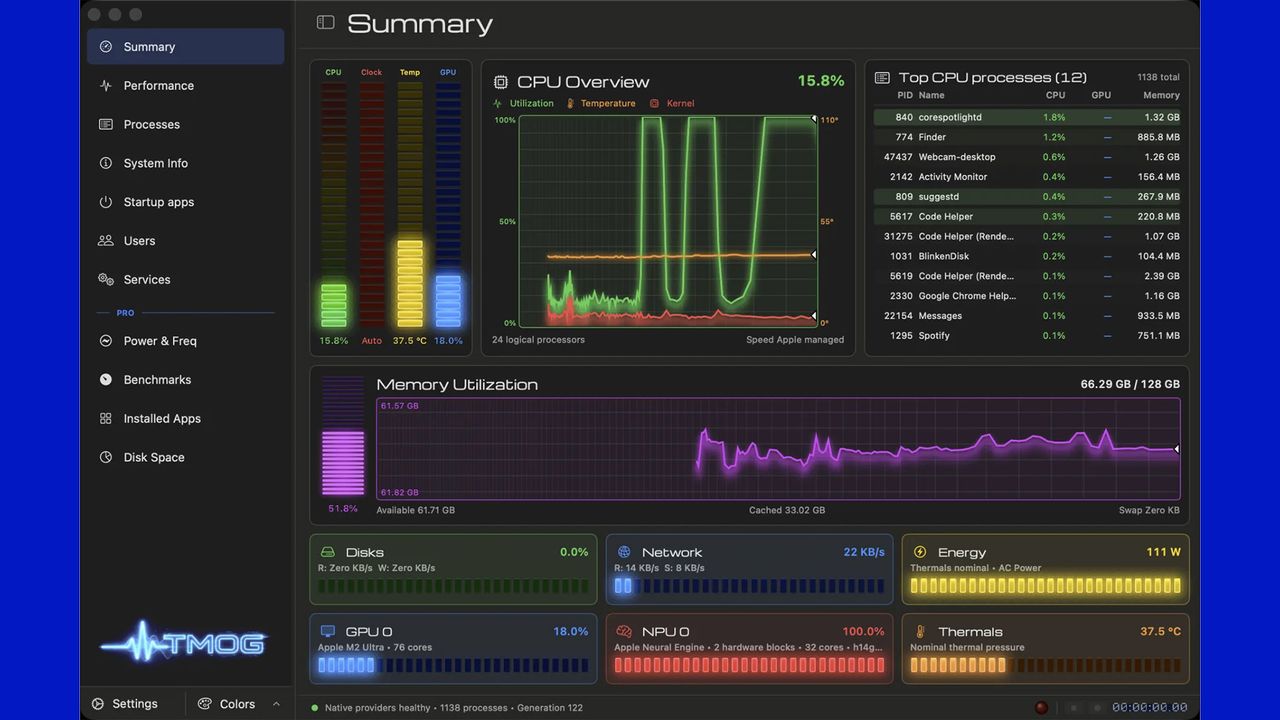
Legendary Windows developer Dave Plummer has been busy finessing his revamped Task Manager, now dubbed TMOG.
The in-development Linux 7.3 kernel is marking Nova Lake Xe3P graphics as stable in being enabled by default and no longer hidden behind the "force probe" flag. While on-by-default, there still are some features that have yet to land like the DisplayPort 2.1 ALPM functionality...
Ardour 9.8 DAW is out with initial keys and scales support, improved recording recovery after crashes, clip recording enhancements, and more.

Much loved back in the 90s, the classic JRPG Terranigma is making a full return and this time with a PC release being confirmed right away.Read the full article on GamingOnLinux.
KDE developer David Edmundson is out today with a blog post around improvements that have been ongoing for the Plasma 6.8 release in improving the KDE remote desktop experience. As part of ensuring a good Wayland experience and hitting all the needs fulfilled by X11, Plasma 6.8 is seeing improvements for its remote desktop functionality...
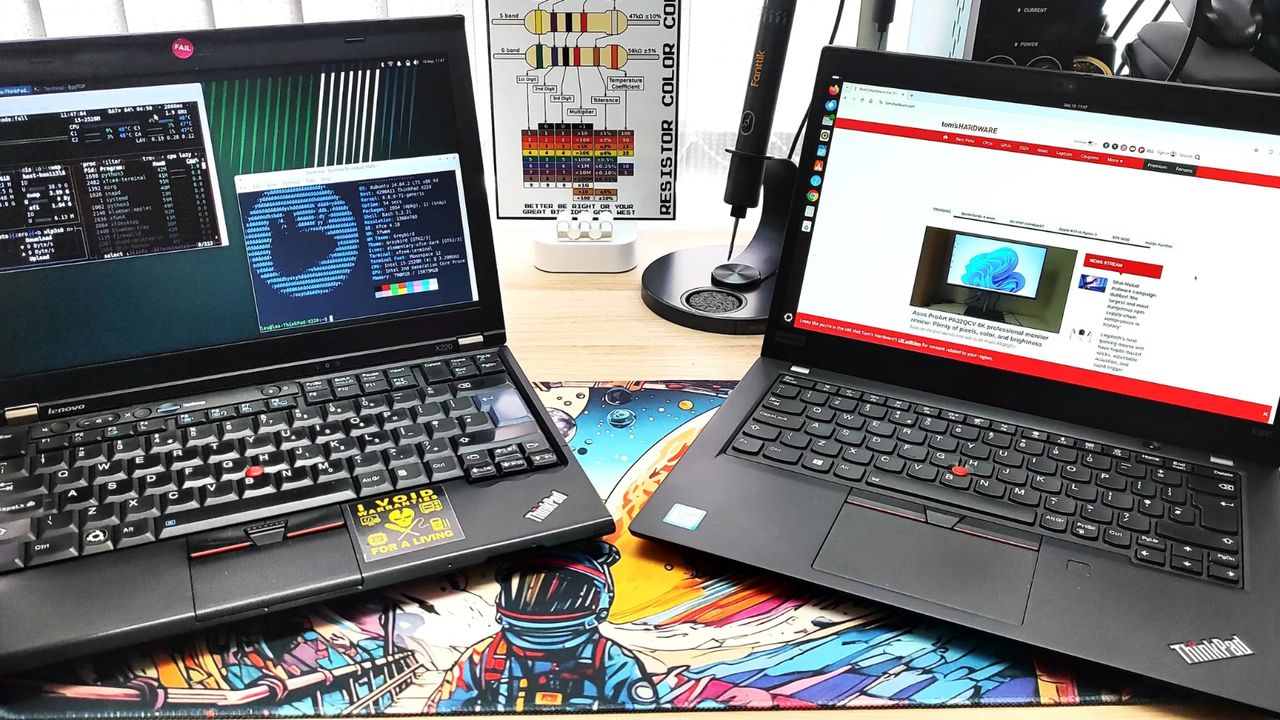
A decades-long dispute over the ownership of Linux looks like it is over. Earlier this month the United States Court of Appeals for the Second Circuit rejected Xinuos’ continued claims that IBM and Red Hat improperly contributed jointly‑developed Project Monterey UNIX code to Linux.
Linux sound subsystem maintainer Takashi Iwai of SUSE submitted all of the sound feature updates last week for the Linux 7.3 kernel. Besides the continued AI/LLM-generated patch churn, the sound code for Linux 7.3 sees a lot of new hardware support...

The $42 open source dongle gives you BIOS-level keyboard and mouse control plus SSH access. No software installation is needed on the target machine.

With an extra $18 million raised, W4 Games plan to continue to expand their enterprise technology and support for the open-source Godot Engine.Read the full article on GamingOnLinux.

Sanitarium Enhanced is a modernized and improved edition of the cult-classic psychological horror adventure Sanitarium, originally released in 1998.Read the full article on GamingOnLinux.

The Bazzite Deck 44 release for handhelds and TV PCs was a huge change for the popular gaming focused version of Linux, which sadly came with lots of issues.Read the full article on GamingOnLinux.
A patch series being worked on for the ath11k mainline wireless networking driver for Qualcomm WiFi 6 / 802.11ax chipsets is yielding 7x lower latency or 2.2x throughput at identical latency...

While Valve didn't seem to publicly celebrate their 30th anniversary, they did at least go back to some older titles to fix them up.Read the full article on GamingOnLinux.

Licensed by Team 17 and developed by Antstream, Alien Breed 35th Anniversary brings together six brutal games with modernised controls and new modes.Read the full article on GamingOnLinux.
Vanilla OS 3 “Reunion” is now available with GNOME 50, Linux kernel 7.1, ARM64 support, reproducible builds, and a new backup tool.
A developer says AliExpress is using the browser's WebAudio API to help fingerprint users by playing inaudible audio and measuring tiny differences in how their devices process it. CyberNews reports: The developer, "laserphile," wrote on their blog that they recently ran into some weird issues with their Bluetooth headphones. They couldn't play music via their phone when, at the same time, the AliExpress website was open on their PC. The headphones, laserphile explained, support multipoint Bluetooth audio so they can be connected to the PC and phone at the same time, for instance, playing music on the phone and announcing notifications through the PC. "Shortly after loading the AliExpress homepage, audio from my phone would stop playing. Closing the AliExpress tab fixes it immediately," the developer said in the blog post. "Muting the tab/Firefox/Windows does not help, and there is no visible video, music, or other media playing on the page. This seemed suspicious enough to investigate." It turns out that Alibaba has been secretly leveraging AliExpress users' audio systems to track them and build detailed fingerprints of them. [...] The AliExpress site was using the browser's WebAudio API to run invisible sound waves at zero volume. By measuring tiny hardware differences in how each PC processed those signals, the site created a unique digital fingerprint to track devices -- without user knowledge or consent. The secret audio path froze the developer's Bluetooth connection while covertly scraping hardware memory, screen dimensions, and network data in the background. The data collection extends beyond audio. Further inspection revealed that the same scripts also measure canvas, WebGL, hardware specs, WebRTC, mouse/touch events, and automation indicators. All of these form a broad device fingerprint that is sent back to Alibaba's telemetry servers. The simplest fix is to use a privacy-focused browser such as Firefox or Brave, which can limit or block this kind of fingerprinting. Brave goes further by randomizing fingerprint data and blocking the AliExpress tracking scripts involved. Read more of this story at Slashdot.