
alternative_right shares a report from Phys.org: Scientists from the Czech Republic have created microscopic cleanup robots that successfully removed microplastics from both soil and aquatic environments in the lab. Details of their work are published in the journal npg Asia Materials. To build the robots, researchers started with microscopic MXene particles made of ultrathin, stacked layers. The material has a large surface area and surface chemistry that help it attract and hold plastic. They then coated the particles with magnetic nickel nanoparticles so rotating magnetic fields could drive the tiny robots.
Then came the testing phase. The team placed swarms of these microbots into water and soil samples contaminated with plastic. The externally generated magnetic fields made the robots spin and tumble through the liquid and squeeze through tiny water-filled gaps in the soil. "In soil environments, the microrobots can navigate through water-permeated soil microenvironments, actively disrupt microplastic entrapment within soil matrices, and extract them," the study authors commented in their paper. As they moved, their sticky surfaces collided with microplastics, binding to them and dragging them along. The researchers then used a magnet to pull the microrobots, along with their trapped plastic cargo, out of the samples.
They performed well. In water, they removed about 94% of test polystyrene particles and 89% of PET (polyethylene terephthalate) in around an hour. In the model soil, they removed about 81% of the polystyrene and 72% of PET. This outperformed the same MXene material used without magnetic motion, which relied on passive adsorption rather than actively moving through soil and water.
Read more of this story at Slashdot.

The funds will go towards keeping the project up and running.
One of the Direct Rendering Manager changes made for Linux 7.2 was switching to "fair" as the DRM scheduler default in place of the existing FIFO policy. The intent was on making the DRM scheduler policy more fair with this being used by AMDGPU and various other DRM kernel graphics drivers. But due to a last minute regression report, the fair policy is being reverted for Linux 7.2...
It's been quiet since the Mold 2.41 release back in April while today it's now been succeeded by Mold 2.42 for deliver even greater performance out of this high speed linker...
Intel's LLM-Scaler project that was born out of their Project Battlematrix initiative aims to make it easier to run generative AI on Arc (Pro) B-Series graphics cards with the likes of vLLM, ComfyUI, SGLang, and other popular AI software in this Docker-based pre-configured AI stack. This week new LLM-Scaler releases brought same-day support for new models and other enhancements...

SnekromancY mixes three rather different genres together into something I haven't seen before with Snake, Vampire Survivors and Tower Escape.Read the full article on GamingOnLinux.
LACT is one of the popular third-party Linux GPU configuration and monitoring utilities that works across NVIDIA, AMD, and Intel graphics. This GUI provides GPU overclocking controls plus a wealth of information reporting, which is especially great considering the lack of any official GUI control panel for AMD Radeon and Intel Arc graphics on Linux. With today's LACT 0.10 release, there are yet more features in tow...
Xfce’s experimental Wayland compositor xfwl4 gets its second preview release, adding new window management features and a large batch of fixes.

Another interesting upcoming incremental game here for you called 10 Million Pixels, and it's all about hunting for the golden pixel.Read the full article on GamingOnLinux.

Minecraft Redstone tends to melt my brain in a frustrating way, but the minimalist puzzle game Pight makes me feel somewhat smart.Read the full article on GamingOnLinux.

From the creator of Cultist Simulator and Book of Hours comes a globe-trotting choices-matter CRPG, with a demo now up for Travelling At Night.Read the full article on GamingOnLinux.

Bottles v66 has some major changes for this game manager to make the experience a lot nicer, with UMU from Open Wine Components to help run games.Read the full article on GamingOnLinux.
The GNOME Design team has shared a long list of ideas for future releases of the GNOME desktop environment, which may or may not become reality, and they need your help to make them come true.
sciencehabit shares a report from Science Magazine: For more than half a century, physicists have searched for one of the strangest particles predicted by modern theory. It would be made almost entirely of gluons, the elusive subatomic particles that carry the strong nuclear force. Now, using a particle collider in Beijing, researchers say they have effectively proved the existence of such a "glueball."
In a preprint posted last month on arXiv and in a presentation last week at the International Conference on High Energy Physics (ICHEP), the researchers argue that a particle called X(2370), which they produced by smashing electrons into positrons at high energies, has the properties expected of a glueball. "It's an experimental triumph," says Colin Morningstar, a particle physicist at Carnegie Mellon University who was not involved in the finding. "It's the strongest evidence yet that particles dominated by a glueball component can exist in nature."
Read more of this story at Slashdot.
An anonymous reader quotes a report from the Associated Press: The contiguous United States sizzled to its hottest month ever last month, according to the National Oceanic and Atmospheric Administration. July averaged 76.89 degrees Fahrenheit (24.94 degrees Celsius) across the Lower 48 states, eclipsing the Dust Bowl's July 1936 by an eighth of a degree. Records go back to 1895. [...] Although it was unusually cool in Alaska, hotter-than-normal conditions blanketed the Lower 48, with the most excessive heat in the Mountain West, Southwest, Northern Plains and Southeast. The heat was so widespread that every one of the Lower 48 states was at least 1 degree Fahrenheit (nearly 0.6 degrees Celsius) warmer than the 20th century average, said Russ Vose, chief of monitoring at NOAA's National Center for Environmental Information.
[...] The biggest driver of the record heat was nighttime lows that smashed the old mark for hottest minimums by 0.7 degrees, NOAA said. Hotter nights are a classic sign of human-caused climate change, according to scientists and several studies in peer-reviewed literature. NOAA's calculation is based on averaging 24 hours of temperature, not just highs or lows. "If you're talking heat waves, that nighttime low is incredibly important for determining total heat stress," [said meteorologist Jeff Masters of Yale Climate Connections]. "So if it doesn't cool off at night, your body doesn't have time to readjust to all the heat." As nighttime temperatures increase, more people die and lose sleep, studies show.
The years 2021 and 1936 tie for America's hottest summer, which is June through August. Through July, 2026 is a shade cooler than 2021, which was powered by record heat in June. Because of climate change, Masters said, "this may be one of the coolest years we're gonna experience for the rest of our lives." What's needed, Masters said, is "to stop burning so many fossil fuels. We also need to be spending money to adapt to the new climate that we've put in place."
Read more of this story at Slashdot.
QEMU 11.1 is out with RISC-V big-endian target support, ARM nested virtualization improvements, new PowerPC defaults, and multiple security fixes.
For those using QEMU as part of the open-source virtualization stack, QEMU 11.1 is now available with a number of new feature enhancements and fixes...
A new blog post out today from the Redox OS crew highlights all of the interesting improvements made to this Rust-based, open-source operating system over the course of July...
Ubuntu users can now run NVIDIA’s Nemotron 3.5 Lightning model through Canonical’s newly released inference Snap.
Cloudflare data suggests desktop Linux usage in North America has climbed to 6.4%, up from 4.1% a year earlier, with one post-holiday workday briefly spiking to 22%. ZDNet reports: [B]elieve it or not, on Monday, July 6, when people were back after the July 4 holiday, Linux usage jumped to a high of 22%. The users of these systems are not AI agents or bots, but real people. I set Cloudflare to count humans rather than bots. If you include people and bots, Linux has a 9.7% market share. That proportion is similar to StatCounter's score. By Cloudflare's count, bots alone come to 19%.
These numbers tell us that workers are leading the way to the Linux desktop. [...] However, past performance doesn't explain present trends. So, why are we now seeing such a bump in Linux desktop growth? Experts believe this trend is largely AI developers and Linux users running AI Agents. For example, as David Linthicum, former managing director and chief cloud strategy officer at Deloitte Consulting and AI and cloud influencer, recently observed, while "Windows 11 can technically run local AI workloads, but as you begin using multiple tools, managing different projects, and installing various dependencies, the friction starts to build," it's a different story for Linux users.
Linthicum continued: "Linux delivered what I can only describe as a true 'AI desktop' experience. Setup was straightforward, mainstream AI instructions matched what you'd actually see in your environment, and GPU-accelerated apps simply worked -- consistently. I spent far less time troubleshooting and far more time actually executing on projects." As for agents, Linux Foundation CEO Jim Zemlin summed up their role succinctly: "Linux is the OS of choice for AI agents." Desktop Linux is also gaining momentum as frustration with Windows 11 and the end of Windows 10 support push users to alternatives, particularly on older PCs that can't officially upgrade. At the same time, Linux has become much easier to use, install software on, and game with, lowering many of the traditional barriers to switching.
Read more of this story at Slashdot.
Ian Clarke (aka ancient Slashdot reader Sanity), designer of the peer-to-peer communication platform Freenet, is back with an update on the project's progress following the launch of its P2P network in March. He writes: Earlier this year, Slashdot covered the launch of the completely redesigned Freenet. I recently gave a talk about what we've been building since then. Unlike traditional web applications, apps on Freenet have no central server or database; instead application state is distributed across the network. These now include decentralized group chat, publishing, search, and fully decentralized Git hosting. The talk also gets into some of Freenet's internals, including how we use machine learning for network routing.
Read more of this story at Slashdot.
Gemini has become Google's fastest-growing product ever, reaching 1 billion monthly active users faster than any of the company's 13 other billion-user services. Ars Technica reports: Gemini has wormed its way into virtually every Google product and service, powering email organization in Gmail, document summary in Drive, and much more. Gemini is also core to Google's flagship search experience, with AI Mode and AI Overviews becoming increasingly hard to avoid. The 1 billion-user metric has nothing to do with any of that, though.
These 1 billion users may also be encountering Gemini in all those places, but that's not the MAU metric. Pichai is talking only about people who are opening the Gemini app or visiting the Gemini web interface to enter a prompt or access Gemini Live. If you used Gemini only once in the past month, you are part of this cohort.
Read more of this story at Slashdot.
An anonymous reader quotes a report from Wired: As AI models gain advanced capabilities to find vulnerabilities in software, develop ways to exploit them, and even carry out autonomous hacking sprees, researchers offered a sobering new example on Tuesday, disclosing vulnerabilities in the video conferencing platform Zoom that could have been exploited to take over targets' devices. Anyone on a call that involved screen sharing, whether participants or the host, would have been vulnerable to a silent attack that could be carried out with no indication and no interaction from the victim.
Researchers from the digital defense firm A Security say thebugwas discovered in early June using publicly available AI models, and that it took fewer than 20 prompts to uncover the vulnerabilities and create a working attack. Zoom issued a security advisory on Tuesday, including details about fixes the company has already begun rolling out to address the flaws, which affected devices running all operating systems that Zoom supports -- Windows, macOS, Linux, iOS, and Android.
The vulnerabilities were specifically in the protocol used to facilitate real-time annotation during screen sharing. The researchers say that their AI bug hunting systems specifically delved into this component because, like human bug hunters, they have been trained that convoluted and obscure functions often contain overlooked vulnerabilities. This is particularly true with proprietary, closed-source software. An established company like Zoom presumably does extensive code review and vetting on all components and functions, but without the benefit of public, open review, esoteric yet complex features like annotation are more likely to contain mistakes. The bugs are now patched, with Zoom issuing both server and client-side fixes—or patches for both Zoom's own servers and the applications that run on customer devices. But the researchers emphasize that it was alarming to contemplate bugs that could have been exploited to take over a target device simply by getting someone onto a Zoom call. "What is interesting for us and what we believe is dangerous is the democratization of these capabilities -- the barrier to entry is dropping rapidly," A Security cofounder Omer Gull told WIRED ahead of the disclosure. "Before it would have taken a team of five people maybe six months with a lot of refining and iteration to find this. Now people can reach the same results with under 20 prompts. And Zoom is an important type of target because people assume trust when using it. They don't see it as a threat."
Read more of this story at Slashdot.
Intel today published their 20260811 CPU microcode updates to fix a variety of issues for existing processors, including shipping the first new microcode images for Bartlett Lake and Wildcat Lake. The new microcode updates stretch back to Intel Core Gen10 processors...
Spotify will begin labeling AI-generated artist identities with "AI Persona" badges and exclude their music from editorial, algorithmic, and personalized recommendations unless users explicitly follow them. The company says the designation applies to whether an artist profile represents a real person, not whether AI was used to make the music, and will allow appeals for mislabeling. TechCrunch reports: While Spotify will allow artists to identify themselves as AI Personas, the company says it won't rely on self-disclosure alone. It will also review artist profiles and identify those where the artist's name and imagery appear to represent photorealistic AI-generated identities. Spotify said it will begin its review with profiles that have met pre-defined audience thresholds to ensure the more listened-to artists are covered first.
Once labeled, the AI Persona badges will appear on the artist's profile in the banner and the About section, in Search, and on track rows across playlists. By default, Spotify won't include AI Personas in its editorial or algorithmic recommendations, nor will it add AI Personas' music to users' personalized recommendations -- unless they happen to follow an AI Persona. Only users can choose to follow an artist, so it's an explicit signal that the user wants to hear more music from that person or group. Spotify wrote in its announcement that, "while we believe all artists have creative choice in determining how they present themselves, Spotify's programming is focused on elevating music from authentic artists building careers in music."
"Although there's a broad spectrum in how artists use AI as a creative tool, the question of whether a profile represents an actual human is one where Spotify can help make a clear determination. This badge is about the artist's public identity, not about how the music was made," the company said.
Read more of this story at Slashdot.
OpenAI announced today they have brought their ChatGPT Desktop application to Linux and is currently in preview form...
Paramount CEO David Ellison is threatening to begin moving the studio out of California on October 1 if state Attorney General Rob Bonta refuses to enter settlement talks over the proposed Paramount-Warner Bros. Discovery merger. The company would reportedly move its Los Angeles headquarters first and shift most studio jobs out of the state over five years, with Georgia, Texas, and Tennessee under consideration. Variety reports: Ellison's threat to relocate Paramount in retaliation for California's Bonta leading the charge to kill the WBD deal -- a move that would include much of its studio operations, over time -- was first reported by industry newsletter Puck. In response, Bonta called Ellison's planned exit from the state an "attempt to blackmail the state into letting an illegal deal through."
"Paramount has lost the plot as it continues to lose in court," the attorney general wrote in a post on X. "It didn't work the first time -- on the eve of our July lawsuit -- and it won't work this time." Bonta has not publicly said what concessions from Paramount-WBD he would consider acceptable enough to take the lawsuit off the table. But the Democratic attorney general has said any remedies would need to be "structural" (i.e., divestments) rather than "behavioral" (e.g., imposing certain production quotas).
Oct. 1 is when Paramount will begin accruing a "ticking fee" payable to Warner Bros. Discovery shareholders of $7 million per day. The trial in the state AGs' lawsuit is scheduled to start March 2, 2027, roughly five months after that, so Paramount would be on the hook to pay around $1.2 billion to WBD shareholders by the time the trial is scheduled to conclude. (Paramount's ticking-fee payments to WBD are not due until the deal closes.) At the Aug. 5 meeting on Paramount's lot, Ellison told his 12-member senior executive team he expects Paramount to prevail in the antitrust case against the states. However, he also said that if Bonta balks at talks, Paramount will start packing up and moving out of the Golden State in less than two months.
Read more of this story at Slashdot.

They have already cracked Xbox game downloads, and macOS support is also being worked on.
Starting today, unsolicited telemarking calls are banned in France unless consumers explicitly consent to them. Companies that violate the law can face fines of up to 375,000 euros per call, though existing customers can still be contacted with related offers. Le Monde reports: The government says the law is a response to years of consumer complaints. Authorities estimate that about three-quarters of people in France receive at least one unsolicited sales call every week, and many receive more. In 2024, 11 consumer organizations issued a joint call for a ban, denouncing "relentless harassment of consumers through countless unwanted telemarketing calls to both landlines and mobile phones -- an intrusion that has become a regular part of their daily lives."
Now, "businesses are prohibited from contacting consumers without their prior consent," said Alice Vilcot, chief of staff at the Directorate-General for Competition, Consumer Affairs and Prevention of Fraud. "That consent can be withdrawn at any time." [...] Previously in France, people who wanted to avoid marketing calls had to register their number with a government-run service, but consumer groups said some call centers ignored the list. Vilcot noted that an Ireland-based company was fined 6 million euros ($6.9 million) last year for violating France's previous telemarketing rules by calling people on the no-call list.
Read more of this story at Slashdot.
Linux Mint 22.3 introduces new HWE installation images with Linux kernel 7.0, alongside a preview of upcoming system and Cinnamon improvements.

Build up that collection of VR games ready to sweat your buttocks off when the Steam Frame releases with the Digiphile VR Games Showcase Bundle.Read the full article on GamingOnLinux.
An anonymous reader quotes a report from the BBC: England is on track to become one of the first countries in the world to eliminate hepatitis C, a dangerous virus that attacks the liver, figures show. The target of treating 80% of all known cases has already been met, and deaths from the virus have fallen by 36% in the last decade, just short of what is needed by 2030. Taking antiviral tablets for 8 to 12 weeks can cure more than 95% of cases. Initiatives including A&E blood tests, GP registration testing and free at-home tests have helped to find people who were previously undiagnosed, says NHS England.
NHS England says that since 2015, more than 100,000 people have been diagnosed and treated for hepatitis C, meaning the country is already meeting that target. Another goal -- a 65% reduction in hepatitis C-related mortality compared with 2015 levels -- has yet to be met, but might be before the 2030 target date. Around 50,200 adults are living with hepatitis C, figures for England in 2024 suggest. Estimates indicate 84.6% of those living with hepatitis C have been diagnosed -- just short of the 90% target. The Hepatitis C Trust says England is "on the cusp" of one of the most significant public health achievements in our country's history.
Read more of this story at Slashdot.
Fedora's CoreOS as their container-optimized operating system will be moving to enable systemd-oomd by default with Fedora CoreOS 45. Additionally, swap on zRAM will be enabled by default too...
Ancient Slashdot reader Alain Williams shares a report from The Guardian: Mark Zuckerberg has faced questions over why a small cruise ship in south-east Alaska rescued a stranded skiff and its crew when his 387ft superyacht had been closer. The Silicon Valley billionaire's yacht, worth a reported $300 million, is said to have "repeatedly" declined to assist when a nearby boat called for help last week. Zuckerberg, CEO of Facebook and Instagram owner Meta Platforms, was not on board at the time, a spokesperson told Forbes.
When a nearby 21ft skiff ran out of fuel between Petersburg and Juneau, the Alaska Beacon reported operators of a cruise ship that was further away than Zuckerberg's yacht came to the rescue. "I'm on a small-ship Alaska cruise with my son," a passenger on the UnCruise Adventures ship Wilderness Legacy posted on Bluesky. "Our boat rescued a stranded vessel last night and apparently we did that after the Coast Guard radioed Mark Zuckerberg's yacht -- which was closer -- and they repeatedly refused to respond. (There was near unanimous booing when the captain announced this)." A spokesperson for Zuckerberg told Forbes that the yacht crew had been operating on a different radio channel and "the assist was already under way" by the time they discovered the broadcast.
Read more of this story at Slashdot.
Virtualization places a guest system into a separate security domain,
typically with less privileges than software running directly on the host.
Increasingly, there is interest in creating multiple security domains
within a single virtualized system as well. CPU vendors (and software
vendors too) are implementing solutions; each of which, of course, is
different from all of the others. KVM planes, currently under development
by Jörg Rödel, Paolo Bonzini, and others in the KVM community, is an
attempt to provide an abstraction layer that makes all of these features
available on Linux systems; it is not a small task.
As part of my recent Linux testing of the Framework Laptop 13 Pro I had recently benchmarked six Linux distributions on the Framework Laptop 13 Pro. CachyOS was the fastest to not much surprise but arguably the most surprising aspect was finding Fedora Workstation 44 typically running slower than the five other modern Linux distributions benchmarked. Here's a follow-up to that with more Fedora Linux benchmarks and the cause/workaround for Fedora's slower performance on the Intel Panther Lake laptop.

The local AI scene is more fragmented than the Linux distro landscape.
GNOME contributor Tobias Bernard has published
a blog post that details some of the design team's ideas for the
GNOME Shell over the long term:
Some of these we have relatively complete plans for, others are
more vague ideas that need more research and prototyping. As always,
getting things like these implemented depends on developer capacity
and interest (and sometimes funding).
While each of these ideas may require additional discussion,
prototyping, and testing, we (the design team) have collected them all
together here to share our longer-term vision and to give each idea
more visibility.
Flatpak 1.19 was released today as a new development release along with the Flatpak 1.18.1 stable point release. Both of these releases ship a number of newly-discovered security issues with this app sandboxing and distribution tech...
If you’ve ever wanted to play PlayStation games without buying an increasingly expensive PlayStation console, Inside Internet has you covered.

Ready for a little off-roading with friends? Funselektor and Strelka Games revealed that over the hill will arrive on October 14th.Read the full article on GamingOnLinux.
Security updates have been issued by AlmaLinux (gpsd), Debian (caddy, libyaml-syck-perl, nss, and wordpress), Fedora (chezmoi, chromium, emacs, kernel, knot, libcupsfilters, mingw-gstreamer1-plugins-good, mingw-libidn, mingw-python-pip, nghttp2, p11-kit, python-webob, suricata, and xen), Mageia (bind, openslide, php8.4, and php8.5), Oracle (gpsd-minimal, kernel, libarchive, libpng12, nodejs-nodemon, php:8.3, ruby:3.3, and ruby:4.0), SUSE (agama-web-ui, bind, bouncycastle, dhcpcd, ffmpeg, ffmpeg-4, freerdp, gd, gitoxide, kak-lsp, kernel-devel, librest-1_0-0, libsdb2_5_0, libssh2_org, nodejs22, PackageKit, perl, perl-Date-Manip, python-ujson, python3-sqlparse, python311, python312, python313-pymongo, ruby2.5, runc, suseconnect-ng, thunderbird, vlang, webkit2gtk3, and weechat), and Ubuntu (imagemagick and systemd).
GNOME interaction designer Tobias Bernard has shared some of the plans and ideas for long-term GNOME Shell improvements they have been eyeing for future GNOME releases...

Teufelskreis is an interesting one that's built on Linux with Godot. An occult roulette roguelike deckbuilder about gambling your way out of job contract.Read the full article on GamingOnLinux.
Linux developer Rik van Riel has pulled off some nice Linux kernel optimizations over the years and the Meta engineer has been working on another one around batching of look-ups with Linux's follow_page_mask() that is used for translating virtual addresses to the corresponding struct page...

With testing being done on a SteamOS Steam Deck, Asobi: Remote Play is a new way to play PlayStation games on Linux systems including cloud-streaming.Read the full article on GamingOnLinux.
One of the Raspberry Pi device drivers that has remained elusive from the mainline Linux kernel has been for the performance monitoring unit (PMU) for the Broadcom AXI on all Raspberry Pi 1 through Raspberry Pi 5 models. Thanks to the work of a Google engineer, there is a new effort working to get a mainline Linux driver for the Raspberry Pi AXI PMU...
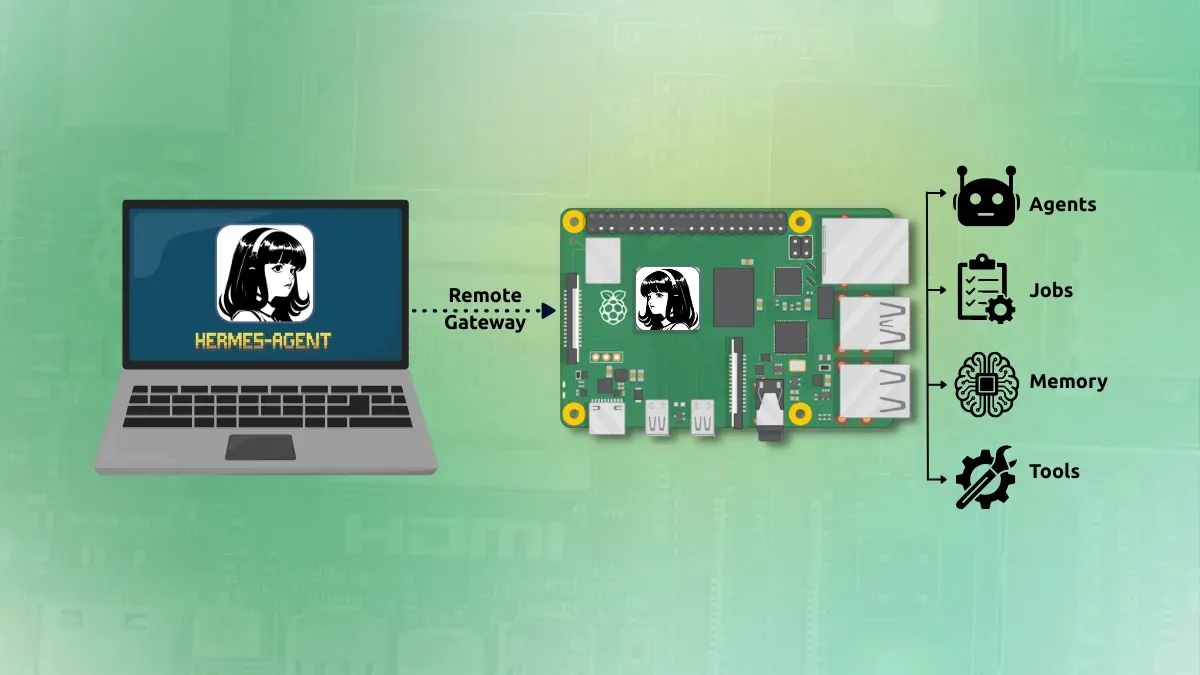
The idea is to use Raspberry Pi as an always-on Hermes backend while using it from the computer(s).
BlueFerry is a new open-source Linux app that lets users send and receive iMessage and SMS from an iPhone directly over Bluetooth.
Longtime Slashdot reader DF5JT writes: On July 26, I posted a single announcement in r/backgammon: GNU Backgammon for Android, GPLv3, the first standalone backgammon engine on F-Droid. Reddit's spam filter removed the post and permanently banned my 11-year, 30,000-karma account -- the result is publicly visible at reddit.com/user/OE1FEU. To this day, Reddit has given no reason whatsoever, although Article 17 of the EU's Digital Services Act makes a statement of reasons mandatory. The only appeal channel is a 250-character web form that sends no confirmation and has never been answered; Reddit's own help text admits: "you may not have received a message to your inbox." A GDPR export of 11 years of data came to 7.2 MB; every post was truncated after a few lines, with zero data about the ban decision.
So I spent one day escalating through every mechanism the EU provides: certified out-of-court dispute settlement at Austria's RTR, complaints with the Austrian and Dutch Digital Services Coordinators, the data protection authority (citing the ECJ's SCHUFA ruling on automated decisions), noyb, and Austria's consumer association. Bonus finding: the European Commission's DSA Transparency Database contains 14,067 Reddit statements of reasons for that week -- none for my ban -- and the Commission's own feedback form limits reports to 500 characters and crashed with a 500 Server Error. Is the DSA enforceable for ordinary users, or just paperwork?
Read more of this story at Slashdot.

The work-in-progress feature would clear out old, unused kernels automatically every week.
FastFlowLM is the open-source software for getting vision, audio, embedding, and MoE large language models up and running on AMD Ryzen AI NPUs. FastFlowLM 1.0 released today and is also now part of the AMD ROCm software umbrella...
With the recent release of Mesa 26.2 the Rusticl OpenCL driver now supports OpenCL 3.1 on RadeonSI, LLVMpipe, Zink, Intel Iris, and Apple Asahi. But the work is not over and more improvements to this Rust-based, modern OpenCL driver continue to land...
The HP OmniBook X Flip 14-kc0xxx is an AMD Ryzen AI 300 "Strix Point" powered laptop. While most AMD Strix Point laptops work fine on modern Linux distributions, with this particular HP OmniBook X there is no working audio with current mainline Linux kernel builds. With Claude Opus 5 acting as a debugging assistant and coding agent, patches are now pending to correct the audio support for this HP OmniBook X Flip 14 laptop to function on Linux...
SparkyLinux 8.4 is out based on Debian 13 “Trixie,” restoring 32-bit i686 images alongside updated packages and Linux kernel 6.12 LTS.

OptiScaler Client is a modern, high-performance desktop utility designed to simplify the installation, management, and update of the OptiScaler mod.Read the full article on GamingOnLinux.

VR on Linux has quite a number of sore spots but it seems Valve do continue to improve it, with the latest SteamVR Beta hopefully making it a lot nicer.Read the full article on GamingOnLinux.

One big thing missing for Linux right now is support for XBOX PC and Game Pass, but we might not be waiting forever on that thanks to the 'Xodus' project.Read the full article on GamingOnLinux.

The community maintained compatibility layer GE-Proton 11-4 is out now, and with it there's a whole lot of fixes and improvements for controllers.Read the full article on GamingOnLinux.
Sent to DRM-Next this week was the DRM Rust core and driver changes targeting the upcoming Linux 7.3 merge window. There continues to be a lot of DRM core infrastructure work happening for Rust integration plus two leading Rust DRM drivers of Nova for open-source NVIDIA GPU support as the successor to Nouveau and then Tyr as the in-development Arm Mali driver...
alternative_right shares a report from 404 Media: Robotics companies promise that video-camera-toting security robots can deter and detect crime. But many companies are rethinking the approach after a trail of canceled contracts and questions about whether the artificial intelligence-powered bots are meeting the needs of businesses and local governments. Proof News found evidence of at least 21 security robot deployments since 2015. We contacted contract holders and combed news articles and determined that at least 13 of those programs have ended. Silicon Valley-based Knightscope secured the most security robot contracts, according to Proof's analysis, and also suffered the bulk of cancellations.
For example, New York City's then-Mayor Eric Adams installed a Knightscope robot on the overnight shift at the Times Square subway station, but the program was scrapped when the pilot expired in 2024. City leaders did not respond to Proof News' questions about why the robot wasn't renewed. By the end of its assignment, it was reportedly gathering dust in an empty storefront. Outside Columbus, Ohio, the city of Dublin pulled the plug on a Knightscope robot in May, ending its two-year pilot program after less than 10 months. The city enlisted the robot, dubbed DubBot, to patrol a downtown park, but city spokeswoman Robyn Gray said it "did not fully meet our operational needs," and failed to identify any criminal incidents or lead to any tickets or arrests.
[...] Seeking a new path forward in the security industry, Knightscope CEO William Santana Li said the company is forging a new model, combining its robots and AI-powered software with another key ingredient: human security guards. Knightscope announced it purchased Event Risk LLC, a national security guard firm, earlier this year. Knightscope has incurred net losses since inception in 2013, according to its most recent quarterly filing with the U.S. Securities and Exchange Commission, and is $273 million in debt. Knightscope hopes its pivot to incorporate people will give it a greater share of the physical security market -- which the company believes is worth an estimated $230 billion annually. Li declined to answer questions about the disbanded programs, but said in an email, "Technology cannot do everything -- and neither can people -- but the combination can be very powerful."
Read more of this story at Slashdot.
Radxa has revealed two Qualcomm-based system-on-modules aimed at edge AI, multimedia, robotics, and industrial applications. The new rCore-Q8280 uses the Snapdragon 8cx Gen 3 with 29+ TOPS of AI performance, while the smaller rCore-Q6490 is based on the Dragonwing QCS6490 and provides up to 12 Dense TOPS. The higher-performance rCore-Q8280 is built around Qualcomm’s Snapdragon […]
An anonymous reader shares a report from The Conversation, written by Hatim Sharif, a civil and environmental engineer who has "spent more than two decades staring at maps" and spatial data. Sharif finds one connection especially fascinating: the link between spatial reasoning and why taxi drivers seem to have lower rates of Alzheimer's. From the report: Taxi and ambulance drivers are less likely than workers in almost any other job to die of Alzheimer's disease. That was the surprising result of a 2024 study examining the death certificates of nearly 9 million people in the U.S. [...] Of the 9 million death certificates from January 2020 to December 2022 that researchers examined, taxi and ambulance drivers had the lowest risk of dying from Alzheimer's disease out of 443 occupations. After adjusting for age, sex, race, ethnicity and education, roughly 1 in 100 taxi and ambulance drivers died of Alzheimer's, compared with 1 in 60 people overall. This pattern did not extend to other driving jobs.
The researchers concluded that the key to reducing the risk of Alzheimer's was not driving itself but continuous real-time navigation: the constant work of locating yourself in space, tracking a destination and updating a mental map as conditions change. Drivers whose jobs relied on fixed or predetermined routes, like bus drivers and aircraft pilots, didn't seem to experience a similar advantage. Researchers believe the association between navigation-heavy work and lower Alzheimer's risk centers on the hippocampus, a part of the brain that governs memory and spatial navigation. It's one of the first brain regions that Alzheimer's damages: Problems with spatial navigation and orientation are among the earliest signs of the disease, sometimes surfacing before obvious memory loss.
In one landmark 2000 study, neuroscientists compared the brains of licensed London taxi drivers with those of people who did not drive cabs. Their findings provided the first evidence via structural imaging that regions of the adult brain can measurably change under sustained navigational demand. To earn a license, London cabbies must memorize more than 25,000 streets within a 6-mile radius of Charing Cross, a challenge known as "The Knowledge" that takes three to four years.
The researchers found that London taxi drivers had measurably more gray matter in the posterior hippocampus, a brain area tied to storing large-scale spatial maps. That volume tracked with experience: The longer someone had driven, the larger that part of the brain. The change was built through practice, not inherited. While people who are good at navigation might gravitate to this kind of job, the job itself does have an impact on the brain. Together, these two studies make a coherent case: Work that intensively exercises the hippocampus may reshape it, and that reshaping may protect against one of the most feared diseases of aging.
Read more of this story at Slashdot.
The Meta Superintelligence Labs announced this morning they have released Muse Glimmer as their next large language model featuring 30 billion parameters for always-on local agent workflows. Muse Glimmer features open-source model weights under an Apache 2.0 license...