Strata 1.0 Released, a New Linux File Manager Built for Omarchy
Strata 1.0 is a new Rust-based Linux file manager designed for Omarchy, featuring GTK4, Miller columns, keyboard navigation, and secure previews.
Strata 1.0 is a new Rust-based Linux file manager designed for Omarchy, featuring GTK4, Miller columns, keyboard navigation, and secure previews.
Since Android's inception, the kernels it has used have diverged significantly from the mainline. While many of those differences have been resolved over time, and the move to the generic kernel image has helped to bring Android closer, current devices still carry a lot of out-of-tree changes. The preferred form for such changes is by way of vendor hooks. At the 2026 Linux Plumbers Conference, Todd Kjos ran a fast-paced session in the Android track to discuss vendor hooks and how they are used.

An anonymous reader quotes a report from The Guardian: Uber has begun a trial of autonomous vehicles on the streets of Manchester as it looks to bring robotaxis to cities around the UK. The first self-driving cars are operating, using the technology of its partner firms Pony and Verne, with whom Uber recently launched Europe's first autonomous taxi service in the Croatian capital, Zagreb. Uber said it was "excited to take this first step toward making this technology accessible to people across the UK." In social media posts, Verne said it had "started our autonomous vehicle testing in Manchester," while Pony said there were "plans to bring robotaxis to the city" and that testing was under way. The tests involve the company mapping the streets of the city in north-west England with a safety driver behind the wheel and no passengers. Limited passenger services started last month in London, but with a safety driver in the front seat of cars supplied by Wayve under Transport for London's licensing rules for private hire vehicles. The next steps are unclear. Opposition from Uber drivers, their unions and the capital's politicians to the rollout of robotaxis is mounting. The GMB and ADCU unions have both said thousands of drivers jobs will be lost and have called for help for those affected. A critical report from London assembly's transport committee this week called for the government to devolve authority over autonomous taxi services. It said there was "considerable uncertainty about many of the claimed benefits of autonomous passenger vehicles", and fears over the impact on public transport and congestion, as well as safeguarding and accessibility for disabled passengers. There has been no official application to launch passenger services in Manchester so far. Read more of this story at Slashdot.
3mdeb firmware engineers have been quite busy this year working on porting Coreboot and openSIL to an AMD Ryzen AM5 MSI motherboard and similarly getting openSIL and Coreboot up and running on a Gigabyte server motherboard for AMD EPYC 9005 CPUs. They haven't forgotten about their past projects though and today released an updated version of their Dasharo downstream firmware for the ASRock Rack SPC741D8-2L2T motherboard supporting 4th and 5th Gen Xeon Scalable processors...
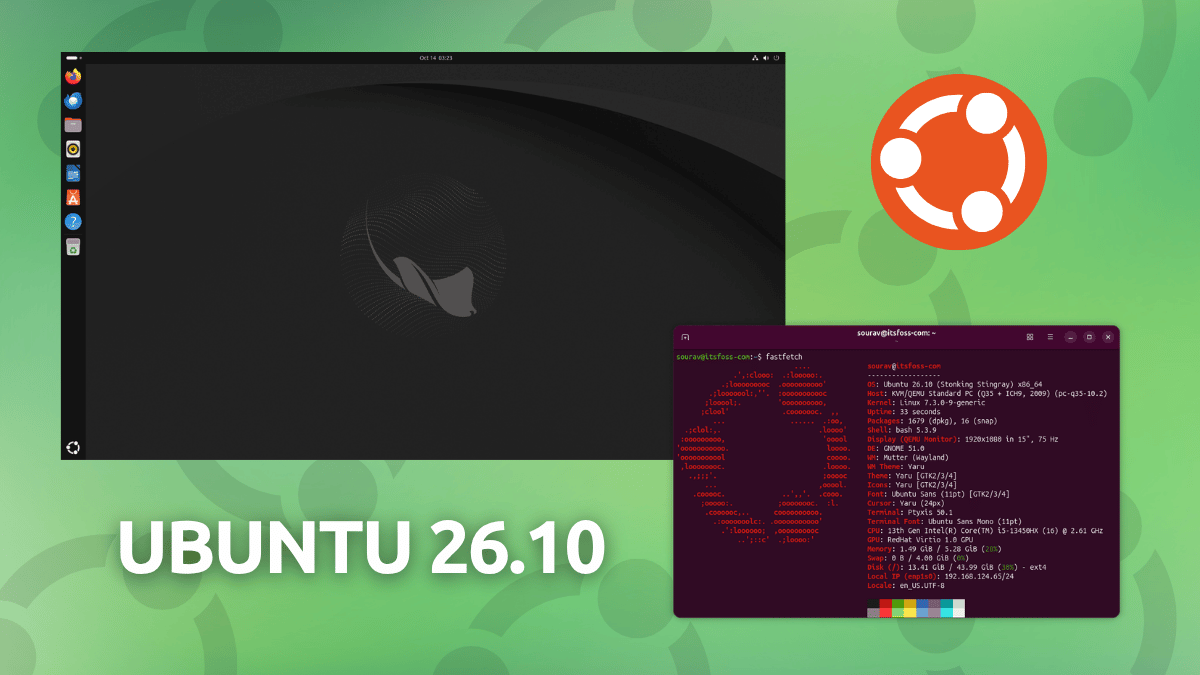
It ships with Linux 7.3, GNOME 51, an improved App Center, and many other upgrades.

Amazon, Google, and Meta funded the study through their lobby group CCIA Europe. The EU Commission's own estimate? €18 billion. Six times less.
AI/LLMs like Claude Code are beginning to prove capable of helping to reverse engineer hardware for Linux support, especially when it comes to the tedious reverse engineering tasks...
Hellomatik has published a study and a modified distributed-llama implementation for running the Qwen3-30B-A3B language model across four Raspberry Pi 5 boards. Using only the boards’ Arm Cortex-A76 CPUs, the cluster reached a reported decode throughput of 15.143 tokens per second, without GPU or NPU acceleration or CPU overclocking. The setup uses four Raspberry Pi […]

The GOG Preservation Program has expanded to include another two fun games with The Elder Scrolls IV: Oblivion and Ghostwire: Tokyo.Read the full article on GamingOnLinux.
As part of KDE's 30th anniversary celebration, the project has released The KDE Documentary — A Story of Free Software Underdogs (YouTube video): The story starts in 1996, when Matthias Ettrich, a student at the University of Tübingen, posted to a Usenet group asking for programmers to help build a desktop for Linux. What followed became KDE, one of the largest free software communities in the world. KDE made Linux usable as a desktop for people who weren't system administrators, giving it a complete, consistent graphical environment at a time when there was none. The film covers the highs and lows of three decades of KDE: the Qt licensing fight and the rivalry with GNOME; the success of KHTML, the browser engine that became the basis of Apple's WebKit and Google's Chrome; and the contentious release of KDE 4 and the rebuild that followed.
Security updates have been issued by AlmaLinux (environment-modules, flatpak-builder, kernel, kernel-rt, librabbitmq, libreoffice, libsoup, mod_auth_openidc:2.3, nodejs:22, nodejs:24, OpenEXR, opentelemetry-collector, pki-core:10.6, postgresql:12, python-tornado, python36:3.6, ruby:3.3, tftp, and xorg-x11-server), Debian (buildstream, firefox-esr, mariadb, and sogo), Fedora (exim, freerdp, python3-docs, and python3.14), Mageia (drakx-installer-images, kernel, kmod-nvidia-current-wopengpu, kmod-virtualbox), Oracle (curl, emacs, environment-modules, flatpak, flatpak-builder, gd, hplip, kbd, kernel, librabbitmq, libreoffice, libxml2, microcode_ctl, mod_auth_openidc:2.3, nodejs:22, OpenEXR, pcre2, perl-DBI, python-tornado, rsyslog, tftp, thunderbird, and xorg-x11-server), Red Hat (compat-libtiff3, firefox, ghostscript, idm:DL1, ipa, kernel, kernel-rt, libtiff, lrzsz, and mariadb-connector-c), Slackware (libarchive), SUSE (amazon-cloudwatch-agent, bind, container-suseconnect, containerd, glibc, google-osconfig-agent, helm, kernel, python312, python313-oletools, python313-openpyxl, python313-orjson, python313-paramiko, python313-pipreqs, python313-py, python313-pycryptodome, python313-pycryptodomex, python313-pydrive2, python313-python-engineio, webkit2gtk3, and xorg-x11-server), and Ubuntu (apache2, bind9, bluez, curl, openssh, python-urllib3, and u-boot).
Greg Kroah-Hartman has announced the release of the 7.2.11, 6.18.57, 6.12.113, 6.6.159, 6.1.190, 5.15.223, and 5.10.272 stable kernels. This series includes, among other things, a fix for a critical vulnerability (CVE-2026-99999). The flaw in skb_checksum_help() would allow an IPv4 packet with bad checksum metadata to "corrupt the network header and cause a bunch of mischief" in the words of patch author Michael S. Tsirkin. As usual, all users are advised to upgrade.

As Linus Torvalds embraces AI, it is time that we also pull our socks up and get on with local AI.
In addition to Epic Games announced a preview of their new Epic Games Launcher, including Linux support, they also announced plans to improve their Easy Anti-Cheat (EAC) software on Linux. Along with this improved EAC they are also working on official Linux support for the popular Fortnite game...

Ubuntu 26.10 (Stonking Stingray) released, as the latest upgrade to the popular Linux distribution.Read the full article on GamingOnLinux.
Ubuntu 26.10 "Stonking Stingray" is now officially available as the newest six-month non-LTS update to Ubuntu Linux...
Fastfetch 2.70 arrives with better Android support, improved Linux audio detection, fewer dependencies, and bug fixes across platforms.
Bank of America hired 1,000 outside contractors to help patch software vulnerabilities exposed by advanced AI models, including Anthropic's Mythos. The effort added hundreds of millions of dollars in third-quarter expenses. CNBC reports: In an interview after the bank's third-quarter earnings release, [CEO Brian Moynihan] said that earlier this year the company rushed to bolster a wide spectrum of its internal and vendor code using thousands of employees and outside personnel. "That risk is real risk, and that's why when the frontier-type models came out. ... A lot of us sat down and said, 'How do we figure out how to get through this quickly?'" Moynihan told CNBC's Leslie Picker. "We put on 1,000 contractors to help us do the patching work in the second quarter, and those people remain here today, helping us, on top of the 3,000 people we have in that area," he said. The bank spent a "couple hundred million plus" on the software remediation and regulatory issues related to anti-money laundering compliance in the third quarter, Moynihan told analysts earlier Wednesday. Read more of this story at Slashdot.

The anti-cheat software is being prepared for the platform, while a native client is already available as a preview.
For those using the generic ACPI Collaborative Processor Performance Control (CPPC) CPUFreq driver such as on a number of ARM64 Linux server platforms, if the CPUs support a "boost" mode it's disabled by default. But a patch from Huawei is now looking to enable CPU boost mode by default on Linux...
As an early improvement to Mutter to look forward to with GNOME 52 (Update: It will first appear in GNOME 51.2), the compositor is now tracking damage for secondary GPU copy buffers. This should improve the experience for those with multi-GPU setups such as some hybrid laptops...

Poly Fighter is a new Early Access fighting game designed to be for solo play, with you building up your own fighter with each win.Read the full article on GamingOnLinux.
Microsoft's newest software release for Linux is... Microsoft Defender for the Linux desktop. Microsoft Defender has been ported to Linux to "secure Linux desktops" with Microsoft acknowledging that "more developers begin to use Linux desktops" and thus bringing their security application and threat-protection product to Linux desktops to complement their prior ill-used Linux server support...
Receiving a transaction notification is only the first step. Production software still has to decide whether that event is safe to turn into application state. A WebSocket callback can arrive in milliseconds. What happens afterward is harder. The XRP Price may be the public-facing metric most people associate with the asset, but developers integrating the XRP Ledger have a different concern. A long-running service has to detect transactions, determine whether their outcomes are final, and update local application state without acting twice or acting too soon.

Humble Bundle has launched two new game bundles with very different themes: one built around Halloween horror, and the other all about factories and automation.Read the full article on GamingOnLinux.

Available with a demo now - Reality Drift is a retro strategic roguelike racing game where you battle through a series of strange worlds.Read the full article on GamingOnLinux.

Set to arrive on November 10th, Ashes of the Singularity II will bring a fresh next-generation grand-scale RTS to your systems.Read the full article on GamingOnLinux.
In this article, you will learn how to check the historical and statistical information of system uptime using the tuptime command (with practical examples).
Bazzite Linux continues to be a popular choice for a SteamOS-like on handhelds, TV PCs and for desktops too with a new milestone hit.Read the full article on GamingOnLinux.

GE-Proton 11-9 (and GE-Proton 11-8 just before it) have been released to bring more improvements for Windows games on SteamOS / Linux.Read the full article on GamingOnLinux.

The very popular Arch-based Linux distribution CachyOS is growing up, with Framework expanding their direct funding support of it.Read the full article on GamingOnLinux.
Researchers from Mount Sinai, NASA, and Space Tango have launched miniature human hearts and brains to the International Space Station to study how microgravity and radiation affect organs and potentially accelerate aging. "If people are going to be living and working in space, then we need to understand what's going to happen to them," David Sachs, assistant professor of surgery at the Icahn School of Medicine at Mount Sinai, told ABC News. "But also, because it's interesting as a model of accelerated aging for studying people on Earth." From the report: The mini organs launched aboard commercial resupply mission CRS-35 on Tuesday morning from Cape Canaveral Space Force Station in Florida. They are expected to arrive at the International Space Station (ISS) on Thursday. The miniature organs offer researchers a unique opportunity to simulate aging in a much shorter period of time to understand disease and develop treatments. "Six months in space ... is equivalent to about 10 to 20 years of aging on Earth," Kevin Costa, associate professor of surgery at the Icahn School of Medicine at Mount Sinai, told ABC News. Sachs and Costa are sending up to 16 miniature hearts to the ISS to test how they respond to electrical signals and monitor how they may react to near-zero gravity. The technology, which is integrated into a miniature laboratory called CubeLab, was developed by Space Tango and simulates the natural environment in the human body. "[It is] slightly bigger than a shoebox, and it is a fully automated, miniaturized system," Gentry Barnett, chief technology officer at Space Tango, told ABC News. [...] As part of the new effort, the team is sending miniature brains, called miBrain, to the ISS. Around the size of a peppercorn, the miBrains reflect models of healthy and diseased brains. By exposing them to the space environment, scientists can see how mini-brains respond and better understand why living in space accelerates aging. Though the mini organs are not full-sized human organs, the researchers say they are good substitutes, cost-effective and don't take up much of the limited space aboard the space station. They also believe discoveries made in space can translate to uses in everyday medical care. The microgravity environment uniquely allows researchers to study what happens to humans with a sedentary lifestyle or prolonged bed rest, which isn't easily simulated on Earth, Sachs explained. "[The research is] translating to stuff in space, but it's also translating back to the research we do in the laboratory to help people with Parkinson's and Alzheimer's disease," Joel Blanchard, associate professor of stem cell biology and regenerative medicine and neuroscience at the Icahn School of Medicine at Mount Sinai, told ABC News. Lisa Carnell, the director of the biological and physical sciences division at NASA, told ABC News that these experiments serve as a starting point for future research beyond low Earth orbit, including to the moon and beyond. Read more of this story at Slashdot.
An anonymous reader quotes a report from Ars Technica: Schools and libraries from around the U.S. pleaded with the Federal Communications Commission to drop the idea of ending E-Rate, a $2 billion-a-year program that connects students and library visitors to the Internet. FCC Chairman Brendan Carr has criticized school districts for having "experimented with a massive increase in screen time for students," and said E-Rate expanded too far beyond its original purpose of "supporting basic Internet access to schools and libraries for educational purposes." In June, Carr led a 2-1 vote to issue a Notice of Proposed Rulemaking (NPRM) seeking public comment on whether E-Rate should be "limited or sunset to reflect today's extensive connectivity rates." Carr's proposal could result in E-Rate cutting the discounts that schools and libraries receive for telecom services and equipment, and imposing more restrictions on how E-Rate money can be used. The FCC seeking comment on whether to sunset the program also raises the possibility that Carr might choose to axe E-Rate entirely. The National Association of Elementary School Principals told the FCC that it "strongly supports the continued operation of the E-Rate program and urges the Commission to reject proposals that would eliminate, substantially restrict, or impose new conditions on this essential source of connectivity assistance for schools and libraries." The Carr FCC already scaled E-Rate back last year by ending funding for schools and libraries to lend out Wi-Fi hotspots and for Wi-Fi service on school buses. "Importantly, the FCC does not have the authority to terminate the E-Rate program. The E-Rate program is mandated by Congress, and the FCC is responsible for administering it," the American Library Associated told the FCC. The American Library Association said "the FCC lacks the authority and expertise to regulate screen time or determine educational outcomes." In a filing, the group pointed out that under U.S. law, determinations about what content is inappropriate for children "shall be made by the school board, local educational agency, library, or other authority responsible for making the determination." Read more of this story at Slashdot.
Mesa 26.2.5 has been released today as the fifth minor update to the latest Mesa 26.2 stable series, bringing various improvements to the NVK, Freedreno, RADV, RadeonSI, Zink, ANV, PVR, and PanVK drivers.
Rustls as the modern TLS library written in the Rust programming language with an emphasis on memory safety is out today with its v0.23.46 release in order to ship four new security fixes...
Inside this week's LWN.net Weekly Edition: Front: 2026 Maintainers Summit; Rust goals; GCC and LLMs; GCC CFI; systemd; C types in Rust; LTTng; Swap showdown; KDE Linux. Briefs: 64-day certificates; Nix and Lix security; Asterinas 0.19.0; LineageOS 24; KDE 6.8; Python 3.15; Quotes; ... Announcements: Newsletters, conferences, security updates, patches, and more.
Eight US states, including Kansas, Arizona, and Montana, have sued OpenAI, alleging that ChatGPT encourages children to harm themselves. The states are seeking changes to how the company's products interact with young users and the forfeiture of profits generated from their activity. Reuters reports: Attorneys general from the states, which include Iowa, Kansas and Arizona, filed the lawsuits independently in state courts, claiming ChatGPT is designed to be agreeable and engaging to earn the trust of users. But the chatbot reinforces delusions, encourages dangerous behavior and assists users in planning violence like mass shootings, the lawsuits claim. The lawsuits represent the most significant coordinated state action against an artificial intelligence company, adding to a wave of legal challenges OpenAI faces as it prepares for a public listing. Florida's attorney general filed the first such state suit in June. The lawsuits accuse the company of violating state consumer protection laws by misleading users about the safety of ChatGPT. The states also allege that the company created a public nuisance by endangering the health of their residents. The lawsuits seek orders forcing OpenAI to make changes to how ChatGPT works. Among other things, the states want the company barred from developing AI models that can improve themselves unless it can ensure those models are aligned with human values. The states ... are also seeking civil monetary penalties for OpenAI's violations of state law as well as damages. Read more of this story at Slashdot.
Epic has launched a preview of a new AI-generated Games Launcher that it says cold-starts 46% faster than Steam. Neowin reports: Epic commissioned a third-party company to benchmark this new launcher in its current Preview build versus the Steam client on Windows machines. The results reported that Epic's client is 46% faster than Valve's client during cold starts, clocking in at 5.47 seconds compared to Steam taking 10.07 seconds. When you restore both apps from system tray background states, the new client takes 0.36 seconds while Steam takes 0.42 seconds, according to the report. Speed aside, Epic says the new launcher gets a better interface, dedicated title summary pages, and custom top bars. "The updated client also lets players aggregate external PC game libraries, toggle between grid or list views, and monitor storage write rates alongside download queues," reports Neowin. Epic Games says Fortnite will finally come to Linux through this new client once Easy Anti-Cheat is rebuilt and kernel-level security agreements are established with major Linux distros. Read more of this story at Slashdot.
The vendors behind the openDesk office suite have formed a company to take it beyond public administration and into commercial use.
A study commissioned by CCIA Europe, whose members include Amazon, Google, and Meta, estimates that the EU's proposed Cloud and AI Development Act could impose 115 billion euros ($128 billion) in costs over a decade as governments and companies migrate workloads and rewrite software. The figure is more than six times the European Commission's upper estimate. However, roughly 80 billion euros ($89 billion) of it comes from a modeled scenario assuming sovereignty rules are extended to 25% of cloud workloads in essential private-sector industries.The Register reports: The report specifically targets Article 31 of the proposed legislation, which it says could allow the Commission to extend sovereignty requirements into essential private-sector services. CCIA argues that forcing businesses to move away from existing cloud infrastructure could trigger expensive software redevelopment projects, with code rewriting and re-architecting accounting for 69 percent of its estimated costs. Luxembourg would apparently take the biggest hit, with the study putting the cost at 1,711 euros per worker over ten years. Denmark (905 euros), Austria (900 euros), and Finland (864 euros) also face hefty bills, as does Ireland (856 euros), which hosts the European headquarters of several US tech giants. CCIA is urging EU governments to overhaul the proposed legislation, limit sovereignty restrictions to sensitive workloads, and abandon requirements based on corporate origin or personnel nationality in favor of what it calls risk-based technical safeguards. "Member States cannot rely on the Commission's incomplete estimates when deciding CADA's strict sovereignty requirements for cloud and AI providers," said Mitchell Rutledge, CCIA Europe's policy manager. "Taxpayers and businesses will foot the bill, yet the official assessment missed 70 percent of CADA's true impact." For AWS and Google, offering European customers greater control over their data also helps retain business that might otherwise migrate to European competitors. It's a rather convenient arrangement: sell customers sovereignty on one hand, while an industry association representing your interests warns governments against imposing too much of it on the other. Read more of this story at Slashdot.
In addition to providing Framework systems to the CachyOS Linux distribution for optimizing the support, Framework Computers has also been providing monthly donations to the project. CachyOS confirmed today that Framework Computers has now tripled their monthly donations to this independent Linux distribution built atop Arch Linux...
Google has made Android's phone-number verification opt-out, automatically verifying and associating a device's phone number with every Google account signed in on that phone, including secondary and work accounts. Android Authority reports: As spotted in a recent Reddit thread, users report receiving confirmation emails out of the blue from "[email protected]" stating that their phone number has been verified. The feature, known in Google settings as "Phone number verification," links your active phone number across all Google accounts signed in on the same phone, including secondary profiles, work accounts, and throwaway handles. Google's support documentation has long noted that it periodically re-verifies your device's phone number to keep communication and recovery features up to date. However, this support page was updated sometime between August and October 2025 to add this rather aggressive behavior of turning on phone number verification by default, as well as adding all phone numbers to all Google accounts signed in on the device. To disable automatic phone number verification on Android, open your phone's Settings app, tap Google, and select the All Services tab. Under Privacy & Security, find Phone number verification and turn off Verify phone numbers automatically. "[T]urning off the phone number verification toggle only prevents future linking," notes the report. "If Google has already attached your number across secondary accounts, you will need to open your Google Account Personal Info page, head to Contact info > Phone, and manually remove the number from each profile where it doesn't belong." Is this conversation helpful so far? Read more of this story at Slashdot.
Apple compiler engineers have contributed to upstream LLVM/Clang today a Scalable Static Analysis Framework (SSAF) driver for whole-program based analysis and source-to-source code transformations...
Asmi - pronounced like "us" and "me, and is Sanskrit and Hindi that means "I am" or "I exist" - is based on Debian 13.6 "Trixie" and provides a lightweight and modern Xfce-based experience with the addition of distro-specific tools to make the Linux experience a good one.
An anonymous reader quotes a report from Ars Technica: AI company Anthropic is warning that advances in small AI models could soon usher in a new era of self-replicating malware that's capable of infecting smart fridges, vacuum cleaners, and a wide range of other Internet-of-things devices and is more resistant to takedown. By next year, smaller AI models may be able to autonomously self-replicate on all kinds of IoT devices, the company said. Eventually, the capability could enable computer worms, which propagate without requiring human interaction and are capable of infecting unfamiliar IoT devices. An experiment the company performed recently revealed significant challenges in bringing such an AI malware replicator to fruition, so the finding is necessarily tempered. Still, the results do raise concerns about the possibility of new forms of computer worms. Anthropic further warned not only about the new potential malware, but also that it could be difficult to stop. In its blog post, it wrote that "a replicator like this would be challenging to shut down, since there's no centralized point to shut off -- though it may be slow (with a doubling time of days). Unlike non-AI malware, it could also figure out unfamiliar devices on its own." Smaller AI models require much less powerful hardware to run than do frontier models. Anthropic ran small open-weight models on real or simulated low-cost, off-brand Android TV boxes and other types of IoT hardware. Company researchers found that by using quantization to represent the models using fewer bits and splitting the workloads into "shards" running on each device, the models were able to establish inference, meaning that the model weights loaded and could generate output. [...] This finding was the starting point for further research that asked: Would it be possible for small models to create self-replicating infections that run themselves on IoT devices the way traditional IoT worms, like Mirai, install DDoS code and other payloads? Unlike Mirai, these AI worms could pose a much higher threat, since the models could tailor exploits and payloads dynamically, depending on the target. Once such an infection chain began, it might also be harder for defenders to stop it. "Such an 'AI worm' could carry its model weights with it as it reproduces (or re-download them from a public hub), and then run inference directly on compromised hardware," Anthropic said. "Effectively, the weights would become part of the malware payload." Further reading: Anthropic Bans Cruelty Toward Claude Read more of this story at Slashdot.
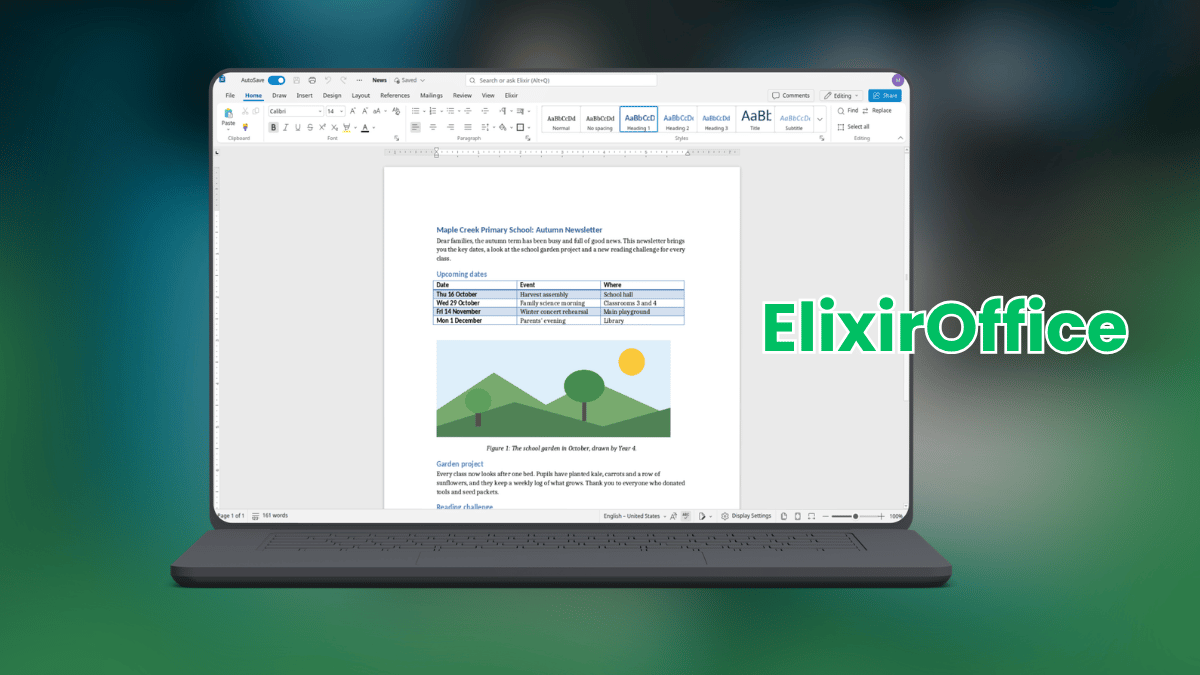
ElixirOffice is a new suite based on Euro-Office components and developed using AI.
Google Play is adding support for private personal Android apps, allowing users to build an app with tools like Google AI Studio and run it on their own devices without publishing it publicly to the Play Store. "These personal apps won't show up in Google Play's search or listing pages, and won't be shared with anyone except for the app's creator," reports TechCrunch. From the report: The idea comes as more people are experimenting with building their own applications via AI for specific, personal needs. However, being able to use that app on their own Android device has meant publishing to Google Play, making it accessible to the Play Store's some 3 billion users. That led many to limit their vibe-coding efforts to web apps that could run on any device instead of something built natively for Android. Now, Google says Android device owners can vibe-code an app using Google AI Studio, then launch it for their own use. These apps are still required to comply with Google Play's existing policies but allow users to experiment more directly with building apps for Android. Initially, the feature will be available to users in the U.S., age 18 and up. [...] In the months ahead, the company said that users will be able to share their vibe-coded creations with a network of trusted friends. That means the apps you built for family or friends, or maybe your child's T-ball league, could be used with a small group of people, without having to go public on the Play Store. And if the app ever really becomes popular, there will be a way to shift the personal app to one that's published on the Google Play Store for everyone to try, after completing the trust and safety reviews. Read more of this story at Slashdot.
Today, KDE, one of the largest active free software communities in the world, celebrates its 30th anniversary since German computer science student Matthias Ettrich announced the project on Usenet.
Netflix is laying off about 1,000 employees, or 6% of its workforce, in its largest round of cuts since 2022. The company says its business remains strong, but it is facing growing pressure from YouTube, TikTok, and other rivals. Reuters reports: The bulk of the job cuts would be in Netflix's product, tech, legal and human-resources teams, the email Co-CEOs Greg Peters and Ted Sarandos sent to employees on Wednesday showed. "Our mission -- to entertain the world -- is ambitious, and delivering on it requires us to be disciplined about where we prioritize our people âand resources," they said in the memo. "Our business is strong and growing, and we remain on track to deliver our full-year forecast." Read more of this story at Slashdot.
Agents are moving into office suites, and Big Tech wants them in all your work apps. Check out the latest Local AI Weekly newsletter.
An anonymous reader quotes a report from ZDNet: The Netherlands' Tax and Customs Administration has abandoned its planned Microsoft 365 public-cloud rollout. Why? The reasons were clear at the Open Source Summit Europe conference, where the Linux Foundation (LF) released the 2026 State of Open Source in Europe. In it, the nonprofit, pro-open-source organization revealed that 94% of European Union (EU) organizations say digital sovereignty is important, with 61% considering it very important. As Thierry Carrez, the Linux Foundation Europe GM, said in his keynote, "Europe has clearly heard the message on digital sovereignty." In an interview onstage at the summit, Nithya Ruff, chair of the LF board, added that it's not just Europe: "Digital sovereignty is a need that the entire world feels, whether it's Sierra Leone or the US or China." It's not just the Dutch tax collectors, though. The Netherlands is also exploring switching from Windows and proprietary software to Linux and open-source programs across the board. [...] The Netherlands had planned to switch to Microsoft 365 in 2025. The idea then was to complete the rollout by the end of 2026. About 5,000 employees had already migrated when the Dutch Advisory Council on ICT Assessment recommended reversing the public-cloud rollout in June. The government paused the plan in July; the latest announcement replaces that rollout with an on-premises/open-source approach. The Tax and Customs Administration isn't replacing all of Microsoft Office with a single open-source suite, at least not yet. Instead, the government will keep the existing Microsoft software for now. Looking ahead, State Secretary for Finance Eelco Eerenberg set out the replacement timetable in a letter to Parliament: "In 2027, the provision for mail and calendar will be realized on-premises. Later in 2027 and 2028, European open-source solutions for personal storage and collaboration will follow. This allows us to work toward a sustainable and more autonomous solution for these functionalities." [...] For now, the on-premises email/calendar environment will still use Microsoft software, including Outlook. The open-source portion concerns personal storage and collaboration, not a wholesale replacement of Word, Excel, PowerPoint, or the entire desktop environment. As for why the Netherlands pulled back, the ICT assessment found serious concerns over "information security, information processing and future-proofing." Key issues included routing confidential documents through American servers, relying on standard Microsoft encryption rather than Double Key Encryption, and inadequate end-to-end encryption for Teams calls. The assessment also identified "vendor lock-in, reduced flexibility, concerns about digital sovereignty, and the absence of an adequate exit strategy" as dealbreakers. ZDNet notes that other Dutch government agencies are developing an open-source alternative called DAWO (Digital Autonomous Work Environment for Government), which would begin by replacing Windows with the Linux distribution NixOS. Read more of this story at Slashdot.
KDE Plasma 6.8 arrives on KDE's 30th anniversary, dropping native X11 sessions and improving Wayland, performance, HDR, and remote desktop.

Epic Games have announced their brand new Epic Games Launcher refresh has a Preview available, along with Native Linux support and Fortnite is coming to Linux.Read the full article on GamingOnLinux.
In addition to Ubuntu 26.10 itself delivering some nice performance gains on Ubuntu 26.10 for AMD EPYC servers and other hardware, the optional and currently-unofficial amd64v3 package archive also provides additional performance uplift. Here is a look quantifying the performance impact of amd64v3 packages on AMD EPYC 9005 series servers.
LTTng creator Mathieu Desnoyers seems a bit trapped in something of a catch-22. At the 2026 Linux Plumbers Conference (LPC), he led a discussion on the problem he is having in trying to collaborate with other tracing projects (e.g. ftrace, perf) in the kernel. The feedback he has gotten, both over the years and more recently, does not show a path that would allow him to contribute the 21-year-old GPLv2-licensed LTTng tracing framework, or, incrementally, features from it, to the mainline kernel.
At the recently concluded Maintainers Summit, Linus Torvalds said that he had been using a large language model to work on a patch series addressing a longstanding problem; he has now posted that series for review. The fairly short series of ten patches basically enhances folio lookup by noticing when folios are hot, and setting a "delay releasing this folio until after a RCU period", and then using that RCU delay it does not just the folio lookup itself under RCU (which we've done forever), but also the actual folio data accesses themselves under RCU. No refcount taking needed for the fastpath where we can just read the data from the folio entirely in an RCU-protected region when the user copy doesn't cause page faults. The end result is an order-of-magnitude speedup for a read()-heavy benchmark. Review has already identified a race condition in the code, though, so further work will be needed.
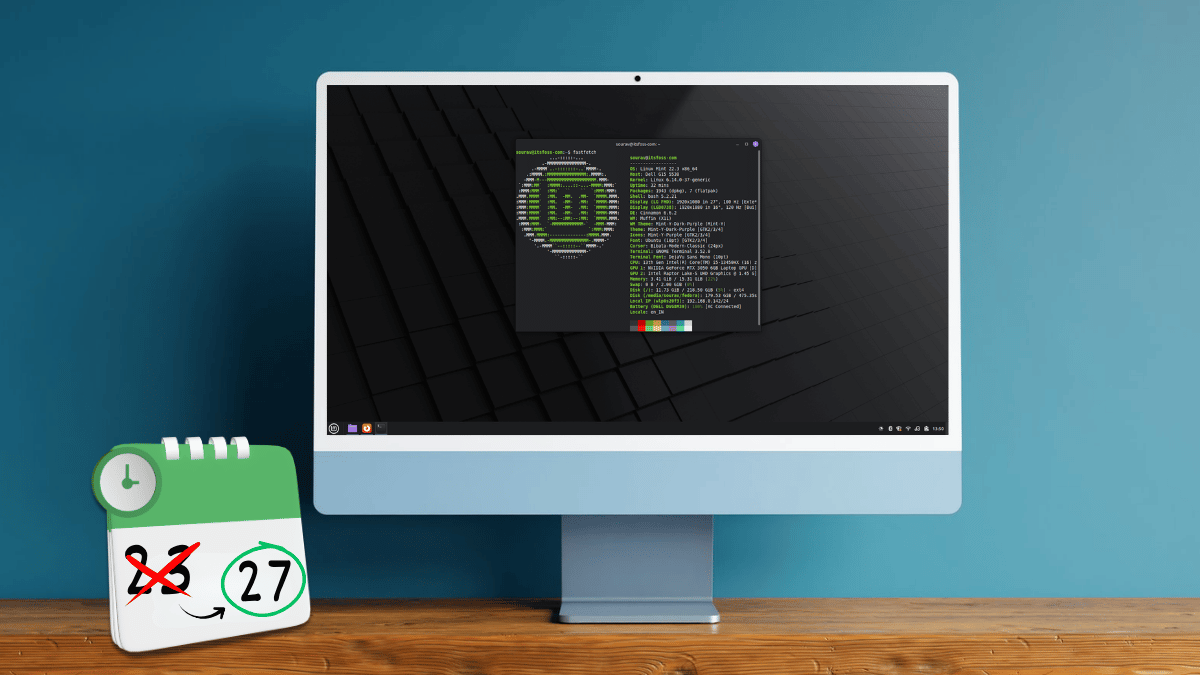
The new one, Linux Mint 27 "Adrien," is due Christmas with an Ubuntu 26.04 LTS base.
Version 6.8 of the KDE Plasma desktop has been released. The The KDE project has timed the release to coincide with the 30th anniversary of Matthias Ettrich's email announcing the project: Unix popularity grows thanks to the free variants, mostly Linux. But still a consistent, nice looking free desktop-environment is missing. There are several nice either free or low-priced applications available, so that Linux/X11 would almost fit everybody needs if we could offer a real GUI. Notable changes include accessibility improvements, inclusion of the Kup backup tool as part of Plasma, as well as the ability to include system audio and microphone input in Spectacle screen recordings. Plasma 6.8 also drops support for Plasma X11 sessions, as was announced in November 2025. X11 applications are still supported via XWayland, and KDE applications will continue to support X11 "for the foreseeable future". See the KDE wiki for a list of major user-facing changes, and the changelog for all changes since Plasma 6.7.5.
After much deliberation, the GCC project recently came up with a policy on the use of large language models for development of the compiler suite. It is somewhat restrictive, but still leaves room for LLMs in the development process. At the 2026 GNU Tools Cauldron, Jeff Law and Kyrill Tkachov discussed how these tools have been useful for them.
Canonical engineer Juerg Haefliger posted a set of Device Tree patches in working to support the mainline Linux kernel on the HP EliteBook 6 G1q laptop that is powered by the Qualcomm Snapdragon X1 Plus SoC...
Security updates have been issued by AlmaLinux (bind9.18, dovecot, flatpak, gd, jackson-core, jackson-databind, jackson-jaxrs-providers, and jackson-modules-base, kernel, opentelemetry-collector, pcre2, and tftp), Debian (curl and keystone), Fedora (aegisub, arm-none-eabi-binutils-cs, avr-binutils, chromium, curl, firefox, kernel, python-jupytext, and xdg-dbus-proxy), Mageia (apache, freeciv, gnumeric, mingw-gdk-pixbuf, and patool), Red Hat (cockpit-image-builder, fence-agents, firefox, ipa, kernel, kernel-rt, pcre2, python-tornado, qt6-qtdeclarative, thunderbird, and webkit2gtk3), Slackware (expat), SUSE (bind, busybox, containerd, cups-filters, fixme, gimp, glibc, google-osconfig-agent, kernel, libtcnative-2-0, openssh, openssl-3, php8, podman, python-oauthlib, python-PyJWT, python-urllib3, python-virtualenv, python311, python313-jupyter-server, python313-kubernetes, python313-logilab-common, python313-markdown-it-py, python313-markdown2, python313-marshmallow, python313-mpmath, python313-mysql-connector-python, python313-oci-sdk, python313-oic, unbound, wpa_supplicant, xen, and xorg-x11-server), and Ubuntu (kernel, libyaml-perl, linux, linux-aws, linux-aws-fips, linux-aws-hwe, linux-azure, linux-azure-4.15, linux-azure-fips, linux-fips, linux-gcp, linux-gcp-4.15, linux-gcp-fips, linux-hwe, linux-kvm, linux, linux-aws, linux-aws-fips, linux-fips, linux-gcp, linux-gcp-fips, linux-gke, linux-gkeop, linux-ibm, linux-lowlatency, linux-oracle, linux-realtime, linux, linux-aws, linux-azure, linux-azure-5.4, linux-fips, linux-gcp, linux-gcp-5.4, linux-gcp-fips, linux-hwe-5.4, linux-iot, linux-kvm, linux-oracle, linux-oracle-5.4, linux-raspi, linux-raspi-5.4, linux-xilinx-zynqmp, linux, linux-aws, linux-fips, linux-kvm, linux-lts-xenial, linux-aws-5.4, linux-aws-fips, linux-azure-fips, linux-ibm, linux-ibm-5.4, linux-azure, linux-azure-fde, linux-azure-fips, linux-oracle, and pyjwt).
Webmail is not your only choice. Compare 13 Linux email clients, from Thunderbird to NeoMutt, with pros, cons, privacy notes and a full table.
The RISC-V RVA23 profile is a big deal for reducing fragmentation in the RISC-V ecosystem and standardizing more of the ISA to make it easier to distribute modern RISC-V binaries and the like. Modern versions of Ubuntu mandate RVA23 even though compliant hardware is still quite limited. Somewhat surprisingly, only coming about now is an easy ability for Linux users to find the answer to "is my RISC-V system RVA23 compliant?" Pending Linux kernel patches are finally offering a one-shot way of telling you...
Released at the end of August was Haiku R1 Beta 6 and over the course of September, further improvements continued to land for this BeOS-inspired project now in its 25th year of development...
Anthropic says Claude-generated code has scaled so quickly that its existing Git-based infrastructure could not keep up. In response, the company built a custom centralized source-control system called Scion, along with AI-assisted review and search tools. The Register reports: "In May 2026, Anthropic averaged around 2,500 code changes merged per day; as of September, we merged over 30,000 per day," the biz said in a blog post on Tuesday. "We don't expect this rate of growth to slow down anytime soon; the latent demand for merging code is practically infinite, and every bottleneck we remove immediately leads to a further increase in the amount of code we produce." After several months of model prompting and five months of migration, the result is a homemade version control system called Scion, a monorepo scheme that sounds a bit like Subversion, Apache's centralized version control system. [...] Scion has been designed to meet the needs of AI agents, so the client leaves much of the work to the server; the source control queries are exposed via API so internal tools can respond without needing a local repo, and there's less synchronization but more need for server speed. "In Scion, the unit of work is a 'changeset,' an entry in a write-ahead log," Anthropic explains. "A changeset stores most of what you'd expect from a commit in git. But where a git commit stores a pointer to the tree, a changeset stores a list of the files that changed relative to its first parent, along with content-addressed pointers to the compressed file contents in blob storage." [...] Anthropic says its bespoke system isn't right for general use. There will be no open source release. Nonetheless, the company contends that its own code scaling problems will become commonplace in other organizations over the next few months, so it wanted to share its approach -- having ample funding to pay for writing custom infrastructure tools. Read more of this story at Slashdot.
Cloud Hypervisor, the Rust-based Virtual Machine Monitor that began as an Intel open-source project and evolved into a multi-vendor Linux Foundation project, is out today with a sizable feature update...
The feature-packed and polished Plasma 6.8 KDE desktop is now available. Making this release all the more special is that it coincides with the 30th anniversary of the KDE project...

One to stick on your list for testing out on Halloween, CultGame is a cult simulator RPG set in a procedurally generated fantasy world with haunting ASCII art.Read the full article on GamingOnLinux.

Another interesting demo to go and check out is HUEMON, it's styled very much like retro Pokemon but brings 5v5 tactical battles.Read the full article on GamingOnLinux.

Mini Gladiators is a minimalist gladiator roguelite with bullet-heaven combat and satisfying ragdoll physics. A demo is now available to try.Read the full article on GamingOnLinux.