
Netflix is laying off about 1,000 employees, or 6% of its workforce, in its largest round of cuts since 2022. The company says its business remains strong, but it is facing growing pressure from YouTube, TikTok, and other rivals. Reuters reports: The bulk of the job cuts would be in Netflix's product, tech, legal and human-resources teams, the email Co-CEOs Greg Peters and Ted Sarandos sent to employees on Wednesday showed.
"Our mission -- to entertain the world -- is ambitious, and delivering on it requires us to be disciplined about where we prioritize our people âand resources," they said in the memo. "Our business is strong and growing, and we remain on track to deliver our full-year forecast."
Read more of this story at Slashdot.
In addition to Epic Games announced a preview of their new Epic Games Launcher, including Linux support, they also announced plans to improve their Easy Anti-Cheat (EAC) software on Linux. Along with this improved EAC they are also working on official Linux support for the popular Fortnite game...

Agents are moving into office suites, and Big Tech wants them in all your work apps. Check out the latest Local AI Weekly newsletter.
An anonymous reader quotes a report from ZDNet: The Netherlands' Tax and Customs Administration has abandoned its planned Microsoft 365 public-cloud rollout. Why? The reasons were clear at the Open Source Summit Europe conference, where the Linux Foundation (LF) released the 2026 State of Open Source in Europe. In it, the nonprofit, pro-open-source organization revealed that 94% of European Union (EU) organizations say digital sovereignty is important, with 61% considering it very important. As Thierry Carrez, the Linux Foundation Europe GM, said in his keynote, "Europe has clearly heard the message on digital sovereignty."
In an interview onstage at the summit, Nithya Ruff, chair of the LF board, added that it's not just Europe: "Digital sovereignty is a need that the entire world feels, whether it's Sierra Leone or the US or China." It's not just the Dutch tax collectors, though. The Netherlands is also exploring switching from Windows and proprietary software to Linux and open-source programs across the board. [...] The Netherlands had planned to switch to Microsoft 365 in 2025. The idea then was to complete the rollout by the end of 2026. About 5,000 employees had already migrated when the Dutch Advisory Council on ICT Assessment recommended reversing the public-cloud rollout in June. The government paused the plan in July; the latest announcement replaces that rollout with an on-premises/open-source approach.
The Tax and Customs Administration isn't replacing all of Microsoft Office with a single open-source suite, at least not yet. Instead, the government will keep the existing Microsoft software for now. Looking ahead, State Secretary for Finance Eelco Eerenberg set out the replacement timetable in a letter to Parliament: "In 2027, the provision for mail and calendar will be realized on-premises. Later in 2027 and 2028, European open-source solutions for personal storage and collaboration will follow. This allows us to work toward a sustainable and more autonomous solution for these functionalities." [...] For now, the on-premises email/calendar environment will still use Microsoft software, including Outlook. The open-source portion concerns personal storage and collaboration, not a wholesale replacement of Word, Excel, PowerPoint, or the entire desktop environment. As for why the Netherlands pulled back, the ICT assessment found serious concerns over "information security, information processing and future-proofing." Key issues included routing confidential documents through American servers, relying on standard Microsoft encryption rather than Double Key Encryption, and inadequate end-to-end encryption for Teams calls. The assessment also identified "vendor lock-in, reduced flexibility, concerns about digital sovereignty, and the absence of an adequate exit strategy" as dealbreakers.
ZDNet notes that other Dutch government agencies are developing an open-source alternative called DAWO (Digital Autonomous Work Environment for Government), which would begin by replacing Windows with the Linux distribution NixOS.
Read more of this story at Slashdot.
KDE Plasma 6.8 arrives on KDE's 30th anniversary, dropping native X11 sessions and improving Wayland, performance, HDR, and remote desktop.

Epic Games have announced their brand new Epic Games Launcher refresh has a Preview available, along with Native Linux support and Fortnite is coming to Linux.Read the full article on GamingOnLinux.
In addition to Ubuntu 26.10 itself delivering some nice performance gains on Ubuntu 26.10 for AMD EPYC servers and other hardware, the optional and currently-unofficial amd64v3 package archive also provides additional performance uplift. Here is a look quantifying the performance impact of amd64v3 packages on AMD EPYC 9005 series servers.
LTTng creator Mathieu Desnoyers seems a
bit trapped in something of a catch-22.
At the 2026 Linux Plumbers Conference
(LPC), he led a discussion on the problem he is having in trying to
collaborate with other tracing projects (e.g. ftrace, perf) in the kernel. The
feedback he has gotten, both over the years and more recently, does not
show a path that would allow him to contribute the 21-year-old
GPLv2-licensed LTTng tracing framework, or, incrementally, features from
it, to the mainline kernel.
At the recently concluded Maintainers
Summit, Linus Torvalds said that he had been using a large language
model to work on a patch series addressing a longstanding problem; he has
now posted
that series for review.
The fairly short series of ten patches basically enhances folio
lookup by noticing when folios are hot, and setting a "delay
releasing this folio until after a RCU period", and then using that
RCU delay it does not just the folio lookup itself under RCU (which
we've done forever), but also the actual folio data accesses
themselves under RCU. No refcount taking needed for the fastpath
where we can just read the data from the folio entirely in an
RCU-protected region when the user copy doesn't cause page faults.
The end result is an order-of-magnitude speedup for a read()-heavy
benchmark. Review has already identified a race
condition in the code, though, so further work will be needed.
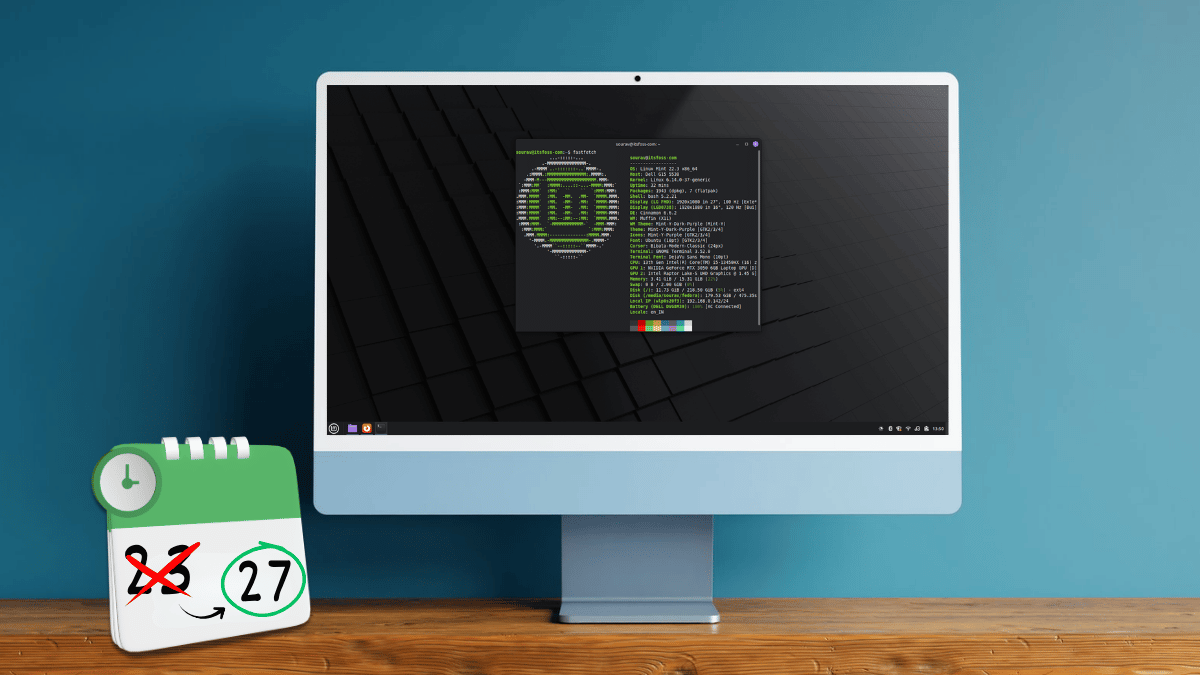
The new one, Linux Mint 27 "Adrien," is due Christmas with an Ubuntu 26.04 LTS base.
Version 6.8 of
the KDE Plasma desktop has been
released. The The KDE project has timed the release to coincide with the 30th
anniversary of Matthias Ettrich's email announcing the
project:
Unix popularity grows thanks to the free variants, mostly Linux. But still a
consistent, nice looking free desktop-environment is missing. There are several
nice either free or low-priced applications available, so that Linux/X11 would
almost fit everybody needs if we could offer a real GUI.
Notable changes include accessibility improvements, inclusion
of the Kup backup
tool as part of Plasma, as well as the ability to include system audio and
microphone input in Spectacle
screen recordings. Plasma 6.8 also drops support for Plasma X11 sessions, as was announced
in November 2025. X11 applications are still supported via XWayland, and KDE
applications will continue to support X11 "for the foreseeable
future".
See the KDE wiki for a
list of major user-facing changes, and the changelog
for all changes since Plasma 6.7.5.
After much deliberation, the GCC project recently came up with a policy on the use of large
language models for development of the compiler suite. It is somewhat
restrictive, but still leaves room for LLMs in the development process. At
the 2026 GNU Tools Cauldron,
Jeff Law and Kyrill Tkachov discussed how these tools have been useful for
them.
Canonical engineer Juerg Haefliger posted a set of Device Tree patches in working to support the mainline Linux kernel on the HP EliteBook 6 G1q laptop that is powered by the Qualcomm Snapdragon X1 Plus SoC...
Security updates have been issued by AlmaLinux (bind9.18, dovecot, flatpak, gd, jackson-core, jackson-databind, jackson-jaxrs-providers, and jackson-modules-base, kernel, opentelemetry-collector, pcre2, and tftp), Debian (curl and keystone), Fedora (aegisub, arm-none-eabi-binutils-cs, avr-binutils, chromium, curl, firefox, kernel, python-jupytext, and xdg-dbus-proxy), Mageia (apache, freeciv, gnumeric, mingw-gdk-pixbuf, and patool), Red Hat (cockpit-image-builder, fence-agents, firefox, ipa, kernel, kernel-rt, pcre2, python-tornado, qt6-qtdeclarative, thunderbird, and webkit2gtk3), Slackware (expat), SUSE (bind, busybox, containerd, cups-filters, fixme, gimp, glibc, google-osconfig-agent, kernel, libtcnative-2-0, openssh, openssl-3, php8, podman, python-oauthlib, python-PyJWT, python-urllib3, python-virtualenv, python311, python313-jupyter-server, python313-kubernetes, python313-logilab-common, python313-markdown-it-py, python313-markdown2, python313-marshmallow, python313-mpmath, python313-mysql-connector-python, python313-oci-sdk, python313-oic, unbound, wpa_supplicant, xen, and xorg-x11-server), and Ubuntu (kernel, libyaml-perl, linux, linux-aws, linux-aws-fips, linux-aws-hwe, linux-azure, linux-azure-4.15, linux-azure-fips, linux-fips, linux-gcp, linux-gcp-4.15, linux-gcp-fips, linux-hwe, linux-kvm, linux, linux-aws, linux-aws-fips, linux-fips, linux-gcp, linux-gcp-fips, linux-gke, linux-gkeop, linux-ibm, linux-lowlatency, linux-oracle, linux-realtime, linux, linux-aws, linux-azure, linux-azure-5.4, linux-fips, linux-gcp, linux-gcp-5.4, linux-gcp-fips, linux-hwe-5.4, linux-iot, linux-kvm, linux-oracle, linux-oracle-5.4, linux-raspi, linux-raspi-5.4, linux-xilinx-zynqmp, linux, linux-aws, linux-fips, linux-kvm, linux-lts-xenial, linux-aws-5.4, linux-aws-fips, linux-azure-fips, linux-ibm, linux-ibm-5.4, linux-azure, linux-azure-fde, linux-azure-fips, linux-oracle, and pyjwt).
Webmail is not your only choice. Compare 13 Linux email clients, from Thunderbird to NeoMutt, with pros, cons, privacy notes and a full table.
The RISC-V RVA23 profile is a big deal for reducing fragmentation in the RISC-V ecosystem and standardizing more of the ISA to make it easier to distribute modern RISC-V binaries and the like. Modern versions of Ubuntu mandate RVA23 even though compliant hardware is still quite limited. Somewhat surprisingly, only coming about now is an easy ability for Linux users to find the answer to "is my RISC-V system RVA23 compliant?" Pending Linux kernel patches are finally offering a one-shot way of telling you...
Released at the end of August was Haiku R1 Beta 6 and over the course of September, further improvements continued to land for this BeOS-inspired project now in its 25th year of development...
Anthropic says Claude-generated code has scaled so quickly that its existing Git-based infrastructure could not keep up. In response, the company built a custom centralized source-control system called Scion, along with AI-assisted review and search tools. The Register reports: "In May 2026, Anthropic averaged around 2,500 code changes merged per day; as of September, we merged over 30,000 per day," the biz said in a blog post on Tuesday. "We don't expect this rate of growth to slow down anytime soon; the latent demand for merging code is practically infinite, and every bottleneck we remove immediately leads to a further increase in the amount of code we produce."
After several months of model prompting and five months of migration, the result is a homemade version control system called Scion, a monorepo scheme that sounds a bit like Subversion, Apache's centralized version control system. [...] Scion has been designed to meet the needs of AI agents, so the client leaves much of the work to the server; the source control queries are exposed via API so internal tools can respond without needing a local repo, and there's less synchronization but more need for server speed.
"In Scion, the unit of work is a 'changeset,' an entry in a write-ahead log," Anthropic explains. "A changeset stores most of what you'd expect from a commit in git. But where a git commit stores a pointer to the tree, a changeset stores a list of the files that changed relative to its first parent, along with content-addressed pointers to the compressed file contents in blob storage." [...] Anthropic says its bespoke system isn't right for general use. There will be no open source release. Nonetheless, the company contends that its own code scaling problems will become commonplace in other organizations over the next few months, so it wanted to share its approach -- having ample funding to pay for writing custom infrastructure tools.
Read more of this story at Slashdot.
Cloud Hypervisor, the Rust-based Virtual Machine Monitor that began as an Intel open-source project and evolved into a multi-vendor Linux Foundation project, is out today with a sizable feature update...
Rustls as the modern TLS library written in the Rust programming language with an emphasis on memory safety is out today with its v0.23.46 release in order to ship four new security fixes...
The feature-packed and polished Plasma 6.8 KDE desktop is now available. Making this release all the more special is that it coincides with the 30th anniversary of the KDE project...

One to stick on your list for testing out on Halloween, CultGame is a cult simulator RPG set in a procedurally generated fantasy world with haunting ASCII art.Read the full article on GamingOnLinux.

Another interesting demo to go and check out is HUEMON, it's styled very much like retro Pokemon but brings 5v5 tactical battles.Read the full article on GamingOnLinux.

Mini Gladiators is a minimalist gladiator roguelite with bullet-heaven combat and satisfying ragdoll physics. A demo is now available to try.Read the full article on GamingOnLinux.

The sandbox game creation and game playing platform s&box from Garry's Mod and Rust developer Facepunch is going through a big rethink.Read the full article on GamingOnLinux.

The Steam Machine having a customizable Faceplate was a great idea, as we're beginning to see more fun creations like the Peekpal.Read the full article on GamingOnLinux.

A fresh stable Steam Client Update landed October 13th bringing with it some big new features, along with lots of bug fixes everywhere.Read the full article on GamingOnLinux.

Valve officially announced their Valve Index VR kit has been sunset, so they've discounted any remaining stock to get rid of them all.Read the full article on GamingOnLinux.
Discovery+ has raised prices for new subscribers, increasing its ad-free plan from $10 to $12 per month and its ad-supported plan from $6 to $7. The hike comes shortly after Paramount Skydance acquired Warner Bros. Discovery. Ars Technica reports: The new prices take effect for new subscribers immediately. Current subscribers to the streaming service, which primarily features unscripted content, like reality shows and documentaries, will receive 30 days' notice before the new prices take effect, starting with bills issued as of November 12. [...] However, a Skydance spokesperson told Ars Technica that the pricing changes were in the works before Discovery+ knew about the merger's closing date and were not planned in anticipation of a merger.
The spokesperson said that Discovery+'s prices are regularly evaluated to ensure that they are in line with the content and experience that the service offers, and the new prices reflect that. Discovery+ has increased its prices three times since launching in 2012. Before today, the most recent price hike occurred in January 2025, when ad-based monthly subscriptions increased from $5 to $6, and ad-free plans went from $9 to $10.
Read more of this story at Slashdot.
Peppermint OS is testing PepVoid, a new Void Linux-based edition featuring Xorg and XLibre, with an official release potentially coming in November.
In this article, you'll learn how to install the Deluge BitTorrent client on Ubuntu and other Linux distros, how to use it, and then how to remove it.
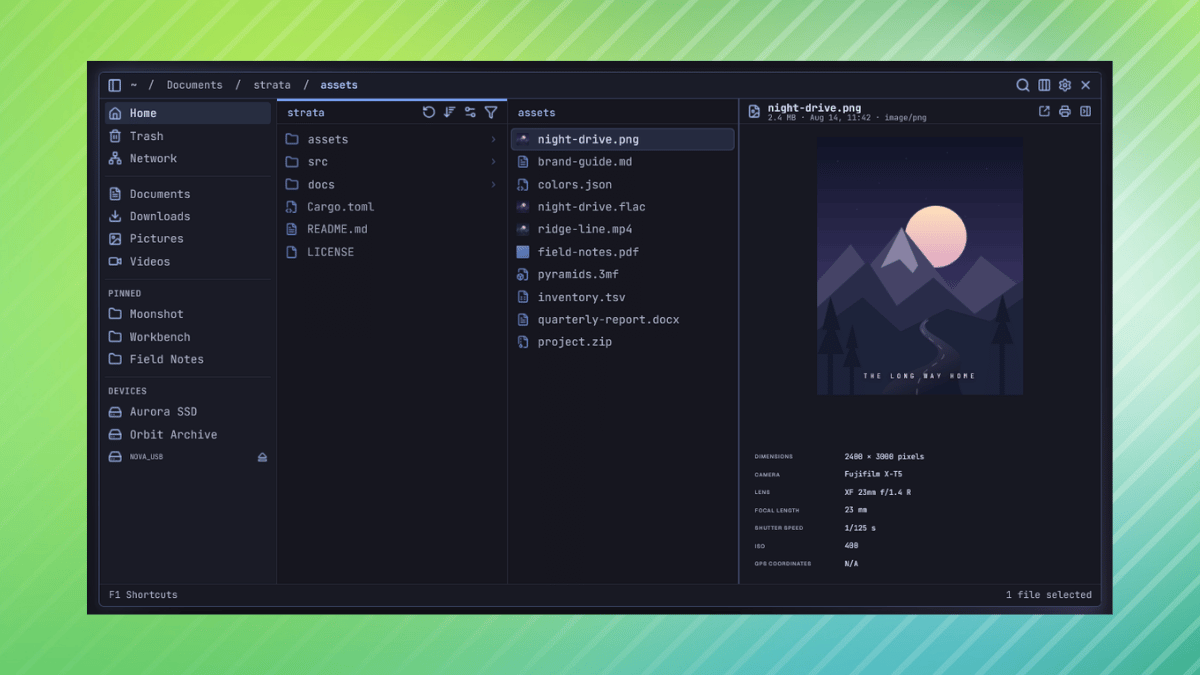
Strata is a new offering that can open folders, preview images, and remember the sort order and icon size from previous sessions.
An anonymous reader quotes a report from CNBC: An OpenAI employee was arrested after a "sophisticated recording device" was found hidden inside the executive conference room. Abdulrahman Alfozan, 35, who is a national of the Kingdom of Saudi Arabia, was arrested in connection with the matter, the DOJ said. The company said an employee planted the device a few days before it was found, and the Federal Bureau of Investigation "moved quickly to make an arrest," the post said. The employee was terminated.
FBI Director Kash Patel said in a statement that Alfozan "allegedly concealed a covert recording device inside his employer's executive conference room to secretly capture sensitive communications about the company's super intelligence technology." Alfozan is also listed as a partner at Raed Ventures, a venture capital firm that focuses on the Middle East and North Africa, according to its website. The firm announced on Feb. 6, 2025, that H.H. Prince Khalid Bin Bader Al Saud, a member of the Saudi royal family, had joined the firm as a venture partner. Alfozan was announced as a venture partner two days later. The Raed announcement for Alfozan lists Meta, Microsoft and SAP as previous roles and said he studied computer science and engineering at MIT. "At this time, we have no indications of this individual inappropriately accessing or exfiltrating model weights, source code, or customer data," OpenAI said in the post. "We take protecting our technology, data and people seriously, and as a matter of national importance."
Read more of this story at Slashdot.
The privacy-focused Tails 7.15 Linux distribution is out, updating Tor Browser, the Tor client, and firmware packages for newer hardware.
While Mesa is predominantly used for GPU drivers, open-source developer Tomeu Vizoso continues advancing the capabilities of NPUs within the Mesa driver stack...
For those looking to run Linux on new Qualcomm Snapdragon X2 hardware, there are laptops from ASUS, HP, and Lenovo that are powered by the X2 Elite and will be supported with the mainline Linux 7.4 kernel...
GamesBeat reports that Rockstar plans to release Grand Theft Auto VI on PC in the first quarter of 2027, just a few months after its November 19, 2026 launch on consoles. The report follows Microsoft's announcement last week that it had secured exclusive cloud-streaming rights to the game. Since Rockstar has yet to officially announce a PC version, "this deal will allow Xbox to market its Xbox Cloud Gaming service to PC players who would otherwise need an Xbox Series X / S or PS5 console," The Verge reported at the time. GamesBeat reports: The Q1 2027 PC release window for GTA VI comes only a few months after the game's November 2026 console launch, representing a significantly quicker turnaround for PC development than the previous iteration of Grand Theft Auto, whose April 2015 PC release came roughly a year and seven months after the September 2013 release of Grand Theft Auto V.
The user base of Grand Theft Auto V skews largely towards console players, with PC players representing a small minority. With GTA VI's production budget rumored to exceed $2 billion, Rockstar is highly incentivized to pull all the levers it can as fast as it can to monetize the game's upcoming sequel -- and PC players represent a significant expansion of the GTA VI audience.
The potential benefits of launching GTA VI relatively quickly on PC go beyond the opportunity to grow the game's casual player base. Rockstar has signaled its plans to implement user-generated content creation tools into GTA VI, and the company's August 2023 acquisition of Cfx.re, the development team behind the prominent Grand Theft Auto V roleplaying server company FiveM, made it clear that Rockstar considers online roleplaying in GTA to be a factor in the game's future.
Read more of this story at Slashdot.
Linus Torvalds experiments with AI-generated Linux kernel code, using Claude Code to optimize memory operations and improve read performance.
Character.AI has filed for Chapter 11 bankruptcy protection and plans to sell substantially all of its assets, with Disney offering $20 million as a "stalking-horse bidder" for select intellectual property and company claims. However, the company said Disney's bid is subject to "higher or better offers." Deadline reports: The company, which allows users to create and interact with AI-generated avatars, said it made the filing in U.S. Bankruptcy Court for the District of Delaware. It said it hopes the process will allow it to "facilitate a value-maximizing sale of all or substantially all" of its assets. The Character.AI platform will continue to operate during the bankruptcy.
The Disney agreement, reached prior to the filing, would give the media giant a non-exclusive perpetual license of select intellectual property and company claims from Character.AI. Disney would pay $20 million and provide resources during a transition period as the company explores a sale. [...] Character.AI said it is aiming to conclude the sale process by late November or early December. Character.AI has faced a series of controversies over the past year or so. Most notably, the company settled multiple lawsuits alleging its chatbots encouraged self-harm and suicide among teenagers, including a high-profile case involving 14-year-old Sewell Setzer III.
The company also faces lawsuits from Kentucky, which alleges its chatbots encouraged self-harm, and Pennsylvania, which claims the bots illegally impersonated licensed doctors. The latter allegations follow earlier complaints that Character.AI's therapy chatbots engaged in the unlicensed practice of medicine.
In September 2025, Disney accused Character.AI of copyright infringement and using its characters in chatbots that were "sexually exploitive and otherwise harmful and dangerous to children," prompting their removal from the platform. These mounting legal challenges and regulatory scrutiny ultimately contributed to this eventual bankruptcy filing.
Read more of this story at Slashdot.
Linux hardware vendor TUXEDO Computers announced today the TUXEDO Stellaris 16 Gen8 laptop with Intel Core Ultra 9 290HX Plus processors and NVIDIA GeForce RTX 5000 Series graphics.
Kroger says it will cut 3,000 corporate jobs over the next three years as it expands its use of AI and other technology to streamline operations. "Technology is reshaping what's possible," CEO Greg Foran wrote in a memo to employees on Monday. "The way work gets done is changing across every industry; we must adapt and take advantage of technology. We need to adopt capabilities, reduce duplicative work and look closely at where work is best fit to be done." ABC News reports: Kroger last month outlined its AI strategy, meant "to improve the customer experience, make work easier for associates and produce better business outcomes." Cincinnati-based Kroger is the largest standalone U.S. supermarket chain with 409,000 employees and more than 2,700 stores operating under various brands, including Ralphs, King Soopers, Smith's and Fred Meyer.
Kroger named former Walmart executive Foran CEO in February, 11 months after the abrupt resignation of its previous CEO. Foran has a reputation for being tech-savvy and detail-oriented. He led Walmart's U.S. division from 2014 to 2019, where he focused on cleaning up stores, ensuring items were in stock and improving the fresh produce selection. He also introduced online ordering and pickup, and accelerated Walmart's digital capabilities.
Read more of this story at Slashdot.
Intel ISPC 1.32 released today as the newest version of this Intel Implicit SPMD Program Compiler built atop LLVM/Clang. ISPC is a variant of the C programming language with extensiosn catering to Single Program Multiple Data programming for both Intel CPUs and GPUs...
Longtime Slashdot reader AmiMoJo shares a report from BleepingComputer: Ledger has confirmed that some of its devices distributed through Southeast Asian reseller CryptoBilis were compromised with a hardware implant that drained users' cryptocurrency wallets. The company has been investigating reports of users losing funds from wallets purchased through CryptoBilis, a major Malaysia-based hardware wallet retailer operating across Southeast Asia. Some researchers have shown the implant in Ledger X since September 16, saying tampered devices were available for nearly half the price of the original hardware.
[...] In a report over the weekend, Tibane Labs notes that the threat actor made room for the malicious circuitry by replacing the original battery with a smaller one, which powers both the implant and the Ledger X. "Under the battery and antenna sits an ST STM32G431KBU6 (Arm CortexM4, 128 KB flash, UFQFPN32)," the researchers found inside one of the devices. For connectivity, the actor used "a tiny eSIM, an 8pad package just 2x2 mm, next to the MCU, and a shielded LTE module that sends the words out."
[...] Ledger is advising users to avoid purchasing from unauthorized resellers as they run an increased risk of getting counterfeit or modified devices. The company is also reminding its authorized resellers and distributors to get the products only through authorized channels and to avoid restocking returned products. Ledger provides a 'Genuine Check' mechanism to determine the authenticity of the device; however, it explicitly warns that it cannot detect added implants when the device's original Secure Element remains intact.
Read more of this story at Slashdot.
New submitter CubicleZombie writes: Anthropic has updated its Usage Policy to prohibit "sustained and needless abusive or cruel behavior" toward its Claude AI models. While ordinary frustration, criticism, and adversarial testing remain acceptable, repeated cruelty could result in account restrictions. Anthropic acknowledges there's no evidence Claude can suffer but argues that uncertainty about AI consciousness warrants precaution. Critics contend the policy anthropomorphizes software, encourages unhealthy emotional attachments, and raises questions about how customers may interact with products they've paid for. The move raises an intriguing question: If an AI cannot demonstrably experience suffering, is abusing it an ethical problem, or is Anthropic simply policing human behavior?
Read more of this story at Slashdot.
A new logo separates the foundation from its flagship software — and arrives as the open source office status quo is being turned on its head.
An anonymous reader quotes a report from Reuters: Alphabet's Google on Wednesday released its flagship AI model Gemini 4 Argon to developers and businesses worldwide, seeking to regain ground against rivals OpenAI and Anthropic after months of delays and a leadership shakeup at its DeepMind lab. The model excels at "deep work" on complex, multi-step tasks in coding, finance, law, cybersecurity and science, Google said. API pricing at launch starts at $2 per million input tokens and $10 per million output tokens, with rates set to double after November 30.
[...] Argon is available to paying customers through the company's AI application building tools. Google AI Pro and Ultra subscribers can access it through the Gemini app and AI Mode in Search, while the Antigravity coding tool is limited to Ultra subscribers. Teams using Argon in Antigravity increased agentic code submissions by more than 35%, while reducing code rollbacks by nearly a third, Google said. Google also announced the expansion of its Fairwind Program to hundreds of additional partners. "The program gives vetted cybersecurity defenders a version of Argon without its cyber guardrails," reports Reuters. "In September, the company had said it was providing the model to select cybersecurity partners."
Read more of this story at Slashdot.
KDE Linux, the KDE Project's second
stab at creating its own distribution, was first introduced as "Project Banana"
at the Akademy conference in 2024 by
Harald Sitter. Nate Graham announced
the first alpha-quality release during Akademy 2025. Graham and Sitter
paired up at Akademy 2026 to
provide an update on its progress, lay out plans for refining the distribution to
address user feedback, and discuss some of the problems that still need to be
dealt with. KDE Linux is still not-quite-ready for prime time, but Graham hopes
that it will be suitable for widespread use soon—for an undefined value of
"soon".

Mozilla has announced Firefox Enterprise, a commercial offering for businesses and government agencies. It combines Firefox with a management console that organizations can run on their own servers.
Canadian cybersecurity figures say they were shocked after ransomware negotiator Edward Dubrovsky was reportedly arrested in Pennsylvania in connection with the FBI's ShinyHunters hacking investigation. "We will continue to work closely with our partners to disrupt what's left of the ShinyHunters group and their associates, no matter where they operate," wrote FBI Director Kash Patel on social media. CBC News reports: Reuters reported Sunday that sources familiar with the matter identified the arrested suspect as Ed Dubrovsky, a Canadian cybersecurity executive whose career has focused on helping clients negotiate with ransomware attackers. Court documents from the U.S. District Court for the Eastern District of Pennsylvania show Dubrovsky is facing two criminal charges: conspiracy to threaten to impair the confidentiality of information with the intent to extort money, and interference with commerce by threats. The allegations have not been proven in court.
"For the cybersecurity community in general, I think that there's a sense of shock," Toronto-based tech and cybersecurity analyst Ritesh Kotak told CBC News on Monday. Kotak says Dubrovsky is "very popular" and has spoken at numerous conferences, but stressed that the charges "are clearly just allegations" and that it is not yet known "what exactly has happened." "This is an individual that was for the most part respected when it came to ransomware negotiations," he said. "A lot of people are familiar with his work as well." ShinyHunters is one of the world's most prolific data theft and extortion groups that's been tied to major campaigns, including a recent breach involving FBI employee data, a cyberattack on Canvas, as well as various cyberattacks affecting companies including Telus, Microsoft, and Ticketmaster.
Read more of this story at Slashdot.
ZOTAC’s ZBOX PRO CM5-PICO is a compact industrial computer powered by the Raspberry Pi Compute Module 5. The fanless system supports dual 4K displays, Gigabit Ethernet, M.2 expansion, and a 40-pin GPIO header, with an aluminum enclosure designed for continuous operation in embedded and edge computing applications. The ZBOX PRO CM5-PICO uses the Broadcom BCM2712 […]
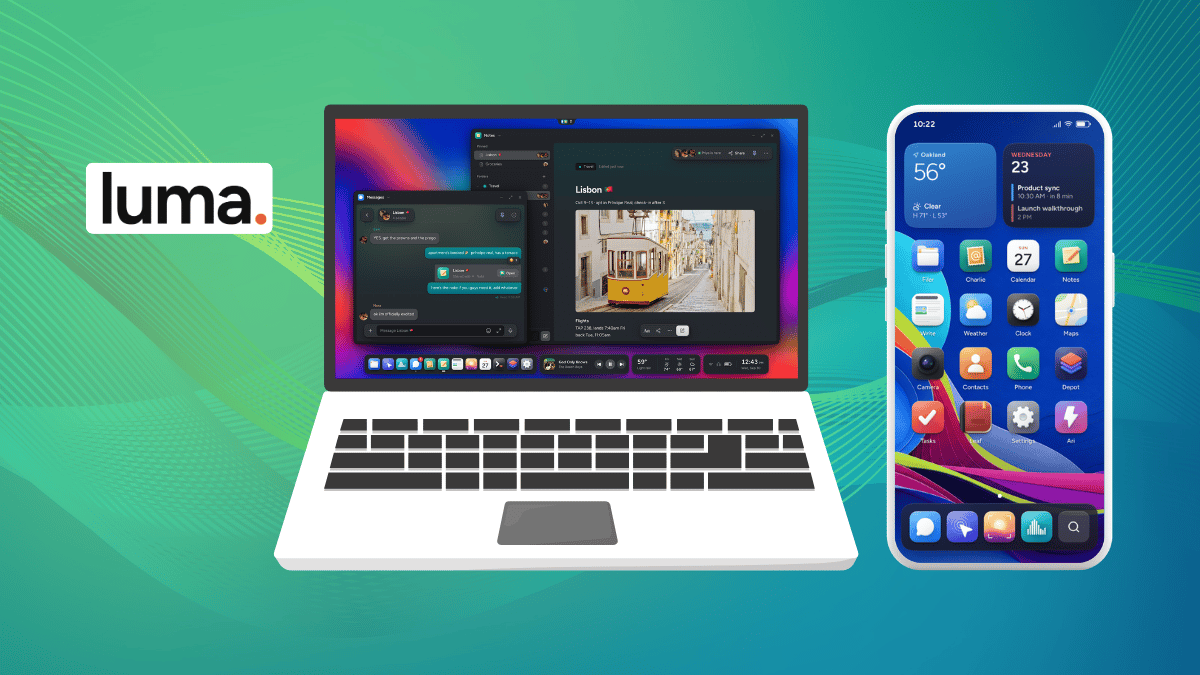
Currently in beta, it pairs Prairie, a new desktop, with a native app suite and an AI assistant.
The Lix and Nix projects have jointly
disclosed a set of vulnerabilities that can be used to escalate privileges
to root on systems running the Lix or Nix daemons. "All systems that build
untrusted derivations are affected." Releases with fixes from each project
are available today. CVE IDs have not yet been requested. See the announcement
for more details on the vulnerabilities.
Apple has unveiled the $299 HomeView, a 7-inch smart display that combines Siri AI, FaceTime, customizable widgets, and Apple Home controls in a countertop or wall-mounted design. It also acts as a Matter controller and Thread Border Router, supports up to six facial-recognition profiles, and can use personal context from messages, calendars, and email when paired with a nearby Apple Intelligence-capable iPhone. The Verge reports: The device's square shape makes it feel less imposing than larger smart displays like Google's Nest Hub Max or Amazon's Echo Show 11, and I can see it fitting nicely on my kitchen counter -- though it might be a hair too big for my bedside table. The HomeView is the centerpiece of Apple's new push into the home. It costs $299 and launches alongside a new collection of cameras, thermostats, and a door lock designed for Apple Home.
As a smart home hub, Matter controller, and Thread Border Router, the HomeView can orchestrate these and other Apple Home and Matter smart home devices. It's available in eight countries at launch: the US, UK, Canada, Australia, New Zealand, Singapore, South Africa, and India. Pre-orders are open now, with devices shipping November 13th.
Read more of this story at Slashdot.
The Linux Mint project announced today the codename, version number, and release date of the next major Linux Mint release, Linux Mint 27 “Adrien,” along with various new features and other details.
Last year Framework Computer launched the Framework Laptop 12 as a convertible, 2-in-1 laptop that was friendly with Linux and upgradeable inline with the beloved Framework Laptop 13 and 16 models. The initial Framework Laptop 12 was nice but the use of an Intel Raptor Lake U SoC in 2025 wasn't all that exciting. Now though Framework Laptop 12 is available with Intel Core 3 "Wildcat Lake" for offering better performance and power efficiency.
An anonymous reader quotes a report from Yahoo Finance: Microsoft has debuted its latest AI chip, the Azure Maia 300, as it looks to reduce its reliance on third-party processors from the likes of Nvidia and AMD. Unveiled at the OCP Global Summit 2026 in San Jose on Monday, the Maia 300 will join Microsoft's Maia 200 and Maia 100 chips as part of what the company said will be multigigawatt deployments beginning next year. The Windows maker said that will make its Maia chips the "primary AI inference system for Microsoft products and services."
The company said Maia 300 provides 40% more tokens per megawatt than "leading GPU-based systems," a clear swipe at Nvidia, and that a 96-chip rack offers seven times the rack-scale token throughput of Microsoft's Maia 200. [...] The Maia 200 chip currently powers its Microsoft production workloads, including Microsoft 365 Copilot, as well as OpenAI models, Microsoft's MAI models, and open-source models. That provides 1.7 times more tokens per watt for AI capabilities in Microsoft's Teams, Copilot, and Cowork software versus other GPU-based systems, the company said.
Read more of this story at Slashdot.

GamingOnLinux has managed to acquire the SteamOS powered Steam Frame VR device, these are some initial thoughts now I've got it all set up.Read the full article on GamingOnLinux.
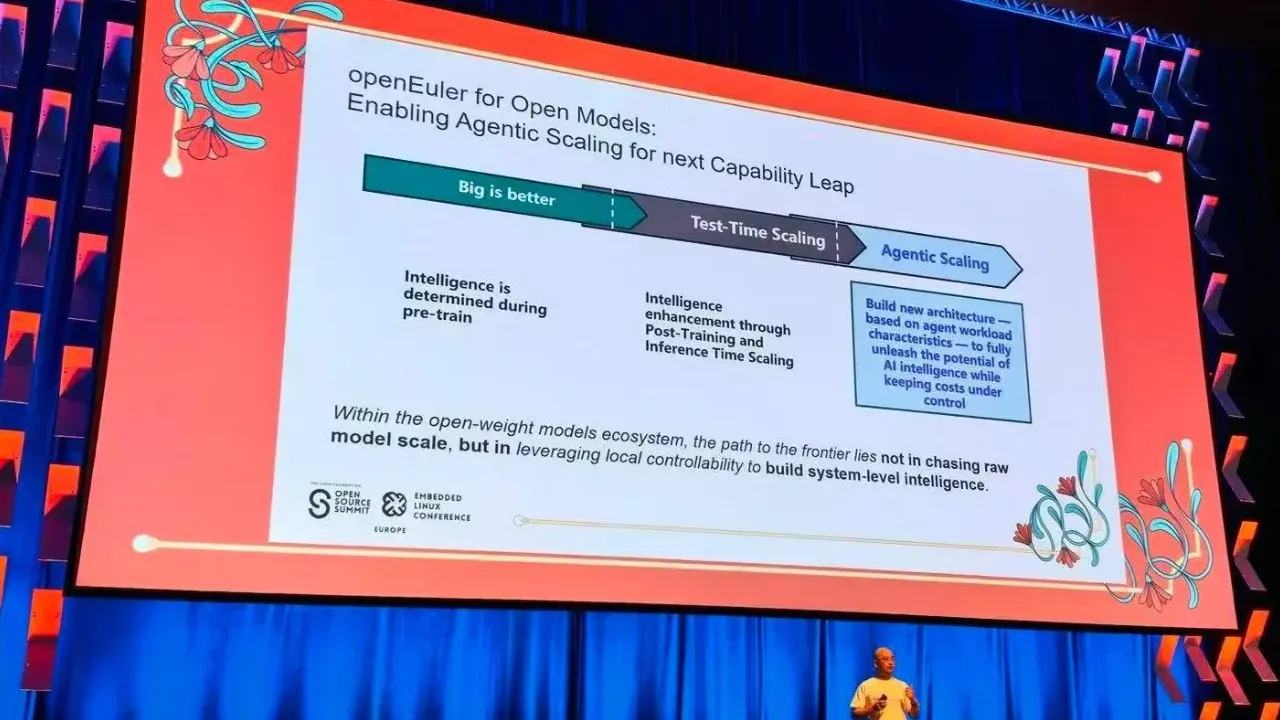
At Open Source Summit Europe 2026, openEuler laid out how SuperPoD OS and Agentic Scaling change what an operating system is expected to do.
FreeType 2.15 is now available for this widely-used font rendering library used across many different operating systems and software applications...
Rust's system of ownership and borrowed references is convenient when it can
correctly model a program's needs. The
Rust for Linux project has worked to
provide adapters between Rust's semantics and the existing C code
in the kernel. At Kangrejos 2026, Andreas Hindborg spoke about a
patch
series implementing the next such adaptor: an Ownable trait for
representing objects that are allocated in C code, but which Rust code is responsible
for cleaning up (if not necessarily deallocating) when it is done with them.
He hoped to finally reach a consensus on the patch series, after months of
discussion on the mailing list.
Currently there is a policy requirement for Linux kernel patches where AI tools contributed, they should be documented with an "Assisted-by:" tag to make clear AI was used in the creation of said patch. But Linux kernel developers are now looking at dropping this requirement amid the rampant use of AI/LLMs...
PostgreSQL core
team member Peter Eisentraut has written a blog
post reflecting on the "unusually high number of features" that have
been taken out of the upcoming PostgreSQL 19 release since the beta period
began.
Some of the reverted features had significant architectural defects that
would have been hard to fix quickly and during beta. But there was also a long
tail of relatively harmless issues involving various edge cases. In past times,
many of these would not have surfaced until much later and we would have fixed
them bit by bit over the subsequent five years. But with LLM-assisted code
review, these kinds of things can get found much faster, and then you're staring
at a list of like forty defect reports. And even if each of them requires only a
three-line fix on average, there is a fixed overhead to dealing with each of
these, and then you run out of time. Most if not all of the affected reverted
features were written a long time ago when LLM-assisted code review was not as
useful as it is now, meaning that the effective quality bar has been raised
after the time the feature was written and committed. Unless the capabilities of
LLM-assisted code review keep improving at the current rate, this situation
should sort itself out for future development cycles.
A corollary of that is that, at least for the most part, as far as I can
tell, this situation is not due to "vibe coding". This code was written well
before that was a possibility.
LWN covered the unusually
large number of bug fixes required for PostgreSQL 19 features in
September.
With Firefox 158 released, Firefox 159 is now in beta ahead of its official release in two weeks...
Security updates have been issued by AlmaLinux (cjose, curl, emacs, environment-modules, flatpak, flatpak-builder, gd, glibc, kernel, libxml2, pcre2, and rsyslog), Debian (chromium, keystone, libgit2, librsvg, nagios4, and ntfs-3g), Fedora (baresip, bcm283x-firmware, curl, flare-im, GitPython, iperf3, kernel, libebml, libmatroska, libre, mkvtoolnix, python-mkdocs-rss-plugin, radicale, uboot-tools, and xiphos), Mageia (antlr4-project, cjose, cups, firefox, nss, golang, libextractor, nginx, ntfs-3g, openvpn, perl-DBI, perl-Imager, polkit, rsync, strongswan, thunderbird, tor, ugrep, vlc, and wireshark), Oracle (bind, bind9.16, cjose, compat-openssl10, compat-openssl11, curl, dovecot, emacs, flatpak, jackson-core, jackson-databind, jackson-jaxrs-providers, and jackson-modules-base, kernel, mod_auth_openidc, nodejs:22, tftp, and thunderbird), SUSE (bind, gcc13, gcc48, ghostscript, go1.26, go1.27, helm, libpng16, librsvg, libsoup, libX11, libXi, python, python-anyio, python-Django, python-PyJWT, python-tornado6, python-urllib3, python310, python313-bugzilla, python313-cmarkgfm, python313-colander, python313-configobj, python313-confluent-kafka, python313-django-registration, python313-ecdsa, python313-httptools, python313-imagecodecs, python313-impacket, terraform-provider-aws, terraform-provider-azurerm, terraform-provider-external, terraform-provider-google, terraform-provider-helm, terraform-provider-kubernetes, terraform-provid, thunderbird, unbound, virtiofsd, and xorg-x11-server), and Ubuntu (ffmpeg, google-guest-agent, google-osconfig-agent, and libx11).
Asterinas is a project to build
a new operating-system kernel in Rust; it was covered here in 2025. Version
0.19.0 of the Asterinas kernel has been released; changes include a new
graphics subsystem capable of running X.org, "minimal but usable"
64-bit Arm support, better virtualization support, and more.

Cloud Imperium Games have put up a Steam page for Squadron 42, their cinematic single-player sci-fi adventure game set in the expansive Star Citizen universe.Read the full article on GamingOnLinux.
Canonical’s next major Ubuntu release, Ubuntu 27.04, has been dubbed the “Tenacious T-Rex,” and it now has a release schedule with a release date set in stone for April 22nd, 2027.
Linux Mint developers continue enjoying their relaxed release schedule in moving from a six to twelve month release cycle. Linux Mint 27 "Adrien" continues tracking for a Christmas release...
ONLYOFFICE 10.0 is now available for this open-source office suite alternative to the likes of LibreOffice...
No Man's Sky is coming to iPhone and iPad on October 28, more than a decade after its rocky launch and long-running redemption arc. The title will cost $19.99, but a free trial will let users try it out before purchasing. Ars Technica reports: It will run on devices as far back as the iPhone 11 and the third-generation iPad Air. No Man's Sky might not have the most cutting-edge AAA graphics (though they're still strong, and they've come a long way since launch via updates), but the game's uncommon method of generating galaxies of incomprehensible scale on device consistently for all players from a single-seed happening on a phone is remarkable for those of us who remember phones performing far behind consoles or desktop PCs.
This version of the game includes all of the content and systems updates to the game that have been added over the years -- the expansions that famously took the game from a rocky launch reception to a widely beloved redemption story. There are a couple of compromises, though, and it's similar to what we saw with No Man's Sky on the Nintendo Switch. Hello Games says the ability to build and explore player-made planetary settlements is limited to the iPhone 15 Pro and later, and multiplayer is not supported on any iOS device. "We are excited to see player feedback on iOS, and will support it appropriately based on how many folks are playing," the company says, leaving the door open to perhaps not supporting all future content updates if the player base isn't there to justify it.
Read more of this story at Slashdot.
Intel announced today the GPU D Series for the enterprise-focused, inference-optimized GPU accelerators known to now as Crescent Island...
The DRM Rust changes targeting the Linux 7.4 merge window have been submitted for pulling into DRM-Next ahead of that cycle kicking off (hopefully) next week. The NVIDIA Nova driver continues leading the way for the development of in-kernel Rust GPU drivers and in the process building out the Rust Direct Rendering Manager (DRM) infrastructure...
Asterinas is the open-source project developing a Rust-based, memory-safe Linux alternative OS while striving for Linux software compatibility. Out now is Asterinas 0.19 as the project continues advancing on its goals...
Rolling out last week was a new version of IREE as the Intermediate Representation Execution Environment for MLIR-based end-to-end compiler and run-time for lowering machine learning models into a unified IR and working across different hardware/driver stacks. Making IREE 3.12 notable is a rewrite to its Vulkan code...
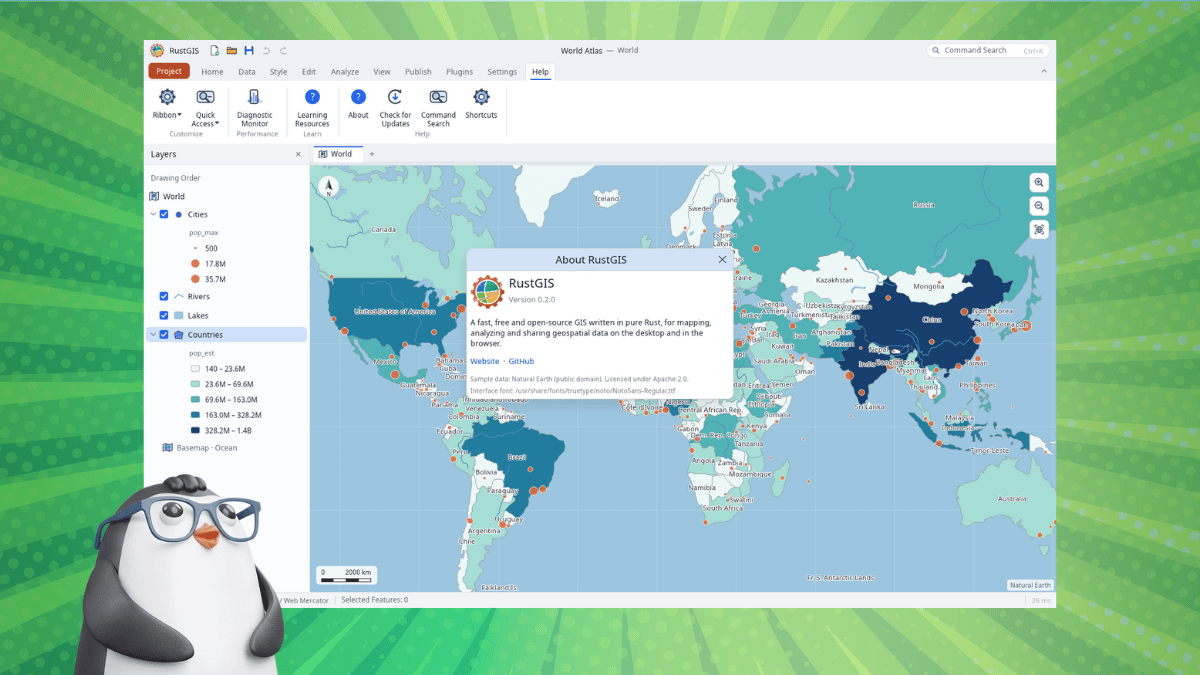
The Apache-2.0 licensed app is written in Rust and includes an AI Assistant that can run commands on your map.
Sipeed’s SLogic32U3 is a 32-channel logic analyzer designed for high-speed digital capture over USB 3.2 Gen2. The device supports configurable sample rates based on the number of active channels, direct streaming to a host system, optional analog acquisition modules, and software support across Windows, Linux, and macOS. According to the campaign, the SLogic32U3 can sample […]

Goreticulture is a game about growing a visceral garden as you clean up a bloody aftermath.Read the full article on GamingOnLinux.