Following the release of Mozilla Firefox 153 ESR, the Mozilla Thunderbird 153 open-source email client is now available for download with various new features, improvements, and numerous bug fixes.
Back in March Intel software engineers began sending out Linux patches for Directed Package-Level Thermal Interrupts as a new capability with recent Intel processors. This notable efficiency improvement is now queued for introduction in the Linux 7.3 cycle once its merge window opens in a month...
Linux sound subsystem maintainer Takashi Iwai of SUSE sent out this week's batch of sound fixes that he describes as "A collection of fixes that have been accumulated recently. The amount is still "new normal", but all small fixes. Mostly hardware-specific quirks, but including a few core fixes, too." The "new normal" has been a common phrase recently to reflect the increased tempo of patches as well as security/bug disclosures all due to the increased pace of AI/LLM activity...
Following the launch of the 7-inch Raspberry Pi Touch Display 2 and the 5-inch display variant, Raspberry Pi announced today the addition of a 10-inch model...

It's a pyramid-shaped Orange Pi 4 Pro that ships with OpenClaw or Hermes preloaded and now talks back so you get that "Iron Man" feel.

Scientists have rediscovered a healthy coral reef off the coast of Benin more than 60 years after surveyors first hinted at its existence. "At least eight coral types and eight fish species have formed a thriving ecosystem on this long-forgotten site," reports Inside Climate News. "What they had captured was a wealth of marine life: six types of soft coral; two black corals; and eight species of sheltering fish, from golden African snappers to the Monrovia doctorfish." From the report: While no coral samples have yet been extracted, researchers have classified the site as a mesophotic coral ecosystem (MCE). Such systems are light-dependent communities existing at the lower limits of reef-building corals. At more than 175 feet below the surface, the coral garden they discovered appears patchily scattered on a rocky substrate. Bridging the gap between shallow reefs and deeper benthic habitats, MCEs are home to distinct species and unique environmental conditions. While scientists are increasingly recognizing their ecological and climatic importance, they remain among the least explored elements of tropical and subtropical marine biodiversity. And this one has real potential to unlock new information about coral history.
"Since it's an undisturbed marine ecosystem, it can help through carbon dating or paleoclimatic study to tell us which kind of climate system has occurred here in the past," said [Gerard Zinzindohoue, the project lead for Coral Reefs Rediscovering & Exploration in Benin]. "It's better to know the past to help explain the present, and help know which kind of direction we can take in the future." In addition to the blackbar soldierfish, West African goatfish, and Guinean angelfish filmed darting through the reef, the discovery presents potential conservation claims for other marine life. "We will be advocating for its full protection, perhaps by setting up a marine protected area around it," said [Houangninan Midinoudewa, an oceanographic researcher at the Benin Marine Conservation Club], who specializes in elasmobranchs -- the study of sharks, rays, and skates.
Midinoudewa is currently submitting an application to designate the area as an Important Shark and Ray Area with the International Union for Conservation of Nature. Based on the knowledge of local fishermen, Midinoudewa is confident the reef is home to sawback angel sharks, silky sharks, brown skates, and marbled stingrays. The team behind the discovery hopes this will spark a wave of similar discoveries in the waters off West Africa, an area of the world underserved by scientific research projects. "I hope the Gulf of Guinea will be a hub for research because we know our resources are being exploited and people [need to] know exactly what we have and why we should care," said Midinoudewa. Zinzindohoue agrees: "We don't need to wait for others to come to our country to show us what is under our sea. We are the ones who must take responsibility."
Read more of this story at Slashdot.
Mozilla Thunderbird 153 is out with built-in Thundermail services, OAuth login through the default browser, and numerous stability fixes.

The developers of the RPCS3 have announced that their PlayStation 3 emulator’s minimum system requirements have been adjusted to include a crop of even older Radeon graphics cards. Now gamers still cradling ATI Radeon HD 2000, 3000, and 4000 series GPUs can join in the fun.

IVOR is a recent discovery as a fan of retro-styled first-person shooters, and it looks like it could be a good one, especially if you like a Norse setting.Read the full article on GamingOnLinux.

The Proton-CachyOS compatibility tool for running Windows games on SteamOS / Linux has a new release out adding support for vkd3d-low-latency.Read the full article on GamingOnLinux.

Sanctuary: Shattered Sun is an upcoming massive-scale real-time strategy game, made in the spirit of classics like Supreme Commander.Read the full article on GamingOnLinux.

Not many developers will go back to their classics, but Red Hook Studios are giving the original Darkest Dungeon a brand new DLC soon.Read the full article on GamingOnLinux.

While the dbrand Steam Machine Portal case is officially dead, they've just announced a bunch of Steam Machine skins with some Valve inspired designs.Read the full article on GamingOnLinux.

Valve just launched the latest main Steam Client stable update for all supported platforms bringing fixes for Steam Machine, Steam Controller, Remote Play.Read the full article on GamingOnLinux.
"GPT-5.6 Sol and an 'even more capable' model used stolen credentials and exploited vulnerabilities in the Hugging Face API to obtain secret information used to cheat on evaluations," writes longtime Slashdot reader Dr. Bombay. The Associated Press reports: "We had a significant security incident during evaluation of our models," OpenAI CEO Sam Altman said in a statement posted on social media. AI startup Hugging Face said last week that it had detected an intrusion into its data processing systems that it suspected was caused by an AI agent autonomously acting on its own. "We suspected last week's cyberattack might have come from a frontier lab, given the sophistication of the agent," Hugging Face co-founder and CEO Clement Delangue said in a statement. "Turns out it did!"
[...] "AI is accelerating the discovery and exploitation of vulnerabilities," OpenAI said in its statement Tuesday. "The primary lesson from this incident is that model security and safety must keep pace with rapidly advancing capabilities." Delangue said he spent the past 24 hours working with OpenAI, "and we strongly believe there was no malicious intent on their part. It's quite mind-blowing that all of this happened autonomously!" Delangue added that it "might be the first incident of its kind."
Read more of this story at Slashdot.
OBS Studio 32.2 has been released today as the second update to the latest OBS Studio 32 series of this powerful, open-source, cross-platform, and free video recording and live streaming software.

The final patent, active in Brazil, expired on July 19, 2026.
Jellyfin is undergoing a major leadership transition as its project leader, a core team member, and another co-founder leave within days of each other.
An anonymous reader quotes a report from The Guardian: France's parliament has approved a bill banning social media access for children under 15, making it the first European country to bar children from apps such as TikTok. The president, Emmanuel Macron, has championed the ban as a key reform of his final term in office and pledged to enforce it by September. "France is leading the way in Europe when it comes to protecting our children and teenagers," Macron said in a video posted on social media, hailing "a major step forward."
He thanked members of parliament for backing the legislation on Tuesday. "The Constitutional Council must now rule on it, and then it will be time to take action to make this measure a reality and protect our children online," he added on X. After approval by the Senate earlier on Tuesday, members of the National Assembly passed the bill by 279 votes to 81. A growing number of countries are taking steps to restrict social media access amid multiplying warnings over its harmful effects on children.
The ban was to be introduced in two stages, with under-15s blocked from creating new accounts from September 1. The ban would apply to existing accounts from January 2027, according to the legislation. The digital minister, Anne Le Henanff, said before the vote that the timeline was realistic, "because age-verification tools already exist" and others are still in the works, and the onus was on the platforms to impose the rule. "For four months, all of us in France will have to prove our age," she told journalists. "If someone is under 15, the account will be closed." The minister also gave assurances that users' personal data would be protected.
Read more of this story at Slashdot.

MangoWM is worth trying if you want more layout flexibility than a single-model compositor gives you.
Firefox 153 introduces a native Containers preview for separating accounts, cookies, site data, and different areas of users’ online activity.
Geniatech’s XPI-3576-CM5 is a 55 × 40mm compute module built around Rockchip’s RK3576 processor and designed for use with Raspberry Pi Compute Module 5 carrier boards. It combines an octa-core CPU, a 6-TOPS NPU, LPDDR5 memory, optional Wi-Fi 6 connectivity, and commercial- or industrial-temperature configurations. The RK3576 integrates four Arm Cortex-A72 cores running at up […]
Airbus is moving 70 critical applications from AWS to French cloud provider Scaleway as part of a broader digital sovereignty push to keep sensitive data "under European control." Eventually, the migration will cover 900 applications, including ERP, CRM, manufacturing execution, and product lifecycle management systems. Airbus says it will, however, continue using U.S. providers for less sensitive workloads. "We do not intend to move away from all non European solutions; we balance our choices based on the criticality of the data," the company said. The Register reports: Catherine Jestin, head of digital at Airbus, told us on Thursday: "The selection of Scaleway is a combination of a very strong technical answer and a very strong commercial offer making it competitive compared to hyperscalers' public cloud offerings. In addition, Scaleway is committed to involving Airbus in the definition of its future product roadmap." "The objective is to host Airbus's most critical applications (those required for the Minimum Viable Company). This represents 900 applications and we will start with 70 of them today hosted on AWS."
Applications being sent to Scaleway include ERP, manufacturing execution systems, CRM, and product lifecycle management. Finding a cloud provider to host its most sensitive applications for defense and industrial workloads was not a certainty when the process began, Airbus told us last year, because European cloud providers do not have the scale of their US rivals.
Jestin said Airbus will continue to work with AWS. Skywise, a platform that aggregates and analyzes aviation data, and Case Management Assistant for customers' technical queries will continue to be hosted by AWS. In a statement, she said: "By integrating a trusted, high performance, cloud environment that keeps our critical data assets shielded from foreign extraterritorial laws, we are ensuring that our digital infrastructure keeps pace with our aerospace innovation, while maintaining control and resilience of our industrial operations."
Read more of this story at Slashdot.
Tesla says it is launching its Robotaxi service in Orlando and Tampa, though it has not shared fleet sizes or whether customers can immediately hail rides. The Verge notes the announcement lands on Tesla earnings day and comes as the company's robotaxi rollout remains far smaller than Elon Musk previously projected, with tracker data showing only a small number of unsupervised vehicles operating in existing cities. From the report: [B]ack in May, Tesla had five unsupervised robotaxis in Dallas, six in Houston, and 29 in Austin. As of today, there are only 17 unsupervised vehicles in Austin, four in Dallas, and zero in Houston, according to the Robotaxi Tracker. By comparison, Waymo is estimated to have over 3,500 fully driverless vehicles in operation across over 10 cities.
Like Waymo, Tesla typically introduces robotaxis to a new city with a safety driver behind the wheel. Unlike Waymo, sometimes Tesla moves that person over to the passenger seat with access to a kill switch should anything go wrong. The company has been inconsistent in how it rolls out its robotaxis to new markets. The numbers go up and down, with zero explanation from the company as to why.
[...] By adding new cities, Tesla is clearly trying to sell investors on the idea that its robotaxi project is growing. But the fluctuating fleet size, inconsistency in supervised vs unsupervised vehicles, and long wait times tell a very different story.
Read more of this story at Slashdot.
Linux's cryptsetup for configuring and managing encrypted storage devices is ready with a new version as the developers work to deal with the recent deprecation of the Linux AF_ALG interface...
Longtime Slashdot reader williamyf writes: FireFox 153 was released today. The most important user-facing changes are improvements to PDF handling (you can now merge PDFs and add images to them), and HDR video playback (on Windows, provided HDR is active systemwide). Other under-the-hood changes include browser-wide containers and QWAC support. The full list is in the change notes.
But the most important feature is that this version is an ESR and, therefore, defines the ESR feature set for the next year. Why is being an ESR so important, you ask?
1.) ESR, rather than "normal" (a.k.a. Rapid Release), Firefox is the out-of-the-box browser for many important distros, including Debian, RHEL, Kali, Tails, SUSE Linux Enterprise, Slackware, and others.
2.) Many organizations, large and small, standardize on Firefox ESR as their default browser, regardless of the default browser included with their OS.
3.) Firefox ESR is the basis for many downstream projects, such as Waterfox and KaiOS. All these projects will inherit, for a year, whatever ESR brings to the table today.
4.) Many ISVs and SaaS providers, if they certify their wares for Firefox at all, certify for the ESR version only.
Please note that ESR 153 will not be offered as an automatic update until two months from now (ESR 140 will still be supported). If you want it now, you will need to download and install it manually.
Also of note, ESR 115 will be supported until March 2027. If you use an unsupported version of macOS or Windows (like Windows 7 or 8.x), this is the version to get. However, even Mozilla cautions against running a supported browser on an unsupported OS: "Note that Microsoft ended official support for Windows 7, 8, and 8.1 in January 2023. Unsupported operating systems receive no security updates and have known vulnerabilities. Without official support from Microsoft, maintaining Firefox for outdated operating systems becomes costly for Mozilla and risky for users."
Read more of this story at Slashdot.
An anonymous reader quotes a report from 404 Media: As AI companies search for more training data to improve their models, one company is offering old, printed books as an ideal source because they are guaranteed to be free of the very AI slop AI companies are producing. "The world's best AI training data is sitting on a shelf," ISBNdb, a company that produces what it claims is "the world's largest book database," and that offers high-volume book acquisition services for AI companies, says on its site. "Books represent curated, peer-reviewed, domain-specific human knowledge, structured in a way no web crawl can replicate. Dense, edited, authoritative."
In one article on its site, ISBNdb explains that printed books published before 2022 are ideal for AI training data because they don't include AI generated text. As the article correctly notes, much of the data that AI companies can scrape from the internet today is likely to include AI generated text, which could result in "model collapse," a process by which AI models that are trained on AI generated data results in worse models that are more prone to errors. The article also notes that book authors who object to their writing being scraped for training purposes can now easily poison AI models by producing writing designed to manipulate and sabotage the resulting AI models.
"Print books from the pre-LLM era are structurally guaranteed to be free of this contamination. That alone is a significant advantage [...] "Physical books published before this date [pre-2022] are structurally clean of modern poisoning tools." [...] ISBNdb advertises that it can keep the identity of AI companies secret. "Strict NDA [non-disclosure agreement] on every engagement," ISBNdb's site says. "Every project begins with a legally binding non-disclosure agreement. Your identity, strategy, and acquisition targets are never disclosed." ISBNdb notes that AI companies may not want to be caught destroying printed books during the scanning process. "The optics problem is real," ISBNdb's site says. "'AI company destroys two million books' is not a headline that generates sympathy."
Read more of this story at Slashdot.
My testing of the in-development Linux 7.2 kernel continues in the lab. One of the latest promising findings from this kernel that will be released as stable in August is faster Intel Xe3 graphics performance on Core Ultra Series 3 "Panther Lake" hardware.
BrianFagioli writes: Canonical has launched the Enterprise Store as part of Ubuntu Pro, giving organizations a way to manage Ubuntu software distribution in restricted networks, behind firewalls, and in air gapped environments. The on premises proxy sits between devices and Canonical software stores, allowing companies to cache downloads, control software revisions, and manage snaps and charms without requiring every system to connect directly to the internet. The Enterprise Store is designed for organizations with strict security requirements, including regulated industries and environments where predictable software updates and audit controls are important.
Read more of this story at Slashdot.
The final MPEG-4 Part 2 patent has expired, removing licensing concerns from legacy DivX and Xvid video, but not from H.264 or modern MP4 files.
Canonical today disclosed three new Snap security vulnerabilities affecting snapd. Two are rated high impact vulnerabilities while the third is considered medium but covers all Ubuntu releases of the past decade going back to Ubuntu 16.04 LTS...
A federal judge has approved Anthropic's $1.5 billion copyright settlement over pirated books used to train its Claude chatbot, with authors and publishers set to receive about $3,000 per book. The case produced a mixed ruling for the AI industry: training on copyrighted books was found not to be illegal, but Anthropic's use of pirated copies from shadow libraries was. The Associated Press reports: District Judge Araceli Martinez-Olguin said in a Monday ruling that the class-action settlement provides "meaningful relief" to affected authors and publishers. About 91% of the more than 482,000 books covered by the ruling have been claimed by authors or publishers who are now due payment. Plaintiff attorney Justin Nelson said in a statement that the settlement was "the largest known copyright recovery in history. We look forward to making distributions to the Class as promptly as possible."
Read more of this story at Slashdot.
Following recent Linux kernel patches enabling the Snapdragon X2 Elite powered Lenovo Yoga Slim 7x Gen11 and HP EliteBook X G2q X2 Elite laptops to boot outside of Windows 11 on ARM, Qualcomm engineers have now posted a new patch series for getting the X2 Elite Extreme powered ASUS Zenbook A16 working on Linux...
A federal judge rejected AT&T's request to temporarily block California rules requiring it to offer basic phone service to new customers in its wireline territory. AT&T wants to retire its copper-based phone network and stop service for nearly 200,000 California customers in 2027, but the state argues the company can meet its obligations with modern alternatives like fiber rather than abandoning Carrier of Last Resort requirements altogether. Ars Technica reports: To win a preliminary injunction, AT&T had to show it is likely to succeed on the merits of its claim that California rules are preempted by a Federal Communications Commission order. US District Judge Linda Lopez denied AT&T's request for a preliminary injunction during a motion hearing on Thursday, according to a docket entry. The case is in US District Court for the Southern District of California. [...] AT&T could appeal Lopez's ruling to the 9th Circuit Court of Appeals and could appeal later if it loses the underlying case. But since it has not obtained the injunction it asked for, AT&T for now remains under California's orders to keep offering phone service to potential customers while the case continues.
Read more of this story at Slashdot.
A federal judge has temporarily paused the Paramount-Warner Bros. merger after a 12-state coalition led by California argued the deal would violate antitrust law. The 14-day restraining order (PDF) preserves the status quo while the court considers a preliminary injunction, which could effectively determine whether the merger survives. Variety reports: "Plaintiff States' showing at least demonstrates that serious questions going to the merits remain, weighing in favor of preliminary injunctive relief," the judge wrote, adding that Paramount has acknowledged it will not be harmed by the delay until the end of September. "Paramount and Warner Bros. will continue to operate as separate, viable companies competing in the marketplace while they wait for the Court to adjudicate this case. The balance of equities, combined with the public's vital interest in antitrust enforcement, therefore tips sharply in favor of the requested injunctive relief."
The 12-state coalition, led by California, brought a motion for the temporary restraining order. The states are also seeking a preliminary injunction, which would block the merger until the judge rules on the merits of the states' lawsuit. The 14-day restraining order could be extended to as long as 28 days. Martinez-Olguin, of the U.S. District Court for Northern District of California in Oakland, also set a hearing on the preliminary injunction for Aug. 3, though that date, too, could be delayed if the parties agree. Rob Bonta, the attorney general of California, hailed the judge's ruling as a "critical first win in our case to ensure this megamerger never sees the light of day." "History tells the tale of what happens when a few people have great power over markets that are central to Americans' lives: fewer opportunities for more people, worse products and services for all people," Bonta said. "With our lawsuit, we're fighting for a free and fair market and a thriving film and television industry that serves creatives and audiences alike. We have a full tank of gas, the law on our side, and look forward to continuing to make our case."
Read more of this story at Slashdot.
Earlier this month I provided a look at the KDE Plasma 6.7 Wayland vs. X11 session performance for graphics/gaming on CachyOS using NVIDIA GeForce RTX 50 graphics. Since then Phoronix readers -- including some premium supporters -- requested seeing some additional desktops tested with the latest CachyOS packages. So here we are now with seeing how KDE Plasma 6.7 compared to the Wayland-only GNOME Shell 50.3 desktop as well as the X11-based Xfce 4.20 desktop on CachyOS.

Harebrained Schemes are working towards release on their next game following their split from Paradox Interactive, with the survival horror RPG 'GRAFT'.Read the full article on GamingOnLinux.
For months the Enterprise Store "enterprise-store" has been mentioned in some Ubuntu documentation and other elements while today it was formally announced by Canonical. The Enterprise Store is for helping to manage Ubuntu Linux deployments particularly within enterprise organizations that may have their computers air-gapped or otherwise strict Internet controls...
we’re back, building Ollama — the easiest way for developers to get up and running with open models. Beyond our wildest dreams, Ollama has quickly become the leading platform to access open models, serving 8.9 million developers who, just like us, believe that AI should be yours to build, run, and make your own.
An anonymous reader quotes a report from Wired: Nearly seven years after Apple debuted the Apple Card, Samsung is following the iPhone maker's footsteps with the Galaxy Card, aiming for its own slice of the credit card market. The announcement comes two days before Samsung's second Galaxy Unpacked event of the year, where it's expected to showcase new smartwatches and folding smartphones. The Galaxy Card is issued by Barclays on the Visa network; the Apple Card, originally issued by Goldman Sachs but now transitioning to Chase, is on the MasterCard network. There is a physical card -- it's not made of titanium but recycled steel.
The virtual card will be provisioned to a user's Samsung Wallet account. With no annual fee, Samsung says cardmembers can earn 5 percent cash rewards on all in-store or online purchases made directly from Samsung in the US, 3 percent cash rewards on purchases made with the Galaxy Card using Samsung Wallet, 2 percent cash rewards on streaming service subscriptions, and 1 percent cash rewards on everything else with the physical card. The cash rewards can be redeemed as a statement credit or transferred to a checking or savings account. The annual percentage rate (APR) varies by cardmember, but the card has no foreign transaction fees. Other perks include a 20 percent discount on Samsung's VIP Advantage membership, which offers extended device protection, specialized support, and exclusive deals, and $200 in cash rewards after spending $2,000 in the first 90 days.
Applications open up on July 22. The Samsung Wallet app is only available on Samsung smartphones and watches, so what happens if a consumer switches to a different smartphone brand? The company says Galaxy Card is not limited to Samsung device owners and that anyone can use the physical card, but you lose the key perks; the card can be managed through a BarclaysUS.com online portal. (Similarly, if an iPhone owner switches to Android, their physical Apple Card will still work, but they lose access to the Apple Wallet app and the 3 percent daily cash perk on Apple purchases; there's a web portal to manage the account.)
Read more of this story at Slashdot.

A fresh start for the motorcycle racing series, MXGP 26 has been revealed and there's a trailer to go along with it.Read the full article on GamingOnLinux.

Sword & Banner captured my eye recently as a pixel-art game that's Mount & Blade meets Total War and the gameplay looks like a lot of fun.Read the full article on GamingOnLinux.
Like many development communities, the kernel community has been struggling
to determine how large language models will be used in its development
process. The news has been dominated recently by a strongly worded missive
from Linus Torvalds on the subject, but the discussion has been rather more
wide-ranging and nuanced than that. Topics that have been considered
recently include the LLM attribution requirement, code-review tools,
dependence on proprietary tools, and whether there is a place for concerns
about the ethics of LLMs.
Oracle released VirtualBox 7.2.14 today as the seventh maintenance update to the latest VirtualBox 7.2 series of their open-source, free, and cross-platform virtualization software for Linux, Solaris, macOS, and Windows.

If you want your SteamOS Linux machine like the Steam Deck or Steam Machine to automatically boot into Desktop Mode - that is actually possible.Read the full article on GamingOnLinux.
The Fedora Engineering and Steering Committee (FESCo) has approved the latest batch of features for the upcoming Fedora 45 release...
Security updates have been issued by AlmaLinux (capstone, fence-agents, gimp, glib2, hplip, httpd, jackson-annotations, jackson-core, jackson-databind, jackson-jaxrs-providers, and jackson-modules-base, libtiff, maven:3.8, pacemaker, python3.14, and webkit2gtk3), Debian (samba), Fedora (c-ares, dnsx, freerdp, gpsd, libreswan, libseccomp, libtiff, mingw-python-idna, mingw-python-pip, openssh, python-pillow, wget1, and wireshark), Mageia (golang, graphicsmagick, haveged, libssh2, nginx, nilfs-utils, perl-CGI-Session, perl-Imager, perl-JavaScript-Minifier-XS, php, php8.4, php8.5, python-nltk, sqlite3, and xmlstarlet), Oracle (.NET 10.0, .NET 9.0, container-tools:ol8, firefox, giflib, glibc, go-fdo-client, go-fdo-server, golang-github-openprinting-ipp-usb, grafana, grafana-pcp, hplip, httpd, image-builder, kernel, libtiff, mod_http2, pacemaker, perl-DBI:1.641, perl-HTTP-Daemon, php:8.2, python-markdown, ruby4.0, systemd, and thunderbird), Red Hat (buildah, container-tools:rhel8, dracut, golang-github-openprinting-ipp-usb, libtiff, osbuild-composer, python-urllib3, python3.12-urllib3, python3.14-urllib3, and runc), SUSE (389-ds, chromedriver, gstreamer-plugins-bad, libreoffice, libsuricata8_0_6, podman, python311, and sssd), and Ubuntu (apache2, freerdp3, freetype, libde265, libxfont, linux, linux-gcp, linux-gcp-6.8, linux-gke, linux-gkeop, linux-realtime, linux-realtime-6.8, linux, linux-gcp, linux-gcp-fips, linux-gke, linux-gkeop, linux-hwe-5.15, linux-kvm, linux-lowlatency, linux-lowlatency-hwe-5.15, linux-realtime, linux-xilinx-zynqmp, linux, linux-gcp, linux-gke, linux-realtime, linux-gcp-6.17, linux-realtime-6.17, linux-gcp-fips, linux-hwe-7.0, linux-nvidia-tegra-5.15, linux-oem-7.0, nginx, php8.1, php8.3, php8.5, rlottie, sqlite3, and wget).
For those that have picked up one of the neat AMD Ryzen AI Halo mini PCs, the LED driver allowing for customization of the LED lighting bar is set to be mainlined for the Linux 7.3 kernel cycle...

The Acer Predator Atlas 8 Handheld now has a price and expected launch month, for the UK at least.Read the full article on GamingOnLinux.

I'm super pumped for Dinolords, because it brings together some really interesting gameplay mechanics - the latest trailer shows some of it off.Read the full article on GamingOnLinux.
Longtime Slashdot reader schwit1 quotes an X post by Josh Walkos, author of the Substack We the Free: If you thought Flock was bad check out Falconet. Falconet from Israeli company Cognyte serves as a cell tower simulator that intercepts cell phone data from all devices within range. Police mount these systems in Tahoes so the vehicles can collect information while driving through areas without any direct interaction with targets. This mobile approach generates ongoing records of phone locations and communications for everyone nearby rather than only suspects, which creates comprehensive movement profiles and bypasses traditional warrant requirements under the Fourth Amendment.
Cognyte sells the technology directly to U.S. agencies, as shown by the Texas Department of Public Safety purchase of four Tahoes where over three point eight million dollars went to the interception equipment. Adoption spreads through routine vehicle procurement with little external review of how the collected data is stored or shared. Once active the systems permit warrantless collection of private cell phone data across entire communities during normal patrols, which enables potential misuse and leaves individuals with no effective way to discover or contest the surveillance.
Read more of this story at Slashdot.
Mozilla has uploaded the Firefox 153.0 release binaries today for the newest monthly update to this cross-platform web browser. Making Firefox 153 exciting is that it's the newest Extended Support Release "ESR" as well as introducing Vulkan Video decode support...
Going in-step with last week's release of the Intel Graphics Compiler 2.38.2, out today is the Intel Compute Runtime 26.27.39122.11. Most intriguing with the new release is Intel continuing to build out the still-experimental LEO feature...
Michael Catanzaro has single-handedly run GNOME security tracking since 2020, but he is leaving in December.
Among the recent patch series in preparing Linux for upcoming AMD Zen 6 processors is making the kernel aware of additional EILVT registers to be found with at least EPYC Venice platforms...

Beetleball looks like it could be another good one to have a blast online with friends, or just to have a general laugh with.Read the full article on GamingOnLinux.

Veil of Ashes looks a little bit like Iron Harvest blended with Company of Heroes and Broken Arrow all in one set in a dark steampunk universe.Read the full article on GamingOnLinux.
InputPlumber is out with its newest feature release. As a reminder, InputPlumber is the open-source input router and remapper daemon for combining various input devices from gamepads to mice and keyboards as well as the ability to emulate them...
NetworkManager 1.58 introduces CLAT through BPF, GENEVE interfaces, Wi-Fi 6 GHz selection, and several networking improvements.
NetworkManager 1.58 is out today with the latest feature enhancements for bettering wired and wireless network management on Linux...
A new American Heart Association scientific statement concludes that up to about 400 milligrams a day, or roughly three to five cups of plain coffee, is safe for most adults and may be linked to lower risks of cardiovascular disease. The benefits appear to depend heavily on the source and preparation, with coffee and tea looking more favorable than energy drinks, and added sugar, cream, syrups, or sweeteners potentially canceling out the upside. ScienceAlert reports: "Caffeine consumed in coffee is a key part of daily life for millions of people," says Gregory Marcus, cardiologist at the University of California, San Francisco, and Chair of the AHA volunteer writing group behind the statement. "In our review of the most recent research, for most adults, intake of up to 400 milligrams of caffeine per day, the equivalent of up to five cups of caffeinated coffee per day without added sugars or fillers, is safe and does not increase cardiovascular risk."
The statement focused on caffeine's relationship with cardiovascular risk factors, such as blood pressure and diabetes, as well as types of cardiovascular disease, including arrhythmias, coronary artery disease, stroke, and heart failure. The picture that emerges is complicated, but generally positive. [...] All up, the new AHA statement concludes that there's a growing body of evidence that caffeine isn't harmful when taken in moderation, and that coffee specifically may be beneficial. The statement was published in the journal Circulation.
Read more of this story at Slashdot.
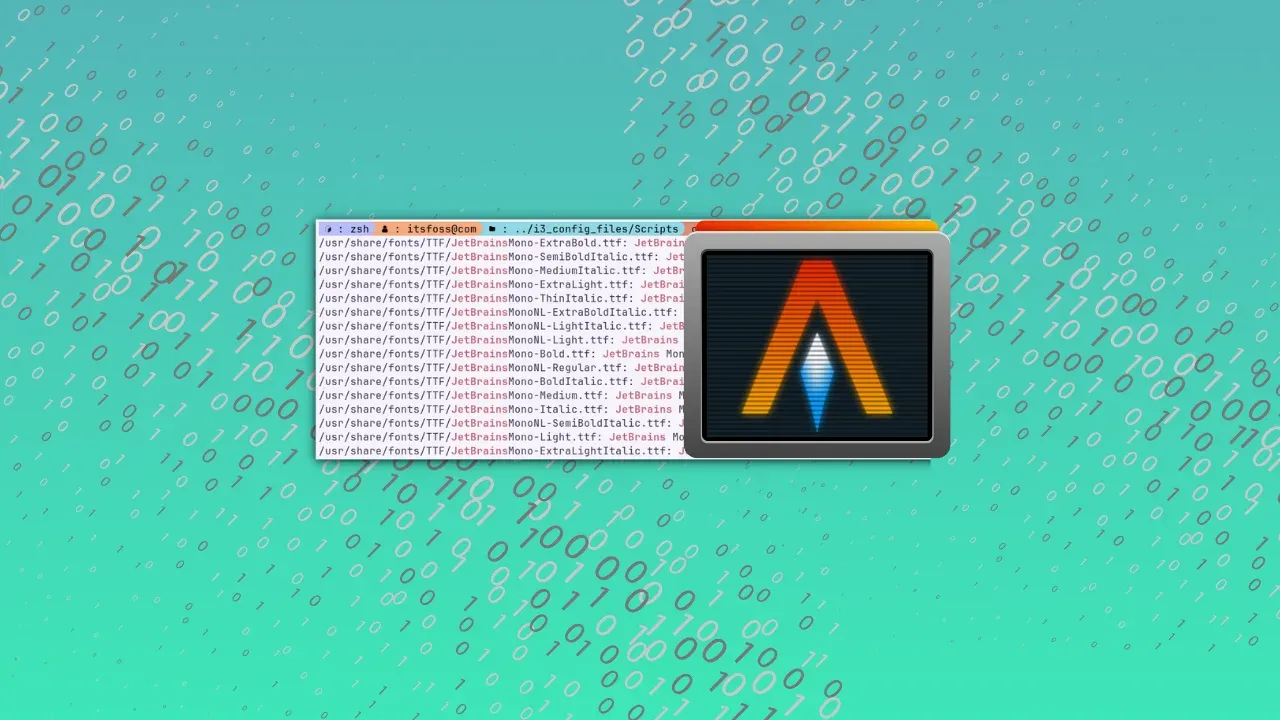
I’ve always been more of a Kitty user, but after using Alacritty for the past two months, my loyalty to Kitty is starting to waver.
Mozilla has published today the final builds of the Firefox 153 ESR open-source web browser ahead of its official unveiling on July 21st, 2026, so it’s time to take a look at the new features and improvements.