AMD Linux Graphics Driver Preps Fix For Apple Studio Display
This week's batch of AMDGPU Display Core "DC" updates arrived heavy with 70 new patches for improving that open-source display support for Radeon graphics on the Linux desktop...
This week's batch of AMDGPU Display Core "DC" updates arrived heavy with 70 new patches for improving that open-source display support for Radeon graphics on the Linux desktop...
Elon Musk promises to open source all of X, ‘no exceptions,’ once the security team is done poking at it. The missing detail: what ‘open’ actually means in Musk?speak.
At GNOME's annual GUADEC conference happening this week in Spain, an update was shared on the current state of GNOME OS...

An anonymous reader quotes a report from Ars Technica: As smoke from hundreds of burning wildfires spread across Canada and the United States, the first three operational satellites in the Google-backed FireSat program successfully launched into orbit. The satellites will begin providing wildfire detection capable of spotting even small fires in the United States, Australia, and Europe before the end of the year. The launch of the microsatellites aboard a SpaceX Falcon 9 rocket from Vandenberg Space Force Base in California on July 7, 2026 marks a transition to "initial operational capability" for the FireSat constellation managed by the nonprofit Earth Fire Alliance. After a three-month testing period, the three satellites will begin actively providing data to fire agencies while covering every fire-prone region on Earth at least twice per day. FireSat represents the first satellite constellation purpose-built for detecting wildfires, including spotting smaller fires that other satellites may miss. The satellites were designed by California-based satellite manufacturer Muon Space and have received over $15 million from Google to support initial deployment. Other notable financial supporters include the Bezos Earth Fund that committed $26 million. Each satellite is equipped with multispectral imaging that can peer through smoke and clouds and detect fires as small as five by five meters -- about 16 by 16 feet. That capability was proven by a FireSat Protoflight satellite that launched in March 2025 and collected more than one million images, while showing it could detect low-intensity blazes invisible to existing satellites. The "early adopter" organizations that will start using FireSat data this year include fire agencies in California, Colorado, Australia, and Portugal. As more satellites launch, the FireSat program aims to provide the latest imagery anywhere in the world on an hourly basis by 2029. Such imagery would eventually become available every 20 minutes once the full constellation of more than 50 satellites is launched by the early 2030s. Detection of small wildfires before they burn out of control could prove extremely helpful. The Earth Fire Alliance has projected that even an hourly revisit rate by the FireSat constellation could help save more than $1 billion in fire damage costs and prevent nearly 22 million tons of carbon emissions, along with protecting 3,500 homes and 1.3 million acres of land. To assist with that capability, Google Research plans to use the company's AI models to compare operational FireSat data with historical images in order to accurately identify very small fires and to inform predictive modeling of wildfires. Google celebrated the launch of the first operational FireSat satellites by describing the event as "another tangible step forward in putting practical AI to work for climate resilience." Read more of this story at Slashdot.
Nate Graham and John Veness are out with the latest issue of This Week in Plasma to highlight all of the interesting developments taking place in the KDE Plasma desktop space...
Following the release of AMD's ZenDNN 6.0 earlier this month, there is a new feature release of the oneDNN neural network library that used to be developed by Intel as part of oneAPI and is now under the UXL Foundation umbrella. Even so, oneDNN feature releases continue to be heavy on new Intel optimizations and future hardware support...
In addition to Friday night's release of DXVK 3.0.2, debuting separately a short time later was D7VK 2.0 as the latest major feature release for this implementation of Direct3D 7 and earlier built off the Vulkan API...
While most Linux desktop development is shifting to Wayland, developer Geir Isene has announced Frame, a new X11 server for Linux written entirely in x86-64 Assembly.
Researchers say a meteorite that crashed through the roof of a Hillsborough, New Jersey, home in 2024 contains unusually pristine evidence of salty fluids and organic chemistry from near the surface of a primitive asteroid. "A forensic study of the fragments revealed that they contained preserved bits from near the surface of a primitive asteroid, where it experienced concentrated salty fluids -- a process not previously known from this type of protoplanet world," said lead author and meteor astronomer Peter Jenniskens of the SETI Institute and NASA's Ames Research Center in California's Silicon Valley. Phys.org reports: According to paper co-author Mike Zolensky, a meteoriticist at NASA's Johnson Space Center in Houston, analysis of the Hillsborough meteorite found fragments that were more extensively altered by water on the meteorite's parent asteroid than is typically seen in CM2 carbonaceous chondrites. The analysis classified the specimen as a CM1/2 carbonaceous chondrite, an intermediate classification between petrographic types CM1 and CM2. [...] Zolensky and colleague JangMi Han found small salt-rich CM1 fragments within the Hillsborough meteorite, suggesting they originated from a near-surface region of the parent asteroid where liquid water evaporated and concentrated salts. They are now working to identify the salt minerals for comparison with similar phases found among samples returned to Earth from asteroids Ryugu and Bennu. The high concentration of salt in briny fluids can potentially create molecules crucial to life on Earth. Brines allow phosphate to remain in solution and can catalyze chemical reactions between organics and precipitate minerals. "Isotope studies of carbon and nitrogen suggest that primitive carbonaceous chondrites, including CM types, delivered organic matter to the early Earth," said cosmochemist Queenie Chan of Royal Holloway University of London, England, and biogeochemist Nana Ogawa of the Biogeochemistry Research Center at the Japan Agency for Marine-Earth Science and Technology. "The Hillsborough meteorite contained 1.8% by weight of carbon and 0.07% of nitrogen, and had carbon and nitrogen isotopes typical for CM-type meteorites." The meteorite contained a wide variety of soluble organic compounds, and its compositional range confirms that the Hillsborough meteorite was more altered by water than most other CM-type meteorites. "A high fraction of compounds were the product of organic chemistry with minerals," said organic mass spectrometry specialist Phil Schmitt-Kopplin of Technical University Munich. "We do not know if these magnesium organic compounds were contributed by brine chemistry or were simply left over from earlier impact shock processes." In living organisms, organometallic compounds are found in blood and used in photosynthesis. Among the soluble organic compounds were many amino acids, similar to those found in more moderately altered CM2 chondrites. Astrobiologist Danny Glavin of NASA's Goddard Space Flight Center in Greenbelt, Maryland, and his team in Goddard's Astrobiology Analytical Lab concluded that the delivery of amino acids, carboxylic acids and other soluble organic molecules by CM-type bodies may have contributed to the prebiotic organic inventory that preceded the emergence of life on Earth. Their analysis suggests the complex distribution of amino acids observed in the Hillsborough meteorite formed within the parent body, likely assisted by brine fluid chemistry. The findings have been published in the journal Science Advances. Read more of this story at Slashdot.
DXVK 3.0.2 has been released today as the second minor update in the latest DXVK 3.0 series of this open-source Vulkan-based implementation of D3D8, D3D9, D3D10, and D3D11 for Linux / Wine that brings improvements for various games and other changes.

Here's my recommended list of GNOME extensions that might help you focus more on work and be (more) productive.
An anonymous reader quotes a report from the New York Times: Australia will require large data centers powering artificial intelligence to generate as much power as they consume, and ensure that creative professionals retain control over work that may be used to train A.I. systems, as the government sets up guardrails over the rapidly growing industry. The announcements on Wednesday in a speech by Prime Minister Anthony Albanese came as Australia draws significant interest from A.I. companies because of its size and the availability of renewable energy, and as resistance to data centers builds in many parts of the United States and Europe. Major A.I. companies have opened offices or announced investments in Australia in recent months. The Australian government is trying to balance capitalizing on the A.I. boom with setting parameters on a fast-changing industry that has sparked backlash over environmental impacts, energy use and lack of contribution to local economies. "Every country on earth is grappling with these challenges right now. Australia will be the first country in the world to bring these issues into a single, national framework," Mr. Albanese said Wednesday, laying out the standards his government will pursue. The details of what exactly the requirements will look like and how they will be enforced remain to be seen, and the government will need to secure the backing of individual states for its plan. The government said it would introduce legislation on the standards early next year, and establish an "Office of A.I." directly reporting to the prime minister to coordinate implementation. The "Australian Standards for A.I." will include a "legal obligation" for companies to ensure they do not drain the power grid and be as water efficient as possible, the government said. Mr. Albanese also said creators of books, music, art or news in Australia should retain control of the price and value of their work when used to train artificial intelligence systems. "Anything less is theft," he said. "No country has got this right yet." Read more of this story at Slashdot.
Collabora announced today the first preview of Holo Core, their official Arch Linux ARM64 (AArch64) port for Valve’s Steam Frame gaming VR headset, which will be launched later this year to join the Steam Deck, Steam Machine, and the new Steam Controller.
In addition to the initial build of Holo Core as AArch64 Arch Linux for the Steam Frame, another software milestone today in Valve's Linux gaming space is the release of DXVK 3.0.2 for Direct3D 8 / 9 / 10 / 11 APIs implemented over the Vulkan API for running Windows games...
"Apple co-founder Steve Wozniak's Woz Ed foundation is partnering with Realbotix, best known for their RealDoll-branded artificial companions, to deploy AI-powered robotic tutors in classrooms," writes Slashdot reader Hentes. "The doll will serve as a sort of artificial teaching assistant, helping students who get stuck or generating lessons. Students will be assigned an ID code, allowing the robot to provide personalized mentoring." NYS Focus reports: "This deployment in a working school district represents a landmark moment for both AI and humanoid robotics," said Andrew Kiguel, CEO of Realbotix, which is currently building the robot. "[Salamanca City Central School District in Western New York] marks the beginning of a new era where humanoid robots and intelligent AI assistants become standard tools in STEM education." The female robot, named Sally, will have a "lifelike appearance" with silicone skin and long brown hair, Kiguel said in an interview with New York Focus. It will be stationary in a seated position but have a wide range of upper-body movements and facial expressions. [...] Salamanca plans to introduce the robot and avatar in its high school AI and robotics courses, which use curriculum developed by Apple co-founder Steve Wozniak to prepare students for high-demand tech jobs. The district plans to expand it to high school students in other classes if the pilot is successful. Realbotix's classroom robot has drawn scrutiny because the company is connected to RealDoll, the longtime maker of hyperrealistic sex dolls and sex robots. Realbotix acquired RealDoll's parent company in 2024 but says the education-focused operation has separate employees, payroll, facilities, and technology, with plans to formally separate the businesses at the ownership level. The "companion robots" are different from sex robots and intended to address what it's described as a "loneliness epidemic." Kiguel has previously said the company's goal is to produce robots and AI that are "indistinguishable from humans." Read more of this story at Slashdot.
The upcoming KDE Plasma release improves the visual consistency of applications that do not draw their own window shadows.
Xi Jinping used his first appearance at China's World AI Conference to promote a vision of low-cost, broadly accessible AI and call for international cooperation rather than technological rivalry. "AI development should not be a solo performance by a single country, but a symphony of international cooperation," he said. Bloomberg reports: His presence at the gathering, attended by scores of tech and government leaders, conveys a potent signal of China's ambitions to dominate a technological sphere with the potential to revolutionize industry and economies -- an effort that's shot to the top of the nation's agenda. Chinese models are winning over companies worldwide, with their share of US firms' AI usage nearing a record 60% on the popular marketplace OpenRouter. Behind the rhetoric, Beijing is grappling with the balance between openness and national security as models grow more capable. Chinese officials recently discussed with companies including Alibaba -- developer of the popular Qwen models -- how to mitigate the security risks posed by their increasingly powerful models, people familiar with the matter said. The talks are early, with no enforcement planned, but restricting foreign access to top models was among the options raised, the people said. Reuters previously reported that Beijing was weighing curbs on overseas access. Earlier today, the Beijing-based AI company "Moonshot" released a massive new model that reset the AI race overnight, immediately vaulting into the top tier of global AI, beating Anthropic's Fable 5 and OpenAI's GPT-5.6 Sol in front-end coding tests. Read more of this story at Slashdot.
The HackRF Pro is an open-hardware software-defined radio platform from Great Scott Gadgets that supports transmission and reception from 100kHz to 6GHz. The half-duplex transceiver maintains backward compatibility with software and accessories developed for the earlier HackRF One. The HackRF Pro follows the same general architecture as its predecessor but introduces several RF, processing, timing, […]
AWS says a billing software bug caused some customers to see wildly inflated estimated charges, including reports of accounts showing bills in the billions or even trillions of dollars. The Register reports: An open issue on the AWS Health Dashboard (archived copy at the time of writing) popped up at 1:33 am Pacific time on Friday informing users that Cost Explorer was "reflecting inaccurate estimated billing data." As of writing, the issue is still unresolved despite AWS trying several different things to get it fixed. The company apparently identified the root cause within an hour and a half of beginning its investigation, only describing it as "an issue with unit pricing within the estimated billing computation subsystem." AWS followed up by pausing estimated bill updates, saying customers would continue to see the inflated figures already displayed, but that those estimates would not increase further. "The displayed billing estimates do not reflect actual usage and charges," AWS explained, noting that customers don't need to take any action, like, we imagine, flooding the help portal with tickets telling them what they already know, for instance. "Once the issue has been mitigated, we expect full resolution to take multiple hours as we work through recomputing the estimated billing data," AWS added. After we first published this article, Amazon updated the issue page to indicate that it had identified the root cause and mitigated the underlying issue. The company says that it's begun backfilling data in the Cost Management Console to correct billing numbers, and that all customers should see corrected amounts by Saturday, July 18 at noon pacific time. Read more of this story at Slashdot.
Linus Torvalds says the Linux kernel will not ban AI-assisted coding tools, and if anti-AI absolutists have a problem with that, they can "fork it" or "walk away." An anonymous reader quotes a report from Ars Technica: Writing in a lengthy post on the Linux kernel mailing list this week, Torvalds said that "Linux is not one of those anti-AI projects, and if somebody has issues with that, they can do the open-source thing and fork it. Or just walk away." The statement came amid a lengthy thread arguing about the use of Sashiko, an "agentic Linux kernel code review system" that its creators claim can, in tests, independently find 53.6 percent of the bugs that would end up being fixed by human coders in later commits. But the tool can also waste maintainers' time by sending "false positive" reports of bugs that don't exist, at a rate Sashiko's maintainers estimate is "well within [the] 20% range." In discussing whether maintainers should be subjected to a flood of these kinds of automated, AI-powered bug report emails (true or false), one poster cited the Software Freedom Conservancy's recent statement that the open source community "should support, not just tolerate, those who outright reject LLM-gen-AI systems" and that "every FOSS contributor deserves self-determination regarding LLM-gen-AI." In the face of that statement, Torvalds said that he rejects those who demand that their open source projects not accept any LLM-generated code or revisions. "We're not forcing anybody to use [LLM tools], but I will very loudly ignore people who try to argue against other people from using it," Torvalds said. Torvalds said his position on this is a pragmatic one that's "based on technical merit. Not fear of new tools." And when it comes to utility, Torvalds said that "AI is a tool, just like other tools we use. And it's clearly a useful one. It may not have been that 'clearly' even just a year ago, but it's no longer in question today. Anybody who doubts that clearly hasn't actually used it." [...] While Torvalds acknowledged that "AI isn't perfect," he urged detractors to compare the output of these tools to the performance of human code maintainers. "Anybody who points to the problems at AI had better be looking in the mirror and pointing at themselves at the same time," Torvalds wrote. "Because it's not like natural intelligence is always all that great either." Read more of this story at Slashdot.
Sipeed has introduced NanoKVM-Go, a compact USB-C KVM-over-IP device that combines remote hardware management with AI integration. Designed for Linux, Windows, macOS, and other USB-C devices, NanoKVM-Go allows users to remotely view and control a system through a web browser while exposing its keyboard, mouse, and display functions to AI agents via the Model Context Protocol (MCP).
Longtime Slashdot reader schwit1 shares a report from Axios: Kimi K3, a massive new model by Beijing-based Moonshot AI, threatens the foundations of Americas AI boom. Its release Thursday dazzled developers, jolted Silicon Valley and reset the AI race overnight. Kimi immediately vaulted into the top tier of global AI, beating Anthropic's Fable 5 and OpenAI's GPT-5.6 Sol in front-end coding tests by AI evaluator Arena. In Arenas broader text ranking, Kimi finished ahead of Anthropics Opus 4.8 -- the company's flagship model until Fable 5 arrived in June -- while costing 40% less. Unlike the premium U.S. models its challenging, Moonshot plans to release Kimi as an open-weight model on July 27 -- allowing companies and governments to customize and run it on their own systems. Kimi's arrival suggests that cushion may have collapsed far faster than expected. "The entire game has changed. I expect this will trigger some code red for some," AI analyst Kim Isenberg predicted. For companies, governments and developers, a model that performs near the frontier, costs 40% less and can be customized or run in-house may be the more attractive option. Its very existence puts pressure on the pricing power of U.S. labs, the enormous valuations built around their technological edge, and the case for spending hundreds of billions of dollars on ever-larger data centers. Read more of this story at Slashdot.
Wayland, an open-source replacement for the X11 window system protocol and architecture, has been updated to version 1.26 with several new features and bug fixes.
The FBI arrested a Florida man accused of uploading fake Steam games containing malware that stole passwords, data, and cryptocurrency wallet credentials from victims. Prosecutors say the scheme infected about 8,000 people, compromised roughly 80 crypto wallets, and stole at least $220,000 through games that appeared legitimate but secretly carried malware. TechCrunch reports: On Tuesday, the FBI arrested Zyaire Wilkins, a 21-year-old Florida resident and student. On Wednesday, prosecutors accused him and a number of unnamed co-conspirators of hacking crimes. Over the past two years, Wilkins and his partners allegedly published several malware-laden video games on Steam, including BlockBlasters, Dashverse, Lampy, Lunara, and PirateFi. Using that malware, says the FBI, Wilkins and his accomplices infected around 8,000 victims, and then hacked around 80 cryptocurrency wallets to steal at least $220,000 worth of crypto. Wilkins and the others marketed their malicious video games on Discord, LinkedIn, and Telegram, according to the authorities. [...] After the FBI identified another person involved in the crimes, according to the complaint, federal agents interviewed them. The unnamed person said they worked with other people to raise money to launch and market the malicious games in return for sharing some of the stolen cryptocurrency. The FBI identified a specific crypto account involved in the scheme, and then traced cryptocurrency payments made with that account to buy several gift cards, including for UberEats. After subpoenaing Uber, the feds were able to see that the gift cards were linked to an account that made deliveries to Wilkins, who went by the nickname Sibel.eth online, according to the complaint. The feds then got a search warrant for Wilkins' residence, where they seized his MacBook laptop, cellphones, other devices, and digital wallets. According to the complaint, he refused to speak or answer any questions. Read more of this story at Slashdot.
With reviewing hardware for more than 22 years, when it comes to cooling products there are few brands that can still get me intrigued like Noctua. With their recent launch of the NL-LC1 all-in-one liquid coolers, I decided to try out the Noctua NL-LC1-36 360mm AIO cooler that is working out well for cooling high-end desktop CPUs like the recently launched Ryzen 9 9950X3D2.
Anthropic is reportedly in very early talks to lease computing power from Meta in a potential deal worth around $10 billion. The discussions follow Anthropic's recent compute deal with SpaceX and come as Meta explores selling excess AI capacity as part of a broader push to turn its massive infrastructure spending into a cloud business. CNBC reports: Access to enough AI chips remains a challenge for firms like Anthropic, which places usage limits on its most advanced models like Fable. [...] Meta could spend as much as $145 billion on capital expenditures, including for AI infrastructure, in 2026. Last October, Zuckerberg said that companies are regularly "asking if we have compute that they could buy from us at some premium to what we've bought it at." Read more of this story at Slashdot.
On top of releasing ROCm 7.14 as the new production release of ROCm now built offTheRock, rolling out the Lemonade 11.0 local AI server, and GAIA 0.22, AMD has some more open-source news in the lead up to next week's AMD Advancing AI event...
Collabora has published a blog post about its work with Valve on Holo Core, which is a port of Arch Linux to aarch64 to be used as the the operating system on Valve's 64-bit Arm Steam Frame gaming system. Collabora has released the sources, binary packages, and a container image for aarch64 devices. The post describes some of the challenges in porting Arch Linux to a new architecture, and what remains to be done: Whilst the infrastructure developed to this point is capable of building from first principles up until a point-in-time snapshot, the next step is to build this into a system which can track Arch Linux as it is developed. This work will serve as the basis of a continuously-operating CI system capable of shadowing Arch Linux itself. We will work with the upstream Arch Linux project to help Arch with their efforts to port the distribution to aarch64 architecture and work towards automated repeatable builds. The post also includes instructions on how to create and test an aarch64 build container on an x86_64 host, for users who would like to follow along at home but lack a 64-bit Arm device.
An anonymous reader quotes a report from MacRumors: Apple has reportedly sent legal letters to dozens of former Apple employees now working at OpenAI, telling them to preserve potentially relevant documents and communications as it continues to pursue its trade secret lawsuit against the AI company. The Financial Times (paywalled) reports that Apple has targeted around 40 former employees with legal preservation letters, acting on its belief that the alleged misappropriation of confidential information may extend beyond the individuals named in its original complaint. The development follows Apple's lawsuit filed last week against OpenAI, in which the company alleges a coordinated effort to obtain confidential information relating to its hardware engineering and product development. Apple claims OpenAI recruited key engineers, including former Apple executives Tang Tan and Chang Liu, and benefited from proprietary designs, manufacturing processes, and other trade secrets. Tan is OpenAI's Chief Hardware Officer and a 24-year Apple veteran who led product design, while Liu is on the hardware team at OpenAI after working as a senior system electrical engineer at Apple. Read more of this story at Slashdot.
As part of Valve's upcoming Qualcomm-powered Steam Frame headset, Valve has been collaborating with Collabora on the Arch Linux AArch64 base for their platform. Published today are the initial sources and binaries of this "Holo Core" base of Arch Linux AArch64 to be used by the Steam Frame...
Since 2020, BPF programs have been able to act as Linux security modules (LSMs). Several projects, including systemd, have been working to use that capability to provide more security to users. Christian Brauner spoke at the 2026 Linux Storage, Filesystem, Memory-Management, and BPF Summit about some of the limitations of using BPF in this way, and the changes he would like to see for systemd's use. In particular, he would like a way to make sure that BPF programs cannot be removed or have their private data tampered with.
What began as one developer’s need to test a Floppy Emu device grew into a full set of SWIM driver fixes for aging Apple hardware.
ABC News reports that White House teleprompter operator Gabriel Perez allegedly made more than $100,000 betting on Kalshi markets tied to what President Trump would say in speeches, using his access to prepared remarks and last-minute edits. ABC News reports: According to the sources, Kalshi alerted its regulator, the Commodity Futures Trading Commission (CFTC), to the suspicious activity on its "Mentions" market, where users can bet on whether specific words, phrases or topics are uttered during a public speech. "Our surveillance team promptly flagged and referred these trades to the CFTC, and we are cooperating and assisting regulators," Kalshi's head of enforcement, Bobby DeNault, said in a statement provided to ABC News. White House Press Secretary Karoline Leavitt told reporters Thursday afternoon, following ABC News' report, that Perez has been put on unpaid administrative leave. Leavitt said she spoke with President Trump about it, and he thought it was a "disgrace" and made the decision himself to put Perez on unpaid leave. Leavitt said she was unaware of any other White House staffers who have made such trades. "The White House has strict ethics guidelines that we expect all staffers and officials to follow," said White House spokesperson Davis Ingle when contacted by ABC News. In addition to February's State of the Union address, sources said CFTC investigators discovered that Perez placed bets on more than a dozen Trump speeches over a three-month period, including a December primetime address, a January speech at the World Economic Forum in Davos, Switzerland, and Trump's remarks in March during a Medal of Honor ceremony. Read more of this story at Slashdot.

Bethesda Game Studios have given a rare update into their roadmap of what they're working on, and it sounds like quite exciting news.Read the full article on GamingOnLinux.
Linux developer Armin Wolf sent out a set of patches today for enabling AArch64 support for the ACPI Windows Management Instrumentation (WMI) driver to work on AArch64 in no longer being bound to x86/x86_64. This is a step toward the long goal of being able to support modern Windows on ARM laptops via ACPI on Linux...
Security updates have been issued by AlmaLinux (cifs-utils, container-tools:rhel8, libreoffice, nodejs:24, perl-XML-LibXML, and python3.12), Fedora (ansible-collection-ansible-posix, firefox, freerdp, ImageMagick, mingw-glib2, perl-DBI, perl-HTTP-Date, rust-cargo-rpmstatus, and rust-opendal), Oracle (cifs-utils, gegl, gimp, git-lfs, go-toolset:ol8, hplip, kernel, libreoffice, maven:3.9, perl-XML-LibXML, python3, python3.12, python3.9, and uek-kernel), Red Hat (kernel, kernel-rt, and podman), Slackware (netatalk), SUSE (agama, aws-nitro-enclaves-binaryblobs-upstream, gimp, gpsd, grafana, hostapd, ImageMagick, jackson-databind, kernel, libssh2_org, nm-configurator, opennlp, perl-Mojolicious, python-Pillow, python-python-engineio, python-python-socketio, and tomcat11), and Ubuntu (ntfs-3g, python-authlib, ruby2.3, tar, and ubuntu-advantage-tools).
A new open-source Linux driver announced today by Arm is the Arm Core Local Accelerator "CLA" driver as a CPU-local interface for programming attached accelerators. This is an agnostic interface for attached accelerators with the initial target focusing on an attached compute engine...

A chronological look at how Linux's creator went from "90% marketing" to telling AI critics to fork the kernel or walk away.
Microsoft restored streamer Joshua Khane's 25-year-old Xbox and OneDrive account after it was compromised by a hacker and then suspended, putting years of personal data, baby photos, and thousands of dollars in games at risk. IGN reports: While he was "extremely happy" and thanked Microsoft for its help recovering his account and all the invaluable information therein, he levied some criticisms toward the brand for its initial response, claiming it had told him the suspension was "irreversible" at first. "It's unfortunate that such a big company can bring back your account if you ask them to," he said. "The way it all went, to me, is a little bit shady, because it's not that they can't bring back your account -- they won't bring back your account if you're a nobody." Khane credited the community for making his story go viral and bringing it to Microsoft's attention, but felt that without their help, he would have been up a creek without a paddle. He also tied the situation to the growing conversation surrounding digital ownership, comparing it to Sony's decision to stop printing physical game discs starting January 2028. Read more of this story at Slashdot.

Bohemia Interactive say DayZ Badlands is the largest expansion so far for the popular open-world zombie survival game.Read the full article on GamingOnLinux.
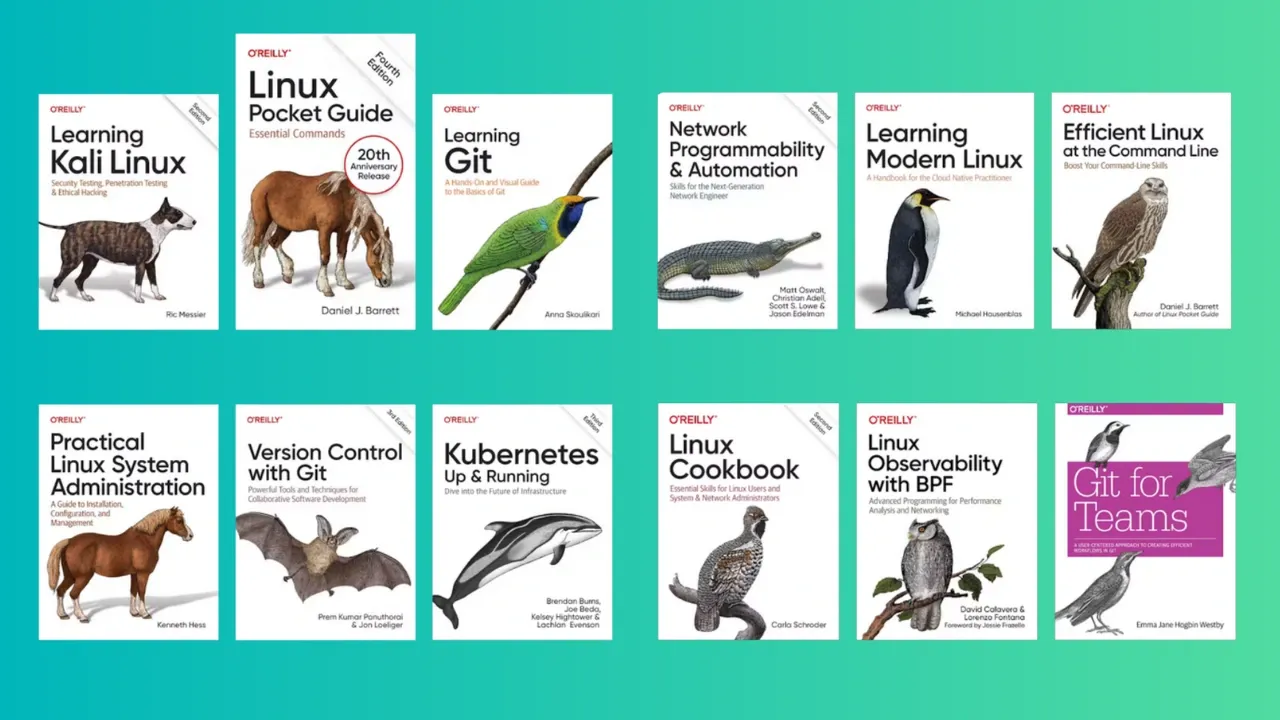
Don't miss! Pay tiny amount for a Git-to-Kubernetes Linux library of DRM-free eBooks, with part of the purchase going to Code for America.
Since earlier this month AMD has begun staging graphics driver changes for Linux 7.3 ahead of the merge window opening in late July. That's brought some interesting changes so far while there still are a few weeks to land any additional features in DRM-Next. This week another batch of AMDGPU graphics driver and AMDKFD compute driver feature code was sent out for this next kernel version...
Mozilla AI developers have released a new version of Llamafile, their solution for easy-to-use LLMs as a single file that work across hardware and operating systems. With Llamafile 0.10.4 is now Transcribefile, as a new piece built off their recently announced Transcribe.cpp project...
OpenBLAS 0.3.34 released on Thursday as this popular, open-source BLAS library providing optimized support for a variety of CPUs/architectures. OpenBLAS 0.3.34 continues working on squeezing more performance out of today's processors as well as delivering other new features...

Bandwagon is a bullet heaven survivors-lite (that's a new one?) that takes the genre in a fun new direction with music and you restoring joy to the world.Read the full article on GamingOnLinux.

DIEATHLON is a retro-styled shooter that's not just another boomer shooter, as you're racing down a mountain on skis as you attempt to survive.Read the full article on GamingOnLinux.
An intern with the FreeBSD Foundation is working on porting AMD's ROCm compute stack to run on this popular BSD environment...
FSearch 0.3 lands nearly three years after the previous release, adding real-time filesystem monitoring, file previews, and smarter indexing.

A look at his latest announcement, plus what's actually shipped so far and what's still missing.

After the usual silence we've come to expect from Valve on everything, they gave a short blog post on the upcoming MvM update for Team Fortress 2.Read the full article on GamingOnLinux.

The first Brigador game from Stellar Jockeys was fantastic for stomping around blowing everything up - and Brigador Killers looks much bigger and better.Read the full article on GamingOnLinux.
Astronomers have directly detected helium in the atmosphere of LHS 1140 b, a rocky exoplanet 48 light-years away that sits in its star's habitable zone. The finding marks the first confirmed atmosphere around a rocky, Earth-like planet in the habitable zone, strengthening the case that some planets orbiting red dwarfs can retain atmospheres and potentially support liquid water. "We have actually detected directly the helium present in the atmosphere itself, and that's the first direct detection for any rocky exoplanet, which is really exciting ... and then there's this added bonus that it's in the habitable zone, which is super exciting for astrobiology and habitability and searching for life," lead author Collin Cherubim, who recently earned his Ph.D. from Harvard University, told Space.com. "It feels kind of surreal." From the report: This exoplanet, or planet outside of our solar system, was first discovered in 2017 by a team led by astronomer Jason Dittmann who is now a co-author on this new discovery. "This planet was found like 10 years ago, and we're just now saying, okay, that's an atmosphere," Dittman told Space.com. "We're slowly narrowing the gap and checking these boxes ... we're finding a planet that's rocky, a planet that's of the right temperature and now ... it's like okay, we finally found one that has an atmosphere." And being a rocky planet, "there's definitely a surface ... it's made of rocks," Dittman said. What does the planet's surface look like? We can't say yet, but the researchers who found this planet's atmosphere think there's a good chance it could have water. While it orbits a red dwarf star, which is smaller and cooler than the sun, it orbits closer than we do to our star, maintaining a temperature that keeps the planet in the "Goldilocks zone" where liquid water could exist on its surface. "It probably also has a lot of water," Cherubim said. "If it has some amount of atmosphere that can provide a bit of a greenhouse effect, which we know that it does now ... it will very likely be what we consider to be habitable conditions on Earth, and conditions that would likely support liquid water." So is it Earth-like? While it's certainly not an Earth copy, this planet can be considered Earth-like in two main ways, Cherubim shared. One: its overall composition. The planet is rocky, likely with an iron core and (now we know) it has an atmosphere. And two: the planet's temperature is just right for liquid water, which is necessary for life at least as far as we understand it on our planet. [...] "I'm not claiming this planet has life," Cherubim made clear. With further investigation, scientists could better understand what else might be in this planet's atmosphere, and they could confirm if it has water. Further observations might not be able to confirm habitability or identify any life on the planet, but they could at least help us to better understand planets like this. The findings have been published in the journal Science. Read more of this story at Slashdot.

Valve released SteamVR Beta version 2.17.4 which brings more Steam features into the VR environment, as they continue preparing for the Steam Frame release.Read the full article on GamingOnLinux.
The KDE Plasma 6.8 will be introducing support for server-side drop shadows with the feature recently having been merged to KWin...
Weston 16 expands HDR and color management support, improves Perfetto debugging and DRM backend performance, and adds new protocol and renderer capabilities for more efficient and flexible Wayland compositor development.